
Basic math practice Addition Worksheets for Ages 3-8
3 filtered results
Difficulty Level
Grade
Age
-
From - To
Subject
Activity
Standards
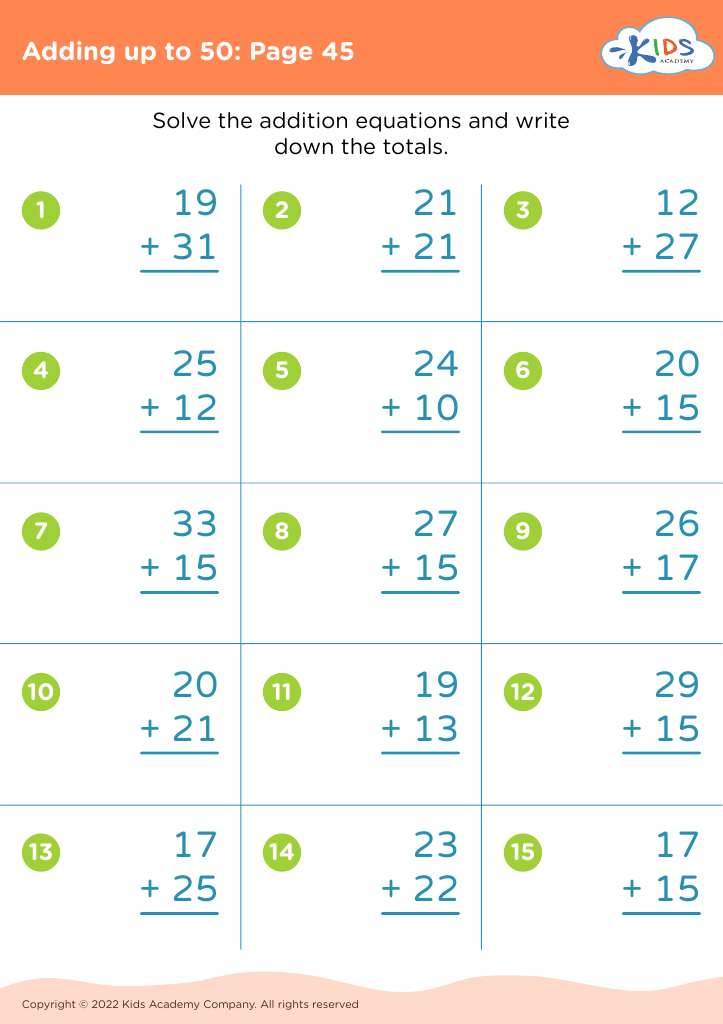
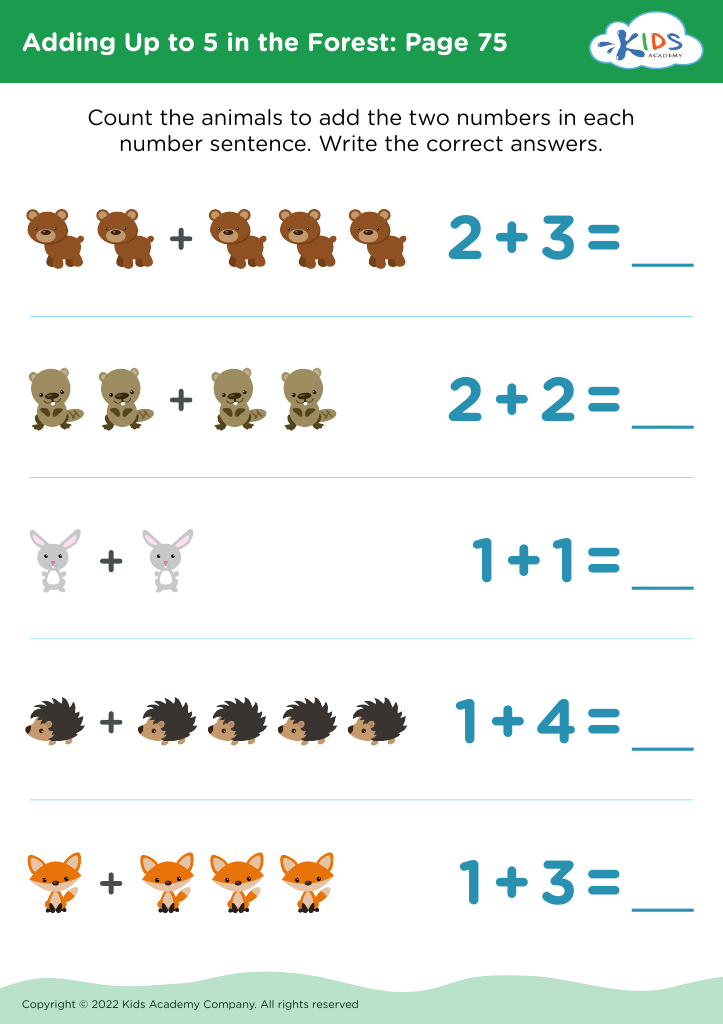
Explore our engaging Basic Math Practice Addition Worksheets designed specifically for children aged 3-8! These worksheets foster essential addition skills through fun and interactive exercises suitable for young learners. With colorful illustrations and age-appropriate challenges, kids will enjoy developing their math understanding while boosting confidence. Our carefully crafted activities not only reinforce arithmetic fundamentals but also promote critical thinking and problem-solving abilities. Ideal for parents and educators, our printable resources make learning math a delightful experience. Enhance your child's early mathematics foundation today with our effective and enjoyable addition worksheets! Perfect for homeschooling, lesson planning, or extra practice at home.
Favorites
With answer key
Interactive
Add up the Dollars Worksheet
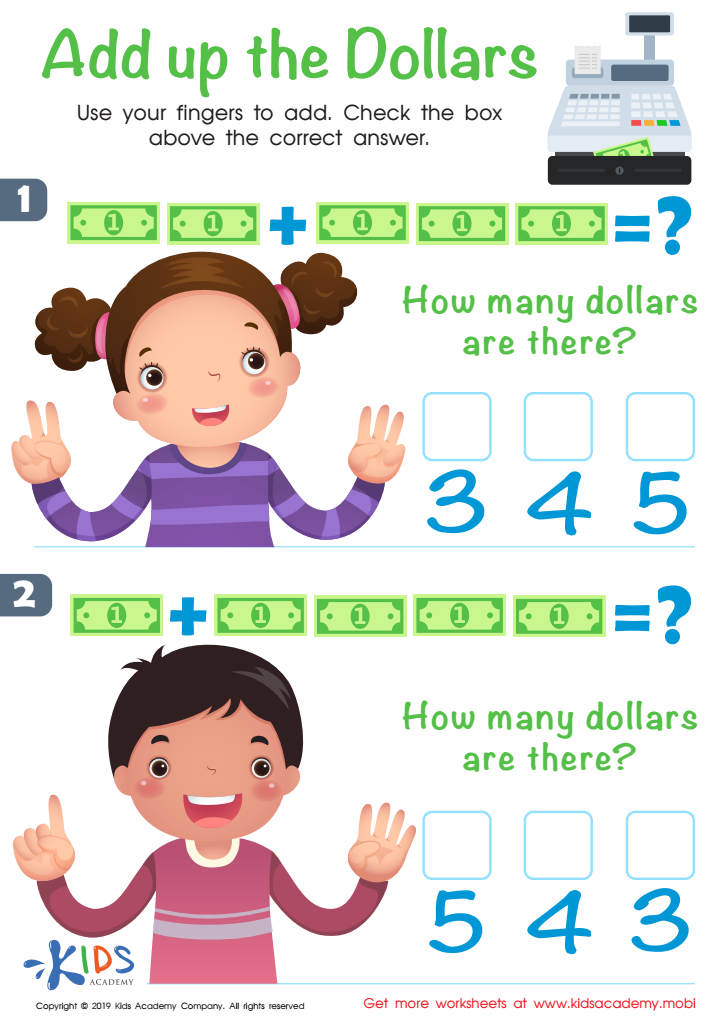
Money is key in life. It buys what we love and need. Get students to learn with exercises full of colour and familiar items like this worksheet. It shows two kids and some money. Ask pupils to use their fingers to add the money and check the box with the right answer.
 Assign to My Students
Add up the Dollars Worksheet
Worksheet
Join Kids Academy for Free
Who is primarily going to use this learning content?








Basic math practice, particularly addition, is crucial for children aged 3-8 as it establishes foundational skills essential for future learning. During these formative years, children are naturally curious, making it an ideal time to introduce mathematical concepts in a fun and engaging way. Addition helps develop critical thinking and problem-solving skills, enabling young learners to grasp more complex math concepts later on.
Parents and teachers should emphasize addition because it cultivates number sense, which is the ability to understand and manipulate numbers effectively. This foundational skill translates into confidence in later grades and is often linked to academic achievement. Furthermore, math fluency can directly impact a child's self-esteem, as children are more likely to engage in learning when they feel competent.
Engaging in basic addition activities can also be a bonding experience for families, as they explore numbers together through games, stories, and everyday scenarios. This cooperative approach fosters a positive attitude towards math and sparks a lifelong interest.
Ultimately, early exposure to addition not only prepares children for success in math but also equips them with important cognitive skills essential for navigating everyday challenges, thereby benefiting their overall development.








