
Basic Mathematics Addition Worksheets for Ages 3-8
3 filtered results
Difficulty Level
Grade
Age
-
From - To
Subject
Activity
Standards
Discover a delightful collection of Basic Mathematics Addition Worksheets designed for children aged 3-8! Our worksheets provide engaging activities that promote foundational math skills through fun and interactive exercises. Perfect for young learners, they foster a deep understanding of addition concepts while keeping them entertained. With vibrant visuals and varied difficulty levels, these resources cater to all learning styles. Parents and educators can easily incorporate these worksheets into daily lessons or home practice. Encourage your child’s mathematical journey and build confidence in their addition skills with our comprehensive and accessible materials. Download now and let the math adventures begin!
Favorites
With answer key
Interactive
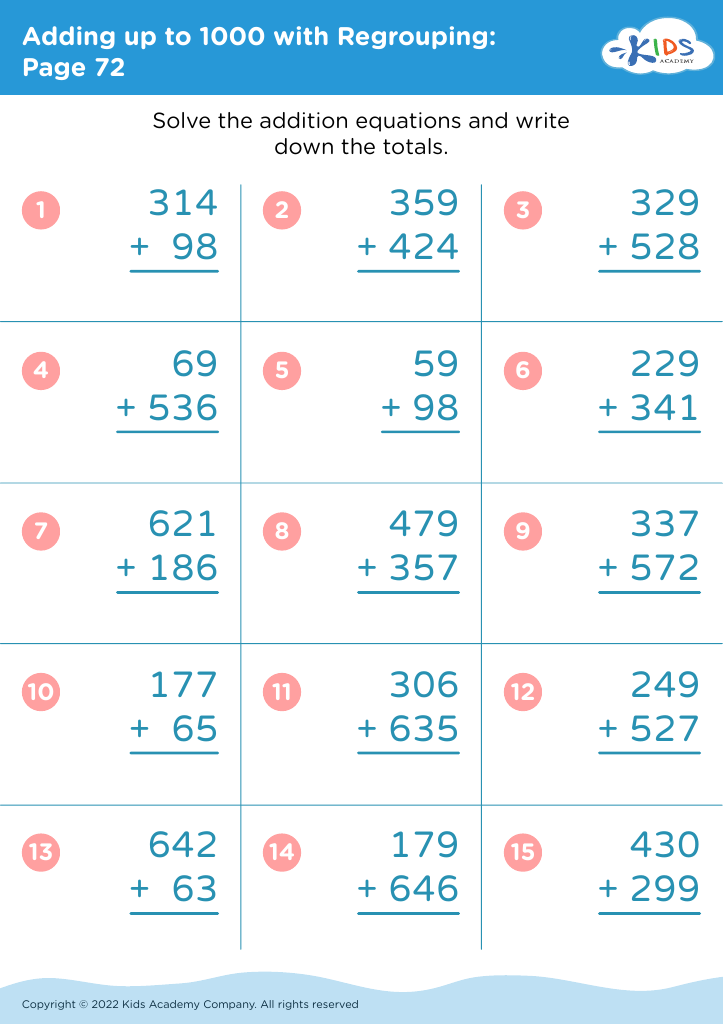
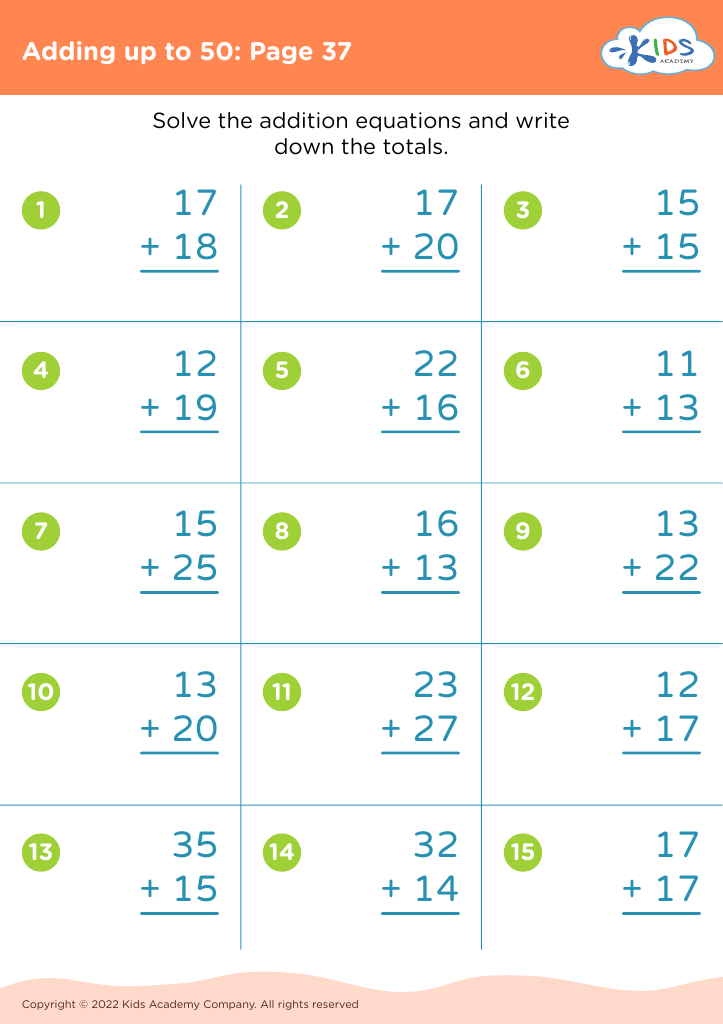
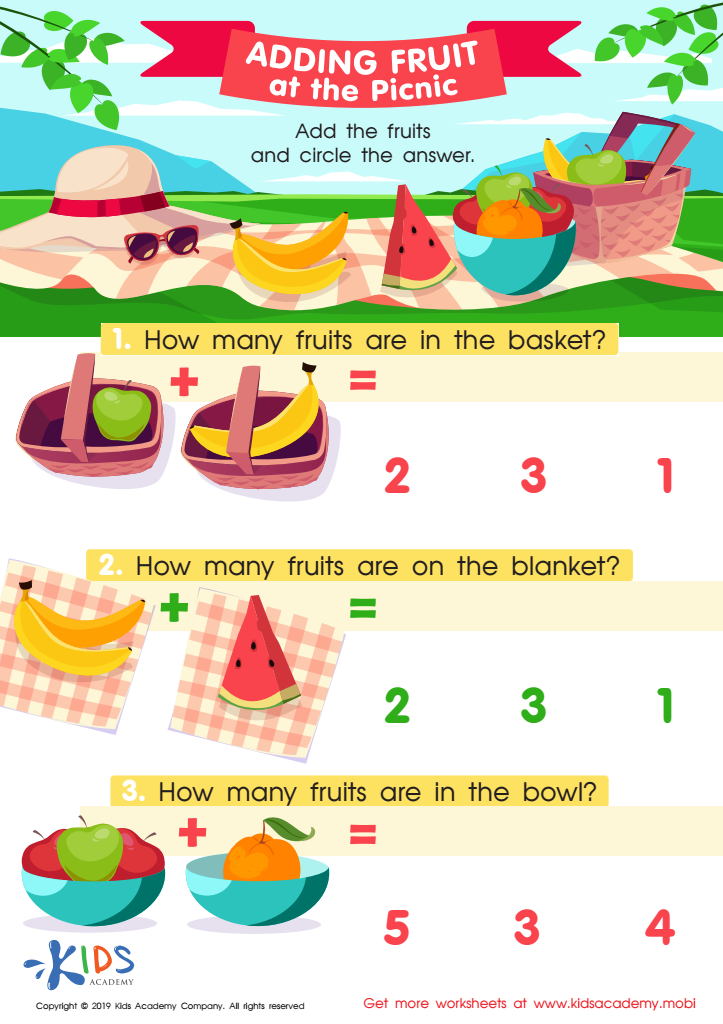
Adding Fruit at the Picnic Worksheet
Picnics are a great way for the family to enjoy a fun day in the sun! Get your kids involved by having them help load the picnic basket and do this worksheet to practice their math skills while they get ready. Identify the fruits in the picture, add them up, and circle the correct answer.
 Assign to My Students
Adding Fruit at the Picnic Worksheet
Worksheet
Join Kids Academy for Free
Who is primarily going to use this learning content?








Parents and teachers should prioritize basic mathematics addition for children aged 3-8 because it serves as a foundational skill essential for lifelong learning. During these early years, children develop cognitive abilities quickly, making it the ideal time to introduce mathematical concepts. Mastering addition fosters problem-solving skills, critical thinking, and the ability to work through challenges, laying the groundwork for more complex mathematics in later grades.
Additionally, understanding addition enhances children’s confidence, as accomplishing simple arithmetic fosters a sense of achievement. This confidence extends beyond math and encourages a positive attitude towards learning overall. It also promotes practical life skills, such as managing money and understanding quantities, which students will encounter in everyday situations.
Moreover, when parents and teachers actively engage kids in learning addition through games, stories, and everyday activities, they create a supportive and enriching learning environment. This not only solidifies the concepts being taught but also strengthens the bonds between adults and children. Overall, equipping children with basic addition skills is crucial, as it equips them not only with the tools they need academically but also with skills that will support their social and emotional growth.








