Critical thinking skills Addition Worksheets for Ages 3-8
7 filtered results
-
From - To
Enhance your child's mathematical journey with our Critical Thinking Skills Addition Worksheets, designed for ages 3-8. These engaging worksheets not only promote foundational addition skills but also encourage students to analyze, evaluate, and apply their understanding of math concepts. With colorful illustrations and interactive exercises, children will learn to solve problems creatively and develop logical reasoning. Our resources foster a love for math while strengthening critical thinking, making learning fun and effective. Ideal for classroom use or at-home practice, our worksheets support diverse learning styles and help prepare young minds for future academic challenges. Explore our collection today!
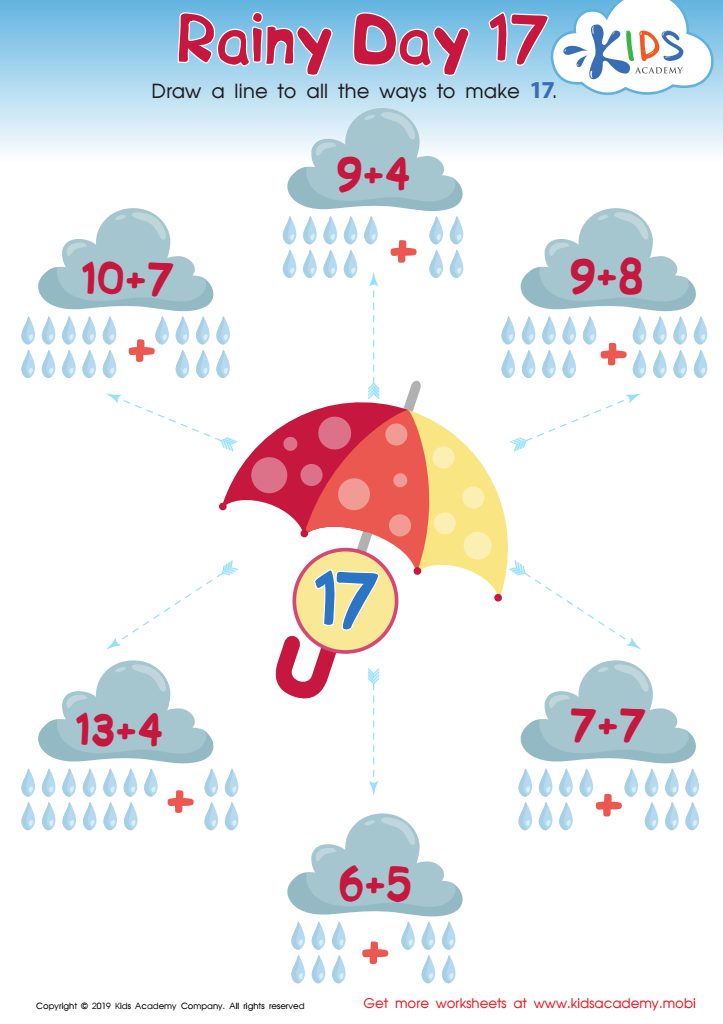
Rainy Day 17 Worksheet
 Assign to My Students
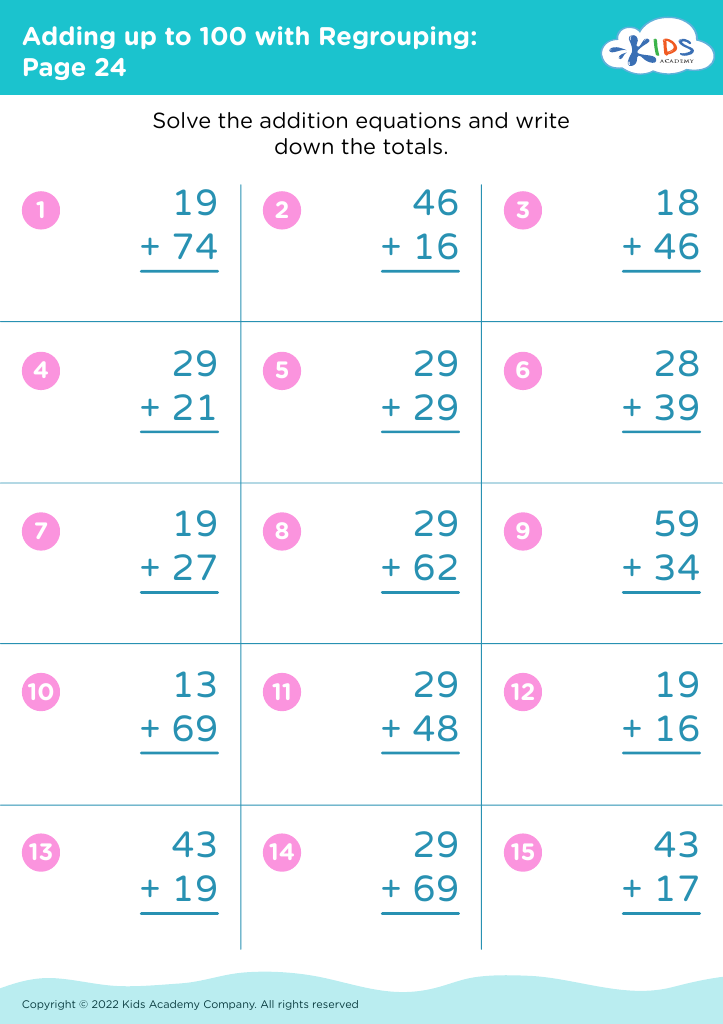
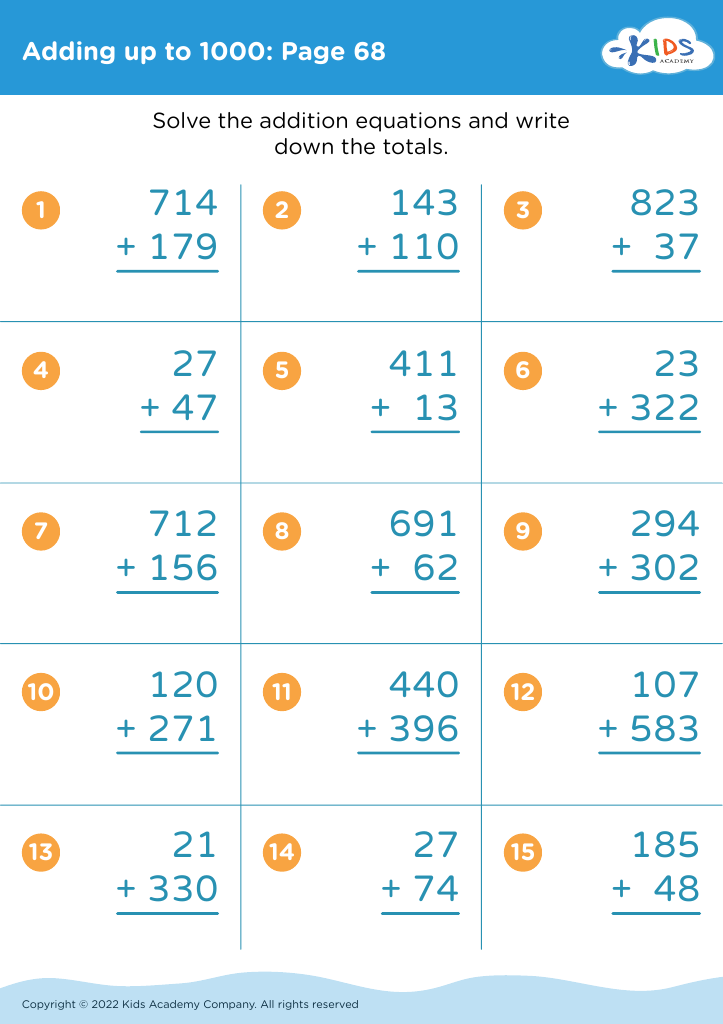
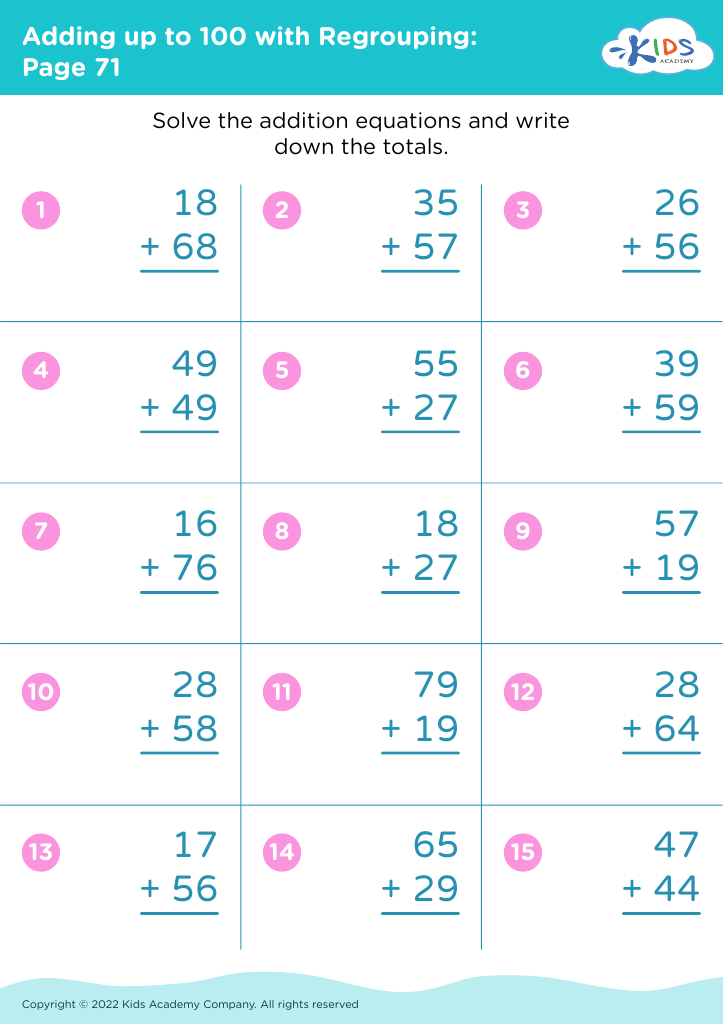
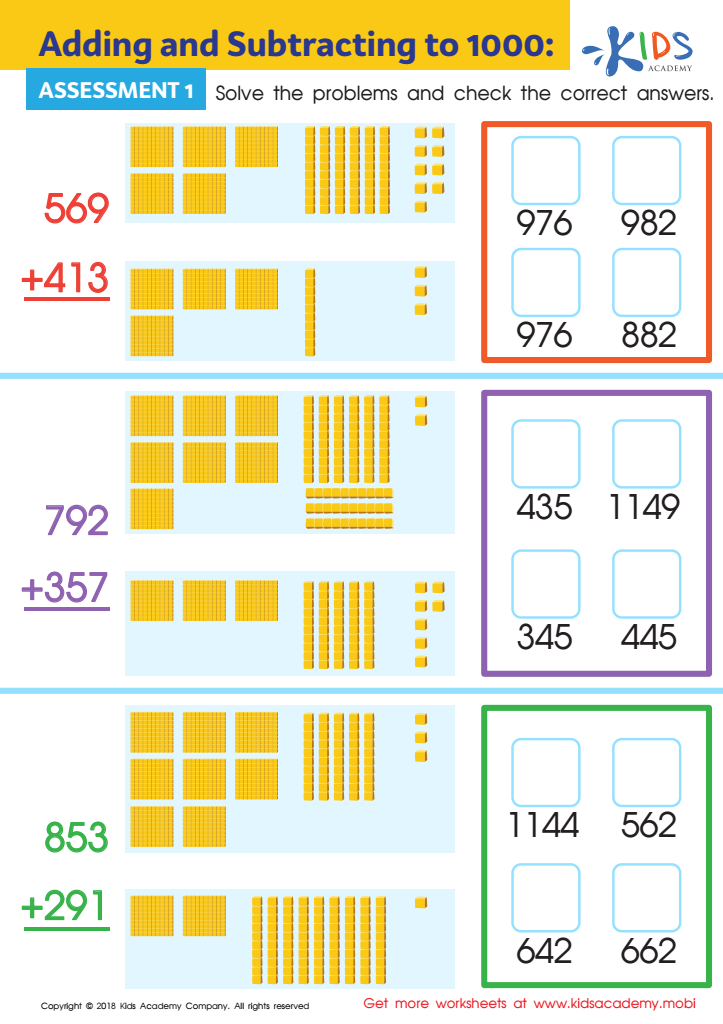
Adding and Subtracting to 1 Worksheet: Assessment 1
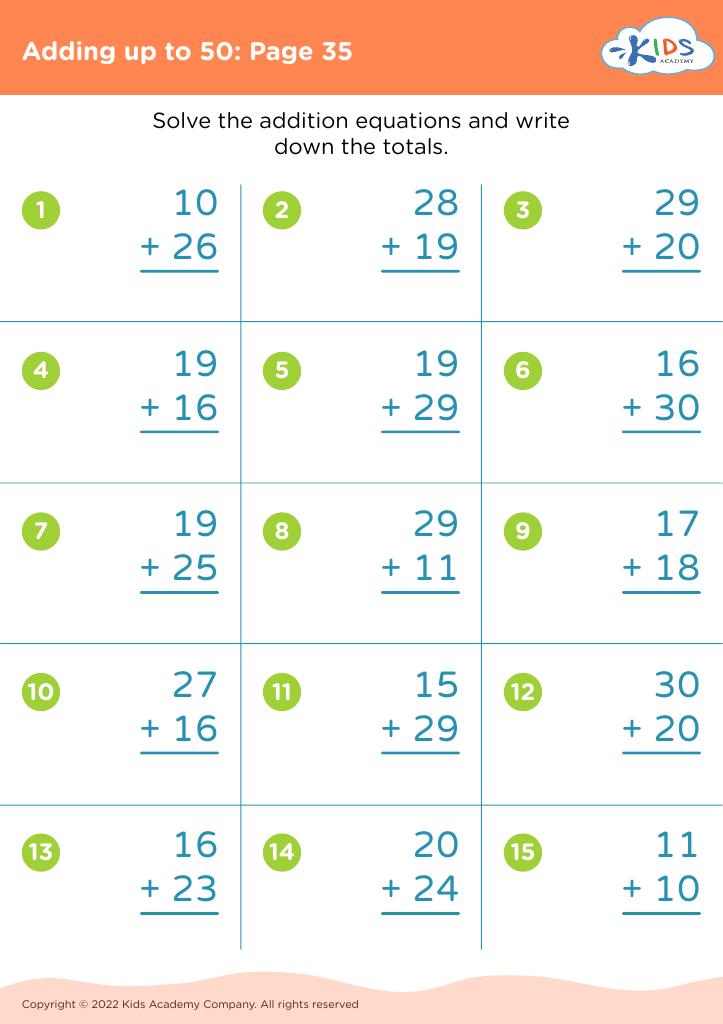
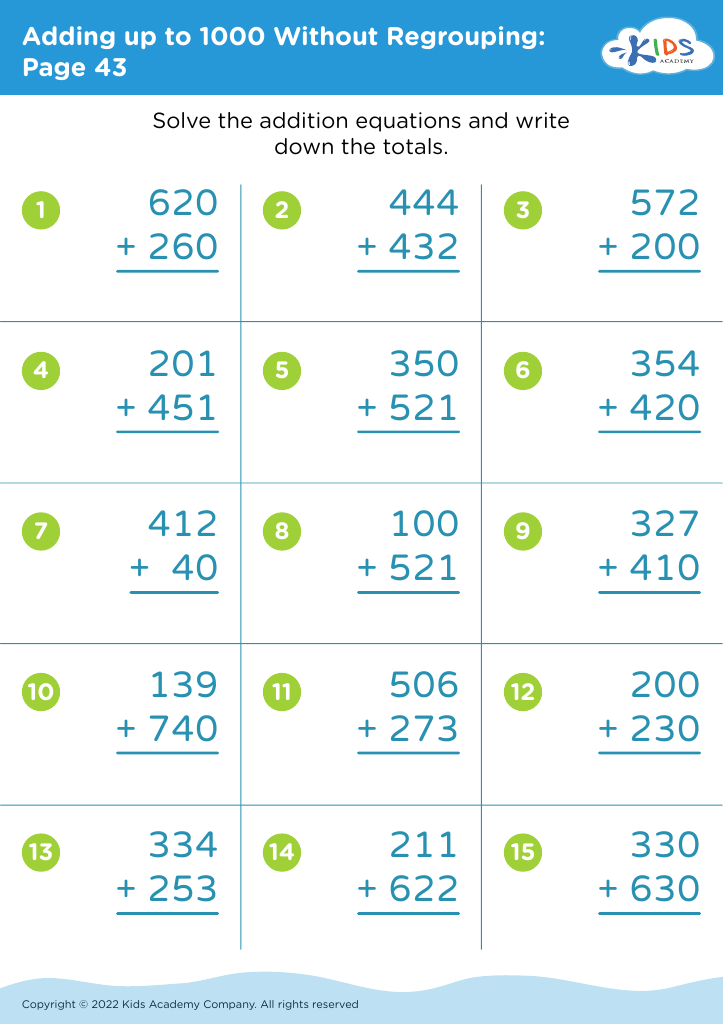








Parents and teachers should prioritize critical thinking skills in children aged 3-8 for several compelling reasons. First, this developmental stage is crucial; children are naturally curious and learning at an exponential rate. Encouraging critical thinking nurtures their questioning spirit, fosters creative problem-solving abilities, and enhances reasoning skills, essential for effective learning.
Second, critical thinking establishes a foundation for lifelong learning. These skills help children analyze information, make informed decisions, and approach challenges methodically, setting them up for academic and personal success. In an age where information is abundant and often misleading, being able to discern fact from fiction is vital.
Moreover, critical thinking promotes social and emotional development. Engaging in discussions, sharing ideas, and considering different perspectives help children build empathy, collaborate effectively, and develop strong communication skills.
Additionally, teaching critical thinking can lead to better behavior and engagement in the classroom. When students learn to think critically, they take more ownership of their learning, leading to increased motivation and better academic outcomes.
In essence, fostering critical thinking in early childhood not only enhances cognitive skills but also equips children with essential tools for navigating an increasingly complex world. Investing in these skills creates a generation of thoughtful, reflective, and capable individuals.








