Enhancing calculation speed Addition Worksheets for Ages 3-8
3 filtered results
-
From - To
Unlock your child's potential with our "Enhancing Calculation Speed Addition Worksheets for Ages 3-8". These thoughtfully designed worksheets focus on boosting your child's ability to quickly and accurately solve addition problems. Perfect for young learners, our activities blend fun themes with robust practice, ensuring kids not only enjoy their experience but also build essential math skills. Tailored to support early educational development, each sheet transforms addition into an engaging challenge, effectively improving speed and enhancing confidence. Join Kid’s Academy to provide your children with the best tools for mastering addition, setting up a strong foundation for future mathematical success.
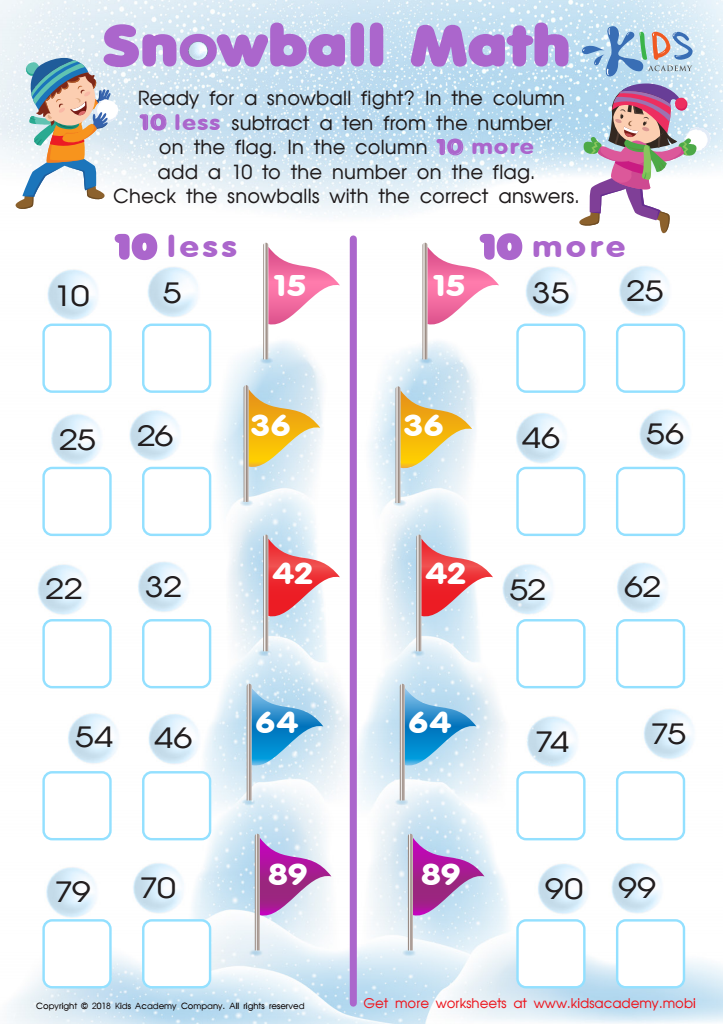
Snowball Math Worksheet
 Assign to My Students
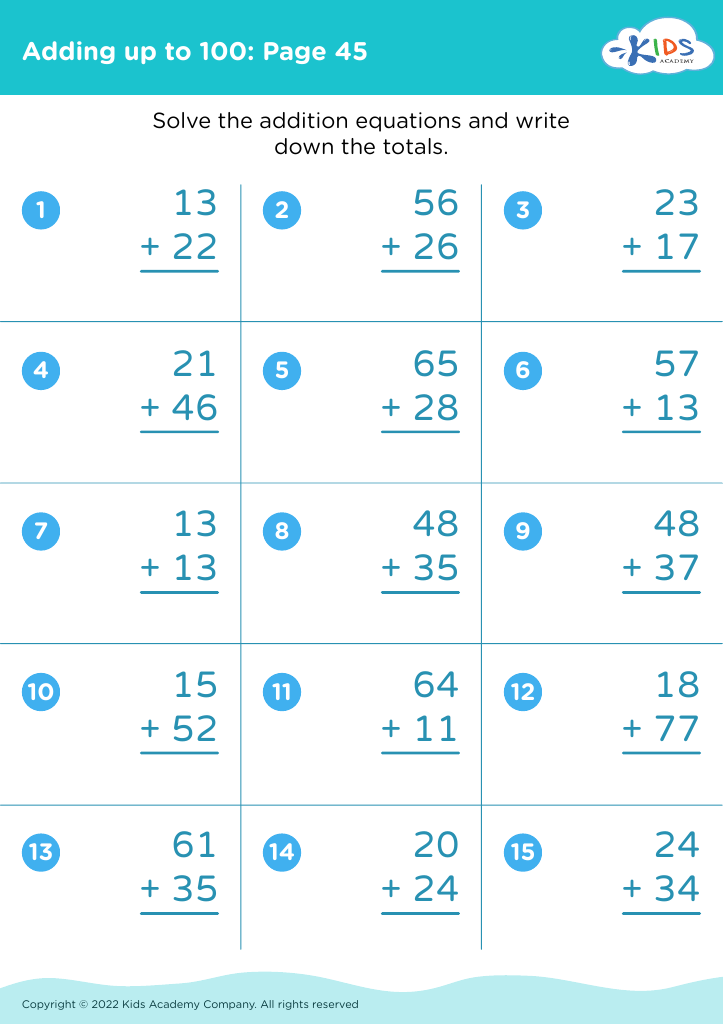
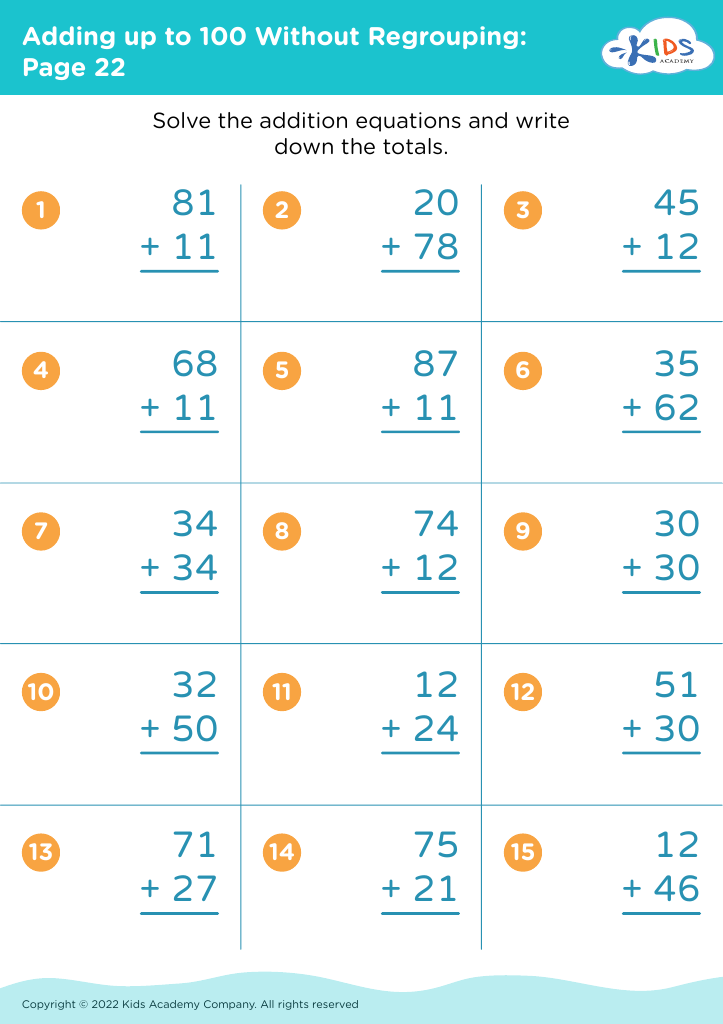








Enhancing calculation speed for addition in children aged 3-8 is vitally important for several key reasons. Firstly, early arithmetic competency builds a strong foundation for future math learning. Young children with proficient addition skills often find more advanced math concepts easier to grasp as they grow older. This also nurtures a positive attitude toward math, reducing anxiety or fear associated with the subject.
Secondly, quick mental addition improves cognitive functions such as memory, attention, and logical thinking. These skills are also beneficial across other academic areas, lending to overall better performance in school.
Furthermore, being able to add efficiently builds confidence. For example, children who are comfortable with numbers can quickly tally scores in a game, handle money in simple transactions, or follow multi-step instructions with ease. This practical proficiency boosts their independence and problem-solving abilities in everyday situations.
Lastly, mathematical skill development in early childhood is linked to later success in both academic and career pursuits. Establishing a solid foundation in arithmetic operations like addition equips children with tools needed for critical and analytical thinking, traits highly valued in many professions. Thus, investing in improving addition speed at a young age supports lifelong learning and skill development.








