Filters

56 filtered results

Clear all filters
Favorites
With answer key
Interactive

56 filtered results

Difficulty Level

Grade


Check out this FREE Trial Lesson on Addition for age 3-8!

Z

Favorites
With answer key
Interactive
  • 3-8
  • Fraction simplification
  • Addition
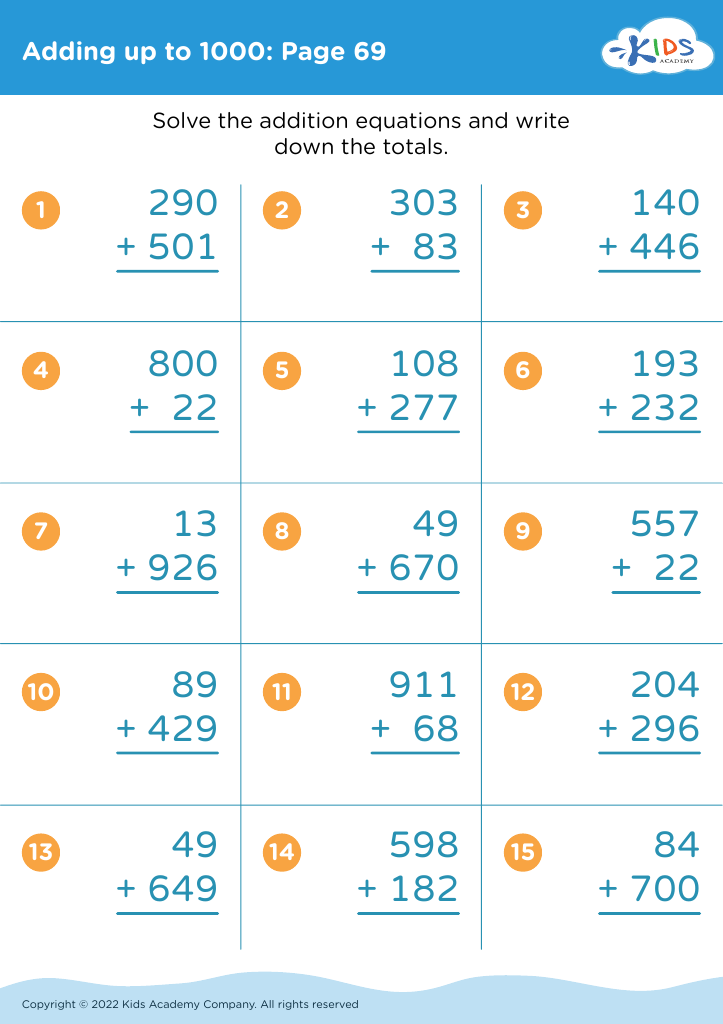
Adding up to 1000: Page 69

Adding up to 1000: Page 69

Adding up to 1000: Page 69
Worksheet
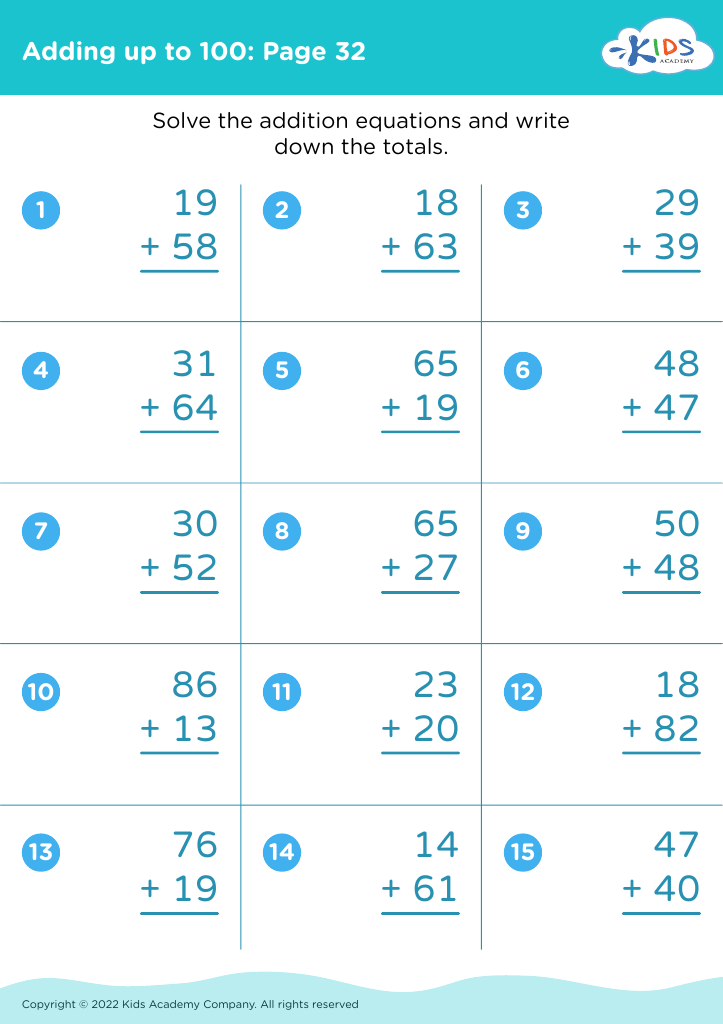
Adding up to 100: Page 32

Adding up to 100: Page 32

Adding up to 100: Page 32
Worksheet
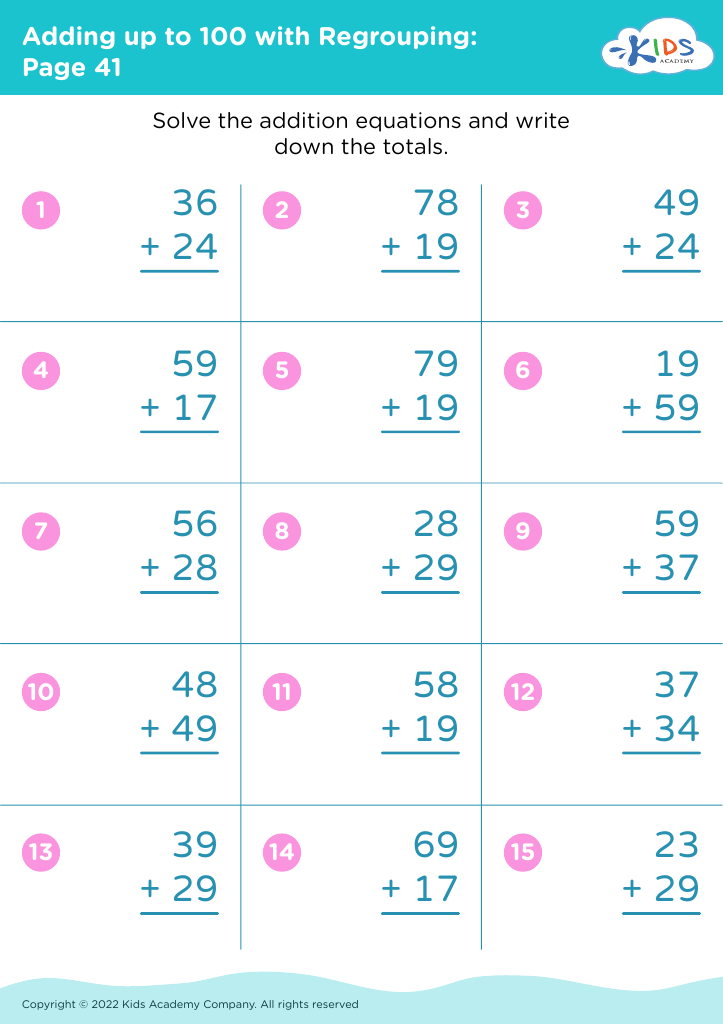
Adding up to 100 with Regrouping: Page 41
Worksheet
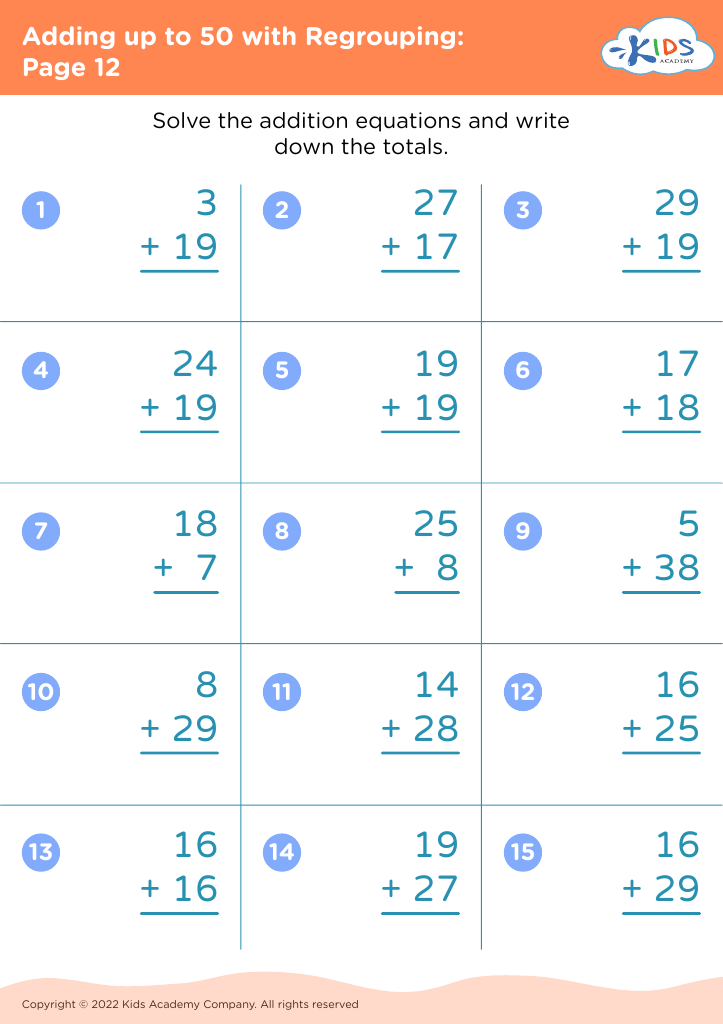
Adding up to 50 with Regrouping: Page 12
Worksheet
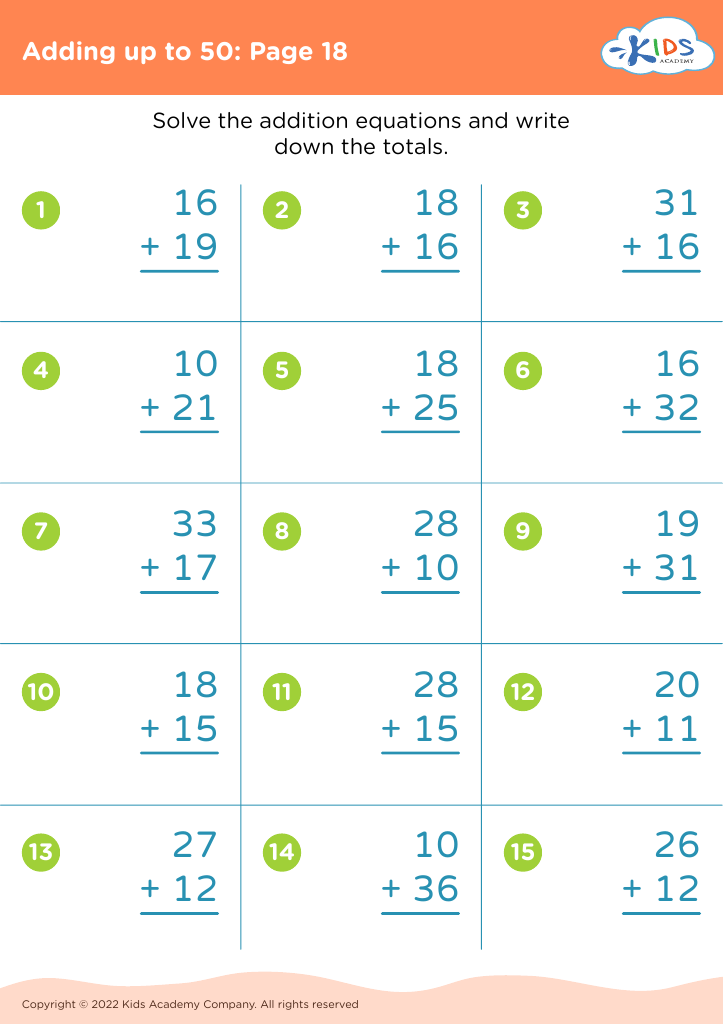
Adding up to 50: Page 18

Adding up to 50: Page 18

Adding up to 50: Page 18
Worksheet
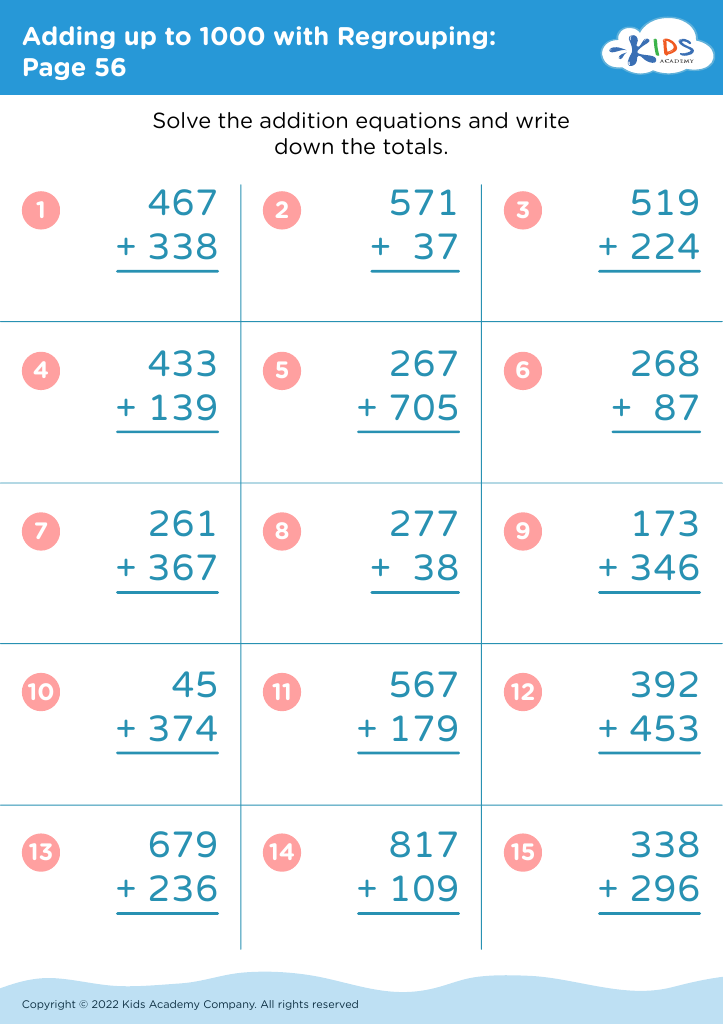
Adding up to 1000 with Regrouping: Page 56
Worksheet
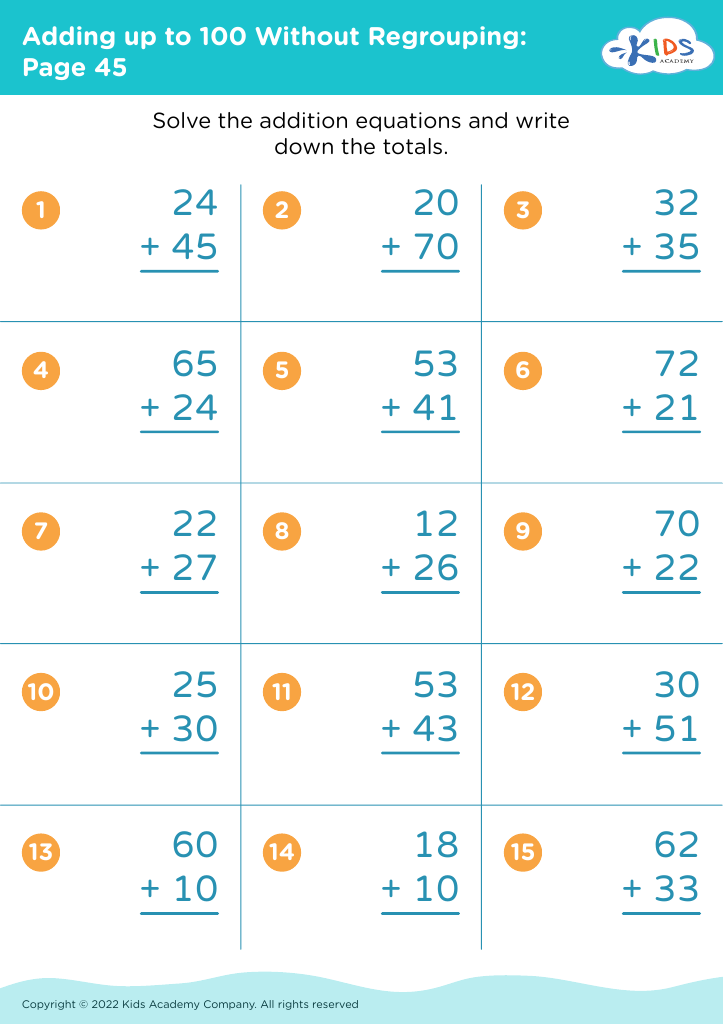
Adding up to 100 Without Regrouping: Page 45
Worksheet
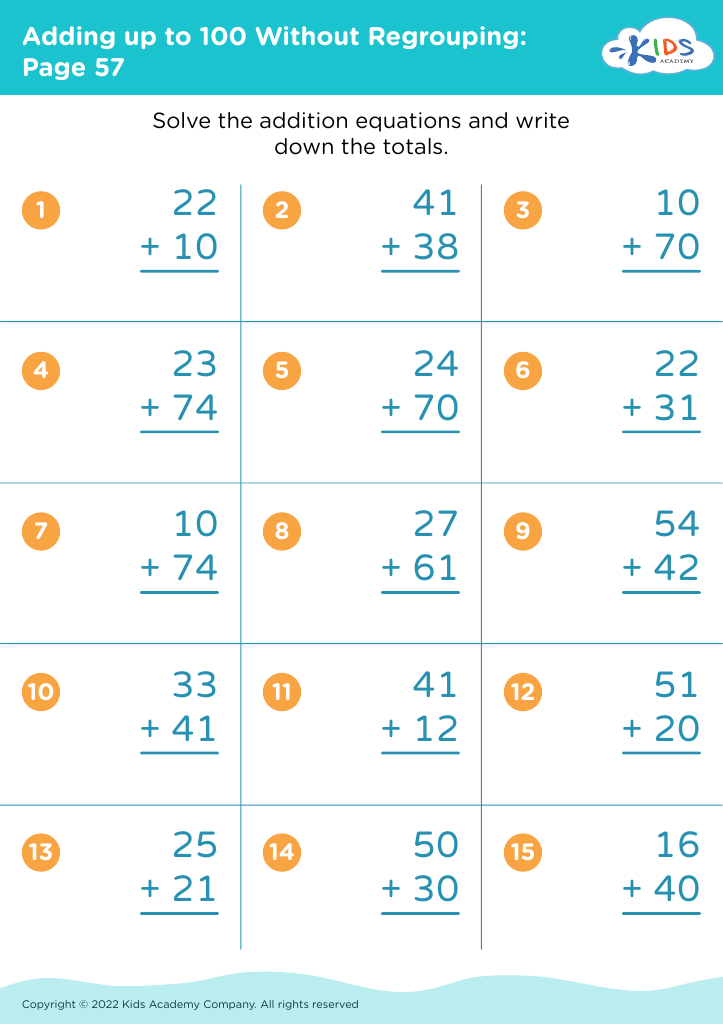
Adding up to 100 Without Regrouping: Page 57
Worksheet
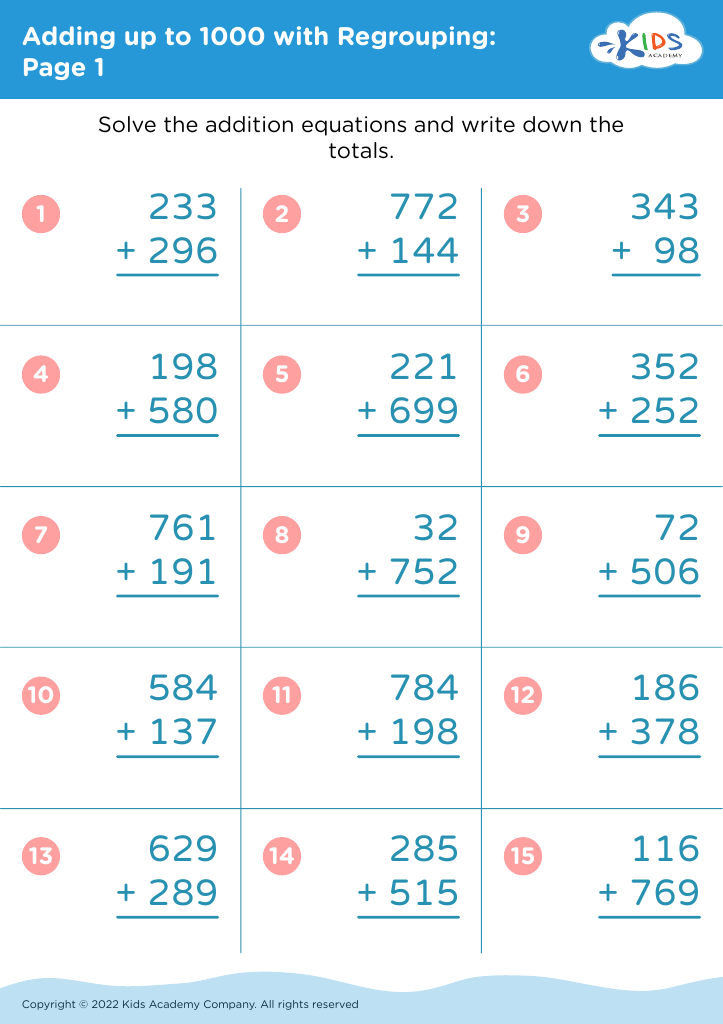
Adding up to 1000 with Regrouping: Page 1
Worksheet
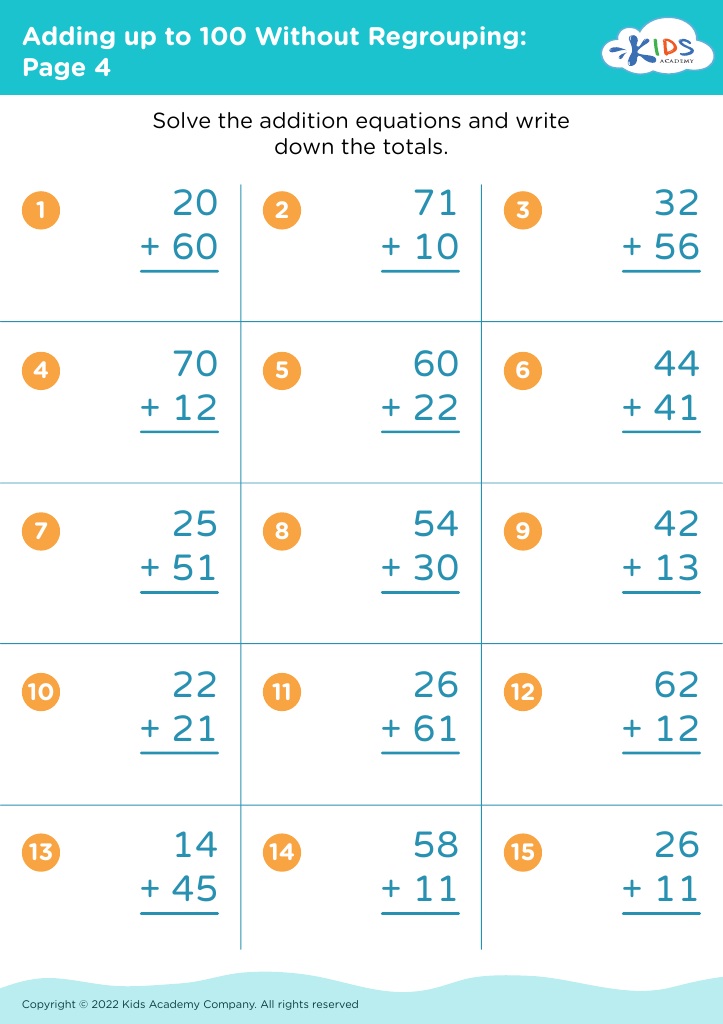
Adding up to 100 Without Regrouping: Page 4
Worksheet
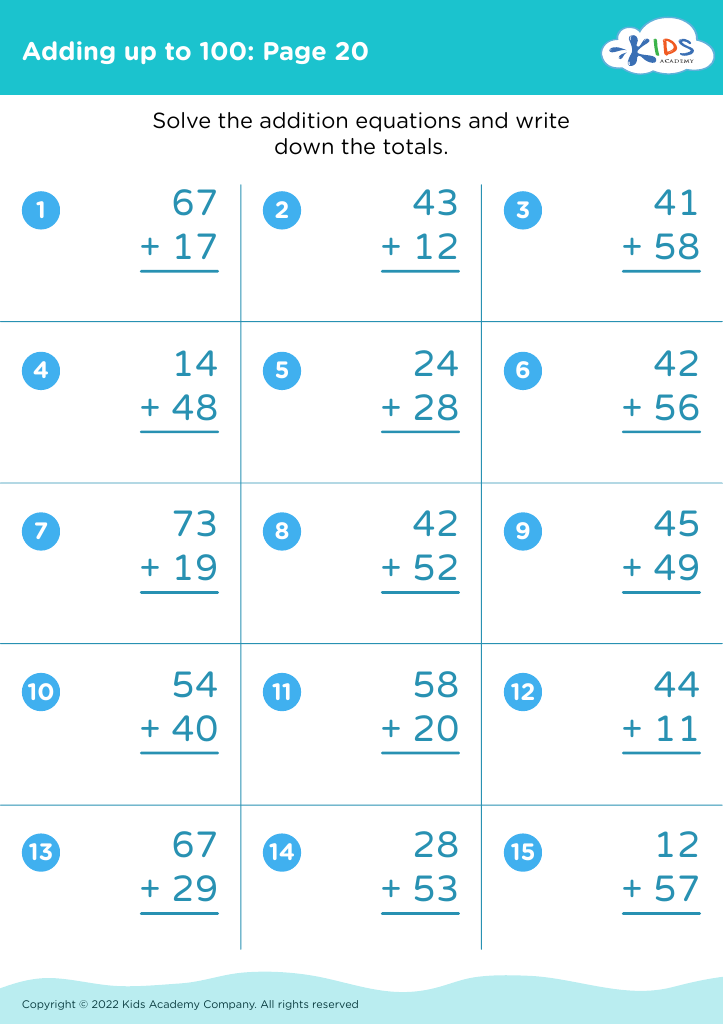
Adding up to 100: Page 20

Adding up to 100: Page 20

Adding up to 100: Page 20
Worksheet
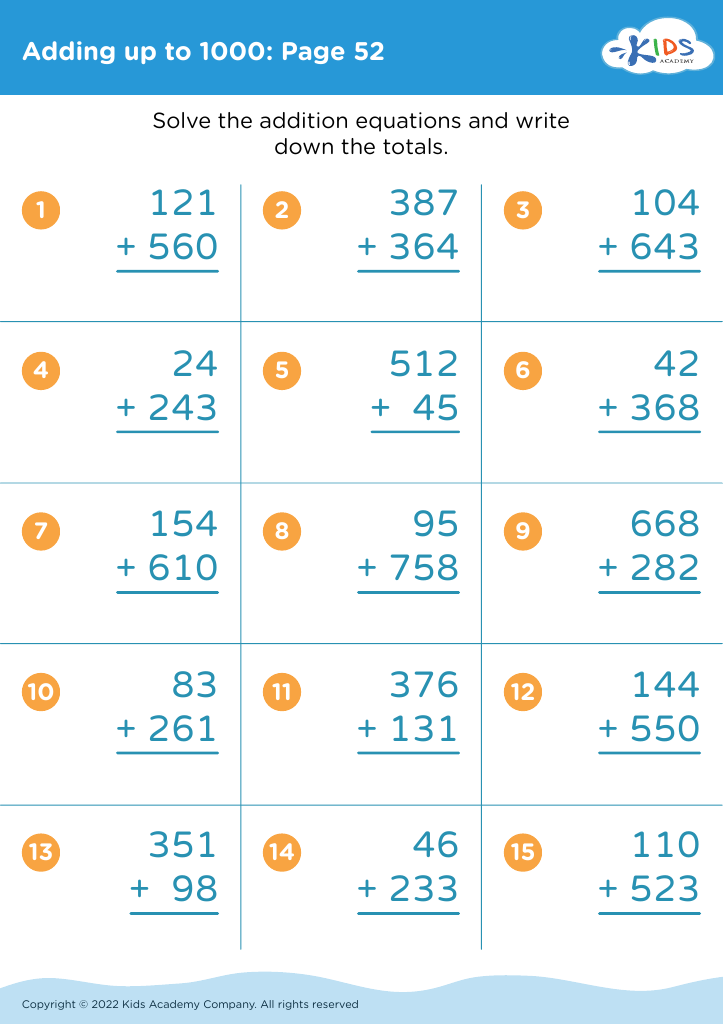
Adding up to 1000: Page 52

Adding up to 1000: Page 52

Adding up to 1000: Page 52
Worksheet
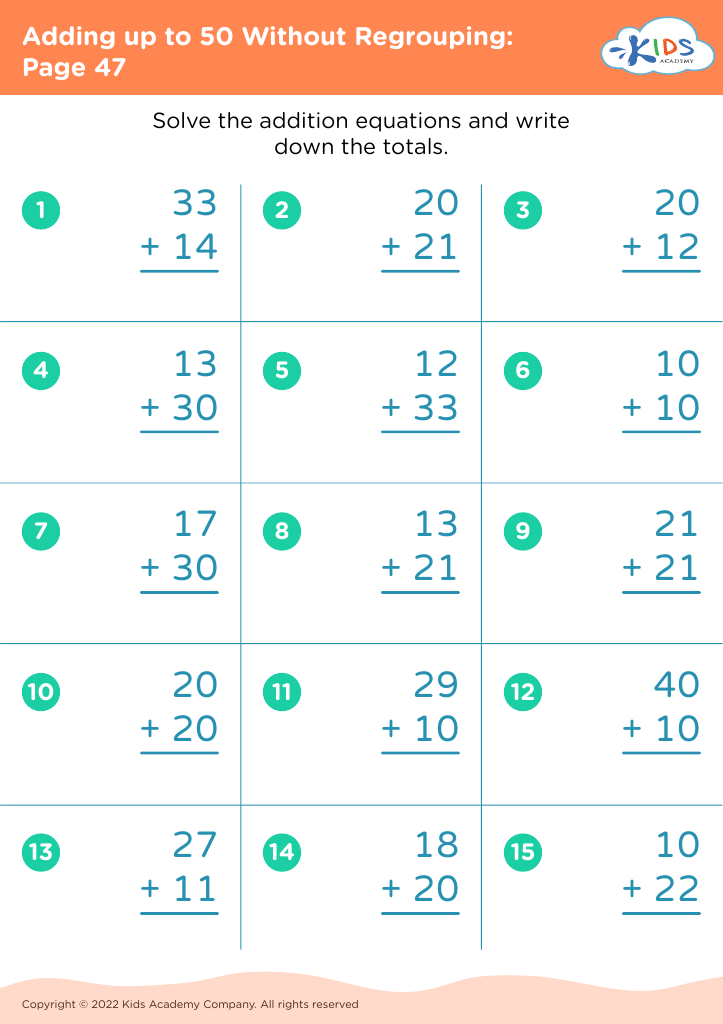
Adding up to 50 Without Regrouping: Page 47
Worksheet
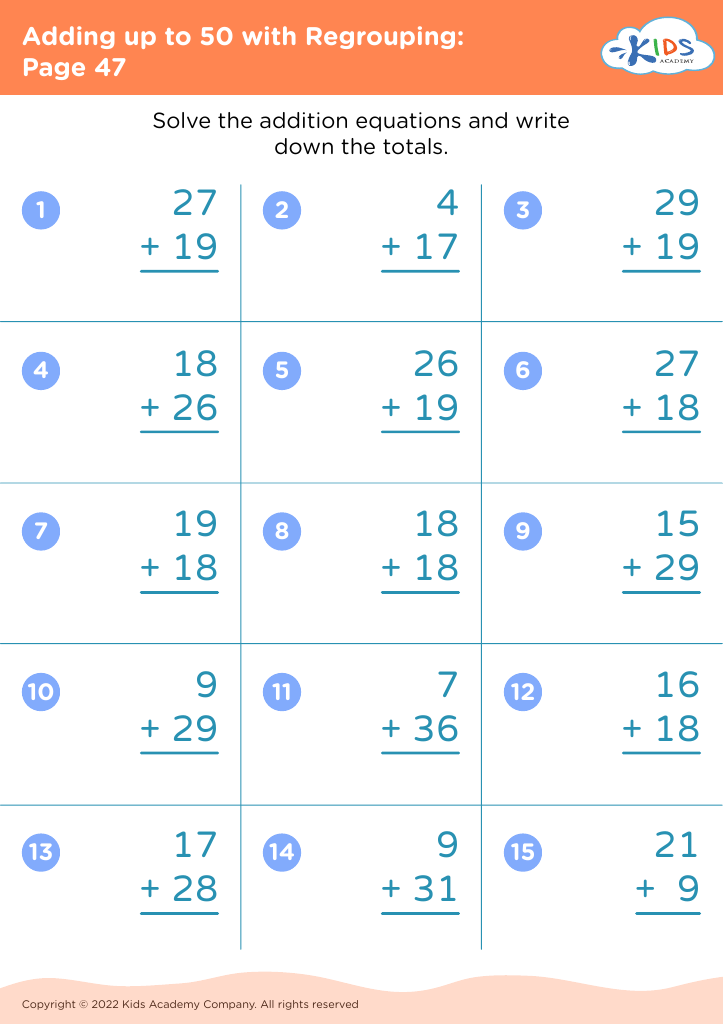
Adding up to 50 with Regrouping: Page 47
Worksheet
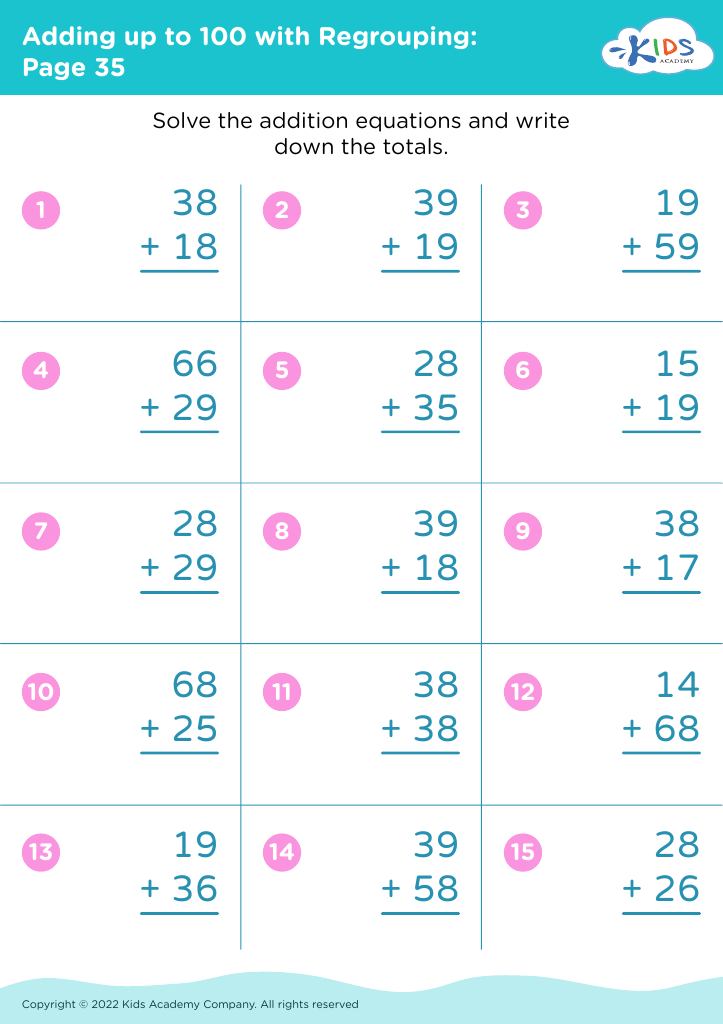
Adding up to 100 with Regrouping: Page 35
Worksheet
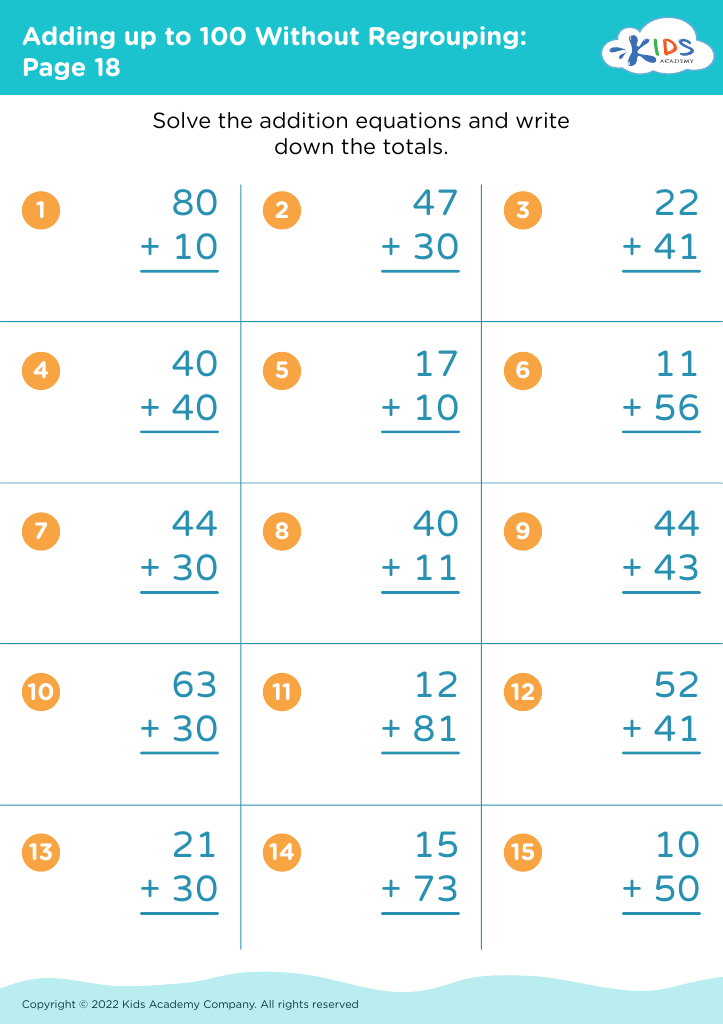
Adding up to 100 Without Regrouping: Page 18
Worksheet
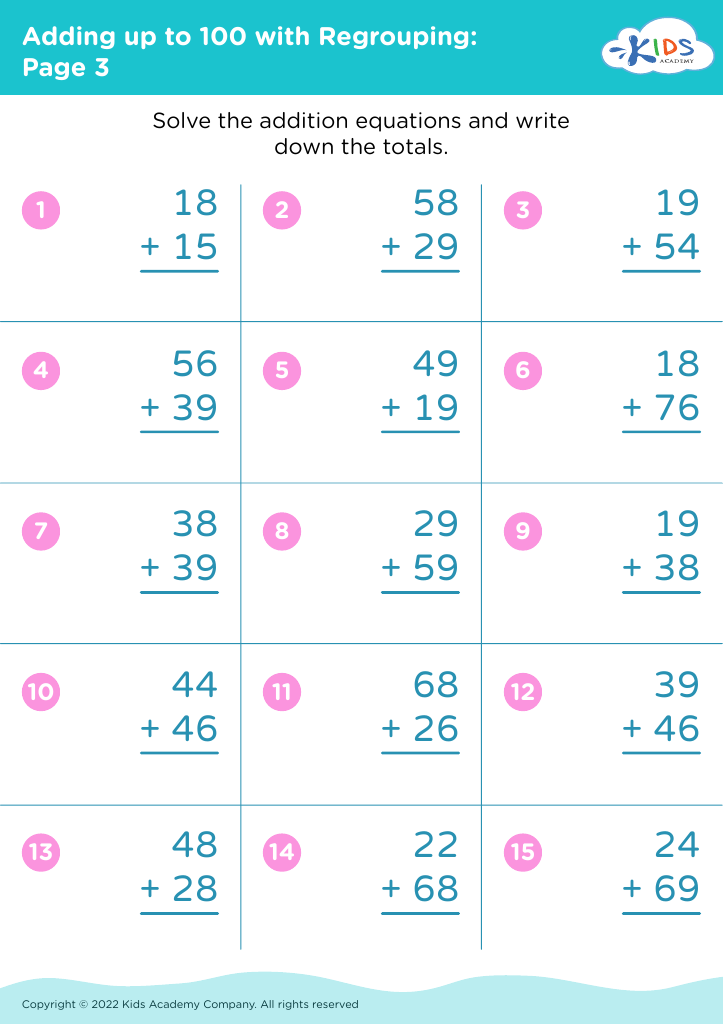
Adding up to 100 with Regrouping: Page 3
Worksheet
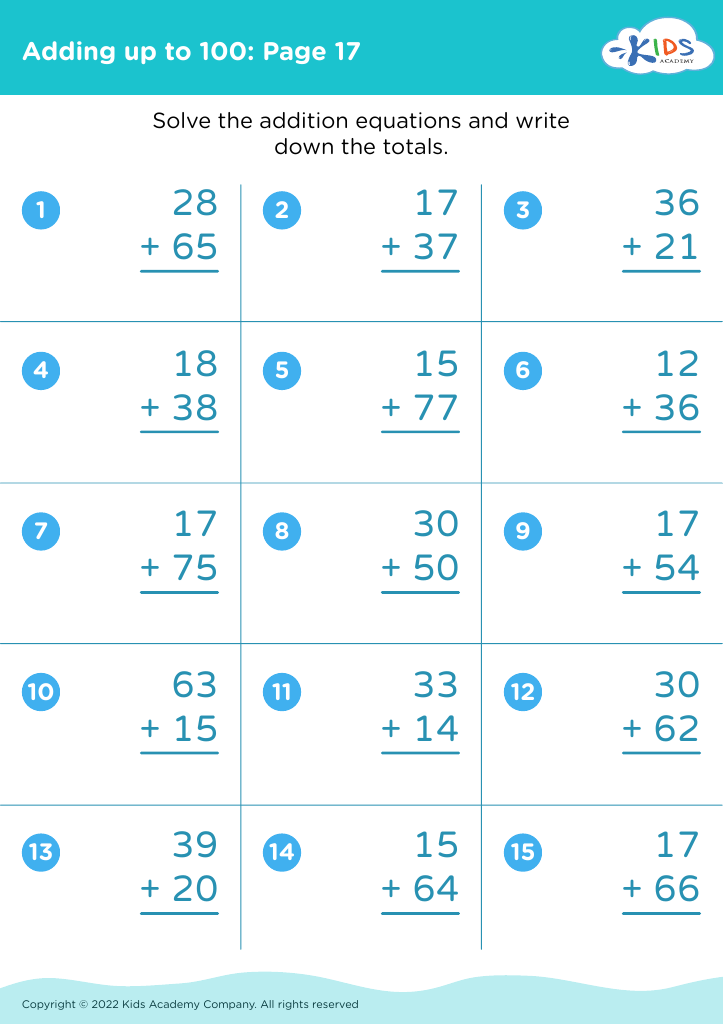
Adding up to 100: Page 17

Adding up to 100: Page 17

Adding up to 100: Page 17
Worksheet
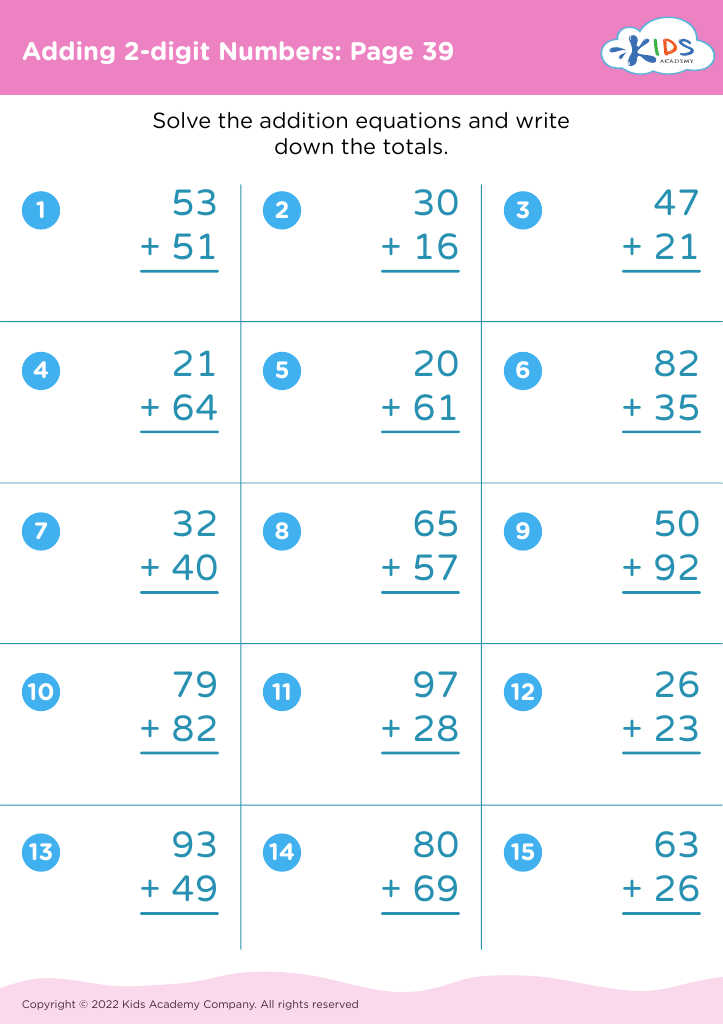
Adding 2-digit Numbers: Page 39

Adding 2-digit Numbers: Page 39

Adding 2-digit Numbers: Page 39
Worksheet
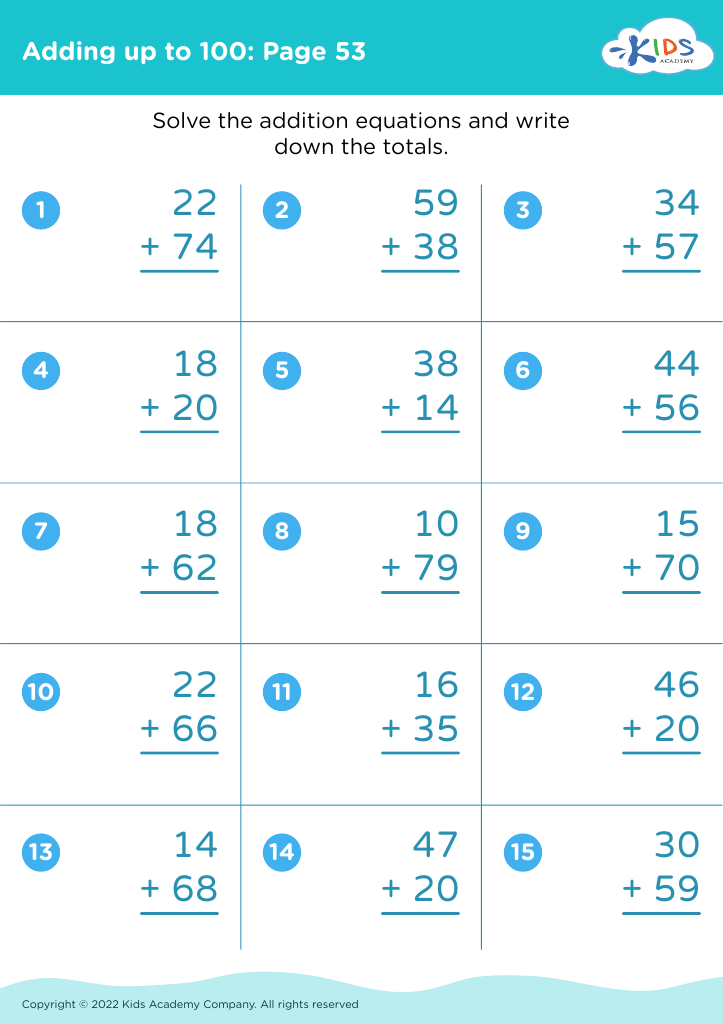
Adding up to 100: Page 53

Adding up to 100: Page 53

Adding up to 100: Page 53
Worksheet
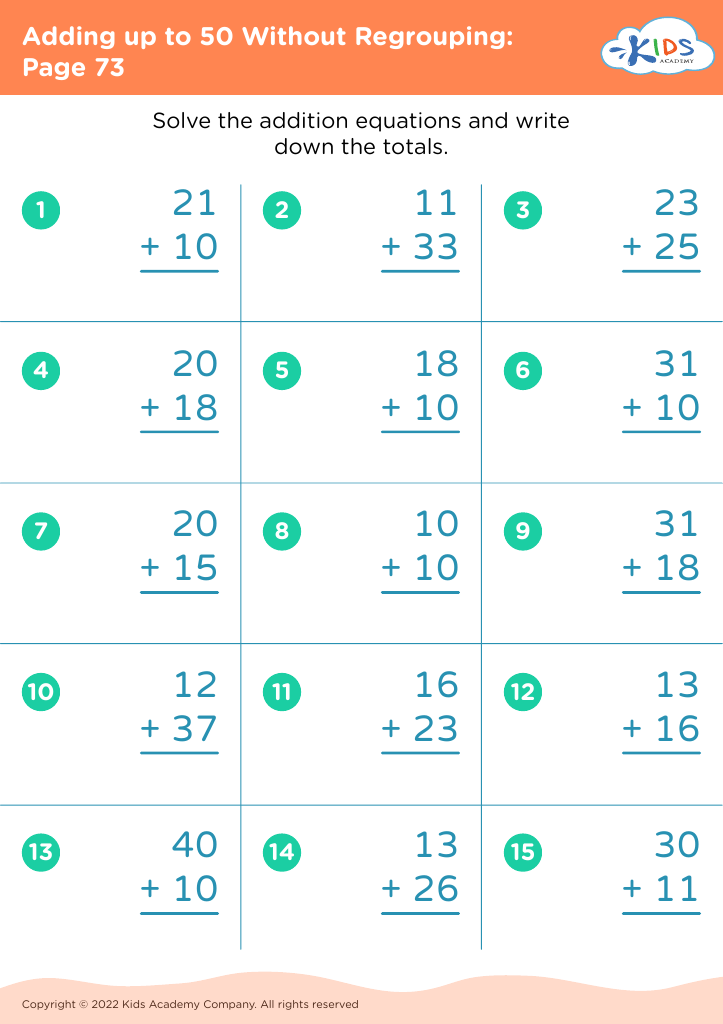
Adding up to 50 Without Regrouping: Page 73
Worksheet
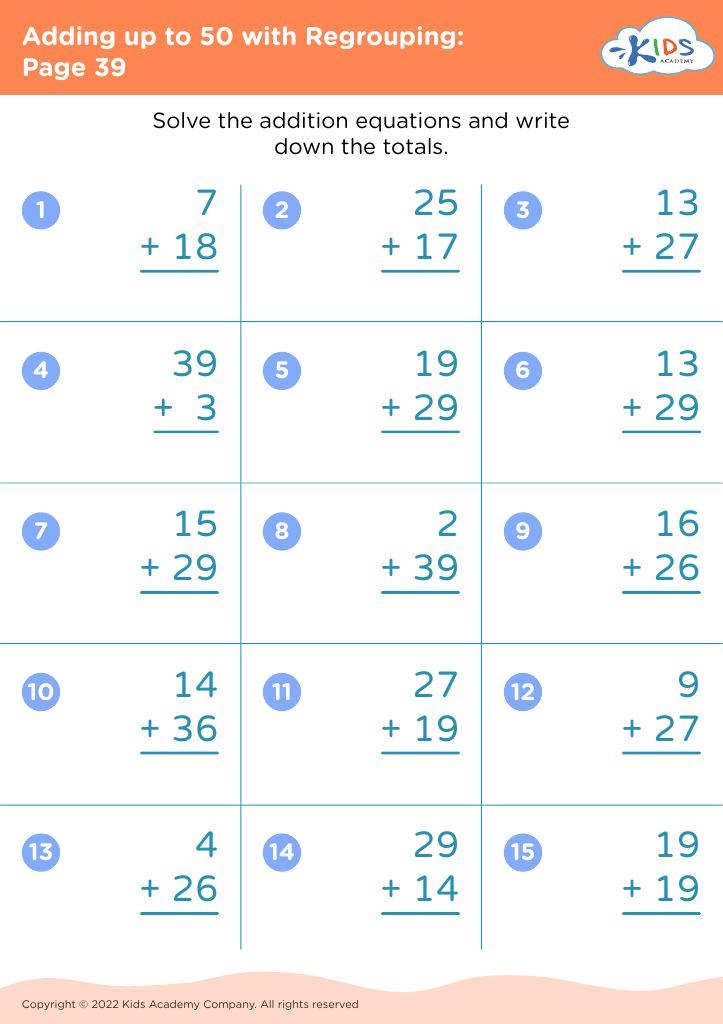
Adding up to 50 with Regrouping: Page 39
Worksheet
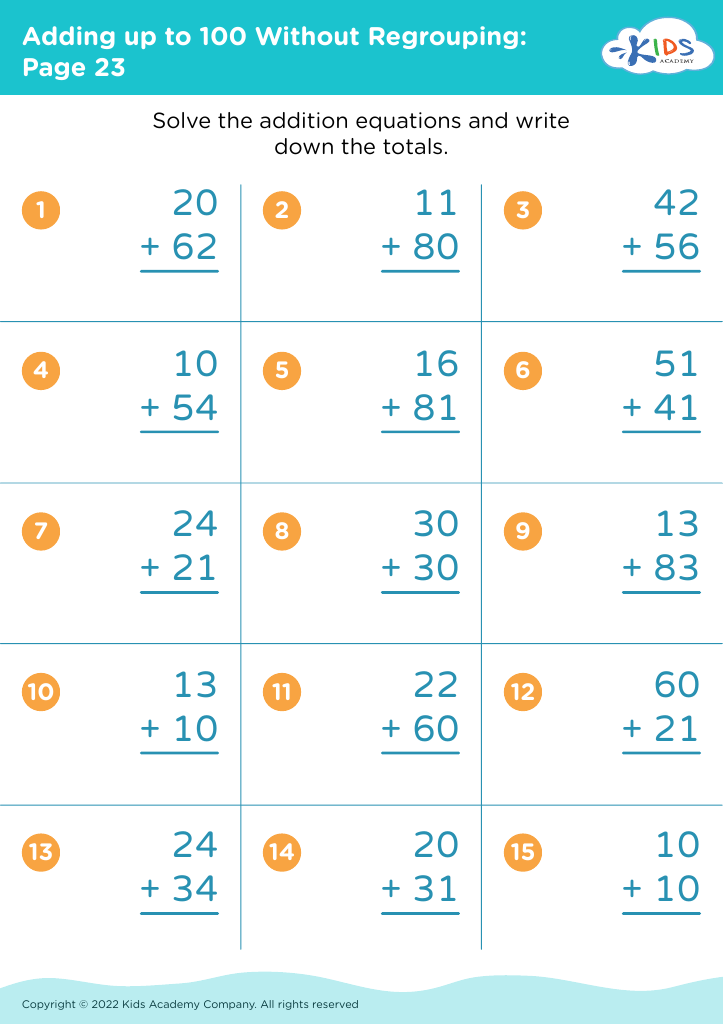
Adding up to 100 Without Regrouping: Page 23
Worksheet
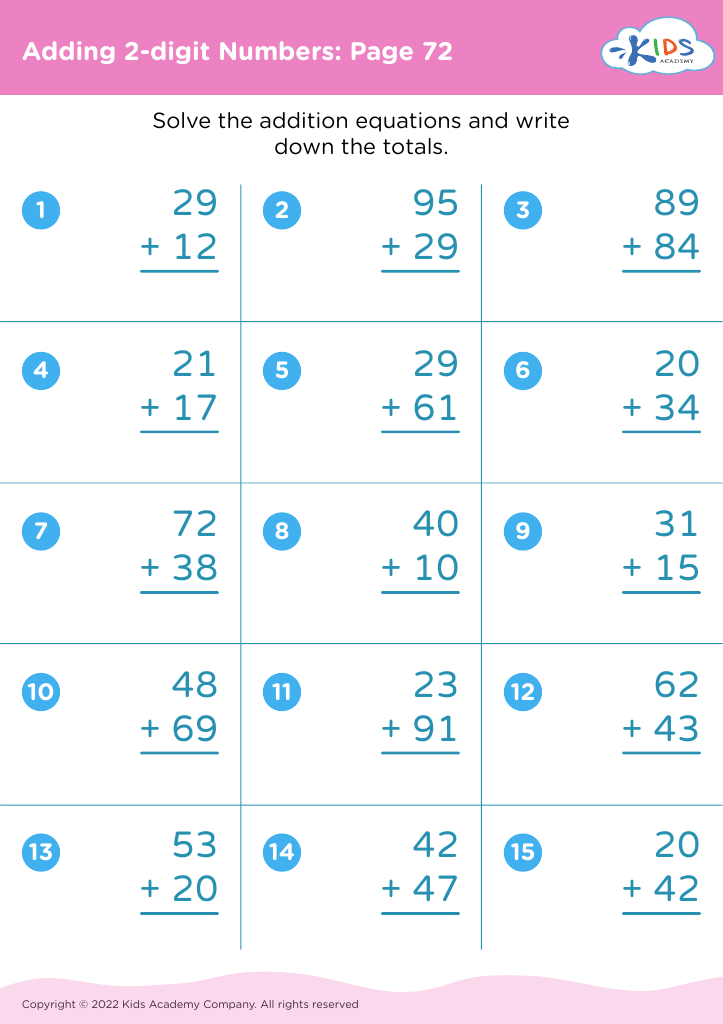
Adding 2-digit Numbers: Page 72

Adding 2-digit Numbers: Page 72

Adding 2-digit Numbers: Page 72
Worksheet


Fraction simplification and addition are foundational concepts in mathematics that can significantly benefit children aged 3-8. Understanding these concepts fosters early numeracy skills, critical for problem-solving and logical thinking. At this stage, children begin to build a strong mathematical foundation, and learning about fractions can help them grasp the idea of parts of a whole, which is essential for more complex math in later years.

Moreover, learning to simplify fractions cultivates a skill set that encourages children to look for efficiency in problem-solving. It helps them understand relationships between numbers and enhances their ability to recognize equivalent fractions. Teaching addition of fractions at this age also introduces concepts of collaboration and sharing, enriching social engagement with peers.

Parents and teachers who prioritize mathematical literacy, including fraction simplification and addition, only set children on a path toward educational success in math. This foundational knowledge will empower students to tackle more challenging mathematic concepts in school and life, leading to increased confidence and a positive attitude towards learning. Engaging young learners with these concepts through games and practical applications will further enhance their comprehension and enjoyment of mathematics.