Identifying fractions Addition Worksheets for Ages 3-8
4 filtered results
-
From - To
Welcome to our "Identifying Fractions Addition Worksheets" page, designed specifically for children aged 3-8! These engaging worksheets provide a fun and interactive way to introduce young learners to the concept of fractions and addition. Each activity supports the development of critical math skills, helping children recognize fraction parts and enhance their understanding of basic addition through practical exercises. Our worksheets promote hands-on learning and allow children to explore different fraction representations through colorful illustrations and relatable scenarios. Ideal for parents and educators, these resources foster a strong foundation in math while keeping learning enjoyable and child-friendly. Download and explore today!
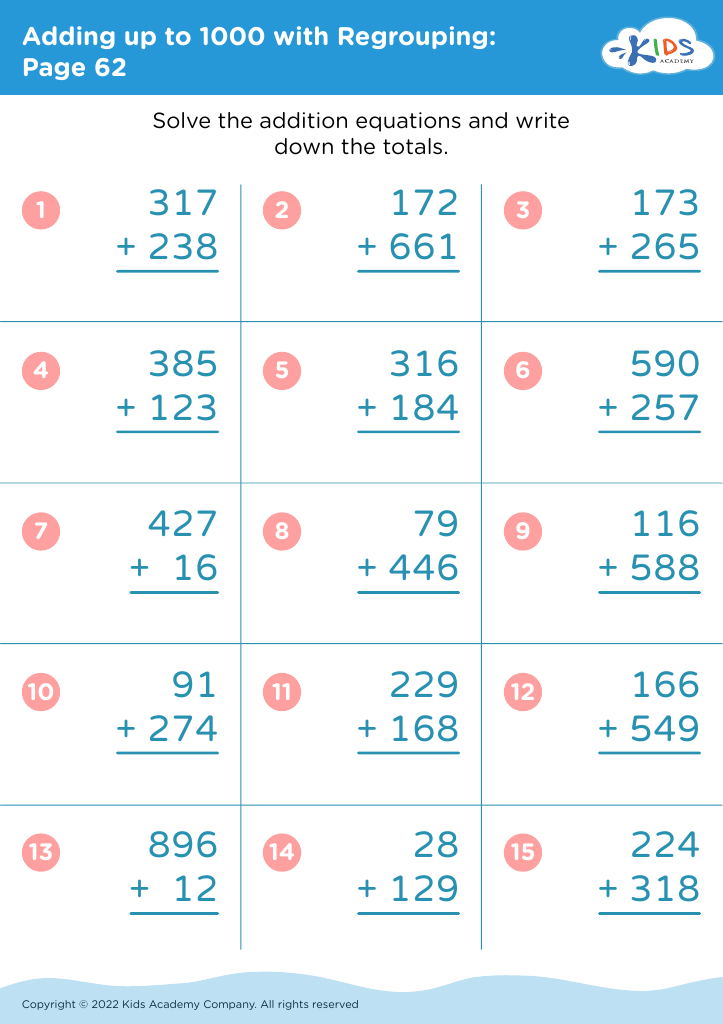
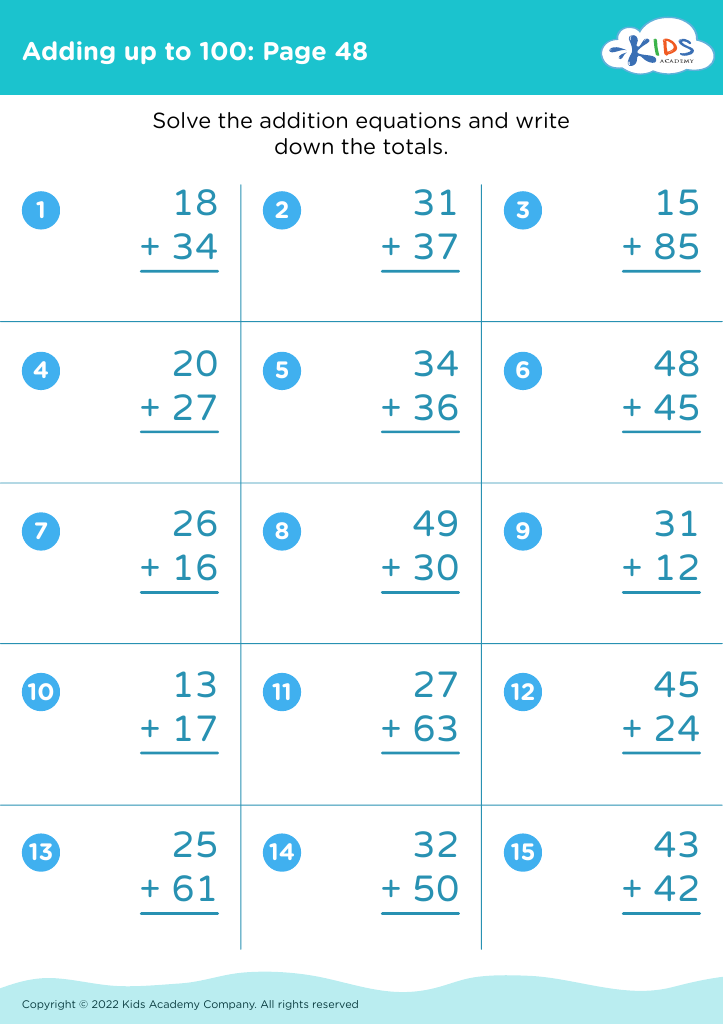
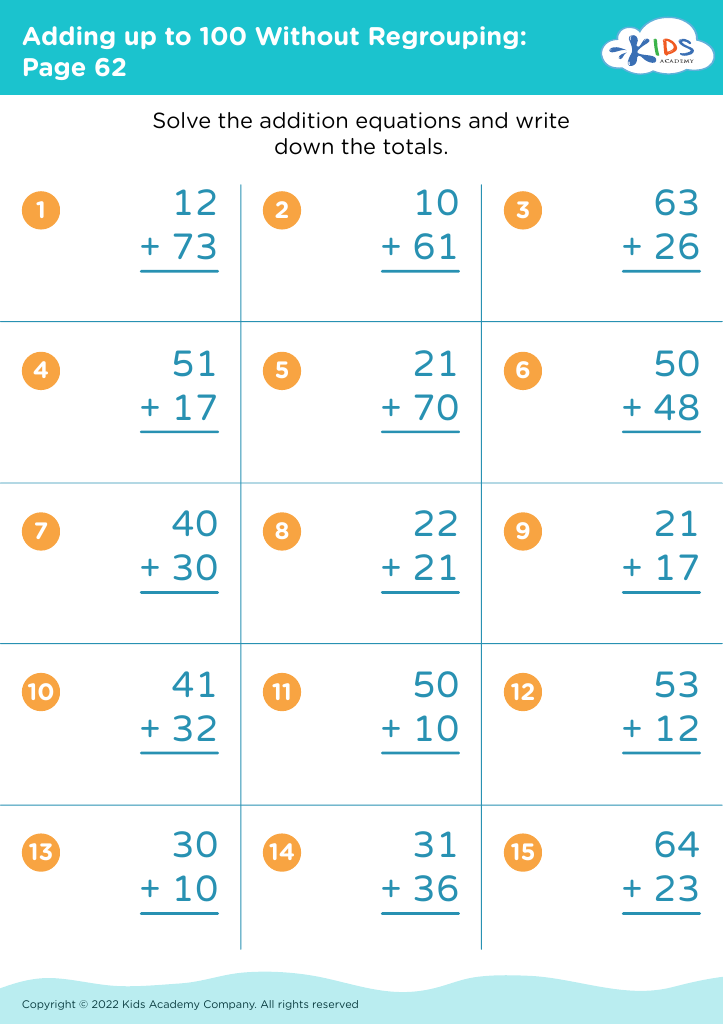
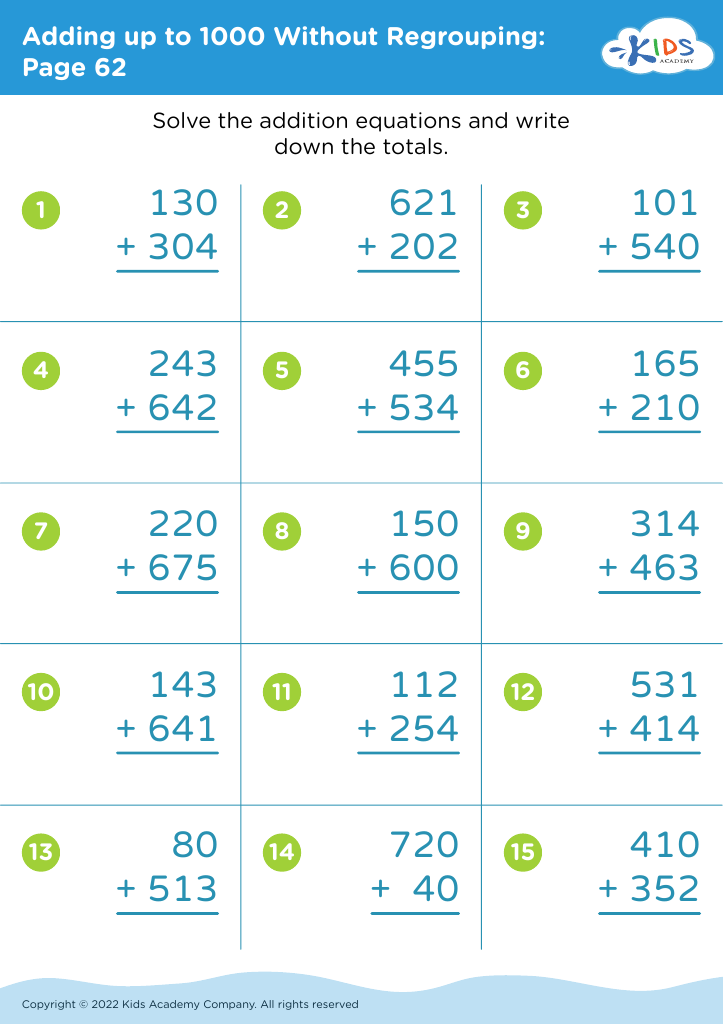








Identifying fraction addition for children aged 3-8 is crucial for several reasons. First, early exposure to fractions helps to build a foundational understanding of mathematical concepts, promoting numeracy skills that are vital for future learning. By recognizing and manipulating fractions, children develop critical thinking and problem-solving abilities that are fundamental in various academic and real-life contexts.
In addition, understanding fractions lays the groundwork for more advanced mathematics, such as ratios, percentages, and algebra, ensuring that children can progress with confidence through their educational journey. Parents and teachers play a pivotal role in this by introducing playful and engaging activities, such as cutting different fruit pieces or dividing objects, making learning intuitive and enjoyable.
Moreover, grasping the concept of parts of a whole fosters a deeper comprehension of the world around them, helping them recognize patterns and relationships in everyday situations. By supporting children in identifying and adding fractions at an early age, parents and teachers not only enhance their cognitive abilities but also encourage a lifelong love for learning. Overall, investing in early fraction knowledge cultivates both academic success and essential life skills, making it crucial for adults to prioritize this aspect of mathematics education.








