Identifying patterns Addition Worksheets for Ages 3-8
3 filtered results
-
From - To
Discover the perfect educational tool for young learners! Our "Identifying Patterns Addition Worksheets for Ages 3-8" offer a fun and engaging way to teach children essential math skills. These thoughtfully designed worksheets combine colorful patterns with basic addition exercises, making math practice enjoyable and effective. Ideal for preschool, kindergarten, and early elementary students, the worksheets enhance problem-solving abilities and pattern recognition. Perfect for parents and teachers alike, these printable resources from Kids Academy boost confidence and build a solid foundation in mathematics. Make math time a favorite activity with our addition worksheets today!
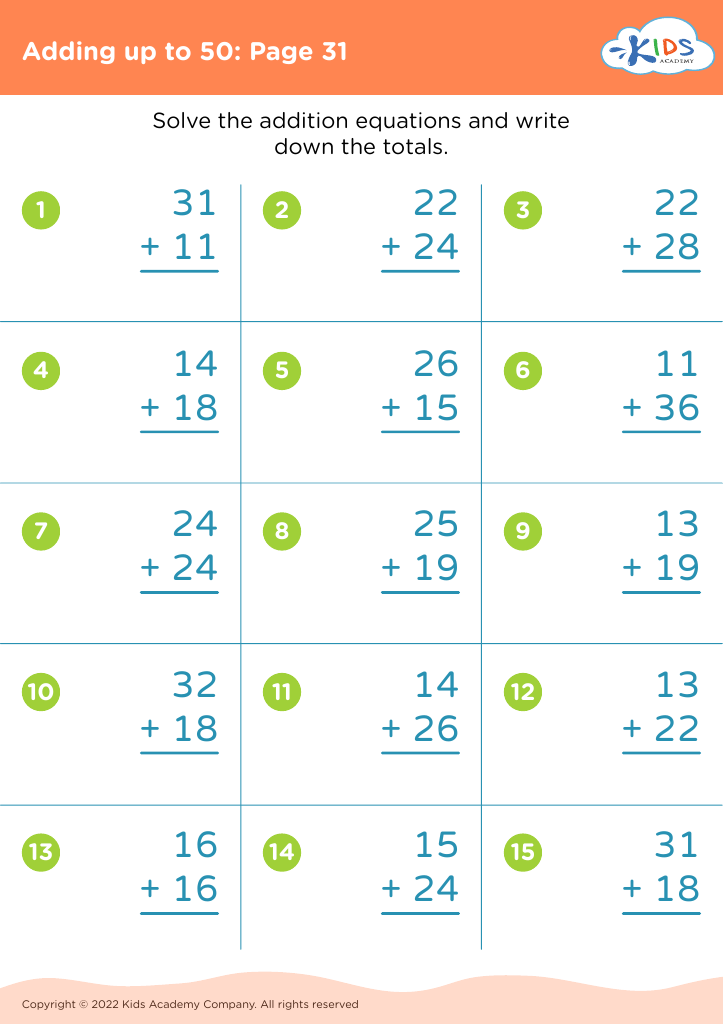
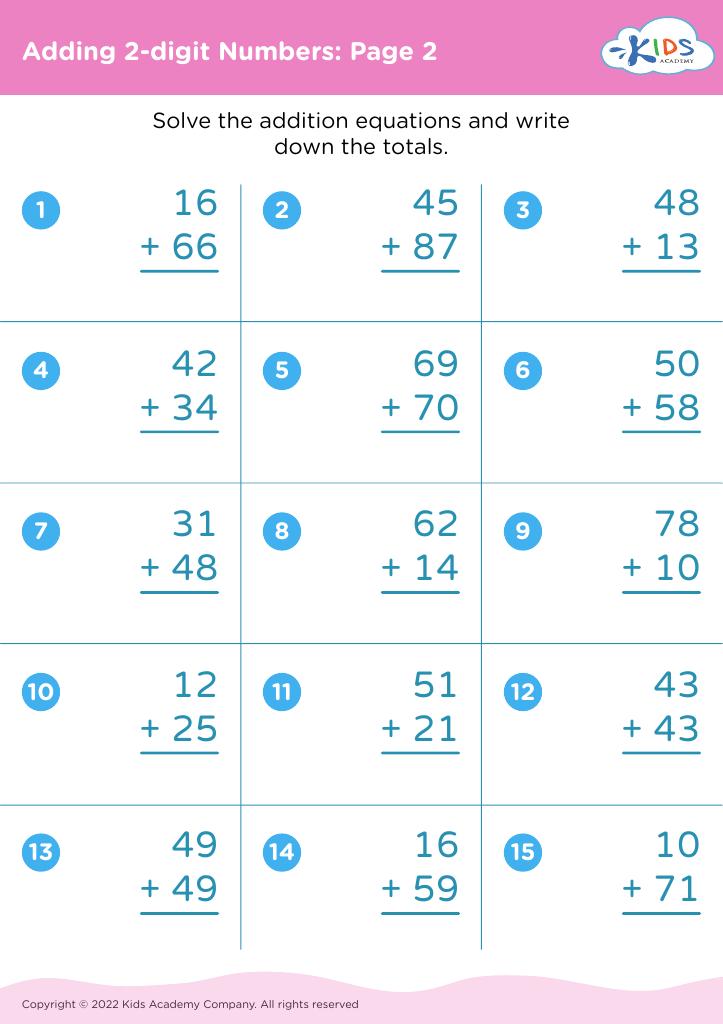
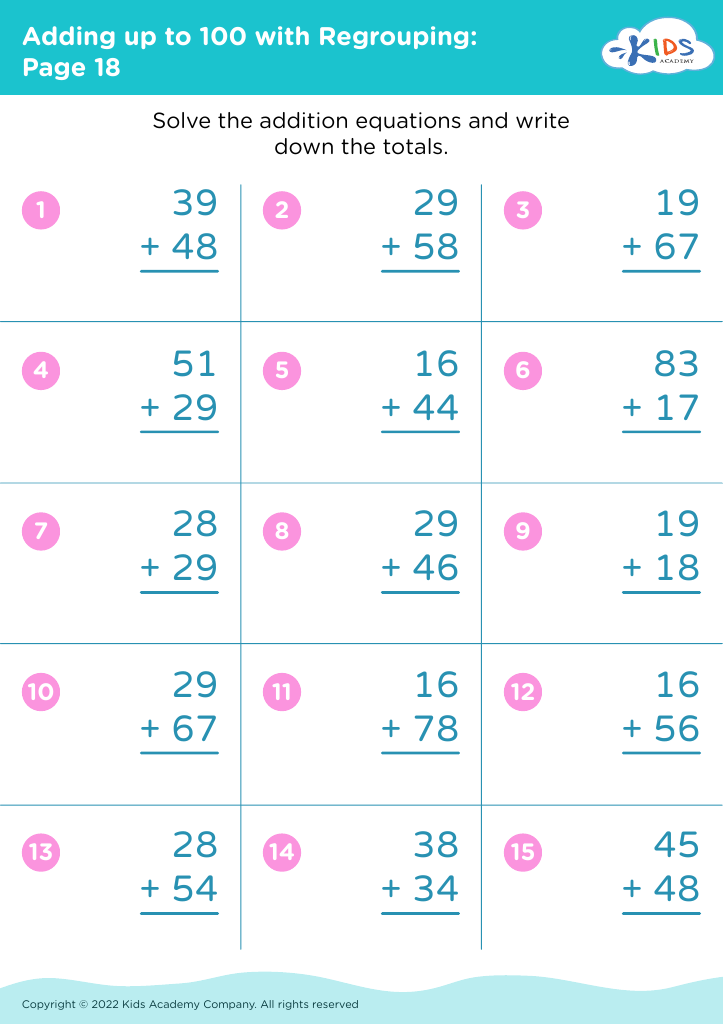




.jpg)


.jpg)
Identifying patterns is a fundamental aspect of mathematical thinking and is especially important for young children ages 3-8. At this developmental stage, children are constantly learning to make sense of the world around them. Recognizing and understanding addition patterns help build a strong foundation for more advanced math concepts and problem-solving skills. Patterns, both numerical and visual, enhance children's ability to predict and understand sequences, which is crucial in everyday tasks as well as in various academic subjects.
When children identify addition patterns, they begin to grasp the concept of how numbers interplay in predictable ways. This understanding supports their number sense, which is the ability to understand, interpret, and work with numbers comfortably. For instance, realizing that 2 + 2 = 4, and 2 + 3 = 5 allows children to see that when you add 1 more, the total increases by 1.
Such foundational knowledge also promotes cognitive development, including logical reasoning, critical thinking, and even linguistic skills, as children learn to articulate their thought processes. Engaging with these patterns in a supportive, playful, and nurturing environment—whether at home or in school—lays down the building blocks for future success in mathematics and beyond.
Thus, both parents and teachers should prioritize pattern identification in addition to foster children's overall intellectual growth and lifelong love for math.








