
Improve math skills Addition Worksheets for Ages 3-8
17 filtered results
Difficulty Level
Grade
Age
-
From - To
Subject
Activity
Standards
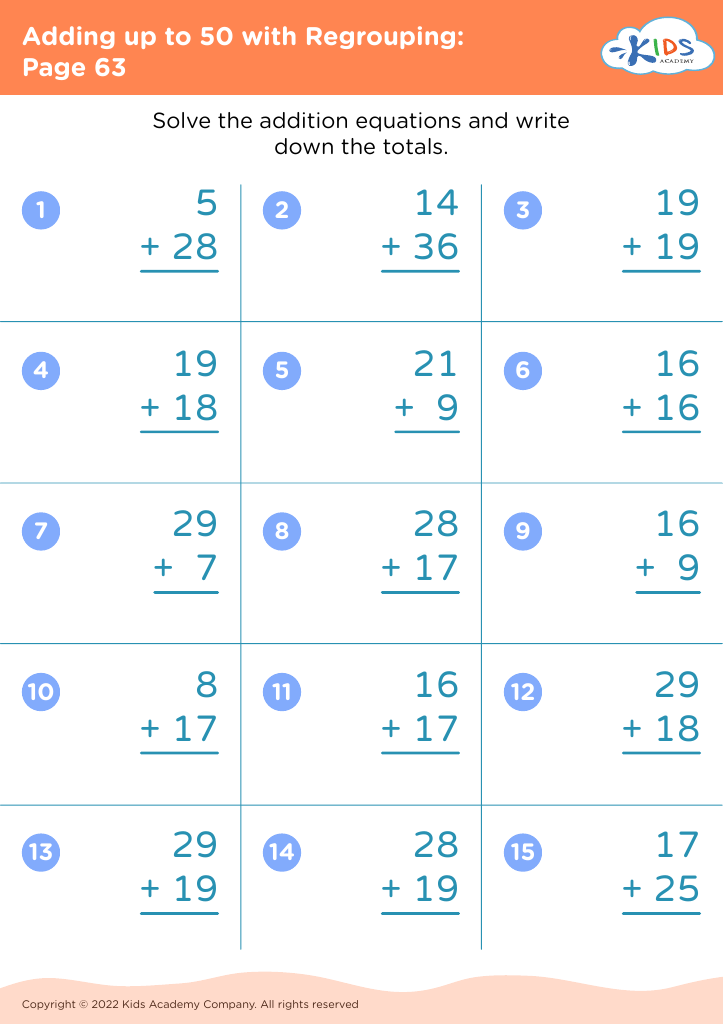
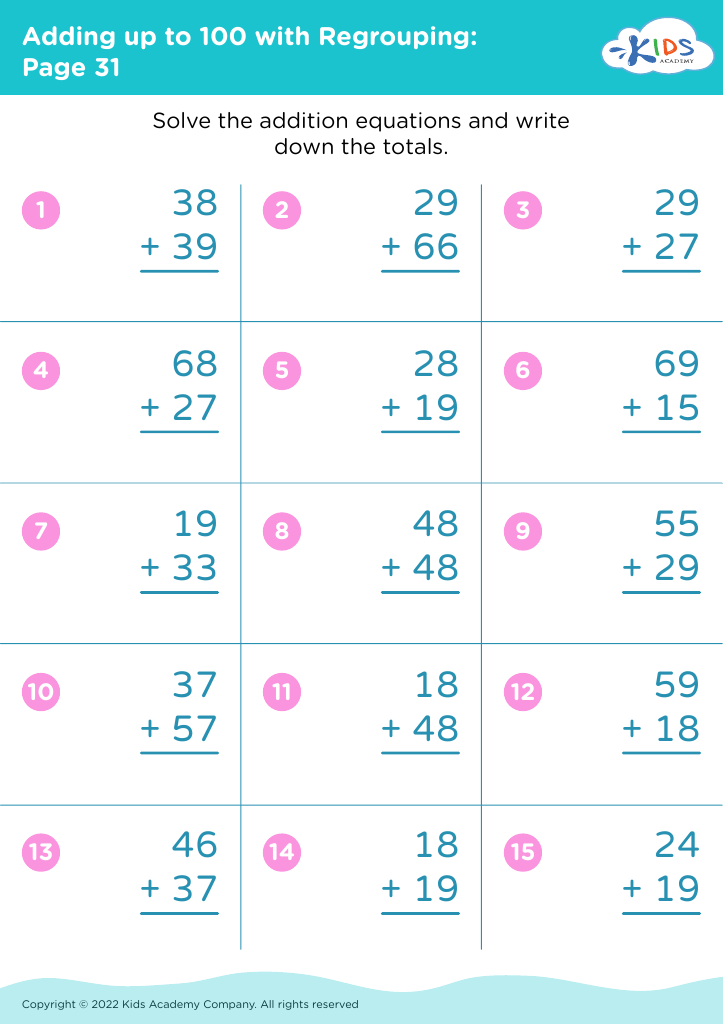
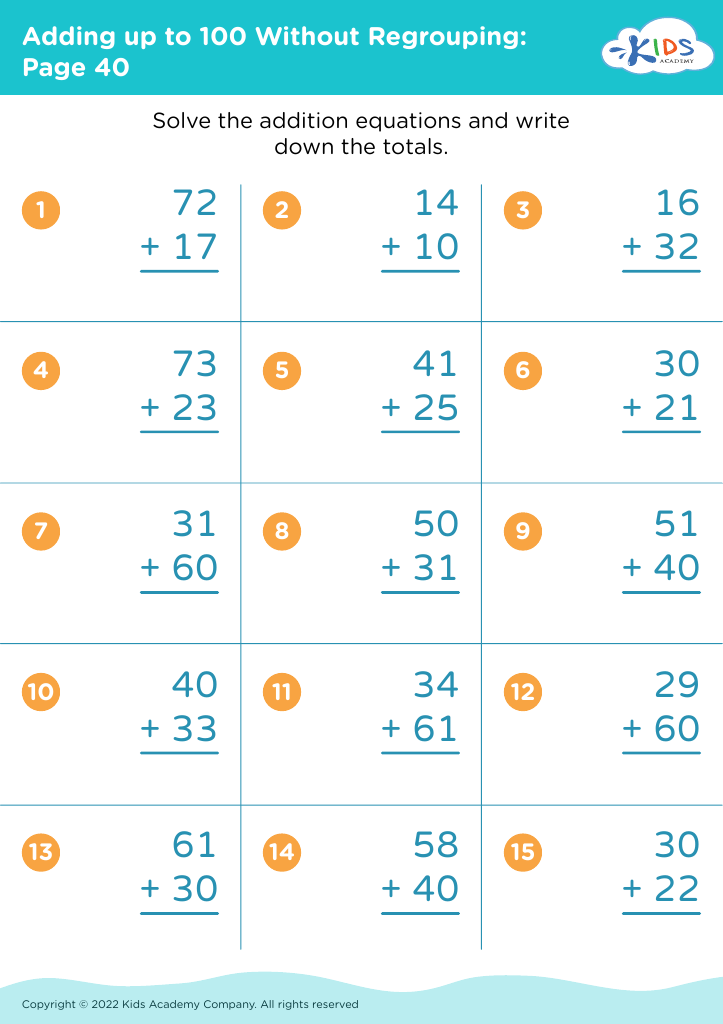
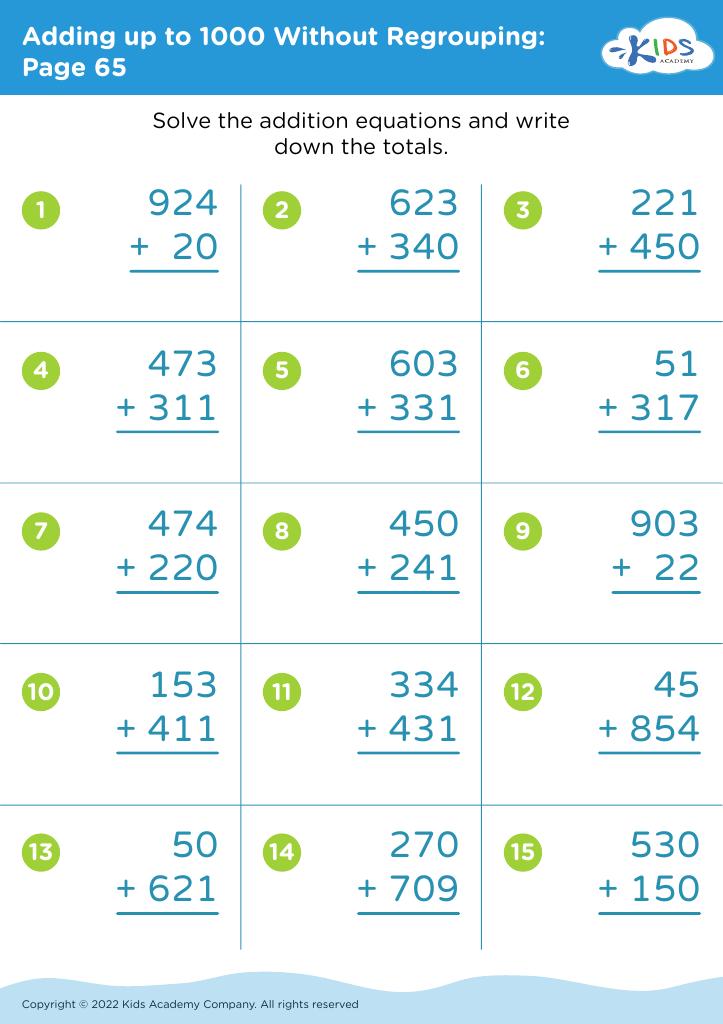
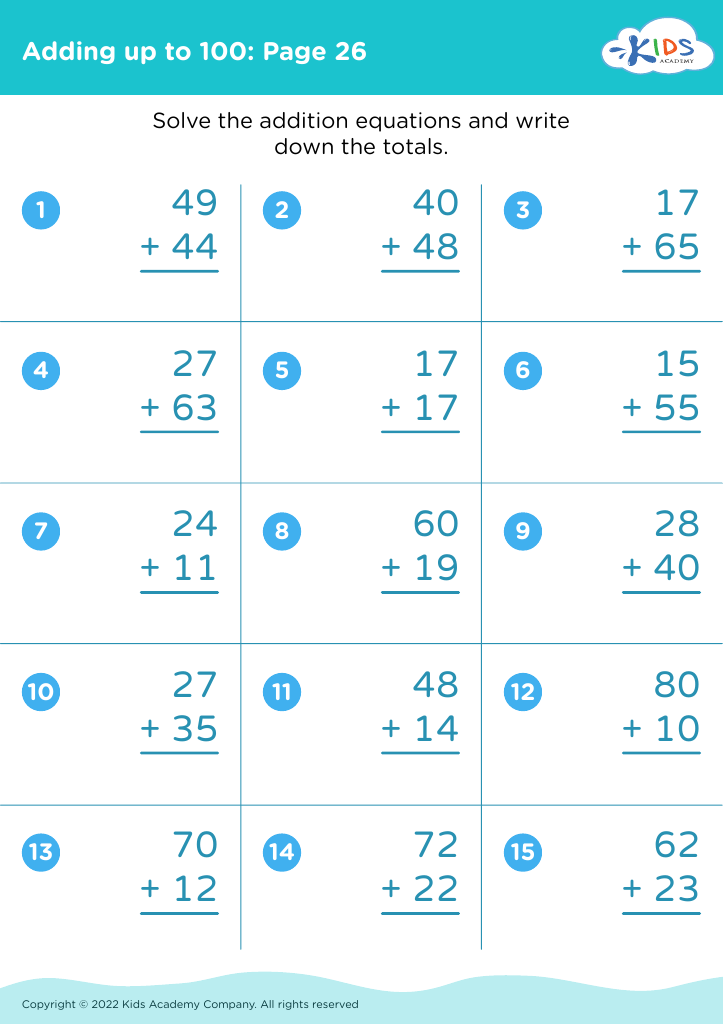
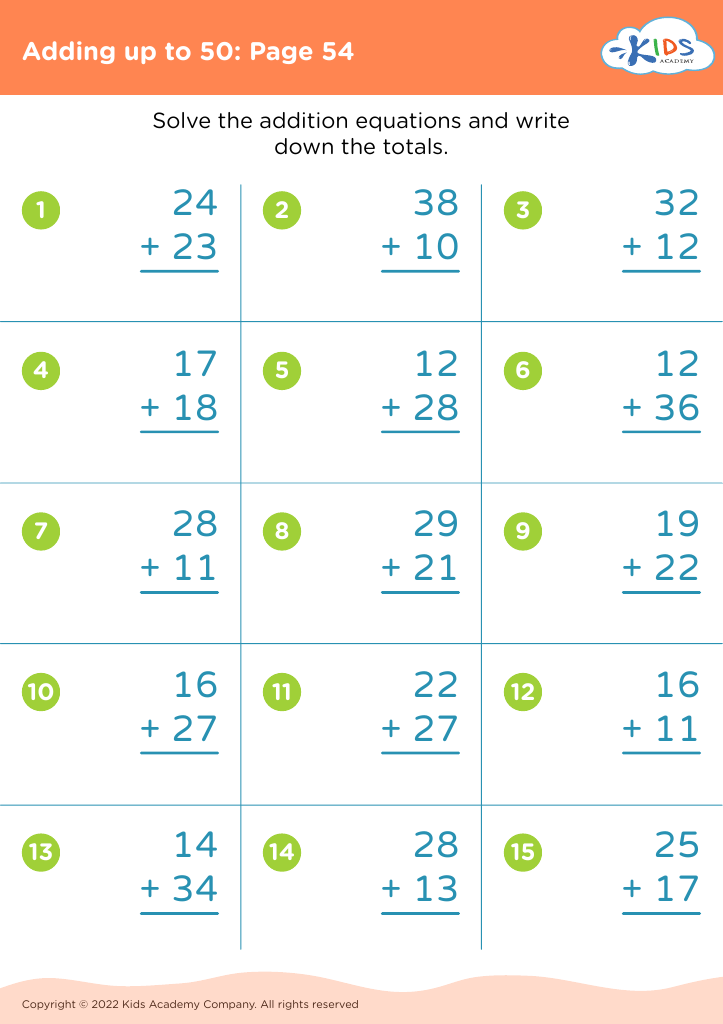
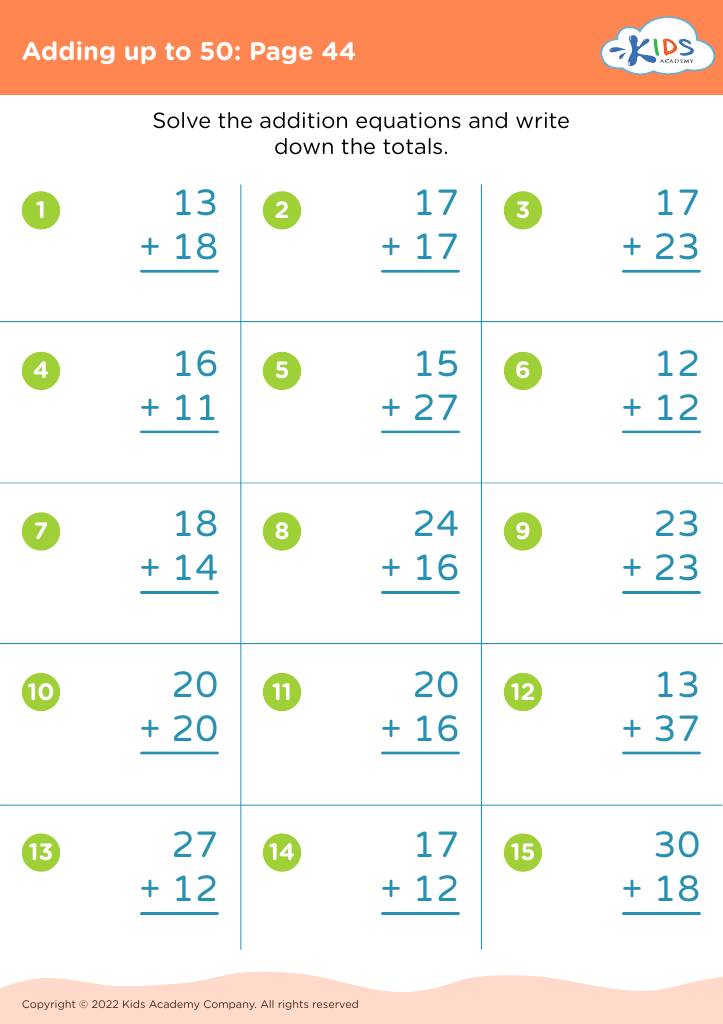
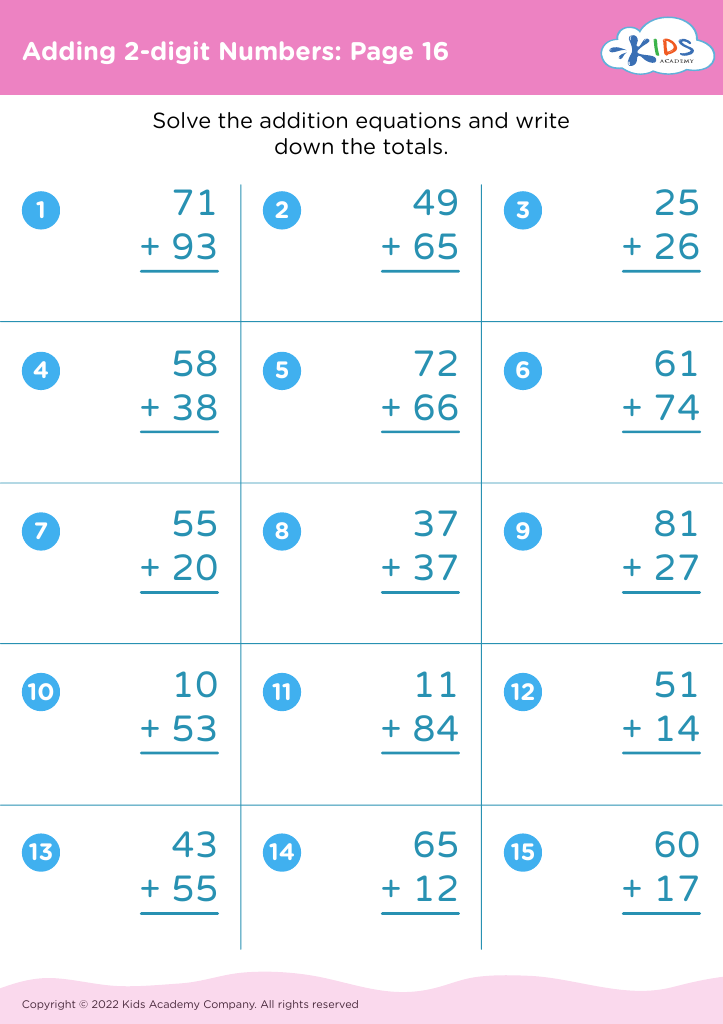
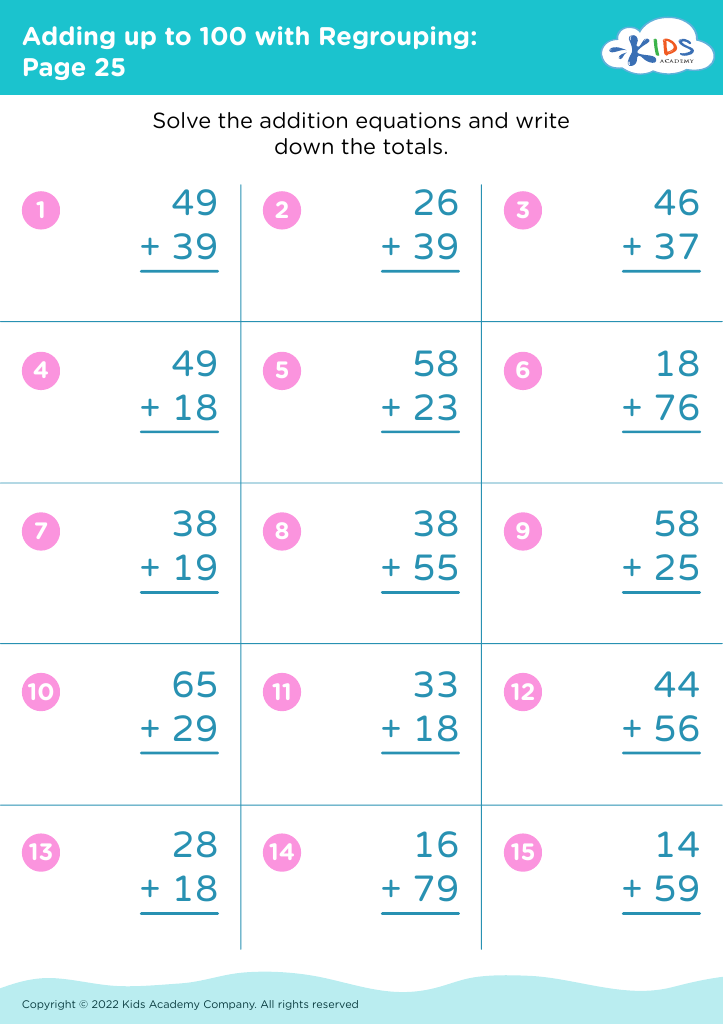
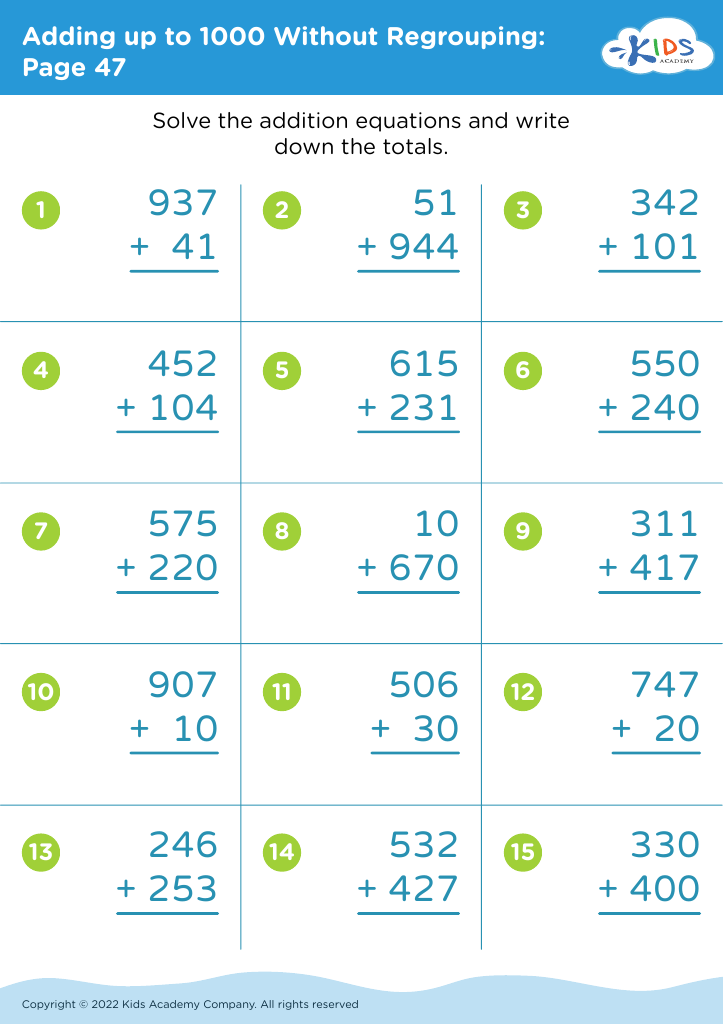
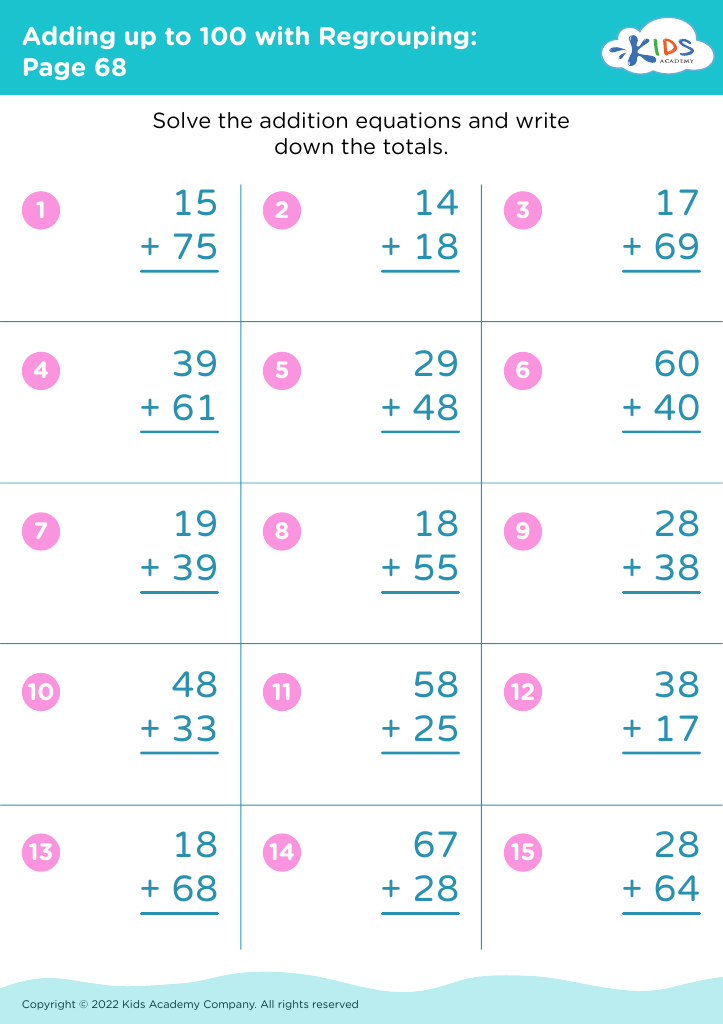
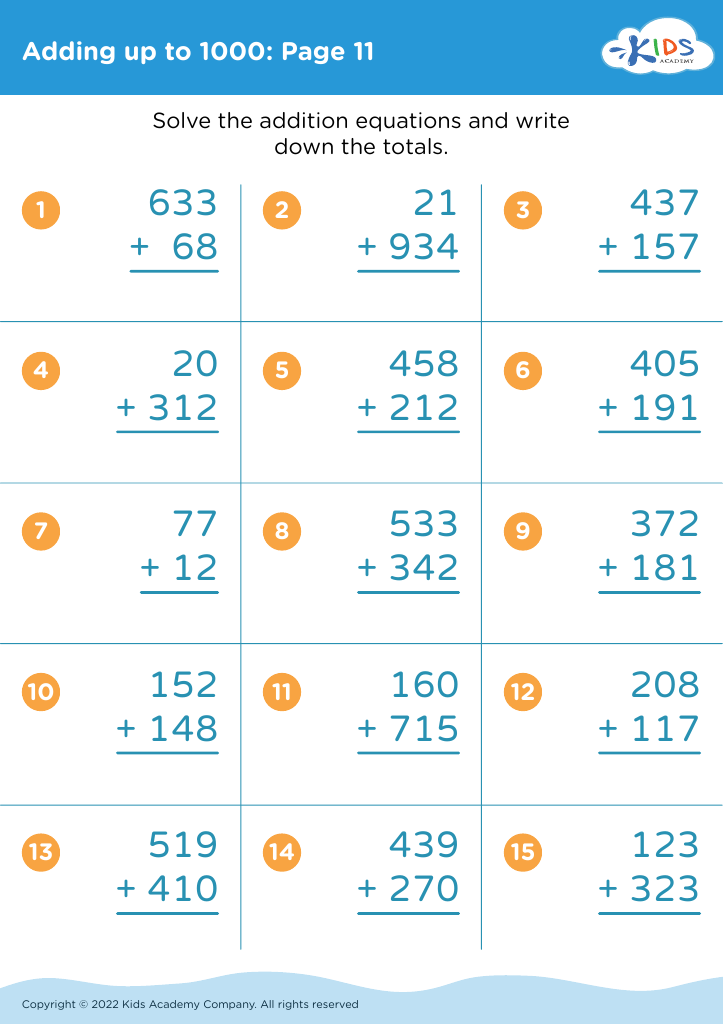
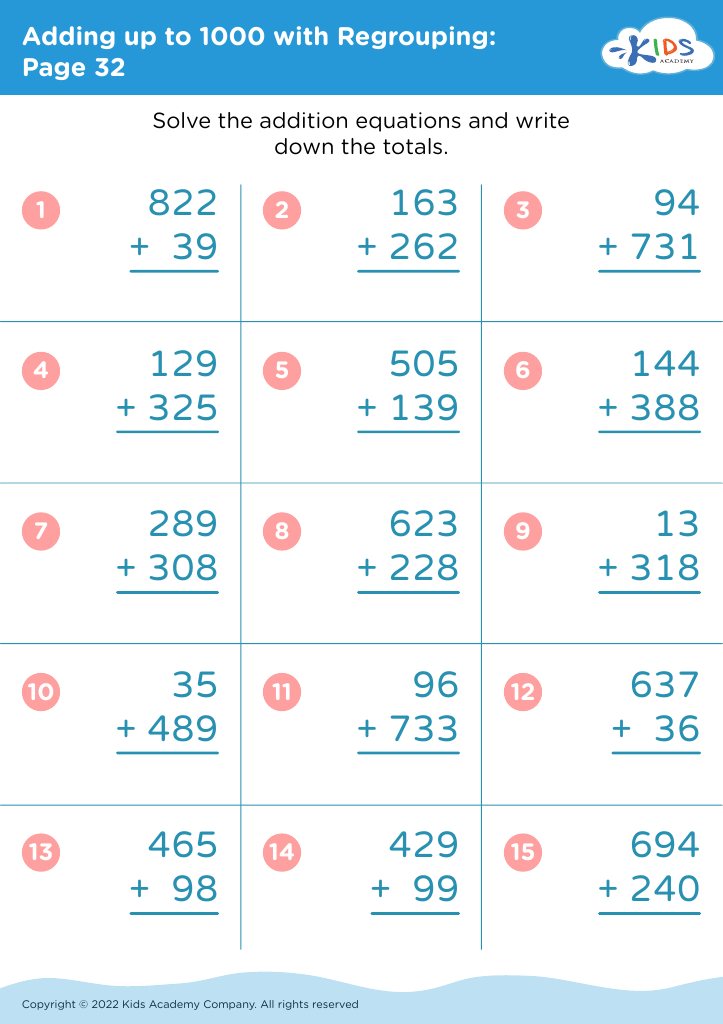
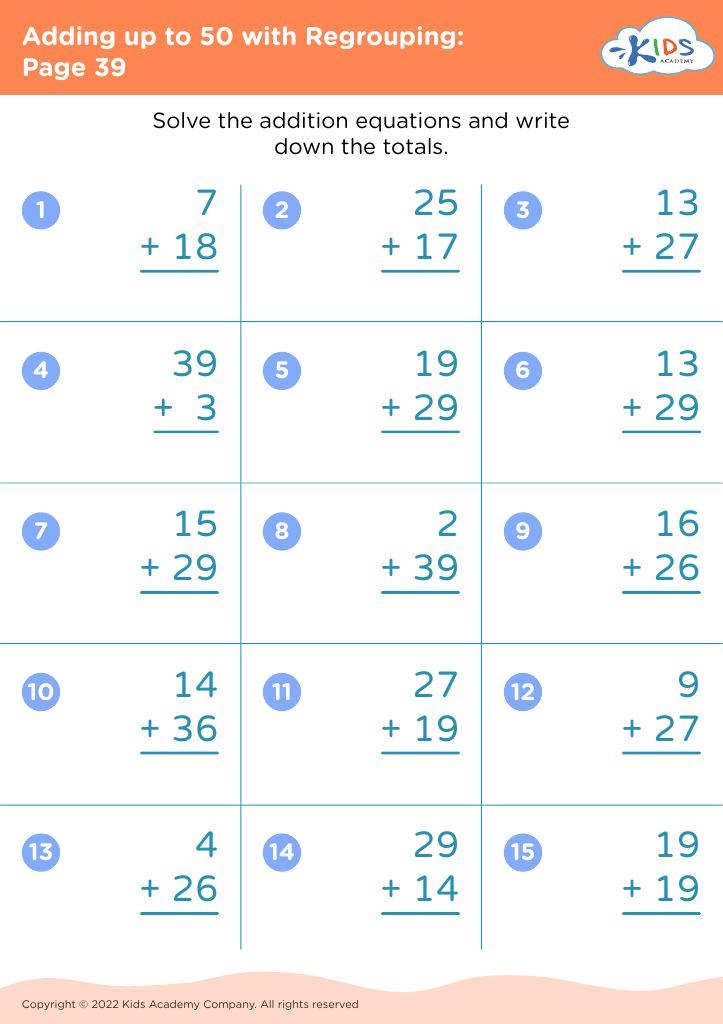
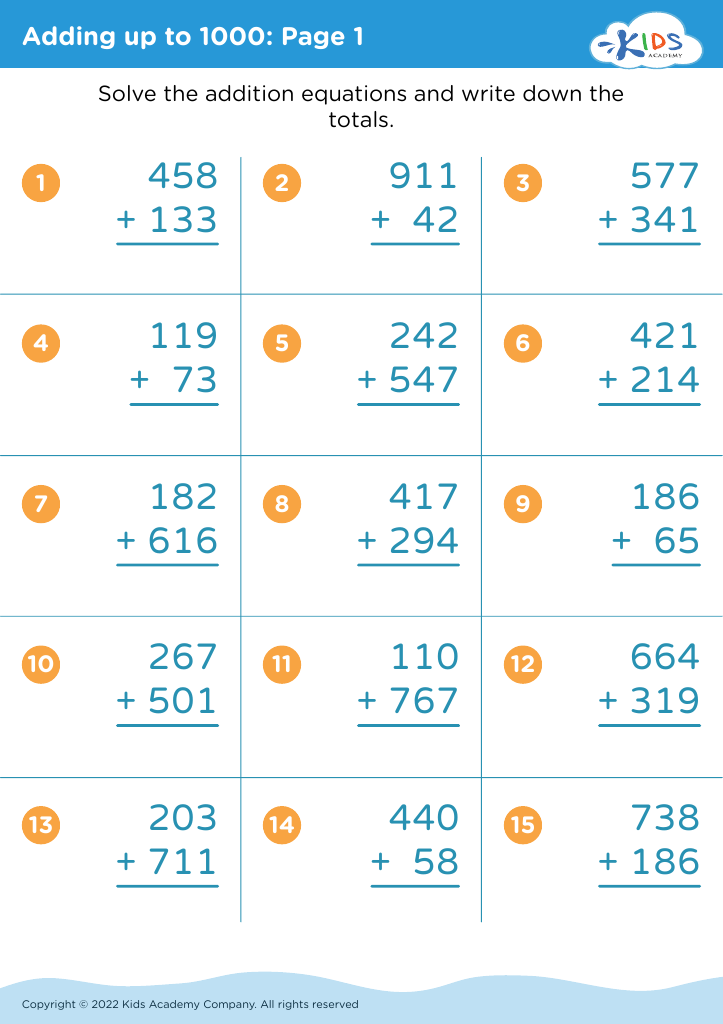
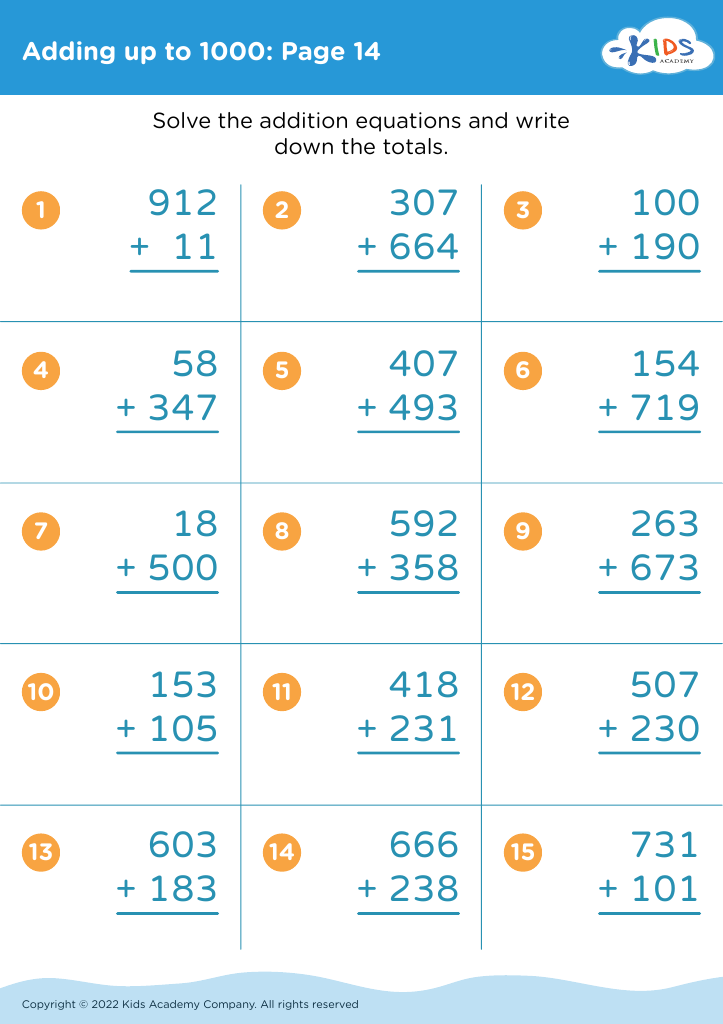
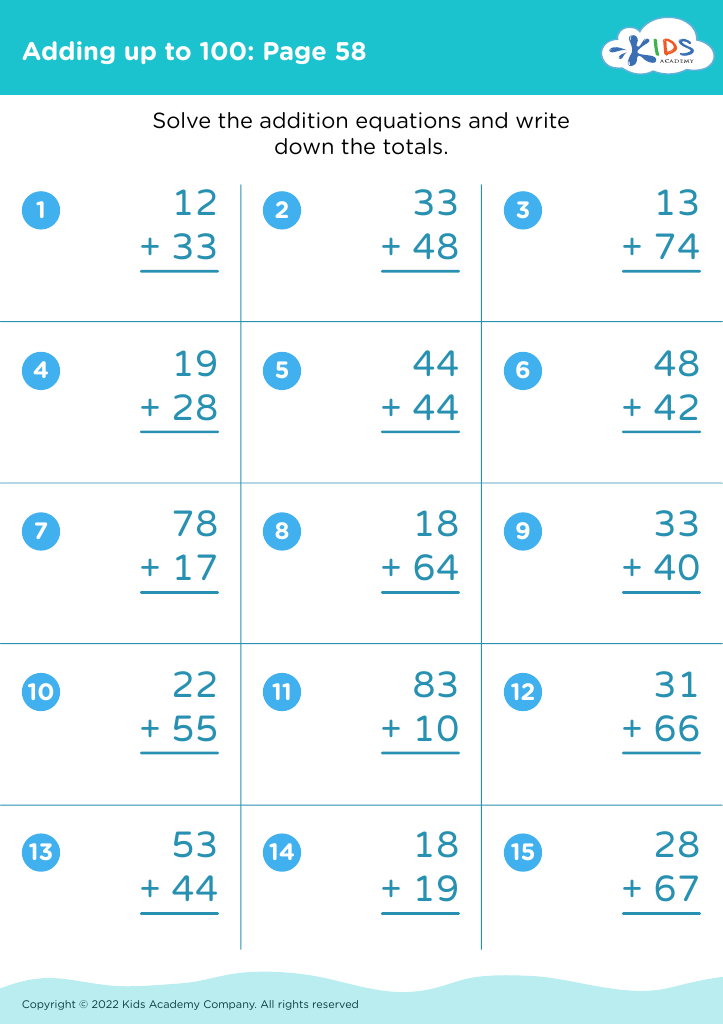
Boost your child's math confidence with our 'Improve Math Skills Addition Worksheets' designed for ages 3-8! These engaging worksheets focus on making learning fun while building essential addition skills. Carefully crafted with age-appropriate challenges, each worksheet encourages young learners to practice addition in an interactive and enjoyable way. With colorful illustrations and varied exercises, your child will develop key math concepts and refine their problem-solving abilities. Perfect for classroom use or at-home learning, our resources provide valuable practice to reinforce foundational skills, ensuring your little one excels in mathematics. Explore endless learning opportunities tailored specifically for your child's developmental stage!
Favorites
With answer key
Interactive
Join Kids Academy for Free
Who is primarily going to use this learning content?








Parents and teachers play a crucial role in the foundational mathematical development of children ages 3-8, particularly with skills like addition. Early math skills are essential for cognitive development and critical thinking as they provide children with the ability to understand numbers, patterns, and relationships. Mastering addition instills confidence and a positive attitude toward learning that can carry into later years.
Furthermore, strong math skills correlate with future academic success. By nurturing a child’s ability to add, educators and parents not only enhance their mathematical competence but also lay the groundwork for problem-solving abilities across various subjects. Addition is often the gateway to more complex mathematical concepts, like subtraction, multiplication, and division, making it imperative to address early.
Engaging children in addition activities can be enjoyable and interactive, fostering a love for learning. It’s also a wonderful way to bond; simple games and everyday situations can transform learning into a fun experience. Ultimately, emphasizing the importance of addition fosters resilience and perseverance in solving challenges, skills that are applicable far beyond the math classroom. By nurturing these skills, parents and teachers are investing in a child’s holistic development, preparing them for a bright educational future.








