Improving mathematical skills Addition Worksheets for Ages 3-8
4 filtered results
-
From - To
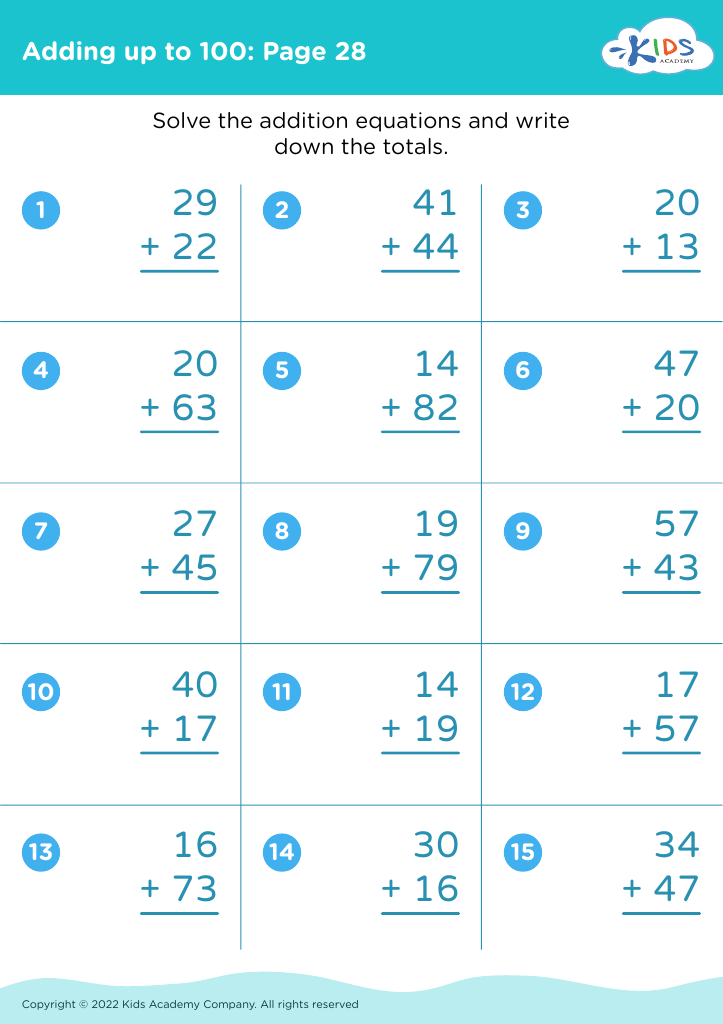
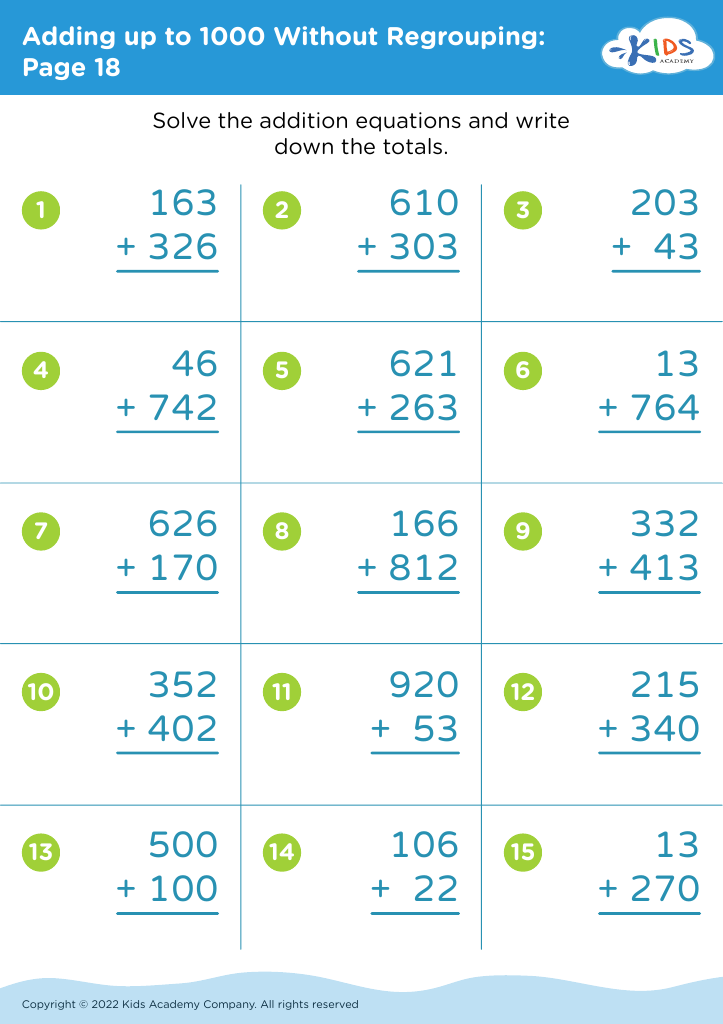
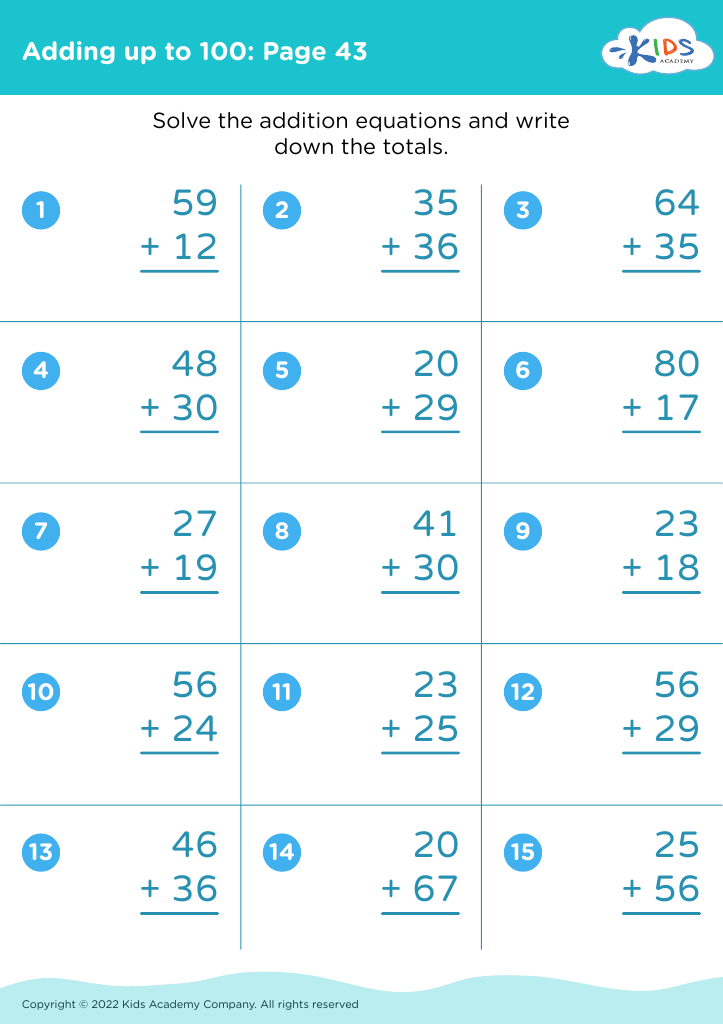
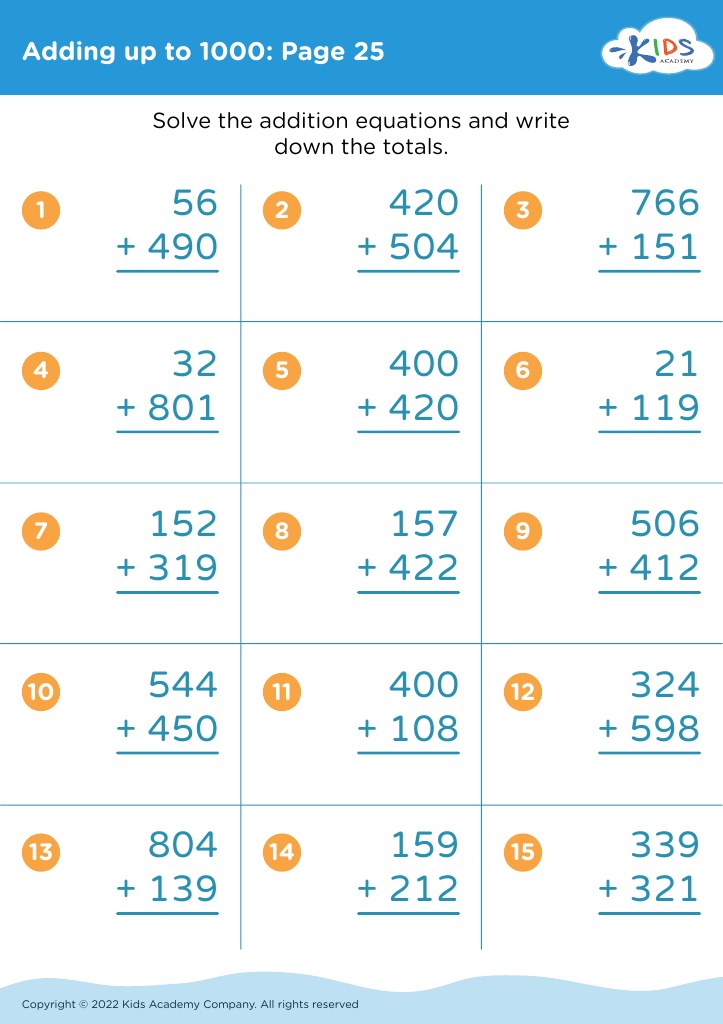
Discover our engaging "Improving Mathematical Skills: Addition Worksheets for Ages 3-8" designed to make learning math fun and effective! These printable worksheets are perfect for preschool and early elementary students, providing clear exercises that promote a strong foundation in addition. With colorful visuals and interactive activities, children will practice essential addition skills while developing critical thinking and problem-solving abilities. Our worksheets cater to various learning styles, ensuring every child enjoys a personalized approach to mastering math. Join us in fostering a love for numbers and helping young learners excel in their mathematical journey. Start their path to success today!






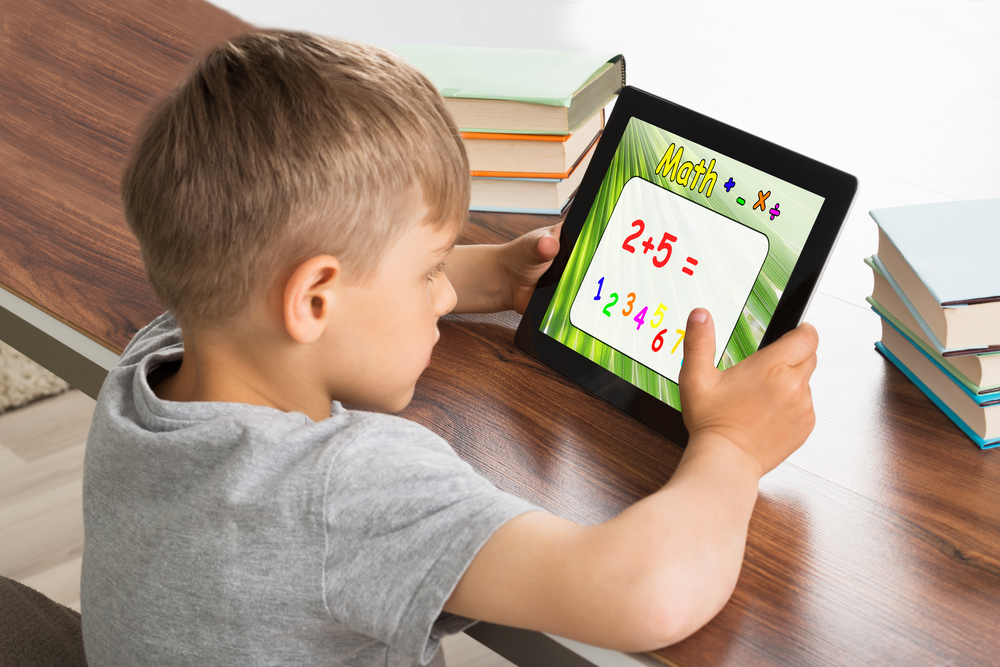

Improving mathematical skills, particularly addition, in children aged 3-8 is crucial for their overall cognitive development and future academic success. This foundational stage is when children's brains are highly receptive to learning new concepts, including numerical operations. Mastering addition not only enhances their mathematical competence but also fosters critical thinking, problem-solving skills, and logical reasoning, which are essential in everyday life.
Parents and teachers should care because early math skills directly correlate with later academic performance in mathematics and other subjects. Engaging children in addition exercises—through games, songs, and hands-on activities—can make learning enjoyable and less intimidating, cultivating a positive attitude toward math. Furthermore, children who achieve proficiency in basic math often develop higher self-esteem and confidence in their abilities.
Additionally, improving addition skills during this developmental window helps foster important social skills such as sharing, collaborating, and respectful competition among peers, laying the groundwork for social-emotional learning. By supporting children in their mathematical journey, parents and educators equip them with necessary tools for navigating future challenges, both academically and in real-world contexts, ultimately setting them on a path for lifelong success.








