
Improving mental math Addition Worksheets for Ages 3-8
3 filtered results
Difficulty Level
Grade
Age
-
From - To
Subject
Activity
Standards
Enhance your child's mental math skills with our engaging Addition Worksheets designed specifically for ages 3-8! These worksheets focus on improving mental computation, allowing young learners to practice addition in a fun and interactive way. Each activity encourages children to think critically and solve problems without relying solely on written calculations. With colorful visuals and varying difficulty levels, our resources nurture number sense, boost confidence, and strengthen foundational math skills. Dive into a world of playful learning and watch your child develop a love for math, setting them on the path to future academic success. Explore our collection today!
Favorites
With answer key
Interactive
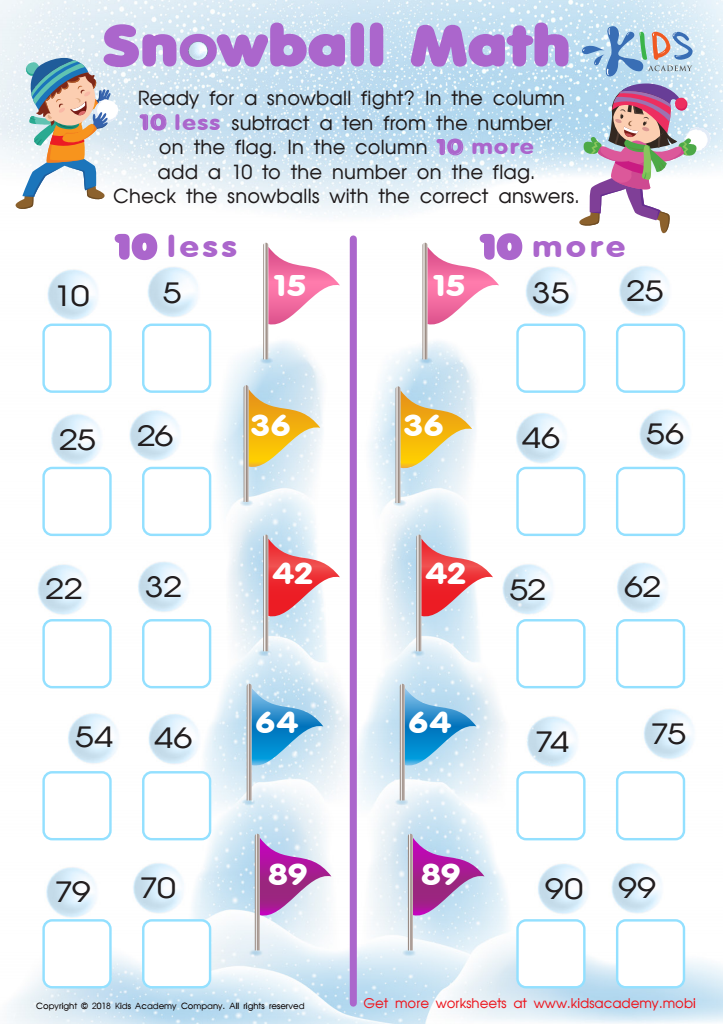
Snowball Math Worksheet
Kids can have a snowball fight and build math skills at the same time with this free worksheet. Kids can use tens to add and subtract for quick math equations and select the correct answers. No need to worry about getting cold either - these snowballs won't chill you!
 Assign to My Students
Snowball Math Worksheet
Worksheet
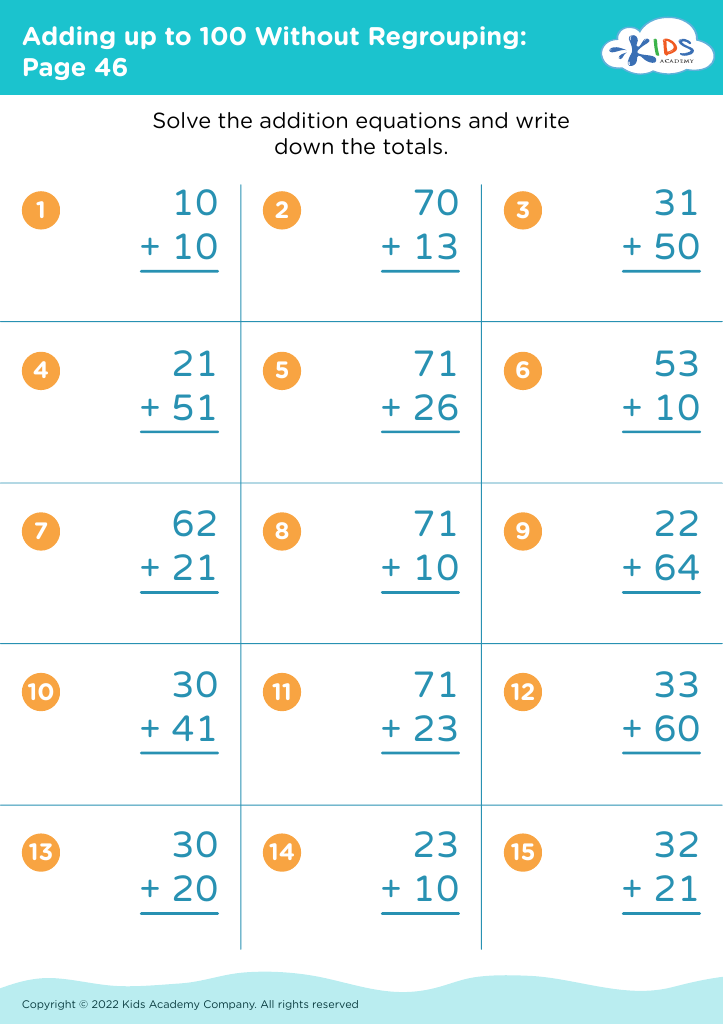
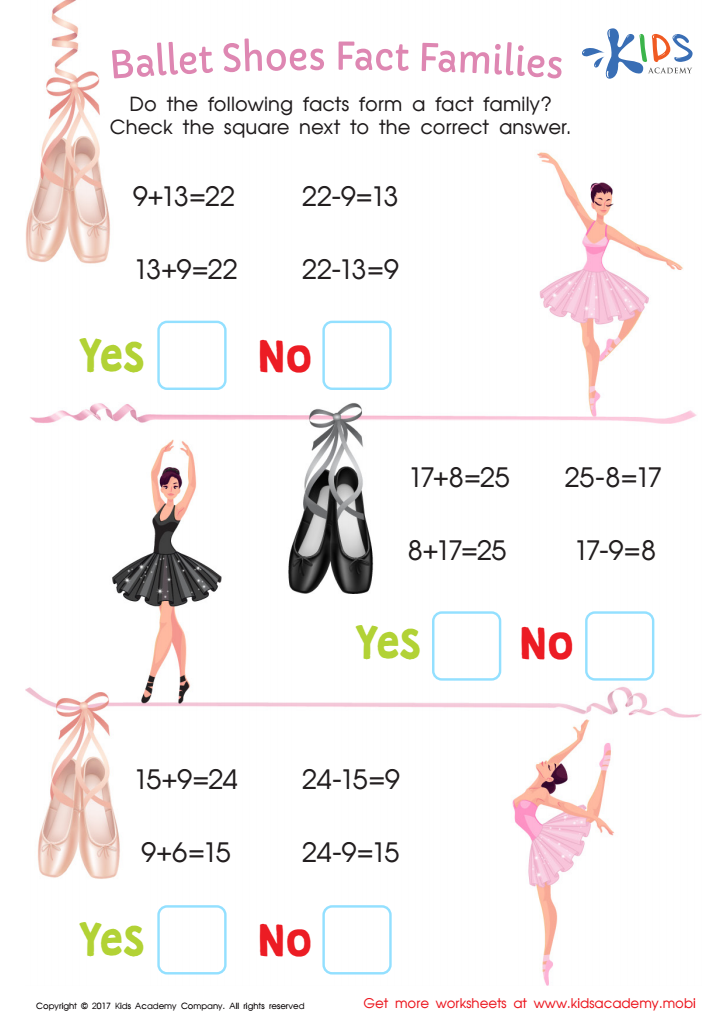
Ballet Shoes Fact Family Printable
Have them observe the equations and determine which groupings are fact families for a delightful learning experience. It encourages critical thinking, showing how addition and subtraction are related.
Ballet Shoes Fact Family Printable
Worksheet
Join Kids Academy for Free
Who is primarily going to use this learning content?








Improving mental math addition skills for children aged 3-8 is crucial for their overall cognitive and academic development. During these formative years, children develop foundational skills that will support their future learning in mathematics and other subjects. Mental math encourages children to solve problems without relying on calculators or written methods, fostering critical thinking and enhancing their number sense.
Strong mental math skills promote confidence and a positive attitude towards math, reducing math anxiety as they grow older. Incorporating mental arithmetic in everyday activities makes learning fun and encourages children to engage more with numbers, whether through counting objects, playing games, or solving simple math puzzles.
For parents and teachers, focusing on mental math addition can also improve communication and cooperation in academic settings. It equips children with tools to express their understanding of numbers and operations clearly, enhancing classroom participation. Moreover, early mastery of such skills lays the groundwork for more complex math concepts in later grades, facilitating smoother transitions into higher-level mathematics.
By actively supporting the improvement of mental math addition, adults empower children to develop a strong mathematical foundation that will benefit them throughout their educational journey and beyond.








