Improving reading skills Addition Worksheets for Ages 3-8
4 filtered results
-
From - To
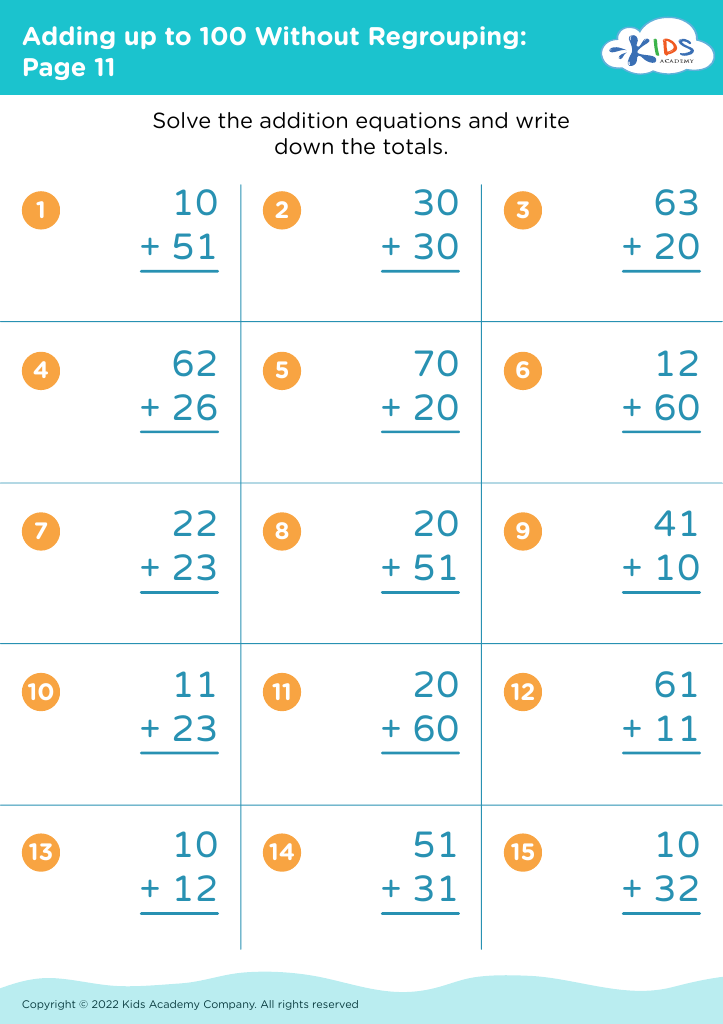
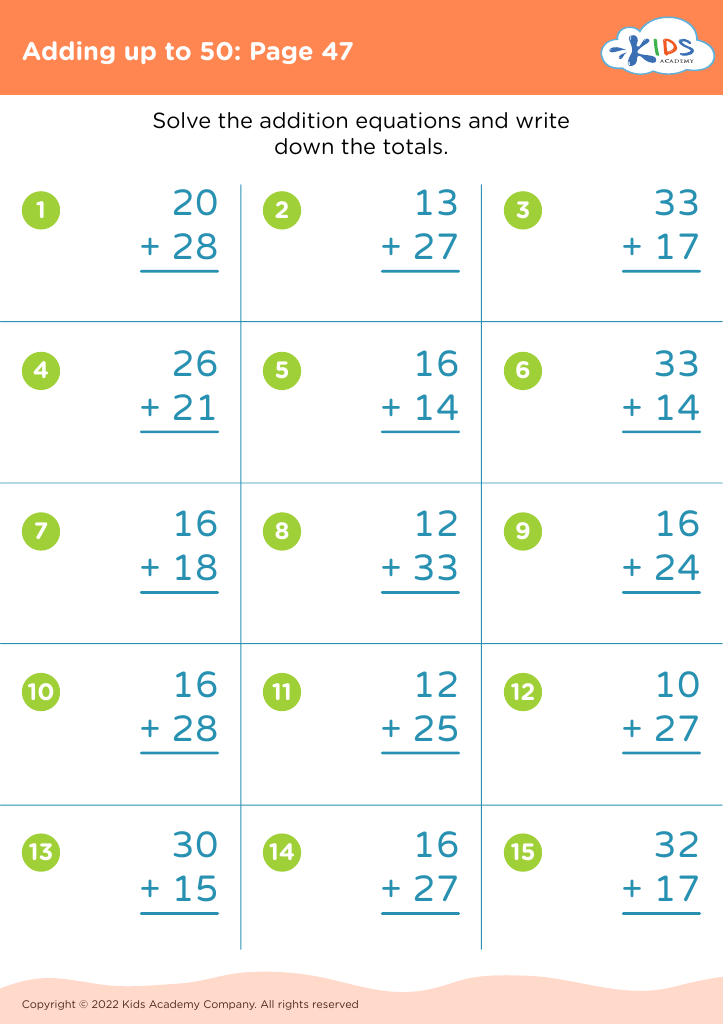
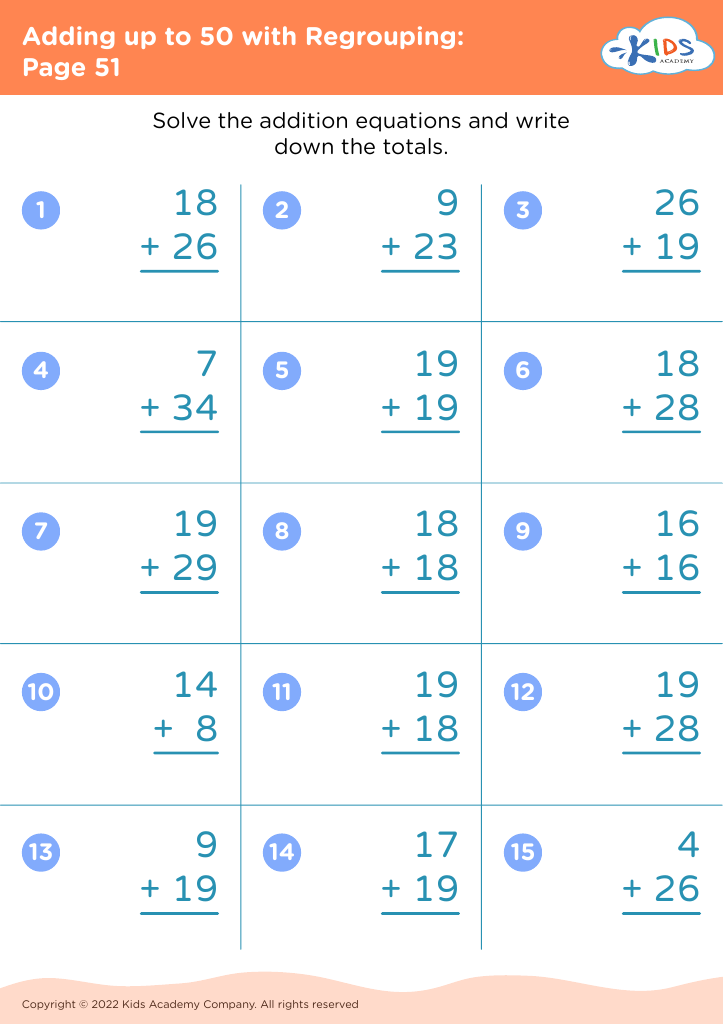
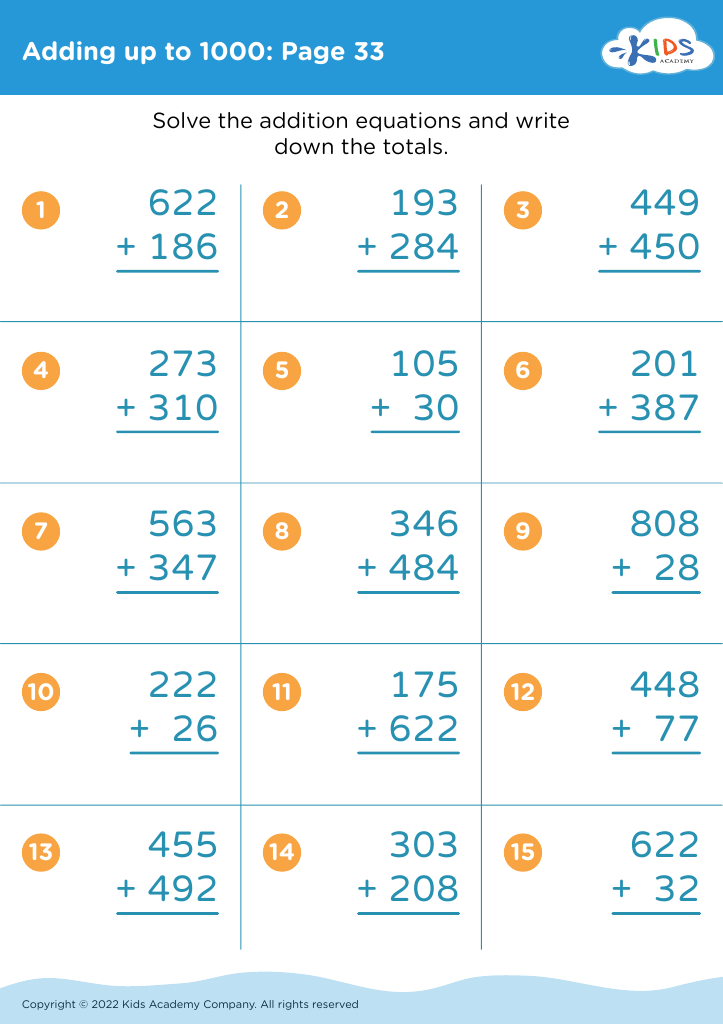
Boost your child's early literacy and numeracy with our "Improving Reading Skills Addition Worksheets for Ages 3-8" from Kids Academy. Our expertly designed worksheets seamlessly combine reading and math skills, fostering a dual learning environment. Engaging stories, vibrant illustrations, and simple addition problems encourage young learners to practice their reading while mastering basic mathematical concepts. Ideal for classroom or home use, these worksheets ensure that students build a solid foundation in both subjects, paving the way for academic success. Perfect for educators and parents, our resources make learning interactive and fun, helping children ages 3-8 thrive.



.jpg)




Improving reading skills in children aged 3-8 is crucial because this developmental window lays the foundation for future academic success and lifelong learning. At this stage, the brain is particularly receptive to language acquisition, and developing strong reading skills can significantly enhance cognitive development, including critical thinking and problem-solving abilities.
For parents and teachers, prioritizing reading at this age can lead to improved comprehension, vocabulary expansion, and better communication skills. Children who start reading early tend to develop a love for books and learning, fostering curiosity and a drive for knowledge. This enthusiasm can translate to better performance in other subjects, as comprehension underpins almost all areas of study.
Moreover, early reading proficiency is a strong predictor of future academic achievement. Children struggling with reading in early grades often face ongoing challenges, leading to a cycle of frustration and disengagement.
Teachers can tailor instruction and interventions to build foundational skills like phonics, fluency, and textual understanding, while parents can create a supportive reading environment at home. Reading stories together, playing word games, and encouraging kids' curiosity about words and texts can make learning enjoyable. Overall, investing in early reading skills equips children with essential tools for success, both in school and in life.








