Improving subtraction skills Addition Worksheets for Ages 3-8
3 filtered results
-
From - To
Enhance your child's subtraction skills with our engaging and comprehensive worksheets tailored for ages 3-8! Our "Improving Subtraction Skills Addition Worksheets" provide a fun, interactive way for young learners to master subtraction while building a strong foundation in math. Designed by experienced educators, these worksheets include colorful illustrations and varied exercises that capture children's attention and make learning enjoyable. Perfect for homeschoolers, classrooms, or extra practice at home, these resources will boost confidence and proficiency in subtraction. Equip your child with essential math skills and watch them thrive with our expertly crafted worksheets! Start their math journey today!
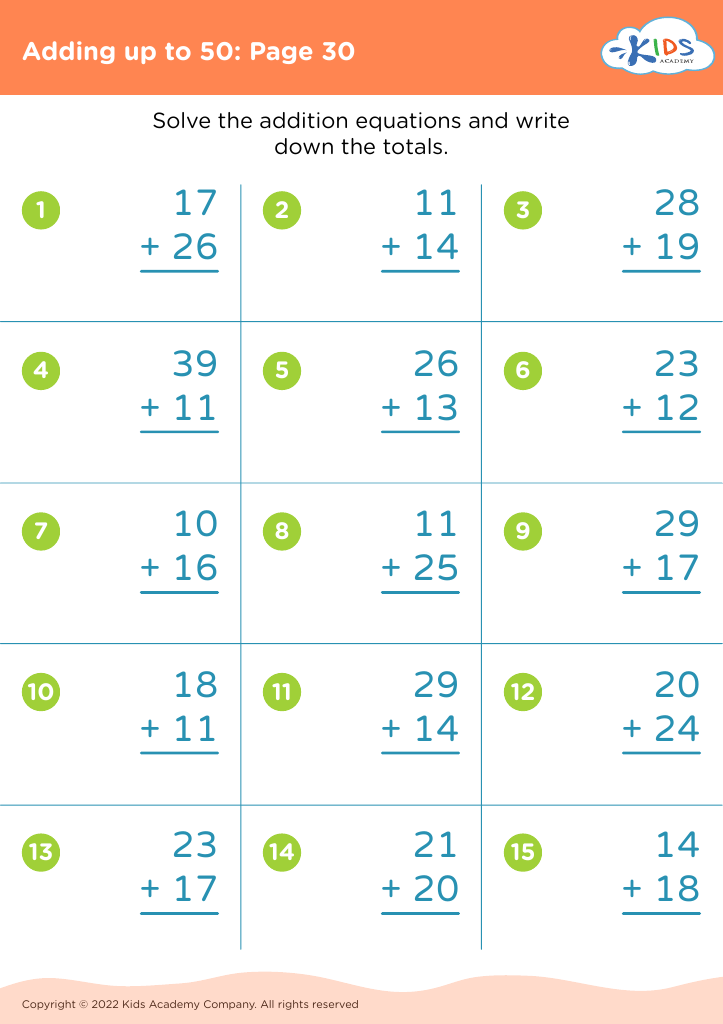
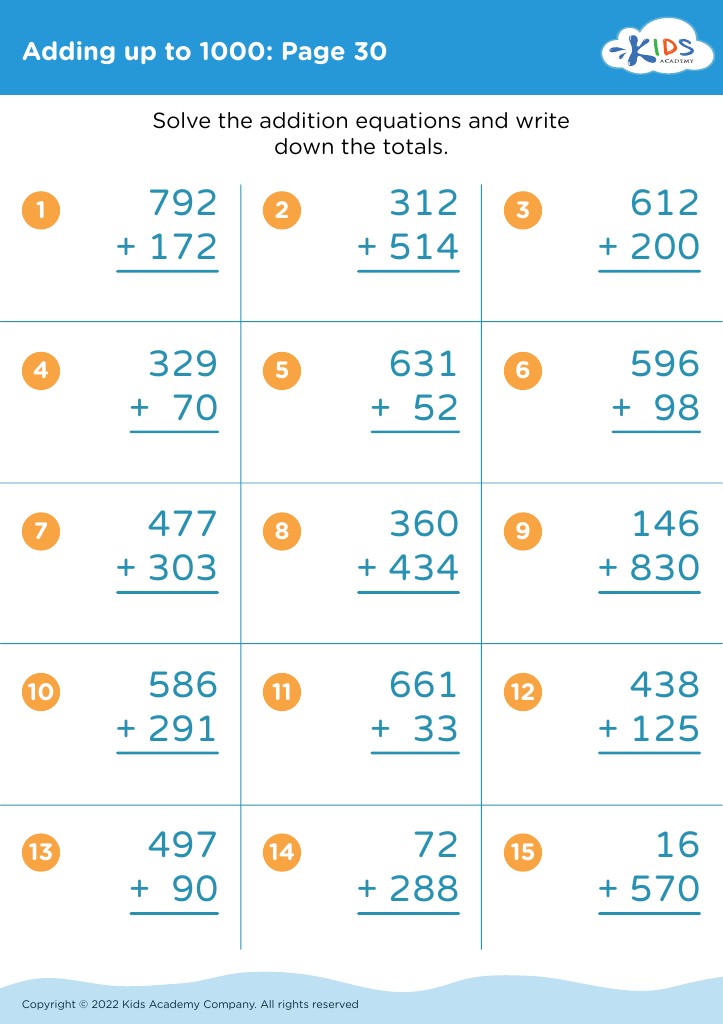
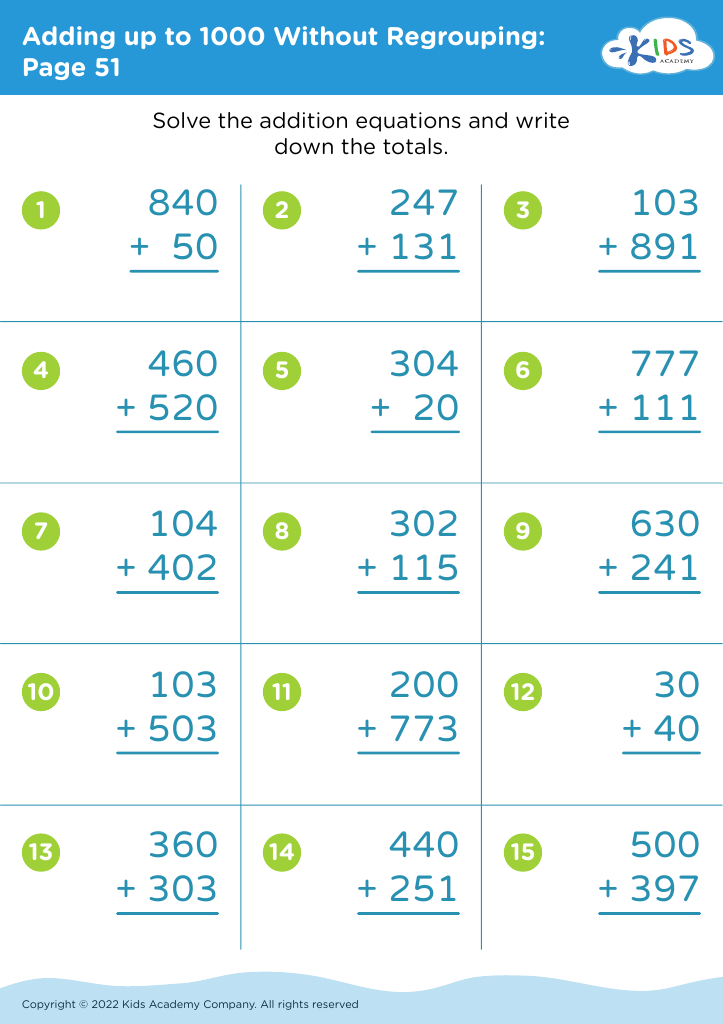








Improving subtraction skills in children aged 3-8 is essential for several reasons. Firstly, foundational arithmetic skills, such as subtraction, lay the groundwork for more complex math concepts. When children master subtraction, it boosts their confidence and encourages a positive attitude towards math, fostering a growth mindset.
Secondly, subtraction skills are not just about numbers; they also enhance critical thinking and problem-solving abilities. As children learn to relate subtraction to real-world scenarios, such as counting objects or managing money, they can better understand how math applies in everyday life.
Moreover, early mastery of subtraction promotes academic success in later years. Children who struggle with basic math may find it challenging to keep up with peers, potentially leading to gaps in knowledge. By investing time in improving subtraction skills, teachers and parents can mitigate these challenges and create a more balanced learning environment.
Additionally, building subtraction skills nurtures essential cognitive development in early childhood. Engaging in fun and interactive activities can make learning subtraction enjoyable, transforming a potentially daunting subject into a playful exploration of numbers. Ultimately, the development of strong subtraction skills cut a clear path toward mathematical proficiency and lifelong learning.








