Learn new vocabulary Addition Worksheets for Ages 3-8
4 filtered results
-
From - To
Enhance your child's mathematical skills with our "Learn New Vocabulary Addition Worksheets" designed for ages 3-8. These engaging and interactive worksheets introduce essential math terms in a fun and accessible way, helping young learners build their vocabulary while mastering the basics of addition. Each worksheet is constructed to promote critical thinking and problem-solving, with vibrant illustrations and age-appropriate challenges that keep children excited about learning. Whether at home or in the classroom, these resources provide an excellent foundation for future math success. Start your child's educational journey today by exploring our comprehensive collection of worksheets tailored for early learners!
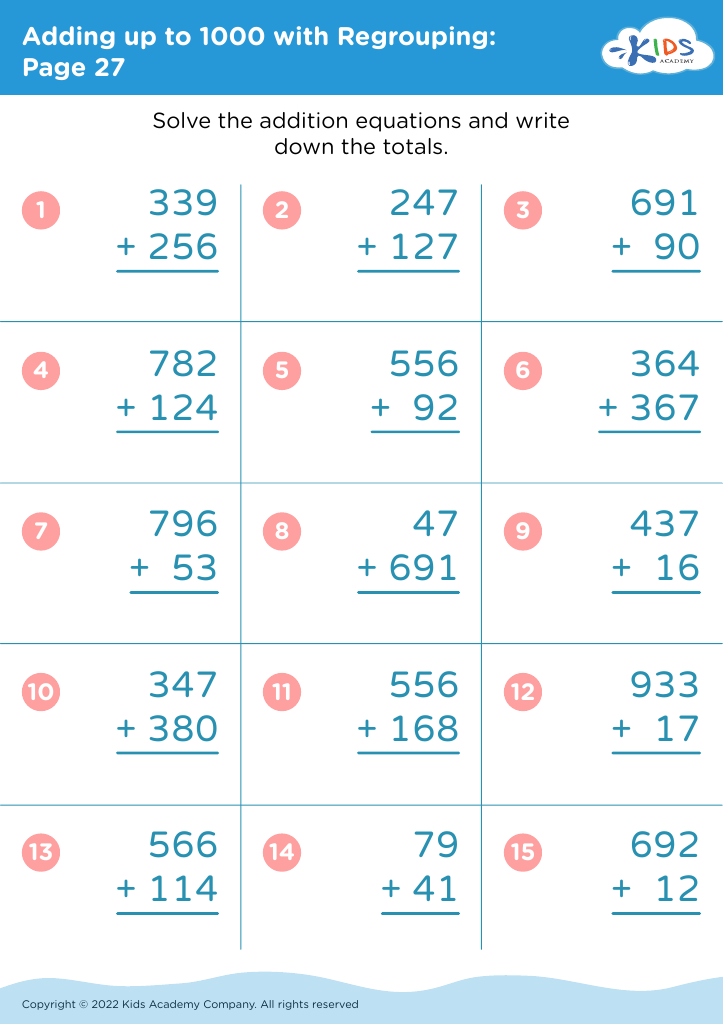
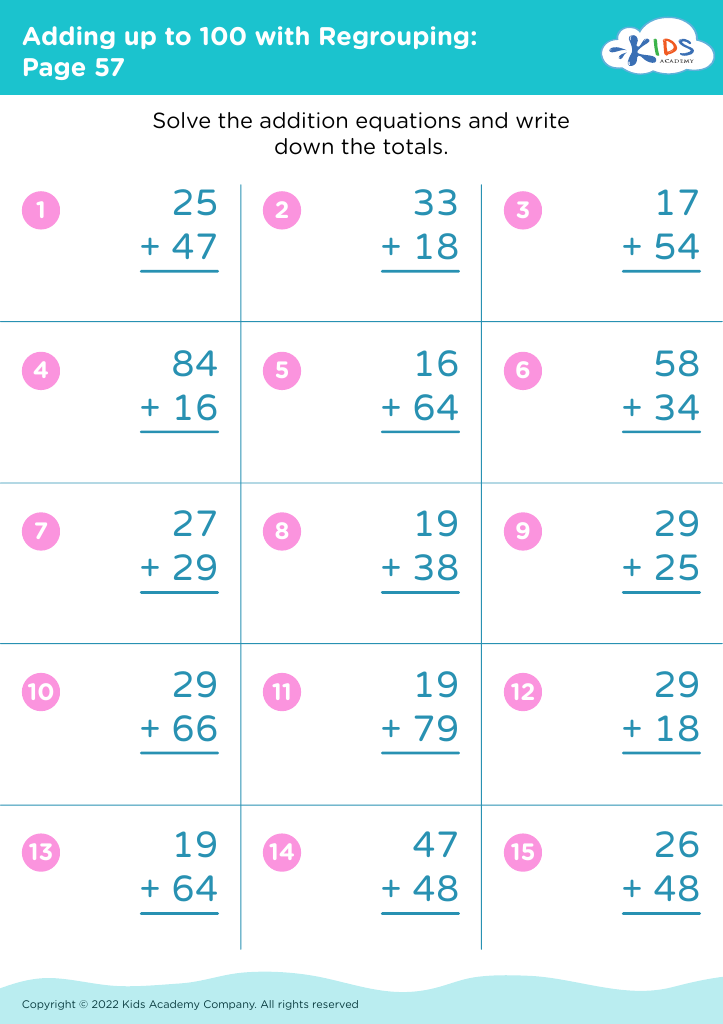
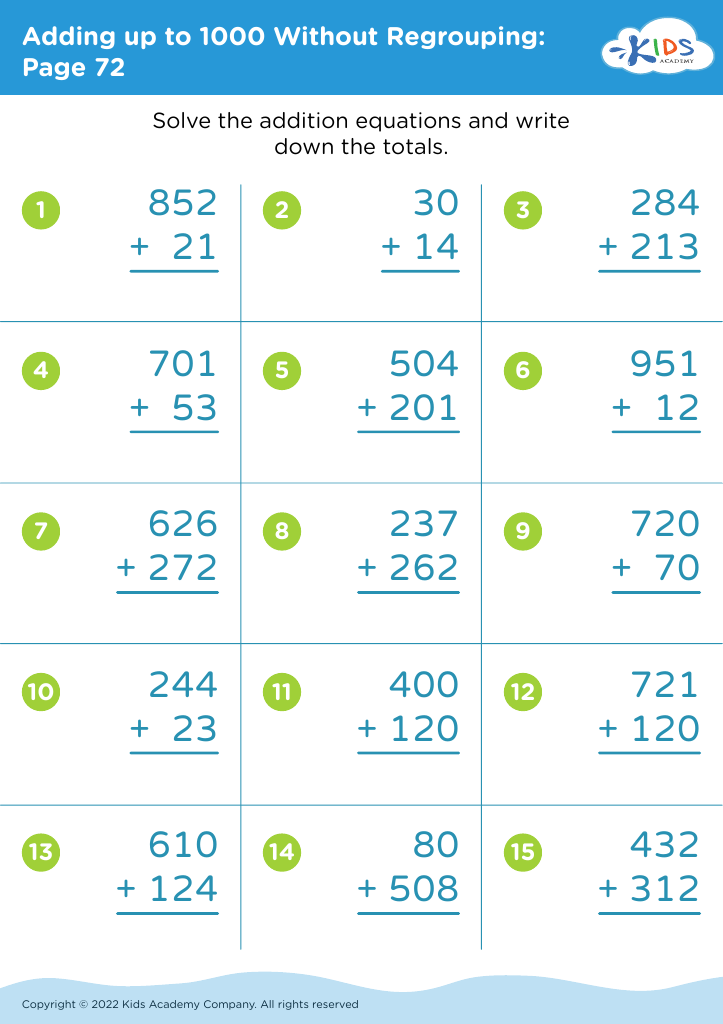
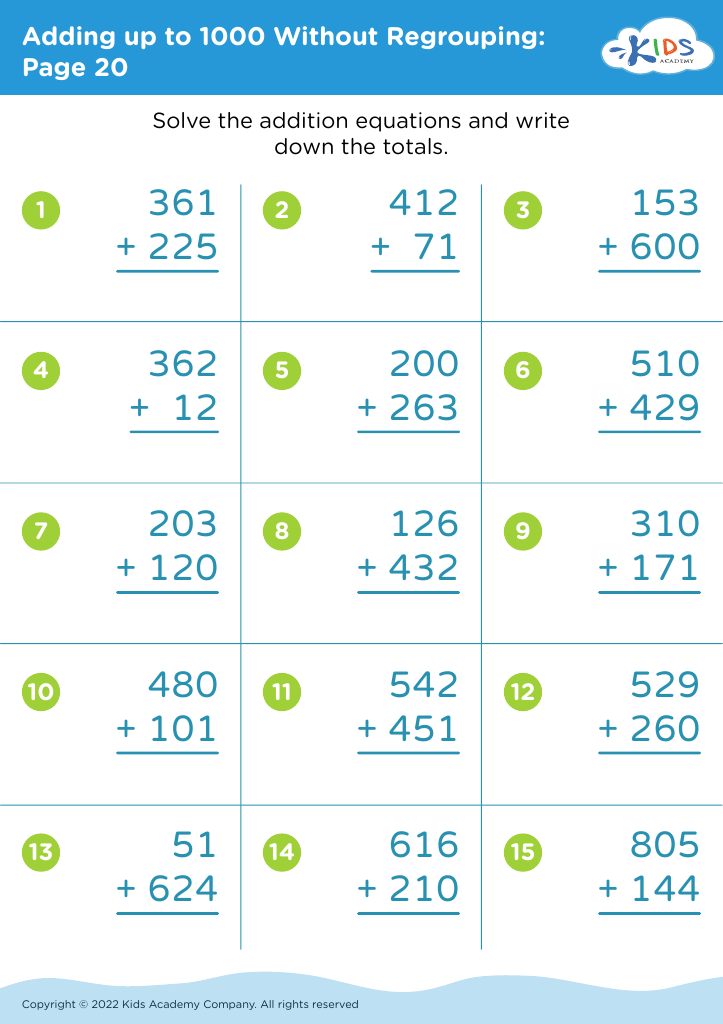






.jpg)

Parents and teachers play a crucial role in early childhood development, and fostering vocabulary growth during the ages of 3 to 8 is essential for several reasons. First, vocabulary is the foundation of communication. Enhancing a child’s vocabulary enables them to express themselves clearly and effectively, which builds confidence and allows for richer interpersonal relationships.
Introducing new vocabulary, especially words related to topics such as addition, helps children develop cognitive skills including critical thinking and problem-solving. Understanding mathematical language is vital, as it aids in grasping concepts that will be crucial in their academic journey, setting the stage for future learning in mathematics and beyond.
Moreover, a robust vocabulary correlates with reading proficiency, which is crucial for academic success. Children with a wider range of words are more likely to comprehend various texts, contributing to better overall literacy development.
Ultimately, teaching new vocabulary creates bridges to understanding complex ideas, fostering a positive attitude towards learning. Dedicating time to enhancing vocabulary, especially in early math concepts like addition, equips children with the tools they need to thrive, ensuring they are prepared for more advanced educational challenges in their future. Parents and teachers who prioritize vocabulary acquisition are investing in a child’s lifelong learning journey.








