Learn subtraction Addition Worksheets for Ages 3-8
4 filtered results
-
From - To
Discover our engaging and educational subtraction and addition worksheets, expertly designed for children ages 3-8. These fun, printable activities help young learners develop essential math skills through playful exercises, colorful visuals, and interactive scenarios. Our worksheets focus on strengthening foundational arithmetic, boosting confidence, and fostering a love for learning. Ideal for both classroom and home use, these resources support parents and educators in guiding children toward math mastery. Start your child's mathematical journey today with our comprehensive and age-appropriate addition and subtraction worksheets. Unlock their potential and make learning math an enjoyable adventure!
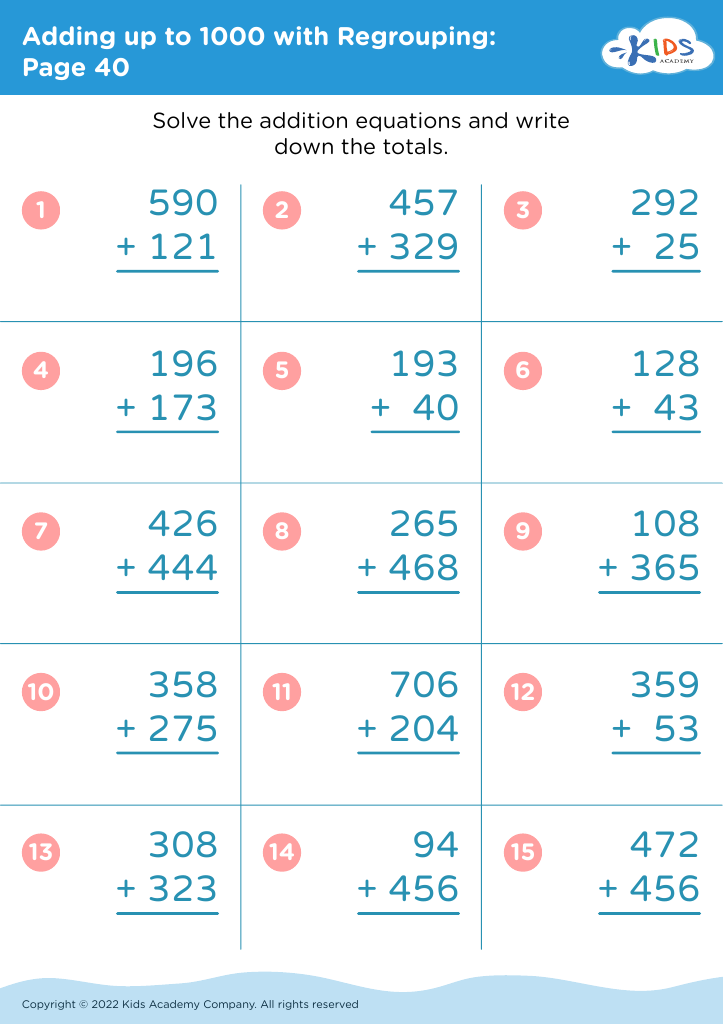
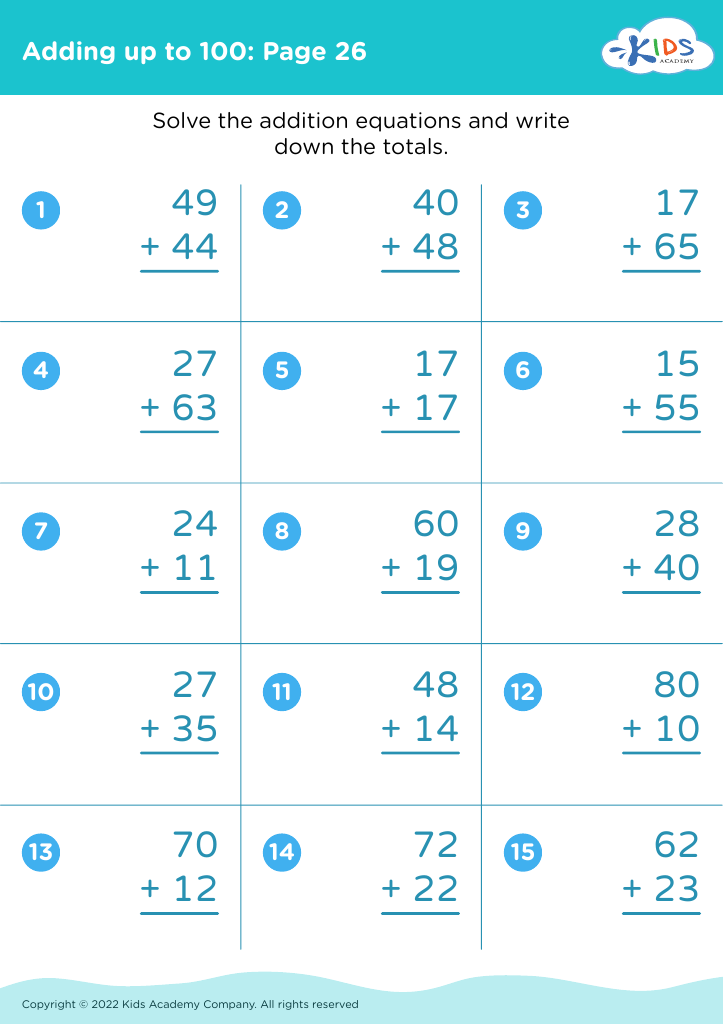
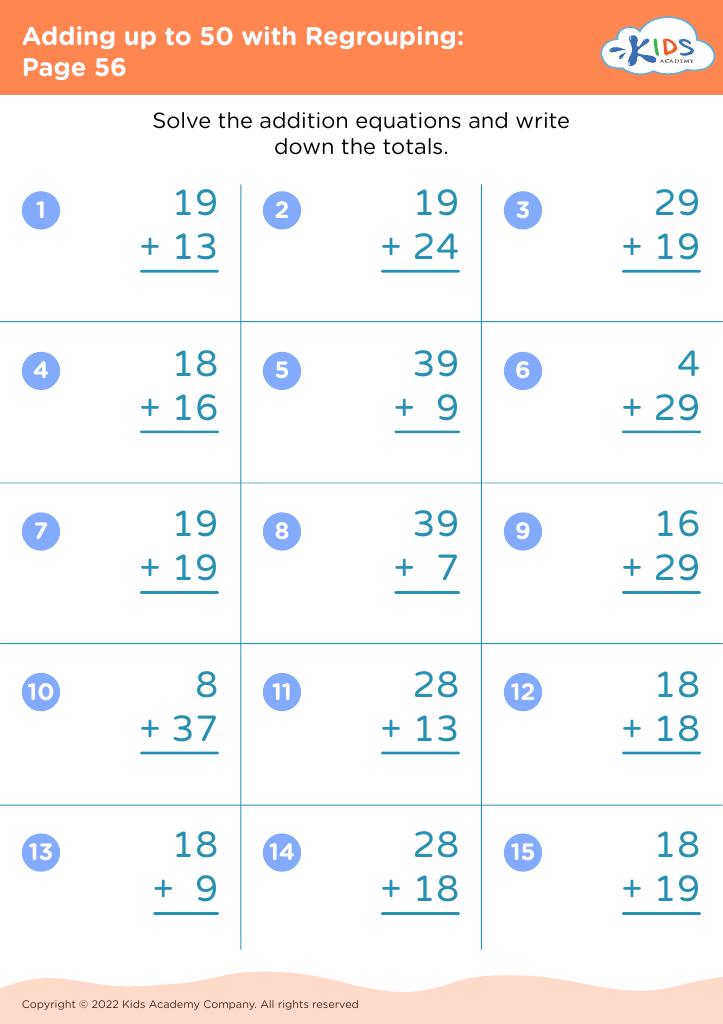
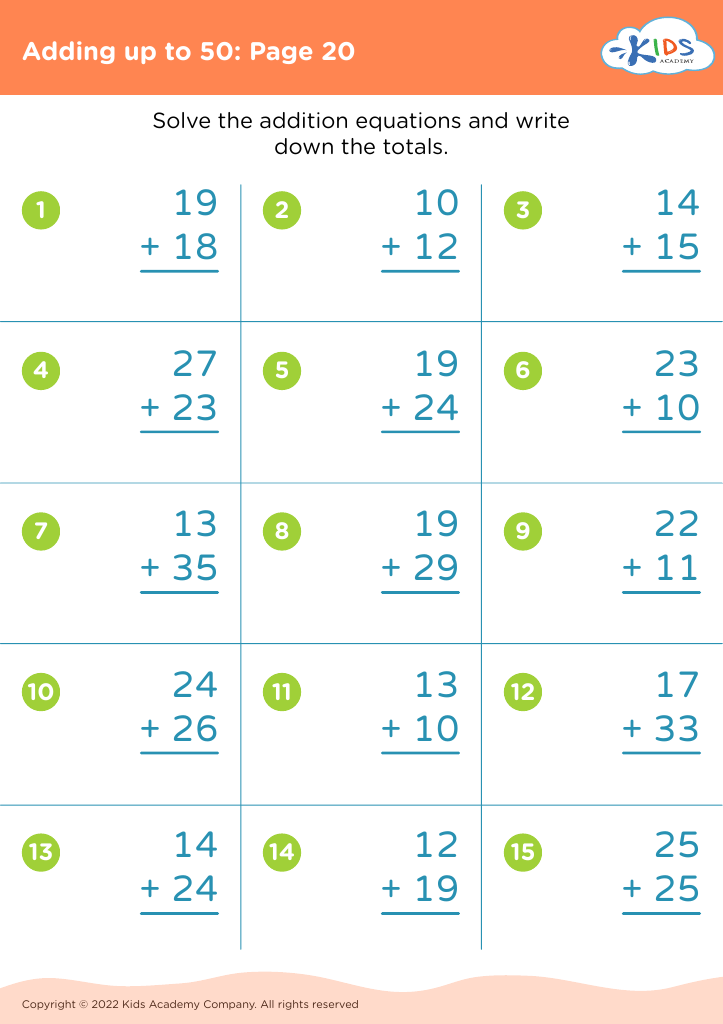








Parents and teachers should place a significant emphasis on teaching addition and subtraction to children aged 3-8 years because it forms the foundational building blocks of mathematical understanding. These early math skills are critical as they directly influence a child’s ability to grasp more complex math concepts in later years. Proficiency in addition and subtraction not only enhances problem-solving and logical thinking abilities but also instills confidence in learning new subjects.
Introducing children to these basic arithmetic operations during their formative years aids in developing their number sense, which is essential for daily life as well as academic success. Understanding addition helps them learn the concept of combining quantities, whereas subtraction helps them grasp the idea of comparison and the concept of difference. These skills are often embedded in everyday activities such as sharing treats, playing games, or sorting toys, making the learning process practical and engaging.
Moreover, mastering addition and subtraction at an early age paves the way for learning other subjects seamlessly, as it enhances memory, attention to detail, and systematic thinking. For parents and teachers, investing time and resources in these fundamental skills is crucial as it lays a solid groundwork for a lifetime of learning and cognitive development.








