Learning number patterns Addition Worksheets for Ages 3-8
3 filtered results
-
From - To
Discover an engaging way to help your child master addition with our "Learning Number Patterns Addition Worksheets" designed for ages 3-8. These worksheets are crafted to foster early math skills while enhancing understanding of number patterns and sequences. Children will enjoy fun exercises that simplify addition and promote critical thinking. Our user-friendly format makes it easy for young learners to grasp essential concepts through colorful, interactive activities. Ideal for at-home learning or classroom use, these worksheets ensure that learning math is an enjoyable experience. Integrate our number patterns addition worksheets into your educational toolkit and watch your child thrive!
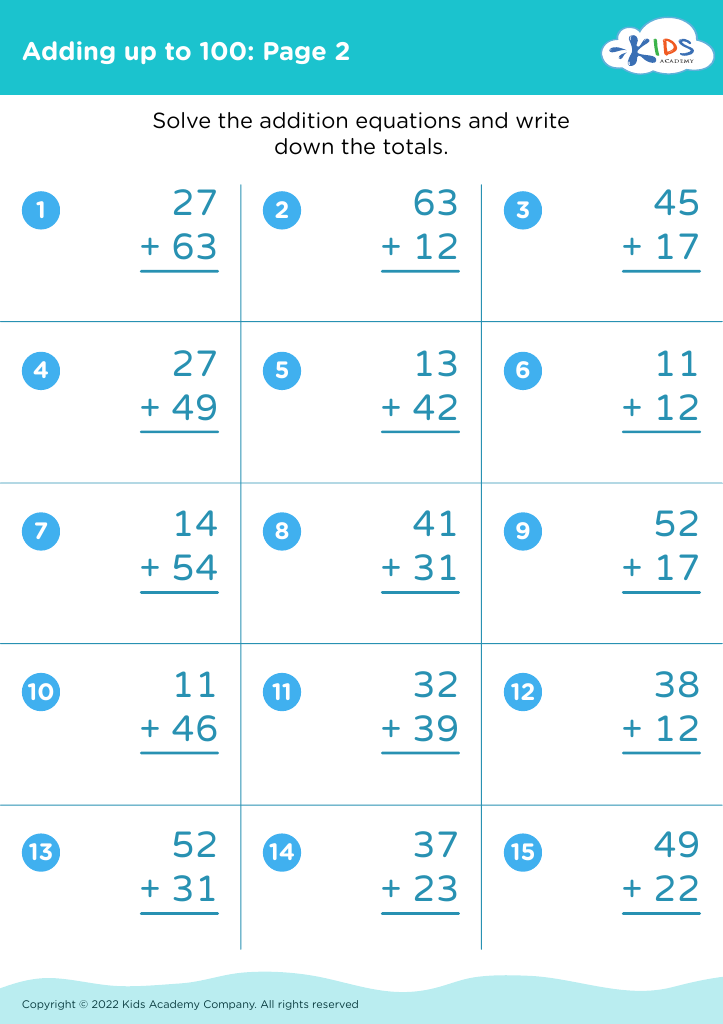
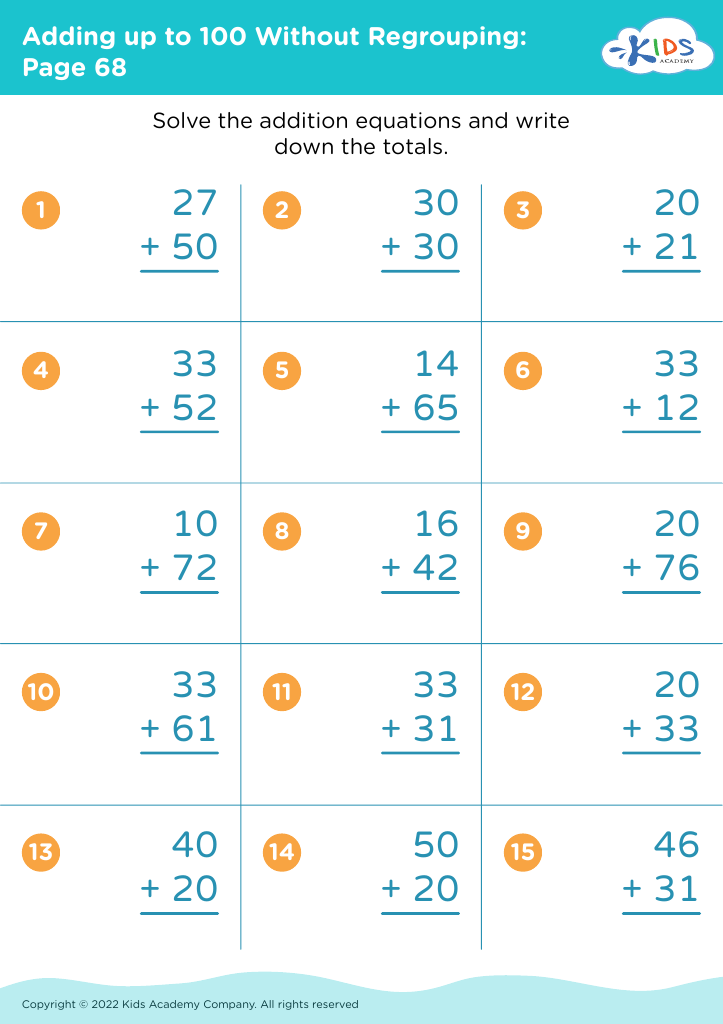
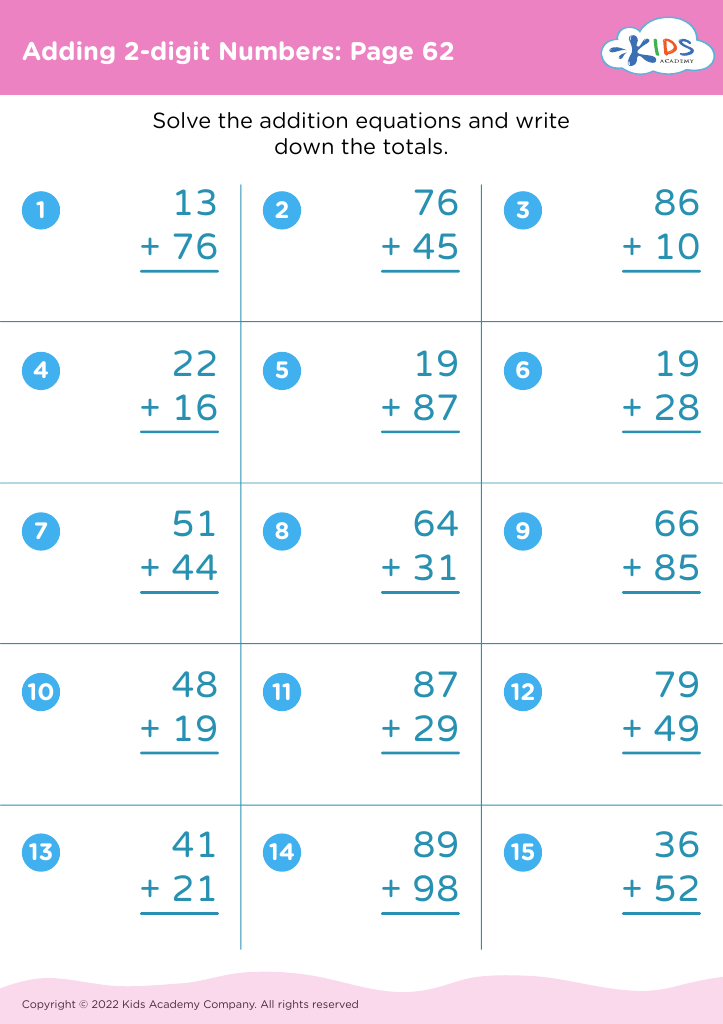








Learning number patterns and addition is fundamental in early childhood education, particularly for children ages 3-8. Parents and teachers should care about this topic because understanding number patterns forms the foundation for essential mathematical concepts. Early exposure to patterns helps children recognize relationships between numbers, fostering critical thinking skills.
Additionally, engaging with addition as a pattern reinforces basic arithmetic concepts that children will build on in later grades. Understanding patterns encourages logical reasoning and problem-solving abilities, which are instrumental in grasping more complex math later on. Through routine activities like counting, sorting, and grouping, children learn to see and create patterns, making math more intuitive and enjoyable.
Furthermore, patterns are everywhere in everyday life; by highlighting this connection, parents and teachers can make math relevant and engaging. This learning method also instills confidence, as children gain mastery over their understanding of numbers and operations. Ultimately, nurturing pattern recognition and addition skills not only prepares children for academic success but also lays the groundwork for lifelong numerical literacy, helping them navigate a world increasingly influenced by technology and data. Thus, engaging in these concepts early on cultivates a positive attitude towards math and boosts cognitive development.








