Mental math practice Addition Worksheets for Ages 3-8
8 filtered results
-
From - To
Unlock your child's math potential with our Mental Math Practice Addition Worksheets, tailored for ages 3-8. Designed to enhance mathematical fluency, these engaging worksheets focus on developing quick addition skills through fun exercises that captivate young minds. Practicing mental math helps build confidence and calculation speed, laying a strong foundation for future learning. With colorful illustrations and age-appropriate challenges, children will enjoy mastering simple addition concepts while sharpening their reasoning abilities. Ideal for at-home or classroom use, our worksheets provide a valuable resource for educators and parents alike. Start your child's math journey today and watch them thrive!
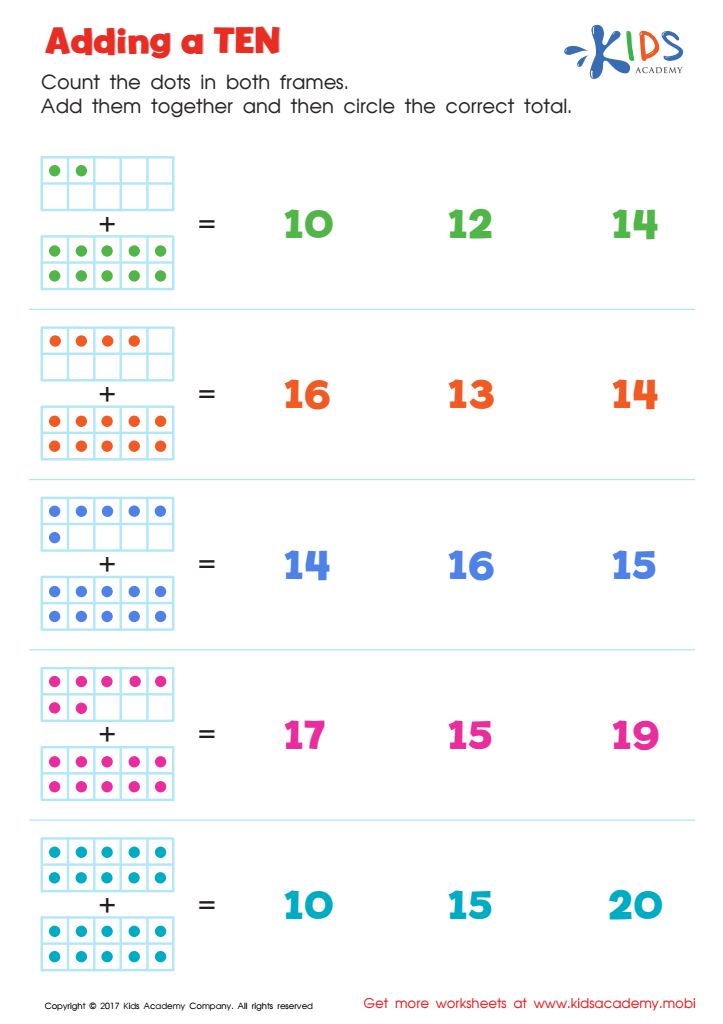
Adding a Ten Worksheet
 Assign to My Students
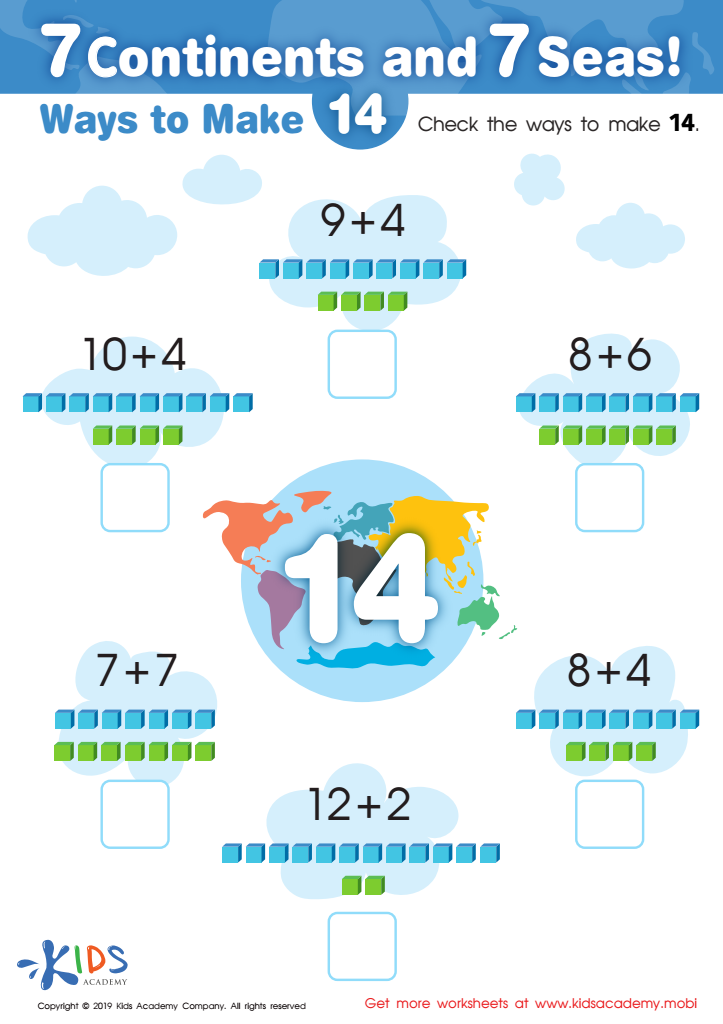
7 Continents and 7 Seas Worksheet
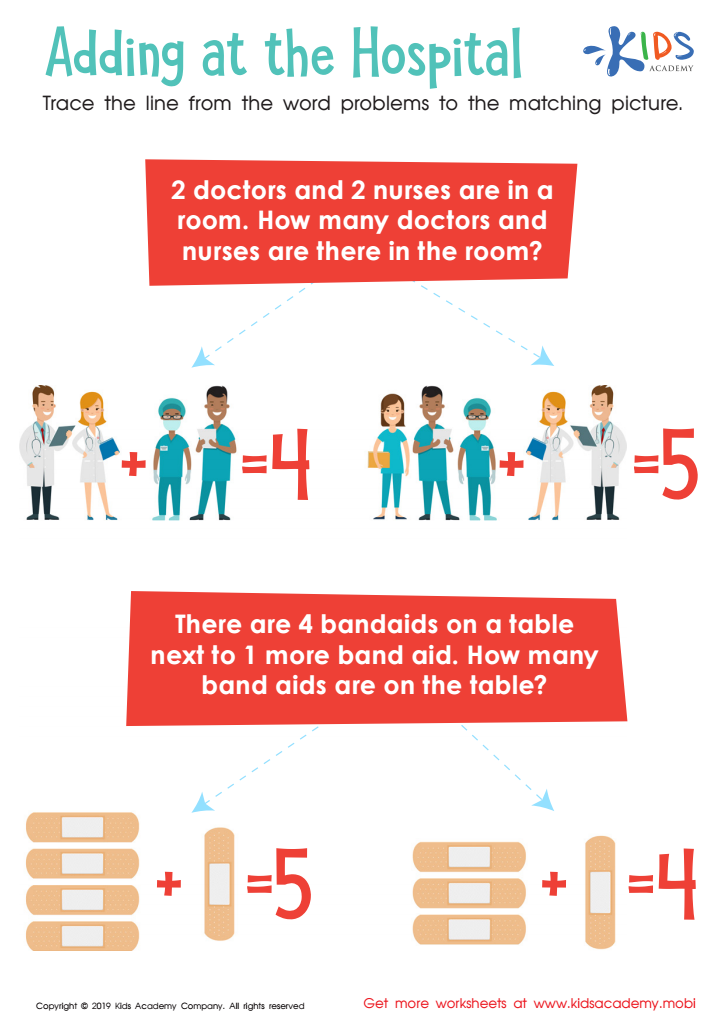
Adding at the Hospital Worksheet
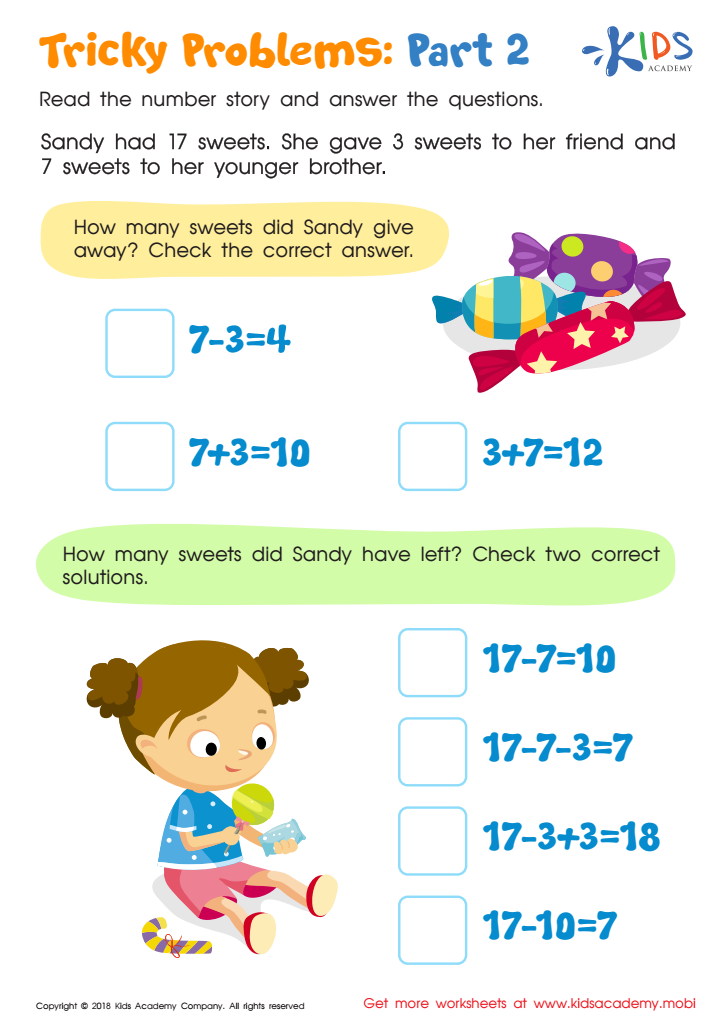
Tricky Problems Worksheet: Part 2
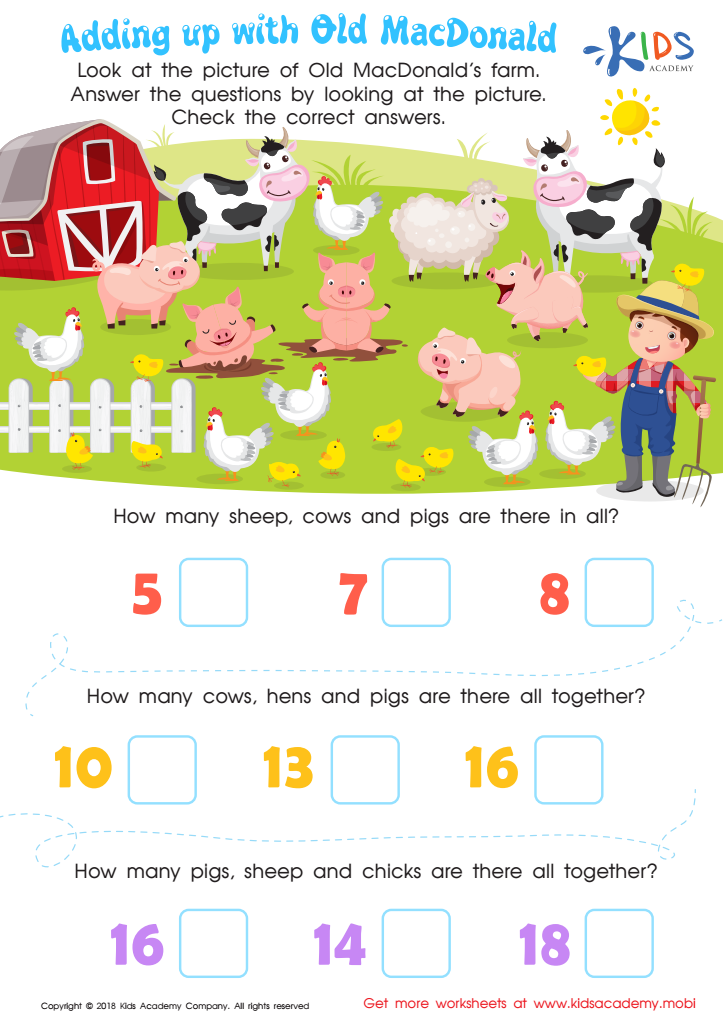
Adding Up with Old MacDonald Worksheet
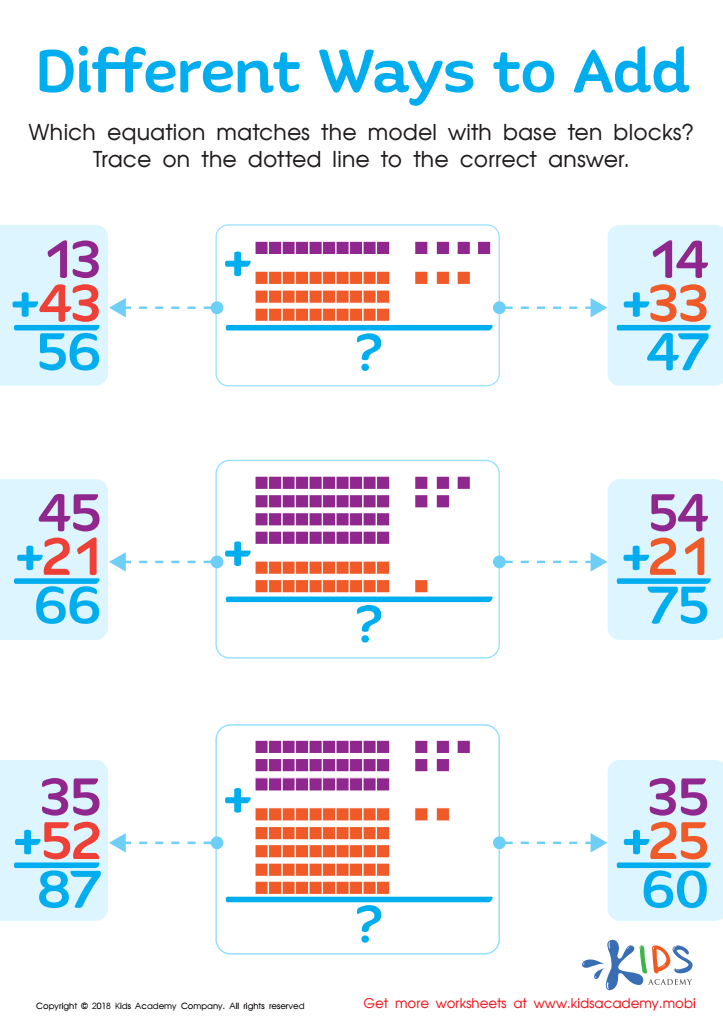
Different Ways to Add Worksheet








Mental math practice, particularly in addition, is crucial for children aged 3-8 for several reasons. Firstly, early exposure to mental math helps develop foundational numeracy skills. These skills are essential for more complex mathematical concepts later in education. Engaging in mental math encourages children to visualize numbers and promotes number sense, which helps them understand how numbers relate to one another.
Additionally, practicing mental arithmetic can boost children's confidence and self-esteem. When children can confidently solve simple addition problems in their heads, they feel a sense of accomplishment. This confidence fosters a positive attitude towards math and encourages them to tackle more challenging problems as they advance.
Mental math practice also enhances cognitive skills such as memory and critical thinking. It trains children to think quickly and improves their ability to process information. Furthermore, it prepares them for real-life situations, like budgeting or calculating change, where reliance on calculators isn’t feasible.
Parents and teachers are instrumental in laying this foundation. Engaging children in fun and interactive mental math activities can not only make learning enjoyable but also enhance their problem-solving abilities, ultimately setting them on a path toward successful mathematical understanding and overall academic achievement.








