Nature appreciation Addition Worksheets for Ages 3-8
5 filtered results
-
From - To
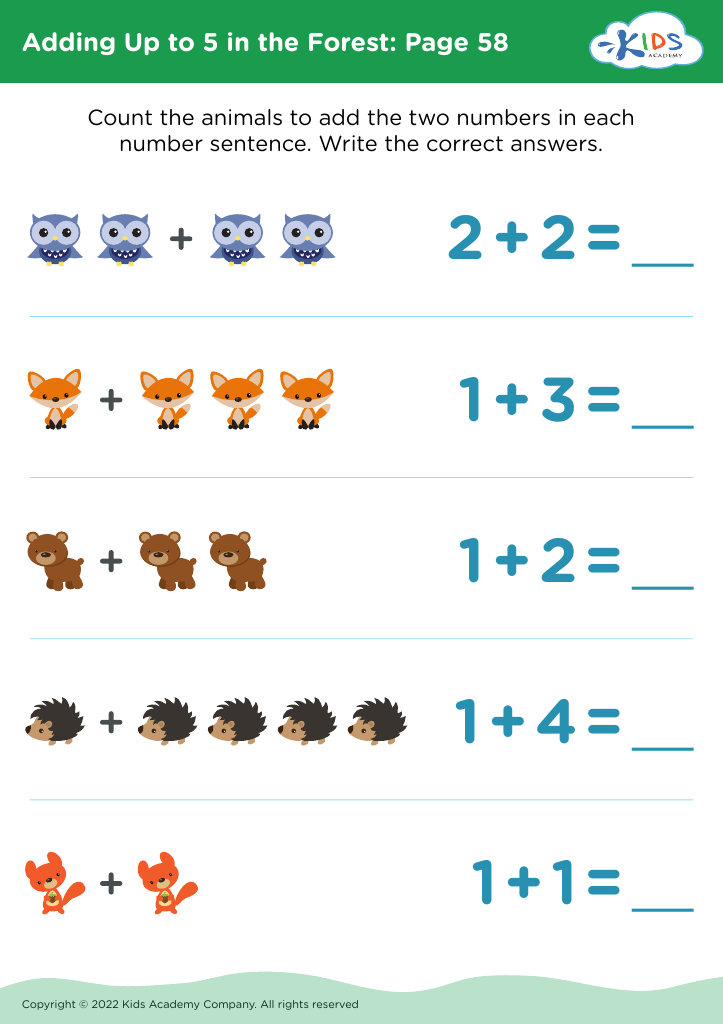
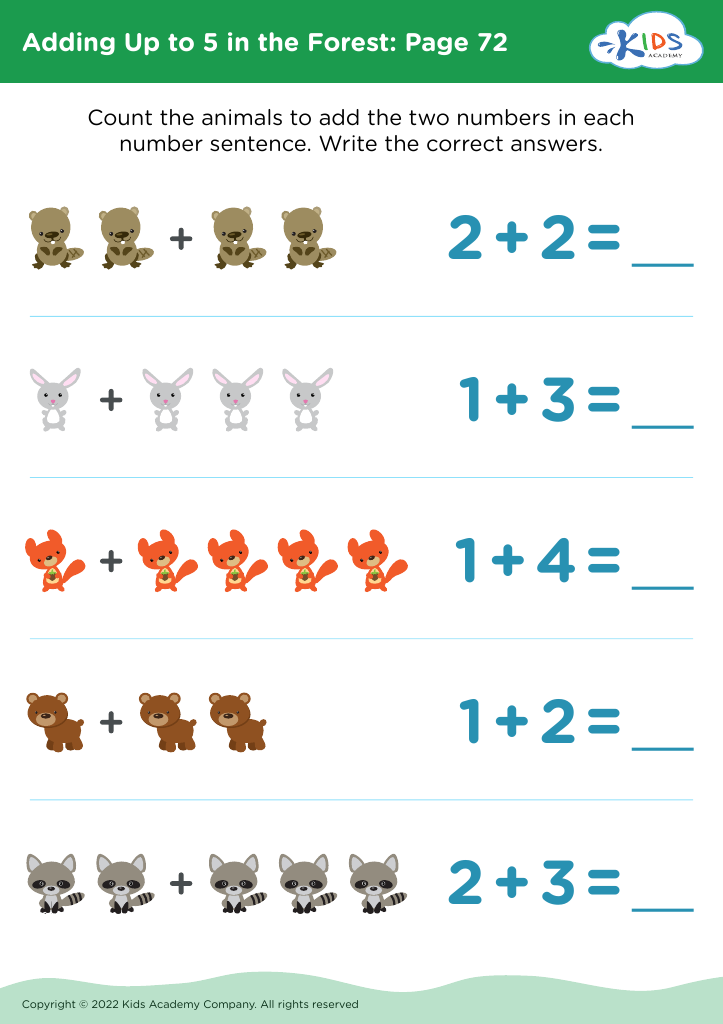
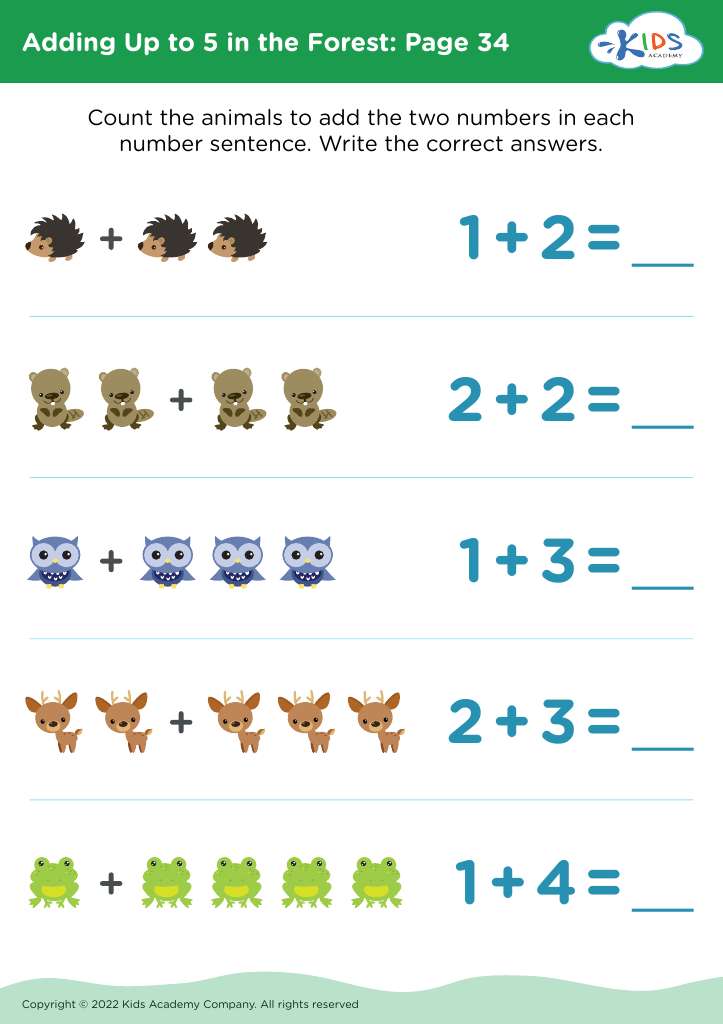
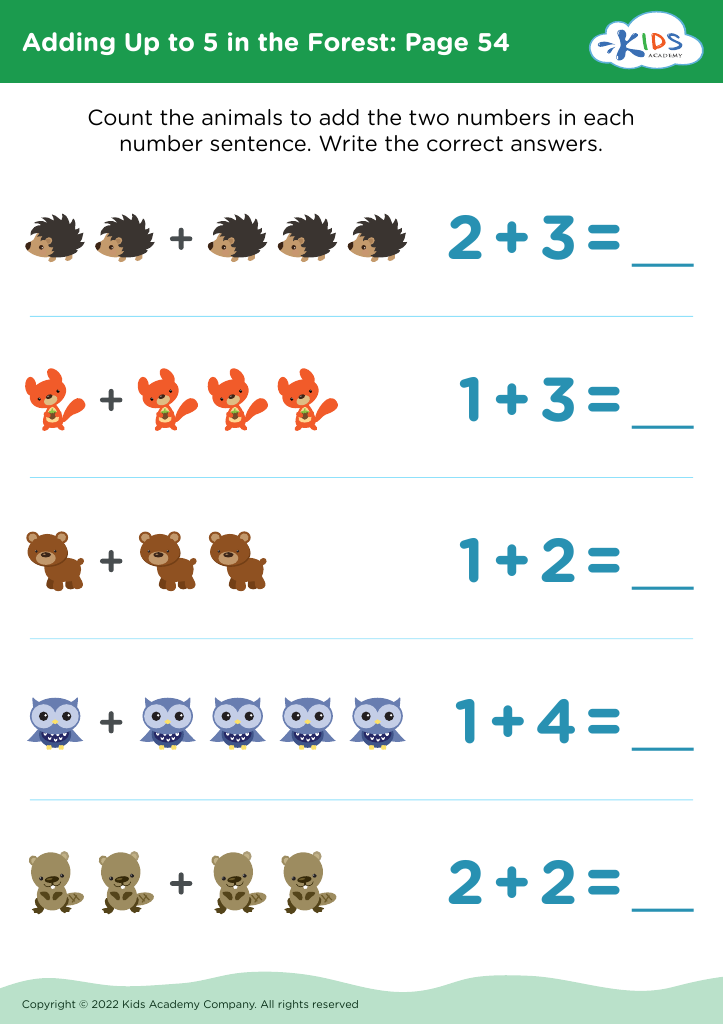
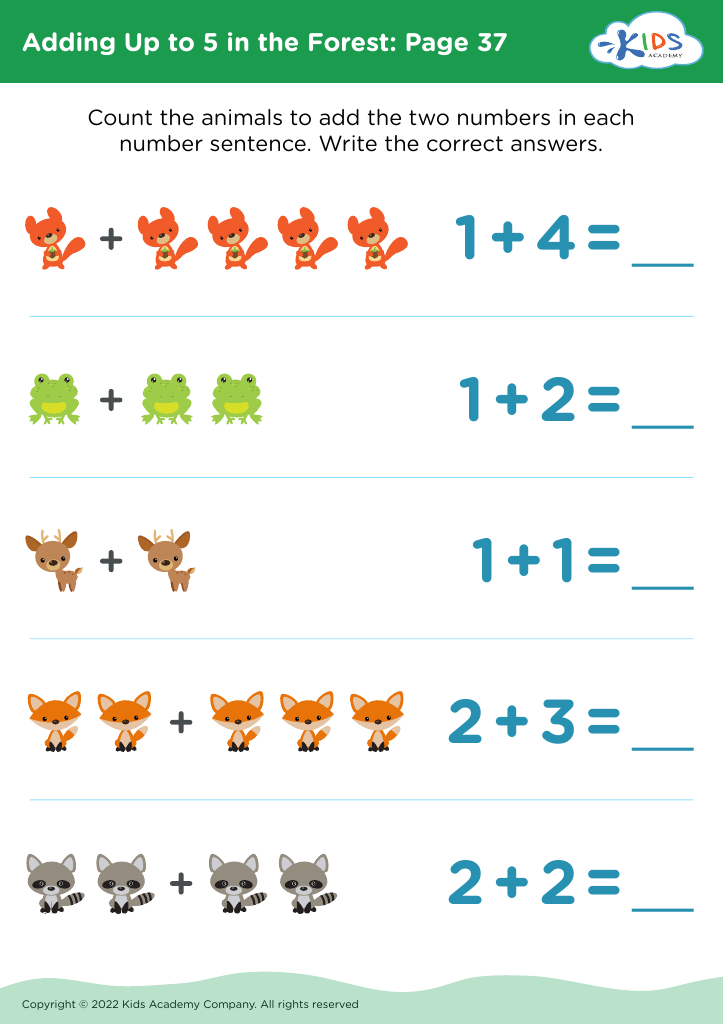
Explore our Nature Appreciation Addition Worksheets designed for kids aged 3-8! These engaging worksheets combine math practice with a love for the outdoors, encouraging young learners to connect with nature while enhancing their addition skills. Each worksheet features delightful nature-themed illustrations to spark curiosity and make learning fun. From counting leaves to adding up animals, these activities promote hands-on learning and environmental awareness. Whether at home or in the classroom, our worksheets make math enjoyable and educational. Help your child develop essential math skills while nurturing their appreciation for the natural world—download our nature-inspired addition worksheets today!








Nature appreciation for children aged 3-8 is crucial for holistic development. It nurtures their innate curiosity, encouraging exploration, which fosters cognitive skills such as observation and reasoning. Engaging with the natural world enhances children's understanding of ecosystems, biodiversity, and the importance of environmental stewardship.
For parents and teachers, promoting nature appreciation supports emotional well-being. Nature has a calming effect and can reduce stress levels, helping children develop resilience. Experiencing the outdoors encourages creativity, as children invent games, stories, and activities inspired by their surroundings.
Moreover, nature appreciation helps develop social skills. Group activities like exploring parks or gardening cultivate teamwork, communication, and even empathy as children learn to respect living organisms. Engaging with nature also allows discussions about choices, such as caring for the environment and sustainability.
Finally, establishing a connection with nature encourages a lifelong appreciation for the Earth. By instilling these values early on, we can cultivate a generation that is informed, caring, and responsible towards the environment. Overall, nature appreciation contributes not only to academic success but also to emotional and social intelligence, making it vital for parents and teachers to prioritize in a child's formative years.








