Practice division Addition Worksheets for Ages 3-8
3 filtered results
-
From - To
Boost your child's math skills with our engaging Practice Division Addition Worksheets designed for ages 3-8! These interactive resources provide a fun approach to learning essential arithmetic concepts, combining both addition and division practice. Kids will enjoy colorful illustrations and age-appropriate problems tailored to enhance their understanding of basic math operations. By integrating playful exercises, we make learning enjoyable and effective, ensuring your little ones develop confidence in their mathematical abilities. Perfect for homeschoolers, teachers, or anyone looking to enrich their child's education, these worksheets are downloadable and easily accessible. Start your child’s journey to mathematical mastery today!
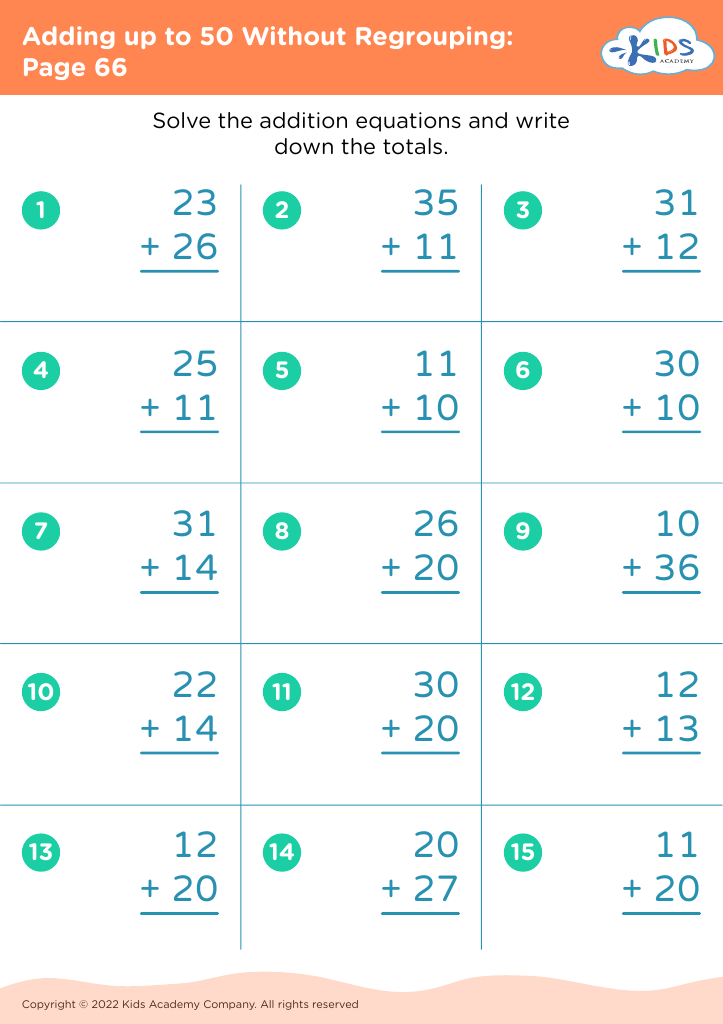
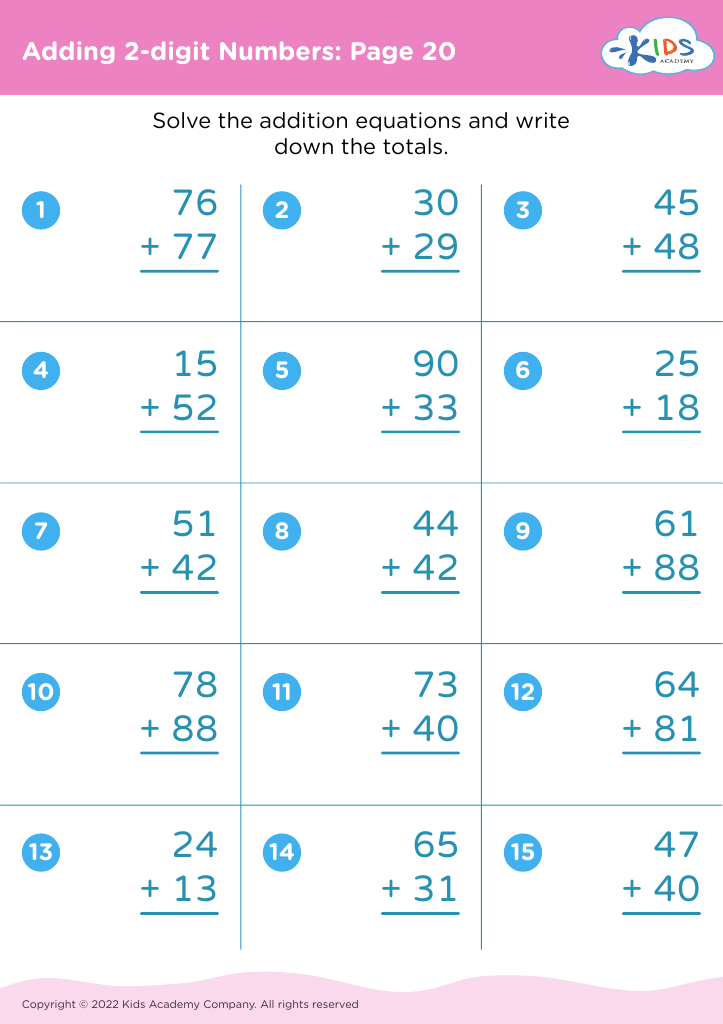
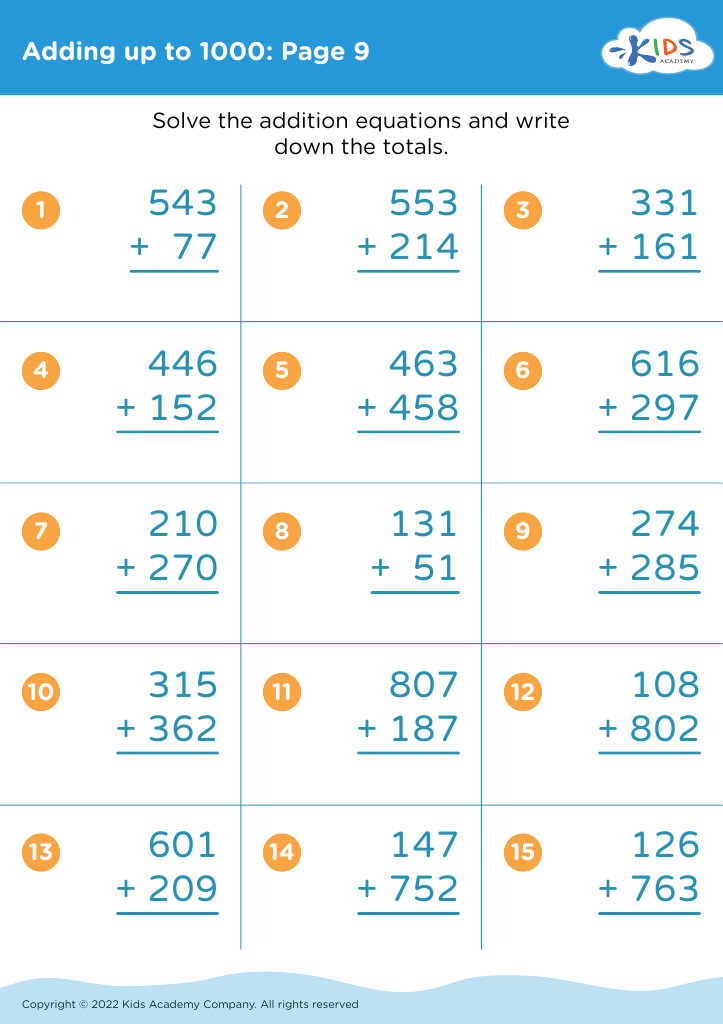








Practicing division and addition with children ages 3-8 is crucial for laying a strong foundation in mathematics, which is essential for their overall academic success. These skills align with early childhood learning standards, where understanding basic operations fosters critical thinking and problem-solving abilities.
For parents and teachers, engaging children in fun and interactive activities around addition and division can make learning enjoyable and relatable. Through games, stories, and everyday situations, children can grasp these concepts in a meaningful context. Early mastery of addition helps children progress to more complex math operations, including multiplication and division later on.
Additionally, practice at this age cultivates confidence, as children see themselves succeeding in math tasks. It’s also beneficial for enhancing language skills, as children learn to explain their thought processes, develop communication abilities, and build mathematical vocabulary.
Furthermore, establishing a positive attitude towards math at an early age can prevent anxiety and negative perceptions of the subject in the future. Overall, nurturing mathematical skills early benefits not just academic performance but also children's cognitive development, fostering a lifelong love for learning. For these reasons, parents and teachers should prioritize practice in addition and division during early childhood education.








