Practice inference skills Addition Worksheets for Ages 3-8
3 filtered results
-
From - To
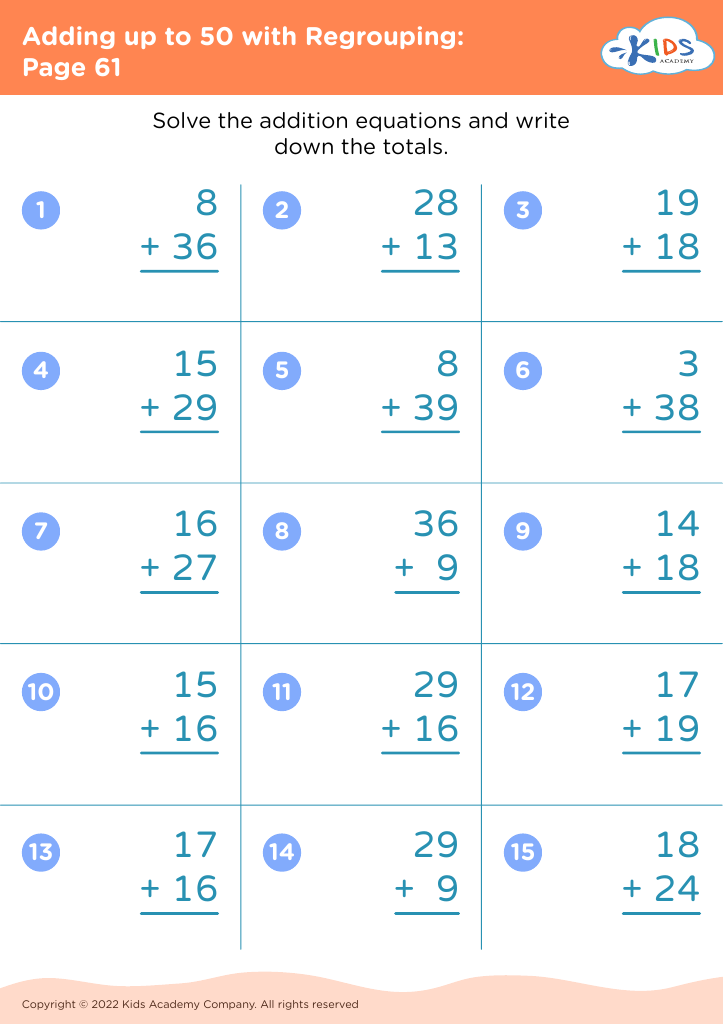
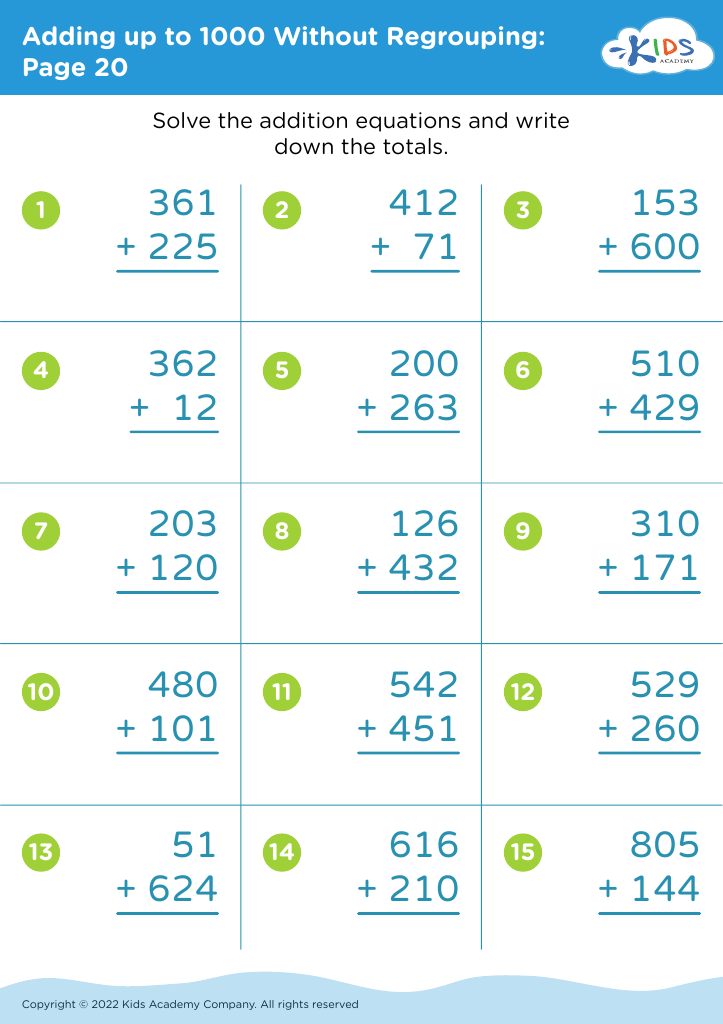
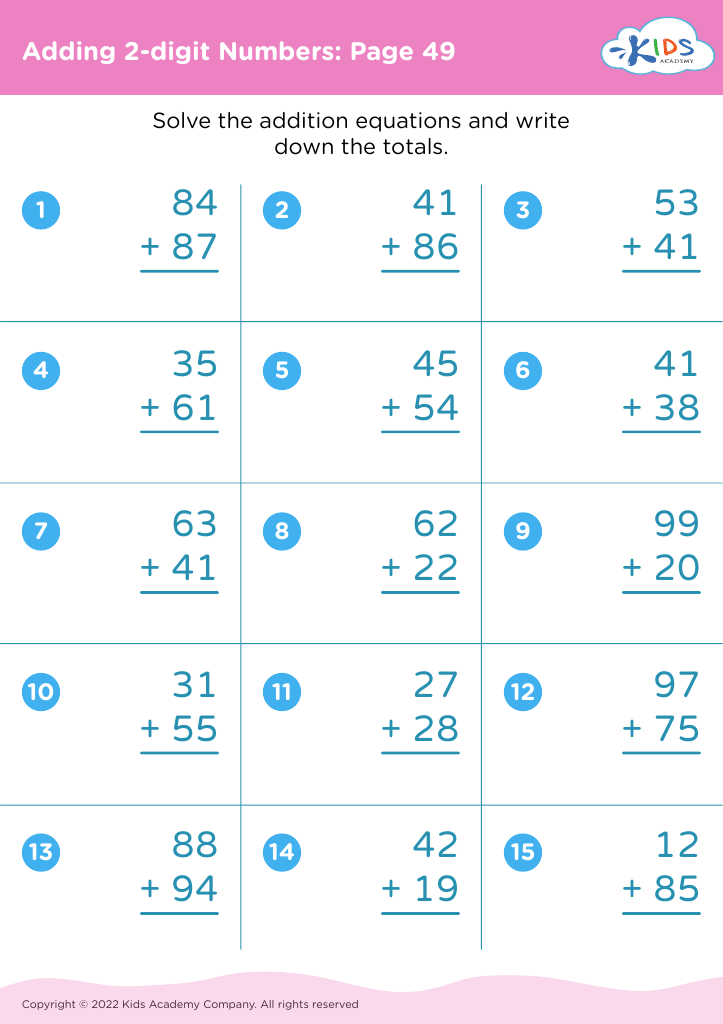
Welcome to our "Practice Inference Skills Addition Worksheets" designed for children aged 3-8! These engaging worksheets are perfect for young learners to enhance their mathematical abilities while developing critical inference skills. Each activity is tailored to encourage cognitive growth and promote the understanding of addition concepts through fun, interactive exercises. Your child will learn to make connections, draw conclusions, and enhance their problem-solving skills, all while enjoying colorful illustrations and age-appropriate tasks. Foster a love for learning with our carefully crafted resources that not only teach addition but also inspire cognitive development. Start your child's journey to math mastery today!






.jpg)

Practicing inference skills in addition for children ages 3-8 is crucial for several reasons. Firstly, foundational mathematical skills, such as addition, are essential for academic success throughout a child's education. By fostering inference skills—where children learn to make connections and predictions based on their existing knowledge—parents and teachers create a deeper understanding of numbers and their relationships.
Inference skills enable children to tackle more complex problems by encouraging critical thinking and problem-solving, skills that are invaluable beyond mathematics. As they engage with addition, children learn to infer the outcome of combining numbers and predicting results based on patterns. This cognitive development lays the groundwork for future mathematical concepts, such as subtraction, multiplication, and division.
Moreover, emphasizing these skills nurtures a positive attitude towards learning. Children who can infer outcomes feel more confident in their problem-solving abilities, promoting a growth mindset. Practicing addition through engaging activities also enhances their ability to communicate their reasoning, improving their overall language skills.
Ultimately, when parents and teachers prioritize inference skills in addition, they equip children with essential tools that will serve them in various areas of learning and life, fostering essential skills that extend far beyond the classroom.








