Recognizing equivalent fractions Addition Worksheets for Ages 3-8
5 filtered results
-
From - To
Discover our engaging Recognizing Equivalent Fractions Addition Worksheets tailored for children ages 3-8! These interactive activities are designed to help young learners grasp the concept of equivalent fractions while mastering addition skills. Through colorful illustrations and fun exercises, kids will identify and compare fractions, fostering a deeper understanding of this essential mathematical concept. Our worksheets are perfect for home or classroom use, encouraging collaborative learning and playful practice. Nurture your child’s math confidence and foundational skills with these thoughtfully crafted resources, making learning both enjoyable and effective! Explore our collection today and watch your little mathematicians thrive!
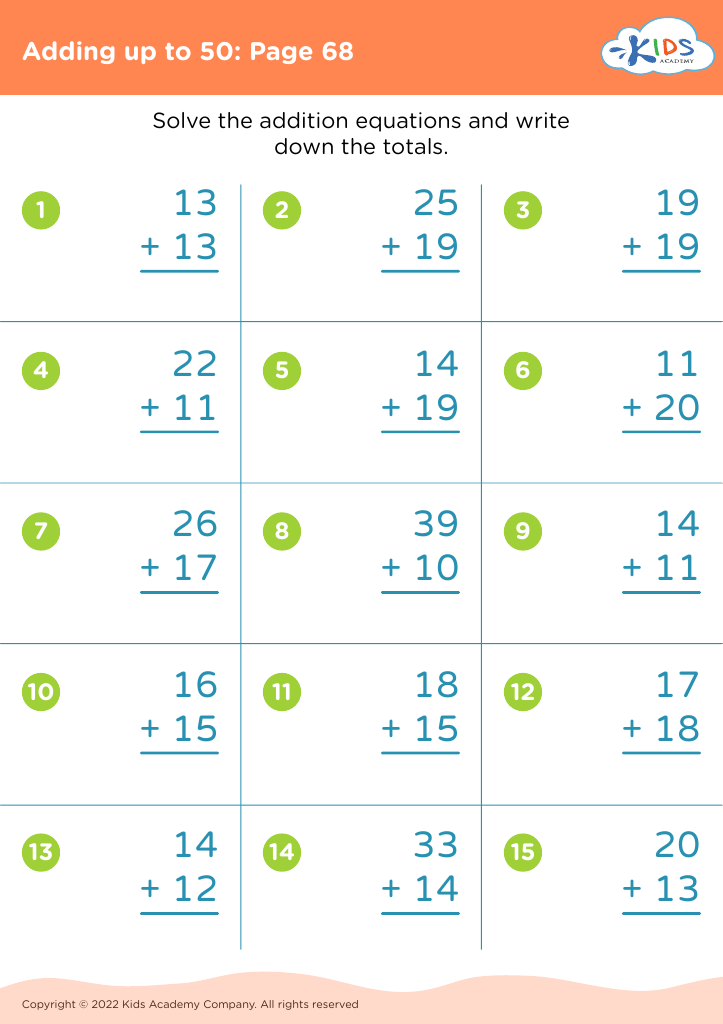
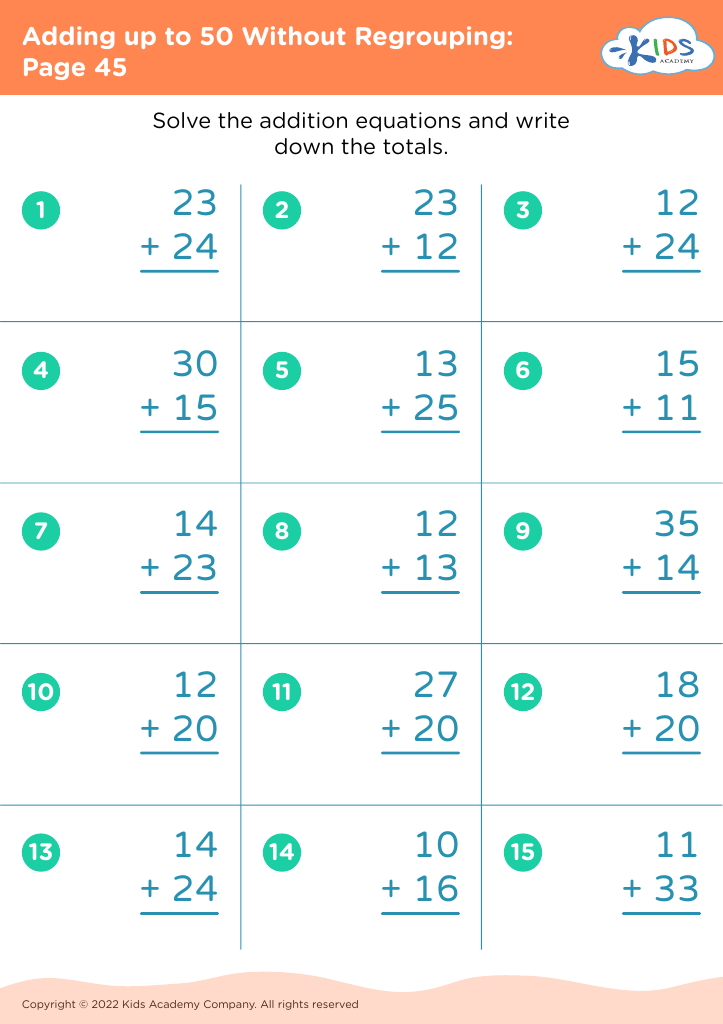
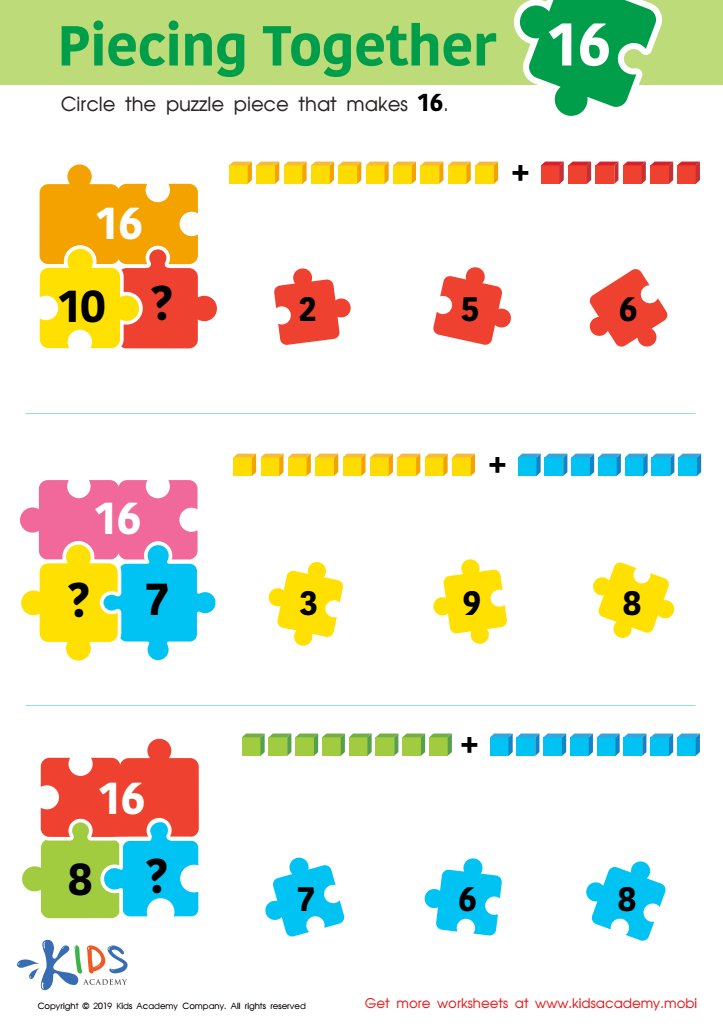
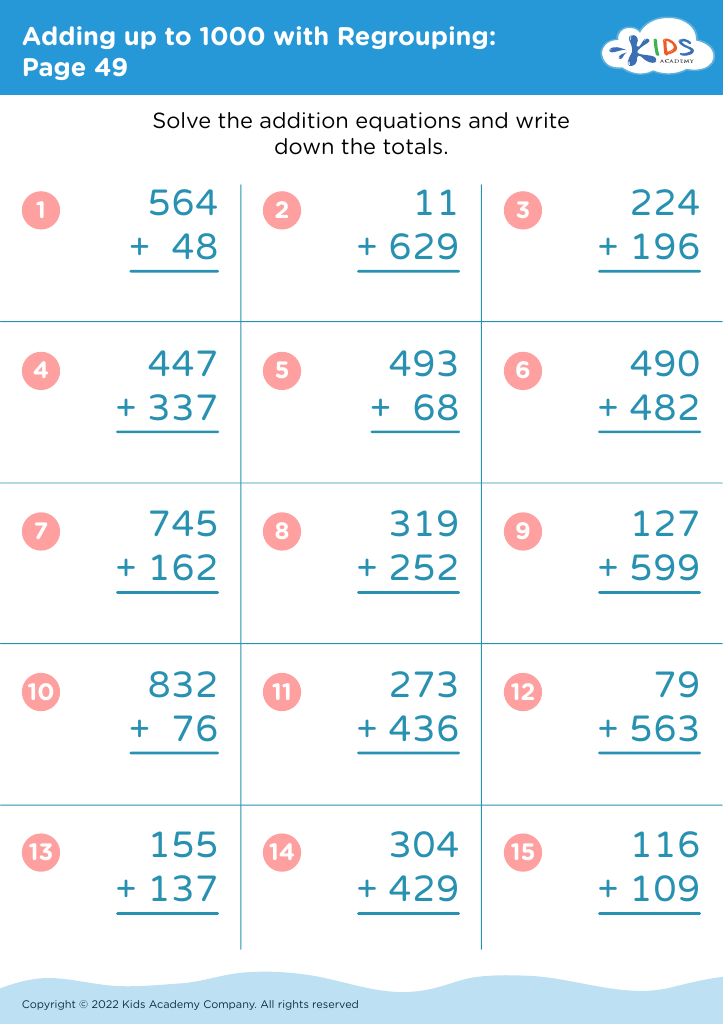
Piecing Together 16 Worksheet
 Assign to My Students
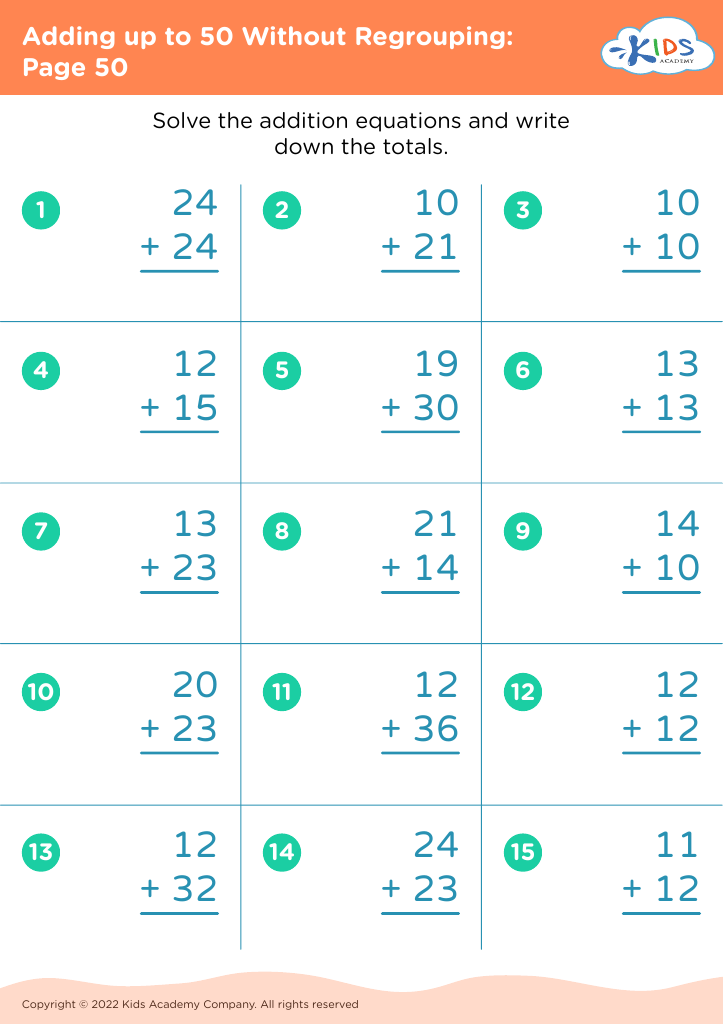








Recognizing equivalent fractions is a foundational skill that lays the groundwork for more complex mathematical concepts in later years. For children aged 3-8, understanding equivalent fractions helps them conceptualize the relationship between numbers and improves their number sense. This is crucial for developing problem-solving skills and critical thinking.
Parents and teachers play an essential role in nurturing this understanding. By integrating practical activities, such as sharing pizzas or cutting shapes, they can make learning engaging and relatable. Recognizing equivalent fractions aids in developing an intuition for division and multiplication, leading to stronger computational skills as they grow.
Moreover, early mastery of equivalent fractions can boost a child’s confidence in math, reducing anxiety toward the subject as they progress. A solid grasp of these concepts also contributes to higher achievement in standardized tests and future mathematical pursuits.
Encouraging this understanding during ages 3-8 supports not only math proficiency but also fosters an appreciation for the beauty and logic of mathematics. Ultimately, recognizing equivalent fractions is about building a robust foundation that supports lifelong learning and an enduring relationship with math. Thus, parents and teachers should focus on this vital area of early education.








