Understand patterns Addition Worksheets for Ages 3-8
6 filtered results
-
From - To
Discover our "Understand Patterns Addition Worksheets" designed specifically for children ages 3-8. These engaging worksheets help young learners identify and comprehend the relationship between numbers through fun patterns and addition exercises. With vibrant visuals and interactive activities, kids will develop essential math skills while enhancing their critical thinking abilities. Our resources are perfect for today's curious minds, fostering a love for learning in a playful environment. Accessible online, these worksheets are suitable for both classroom and home use, making math an enjoyable experience. Help your child build a strong foundation in mathematics as they understand and master addition patterns!
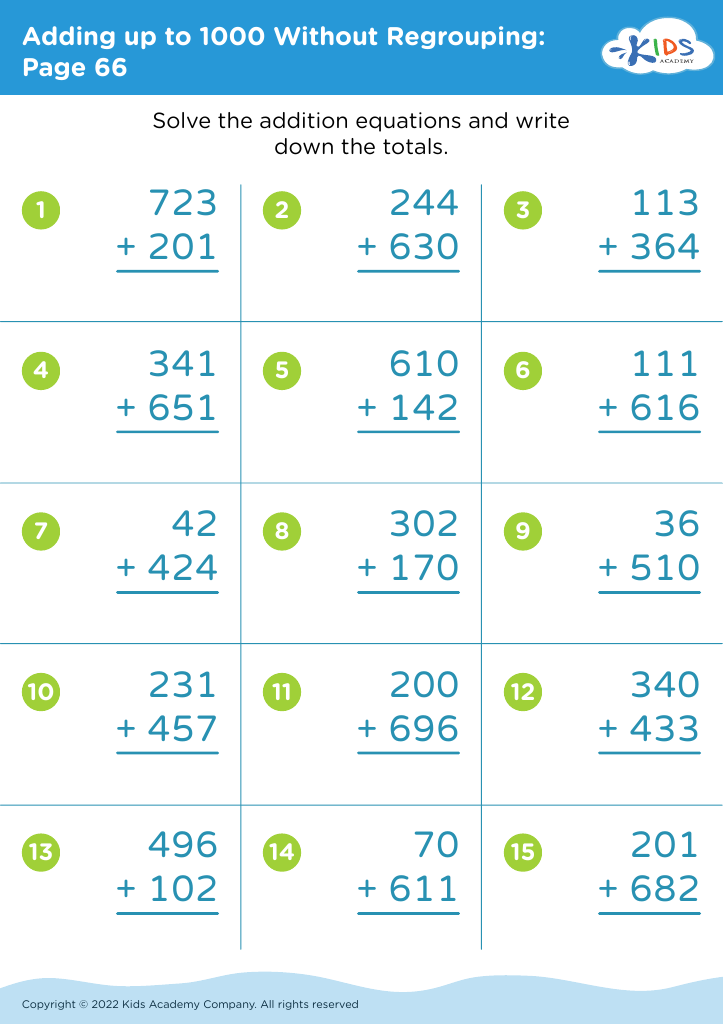
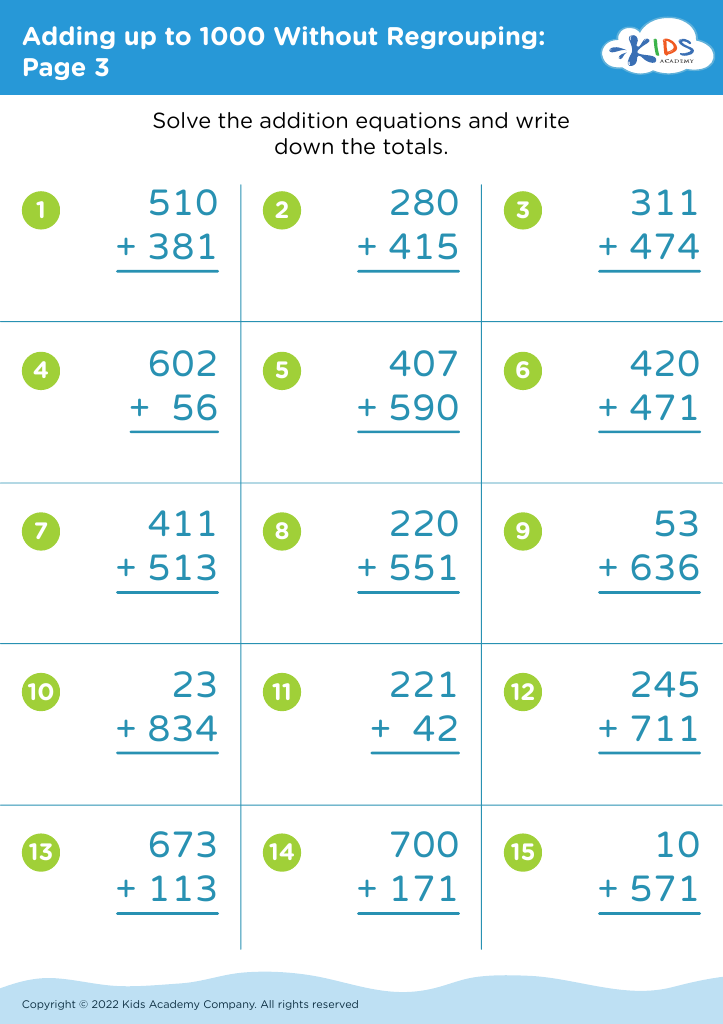
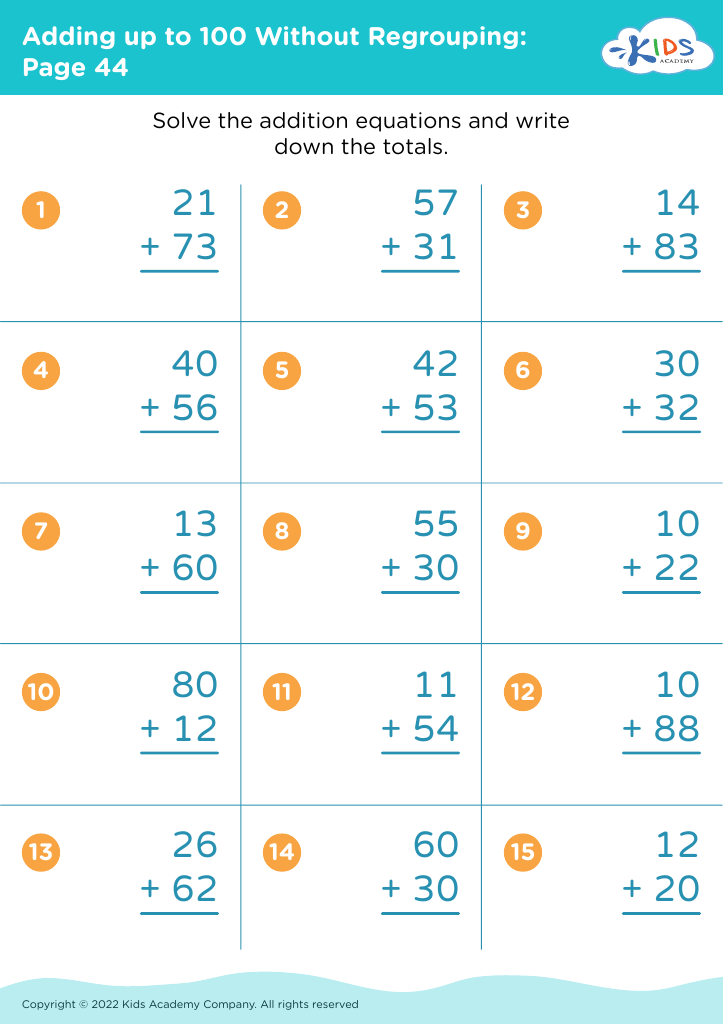
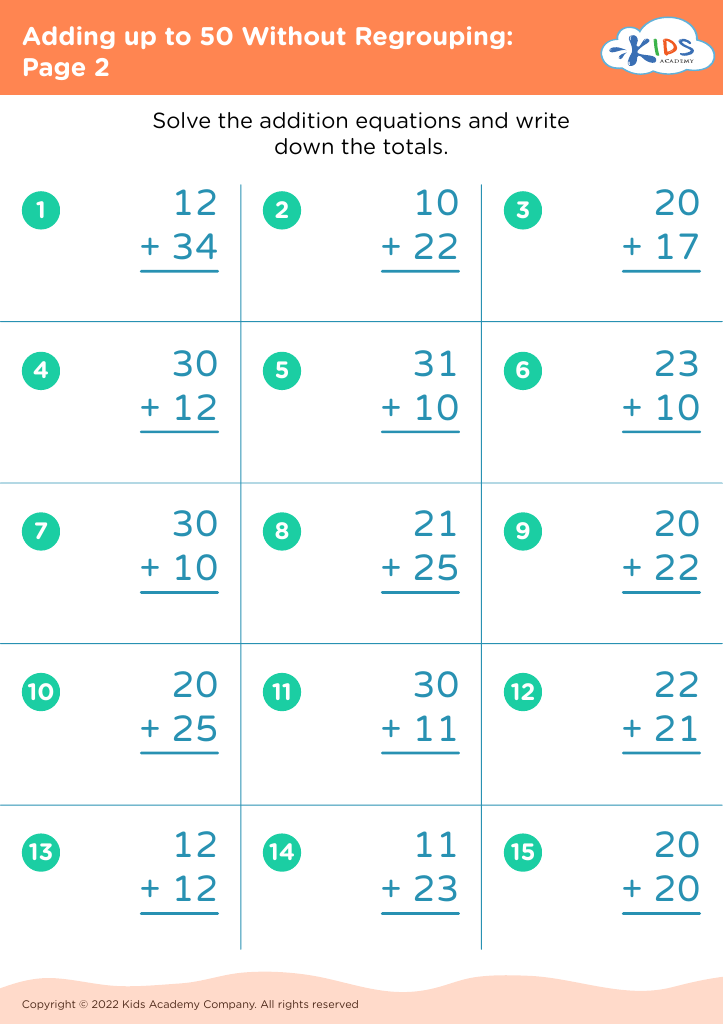








Understanding patterns in addition is essential for young learners aged 3-8, as it lays the groundwork for later mathematical concepts and critical thinking skills. When children are introduced to patterns, they begin to recognize relationships and sequences, which are foundational to addition. By identifying patterns, they can develop strategies to solve addition problems more efficiently and accurately, fostering a sense of accomplishment.
Incorporating pattern recognition into addition helps nurture cognitive skills. For instance, children learn to predict outcomes and complete sequences, which boosts their problem-solving abilities. This understanding prepares them for more complex mathematical concepts, making transitions to advanced topics smoother.
Moreover, developing strong foundational skills in addition through patterns enhances children's confidence in their mathematical abilities. When parents and teachers emphasize this connection, they reinforce a positive learning environment where mistakes are viewed as opportunities to learn.
Additionally, recognizing patterns can stimulate curiosity and engagement, making math enjoyable. By focusing on these skills, educators and parents are not just teaching addition; they are fostering a comprehensive mindset that empowers children to approach both math and everyday experiences with analytical thinking and creativity. Ultimately, prioritizing understanding patterns in addition will serve children throughout their educational journeys and beyond.








