Understand sequences Addition Worksheets for Ages 3-8
5 filtered results
-
From - To
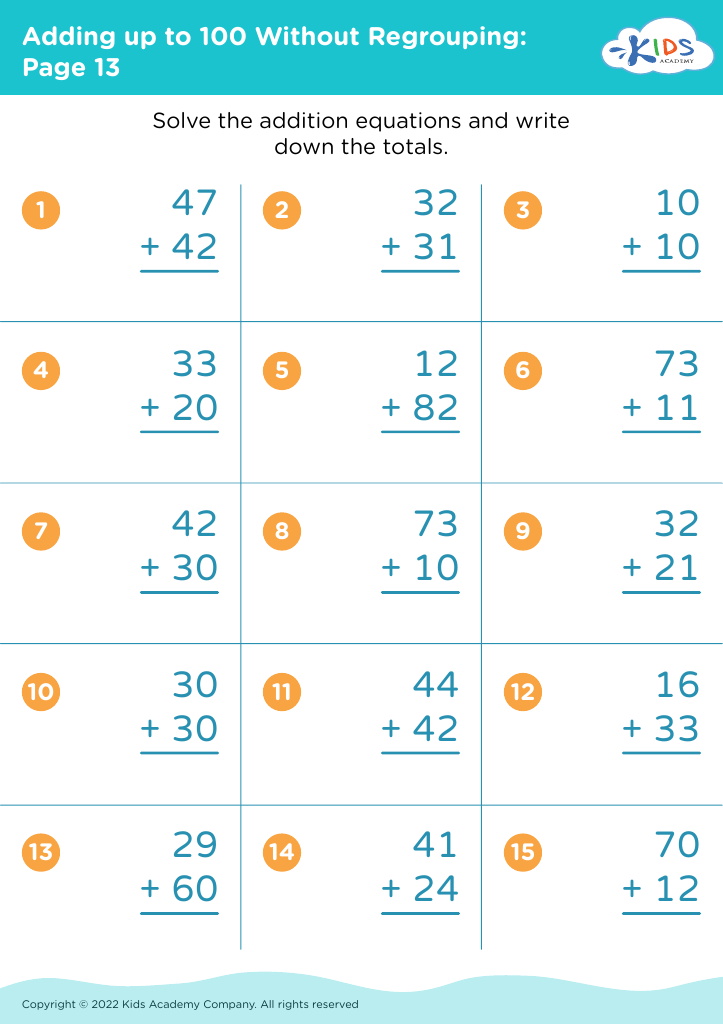
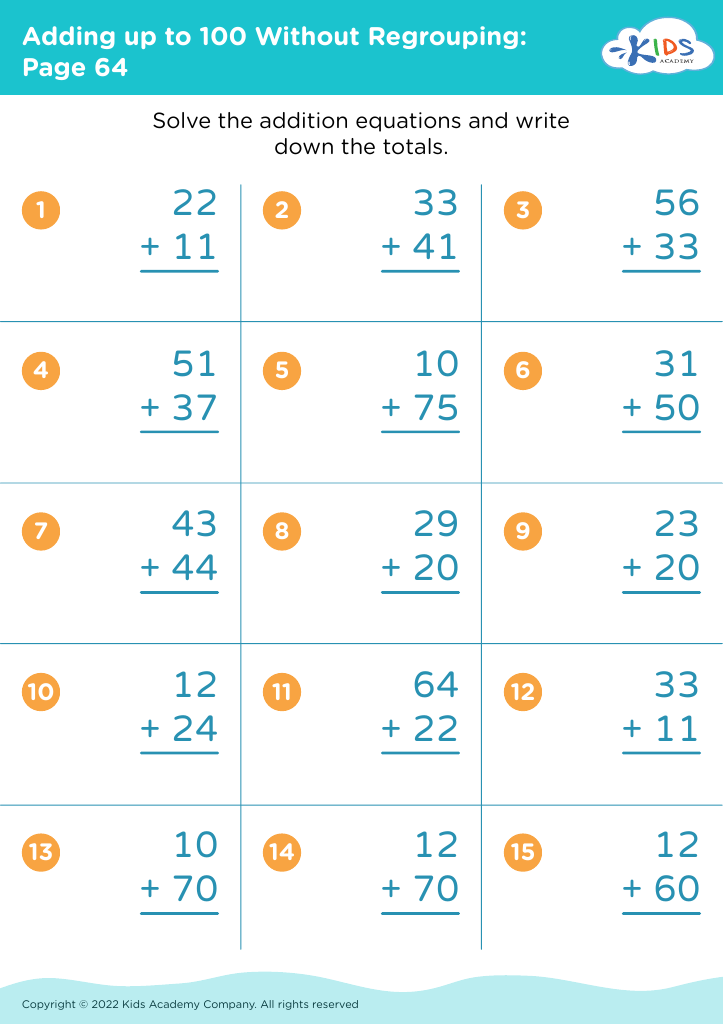
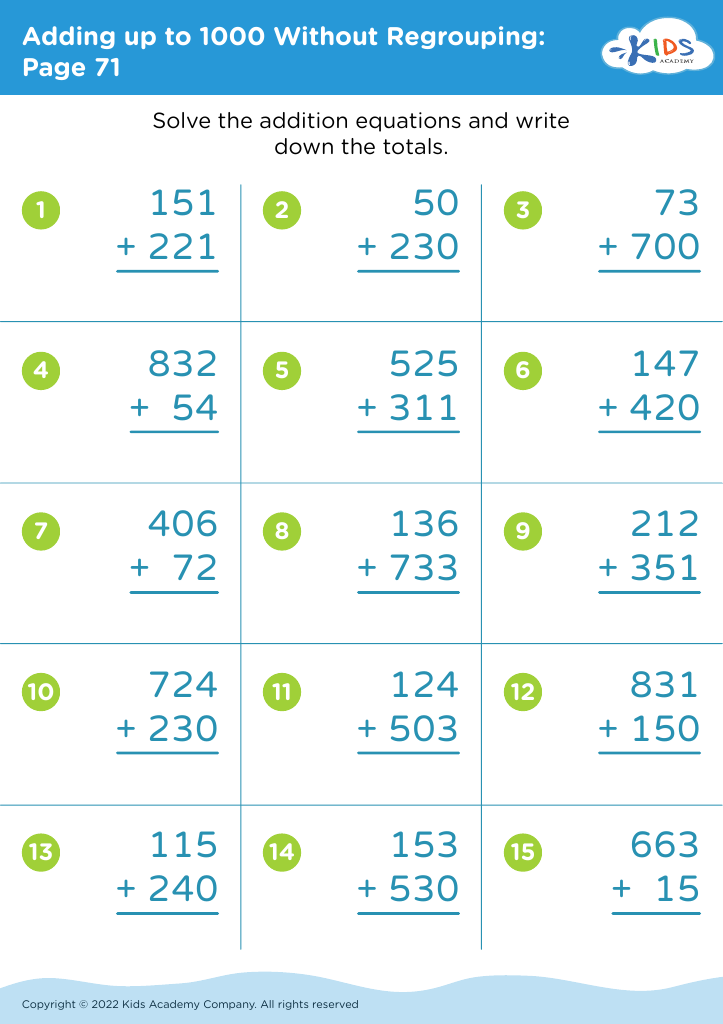
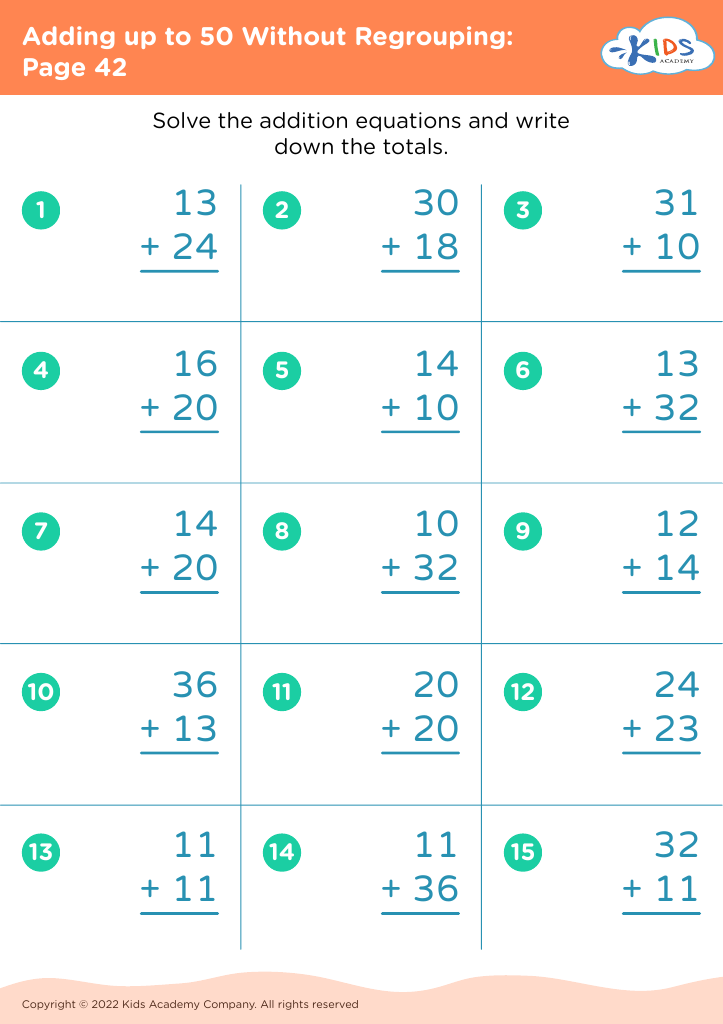
Discover our "Understand Sequences Addition Worksheets for Ages 3-8," designed to build strong foundational math skills. Perfect for early learners, these engaging worksheets help children grasp the concept of sequential addition through fun, interactive exercises. Your child will enjoy solving puzzles and following intuitive prompts that make learning addition enjoyable and straightforward. Whether they’re working in the classroom or at home, these worksheets offer the perfect balance of challenge and excitement, geared towards enhancing their numerical fluency and confidence in math. Give your child the head start they deserve with our expertly crafted educational resources.
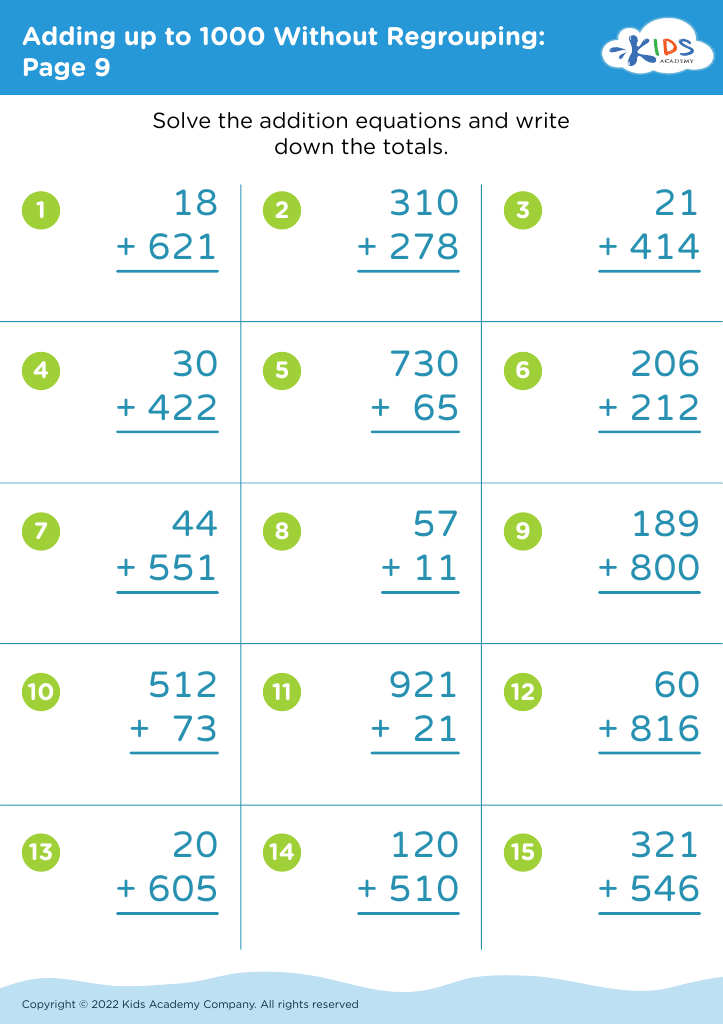








Understanding sequences and addition is foundational for early mathematical development in children ages 3-8. These skills are pivotal for building number sense, which is critical for future academic success in mathematics and logical reasoning.
Firstly, grasping the concept of sequences helps children recognize patterns and predict what comes next, which lays the groundwork for more complex problem-solving abilities. This helps in everyday tasks such as organizing and following instructions.
Secondly, addition is a fundamental arithmetic skill that from a young age, aids children in understanding how numbers interact. Mastering basic addition is essential for higher-level math, including subtraction, multiplication, and division.
Teaching these skills to young children enhances cognitive development. By engaging with numbers and sequences through playful activities such as counting games, puzzles, or songs, kids develop fine motor skills, memory, and attention to detail.
Lastly, early competency in sequences and addition fosters confidence and a positive attitude towards math. Children who enter school with a solid understanding of these concepts tend to perform better academically across subjects, face fewer anxieties regarding math, and are more likely to pursue STEM-related fields in the future.
In summary, investing in teaching sequences and addition to young children sets the stage for lifelong learning and achievement in mathematics and beyond.








