Filters

158 filtered results

Clear all filters
Favorites
With answer key
Interactive

158 filtered results

Difficulty Level

Grade


Check out this FREE Trial Lesson on Addition for age 3-8!

Exactly the Same, or Not

Favorites
With answer key
Interactive
  • 3-8
  • Understanding fractions
  • Addition
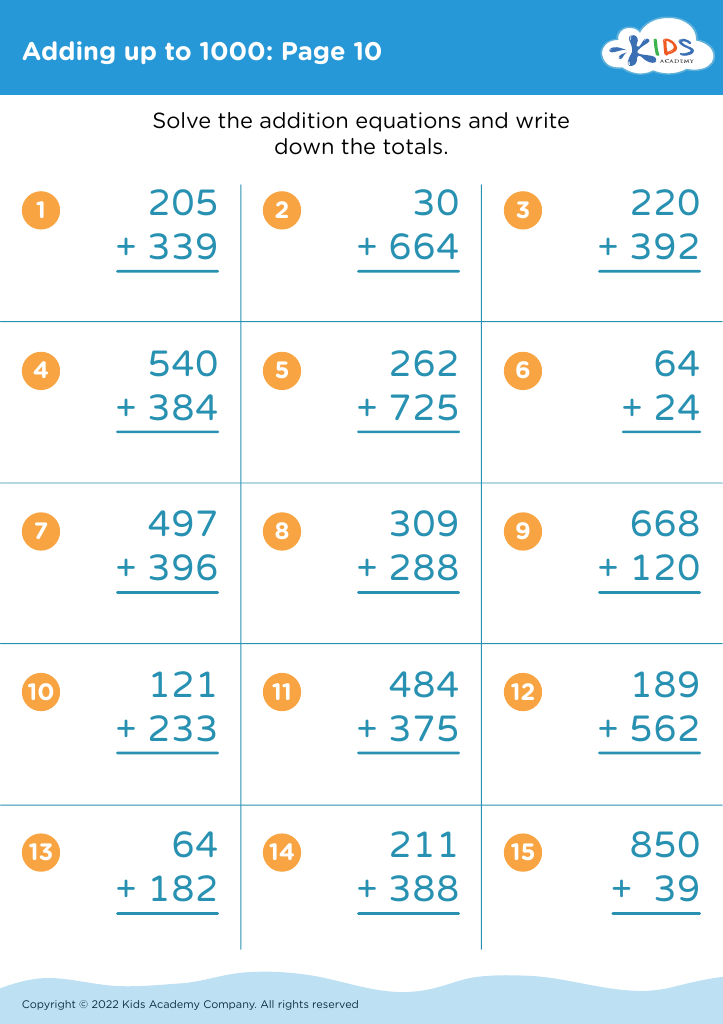
Adding up to 1000: Page 10

Adding up to 1000: Page 10

Adding up to 1000: Page 10
Worksheet
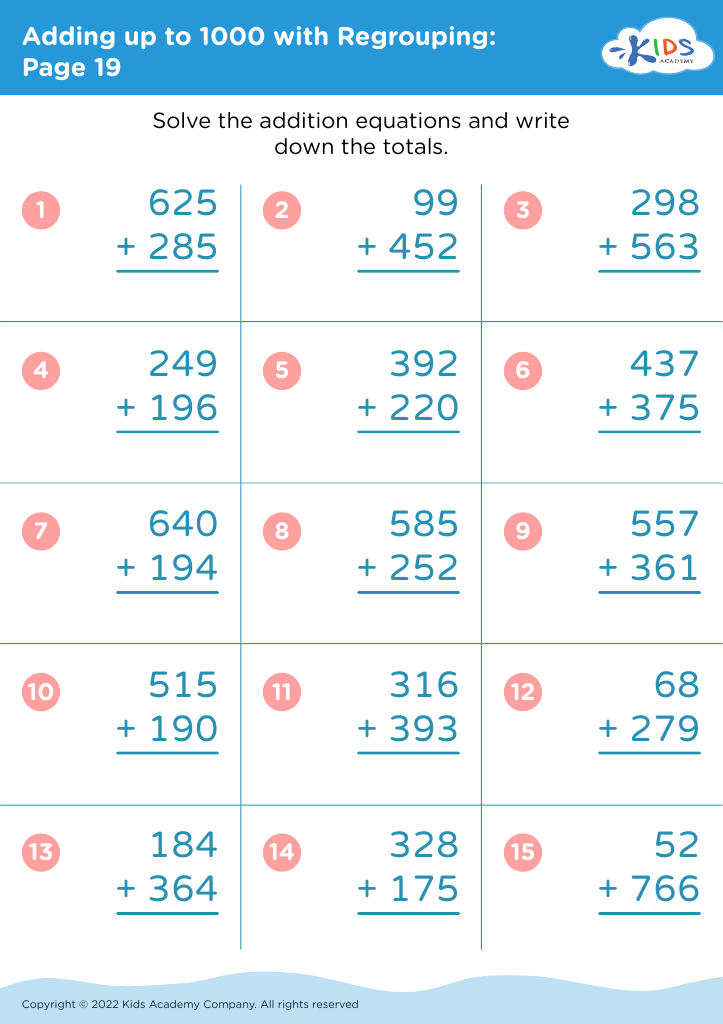
Adding up to 1000 with Regrouping: Page 19
Worksheet
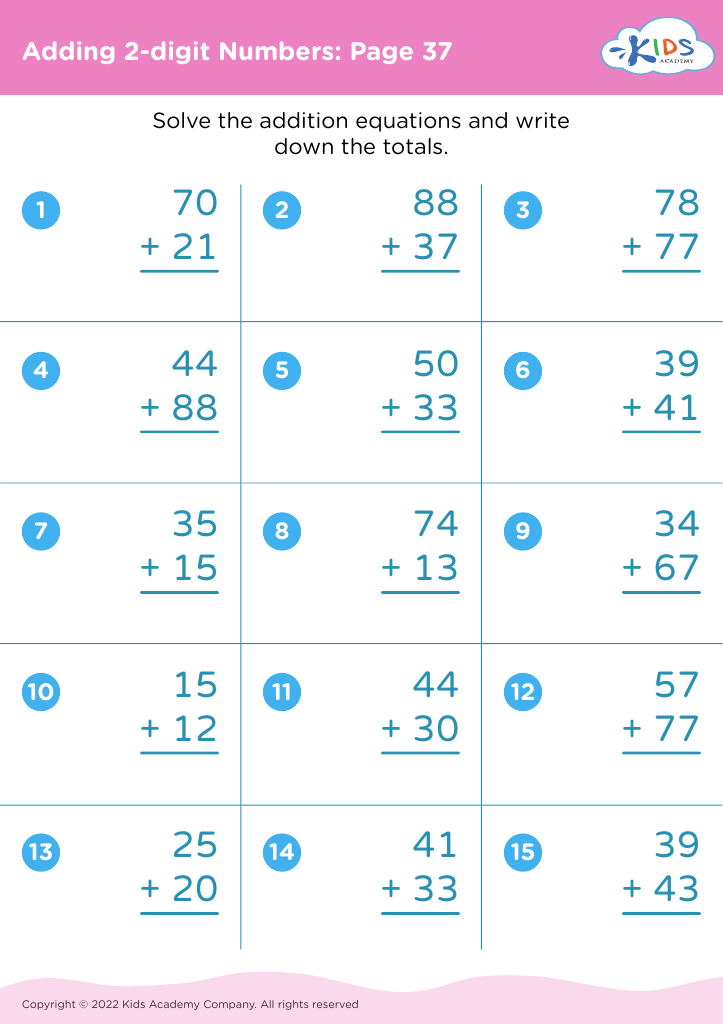
Adding 2-digit Numbers: Page 37

Adding 2-digit Numbers: Page 37

Adding 2-digit Numbers: Page 37
Worksheet
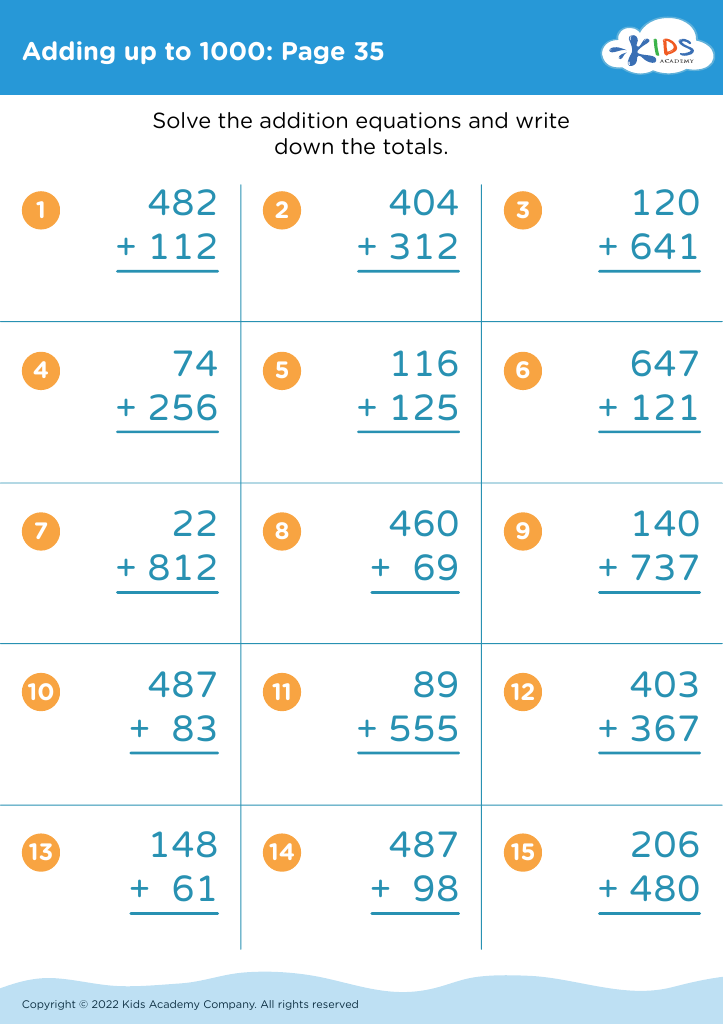
Adding up to 1000: Page 35

Adding up to 1000: Page 35

Adding up to 1000: Page 35
Worksheet
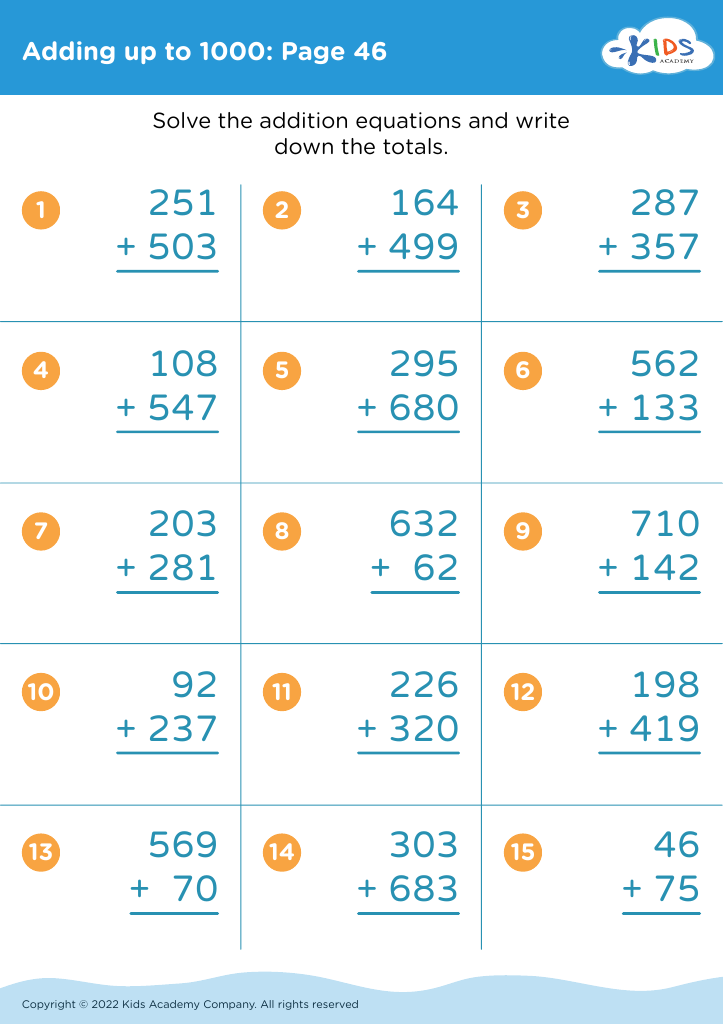
Adding up to 1000: Page 46

Adding up to 1000: Page 46

Adding up to 1000: Page 46
Worksheet
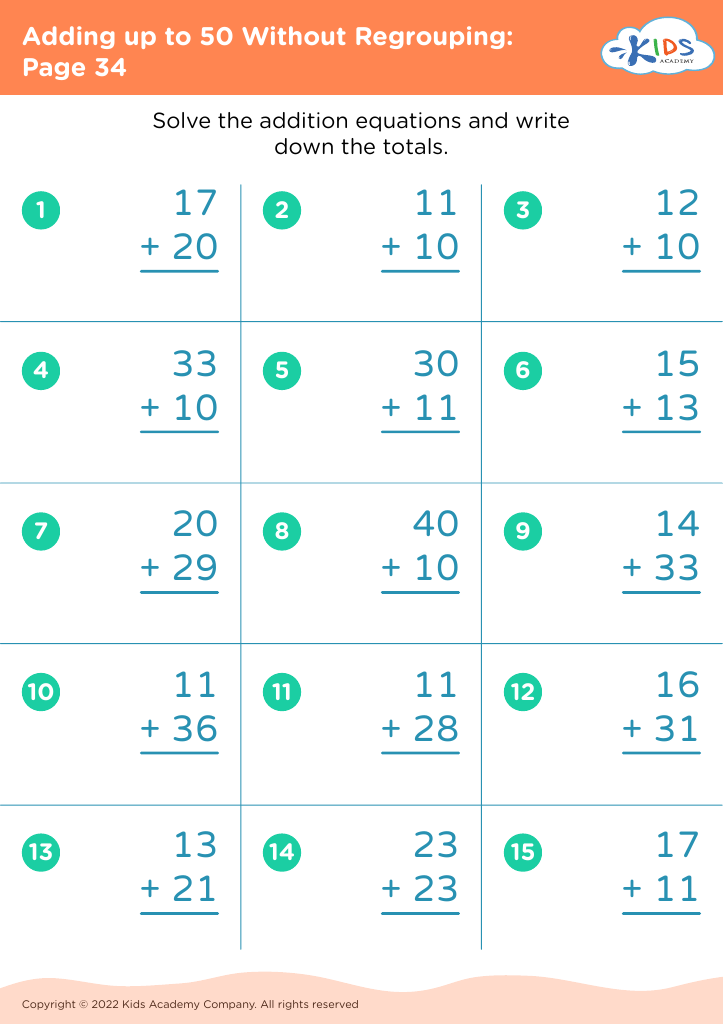
Adding up to 50 Without Regrouping: Page 34
Worksheet
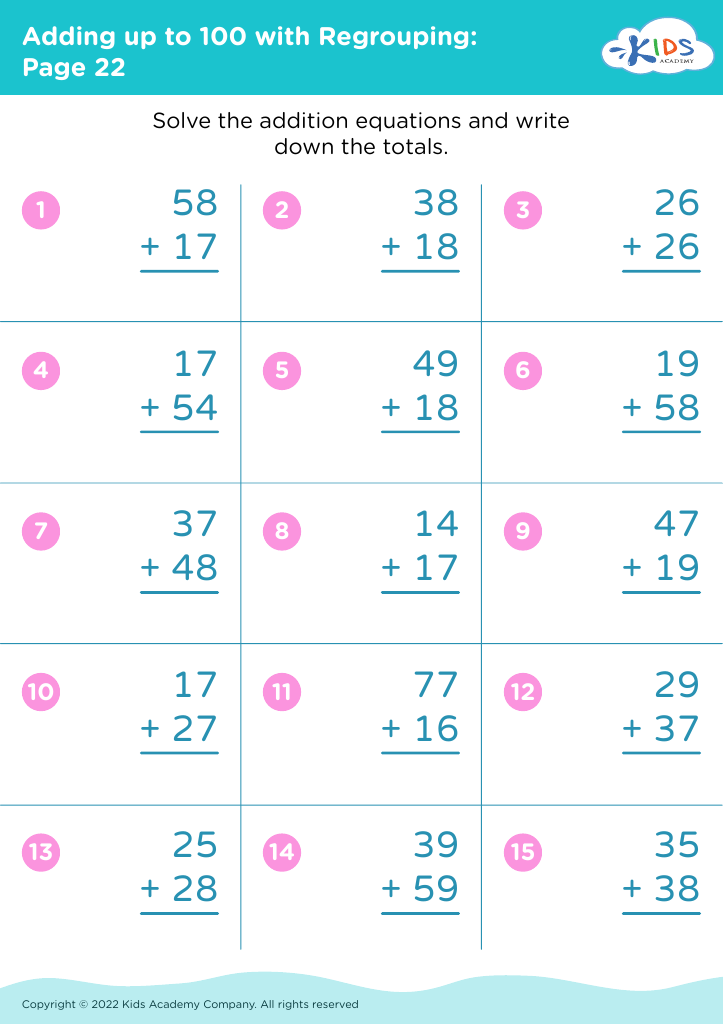
Adding up to 100 with Regrouping: Page 22
Worksheet
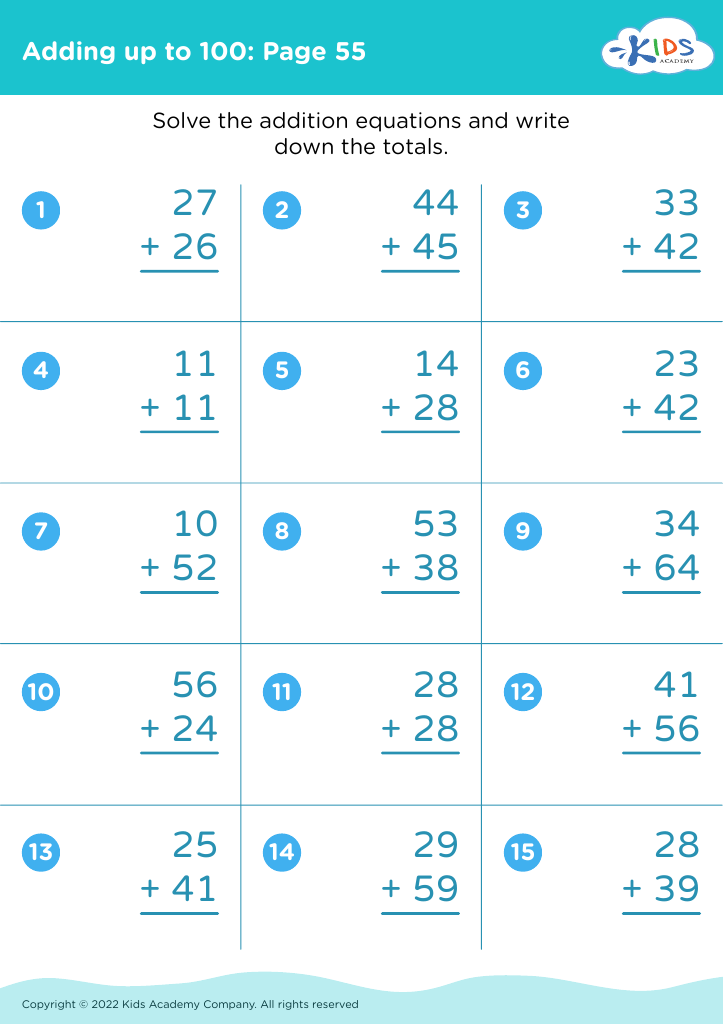
Adding up to 100: Page 55

Adding up to 100: Page 55

Adding up to 100: Page 55
Worksheet
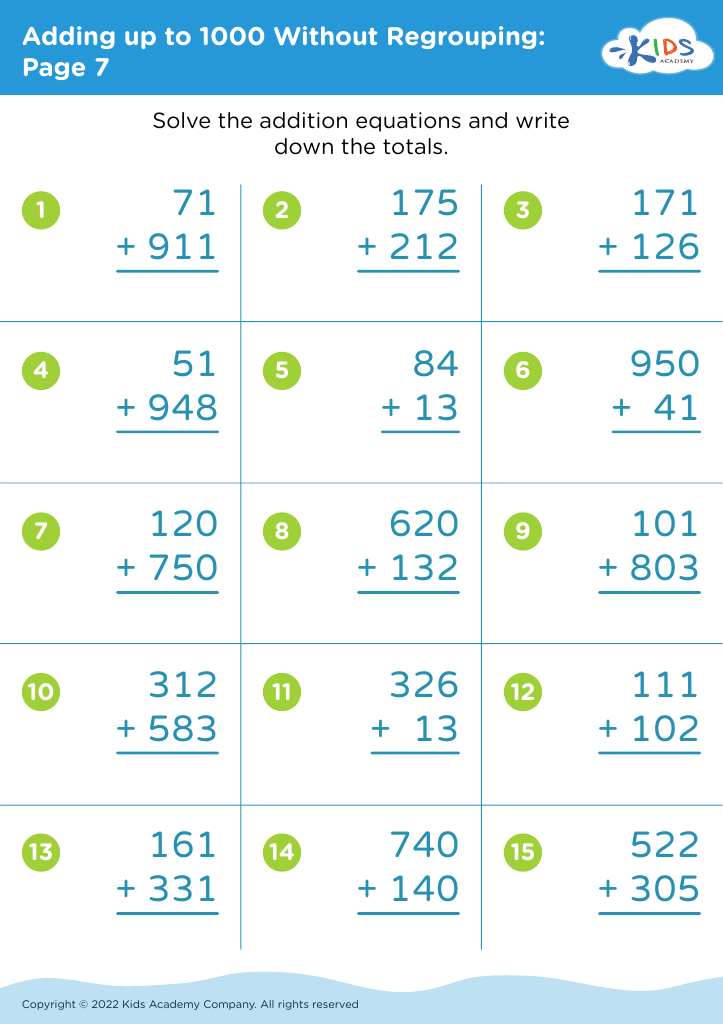
Adding up to 1000 Without Regrouping: Page 7
Worksheet
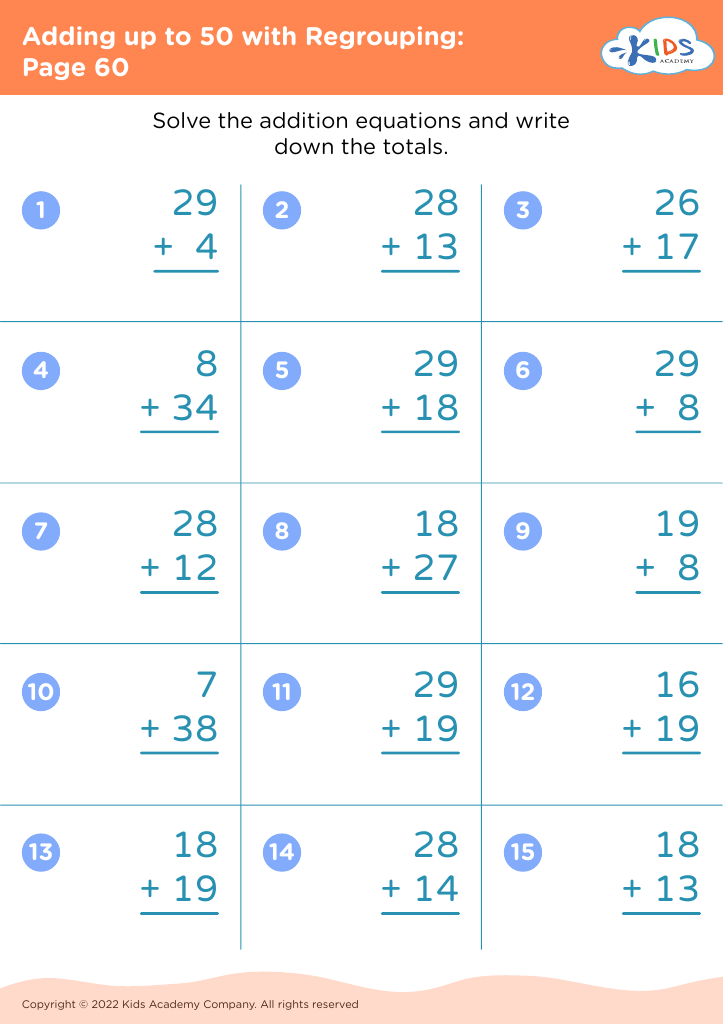
Adding up to 50 with Regrouping: Page 60
Worksheet
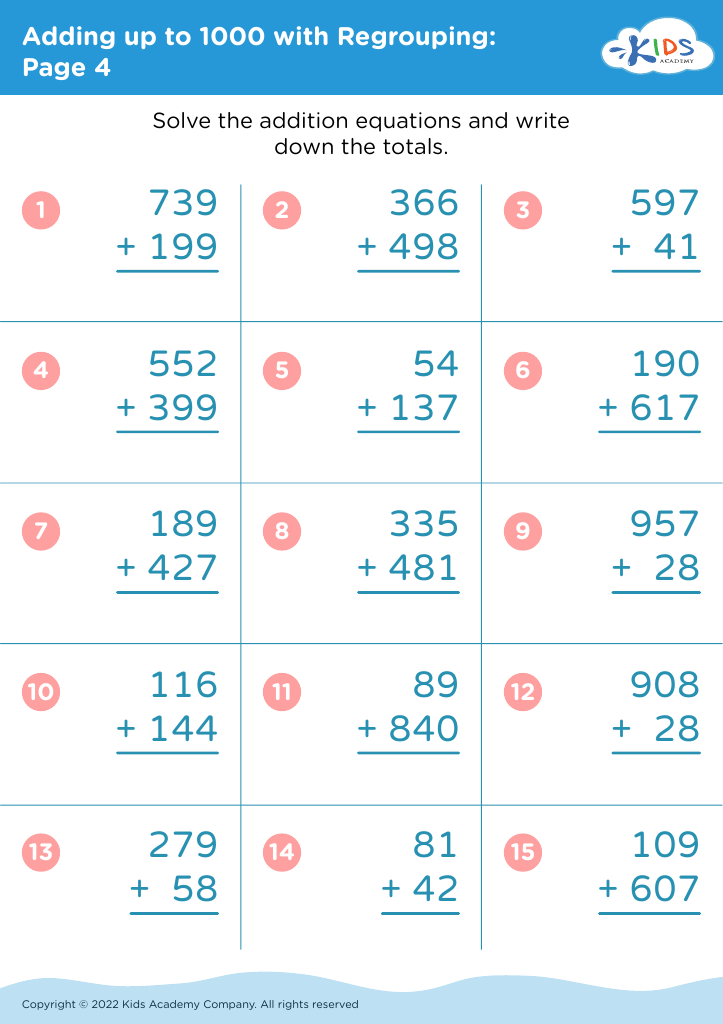
Adding up to 1000 with Regrouping: Page 4
Worksheet
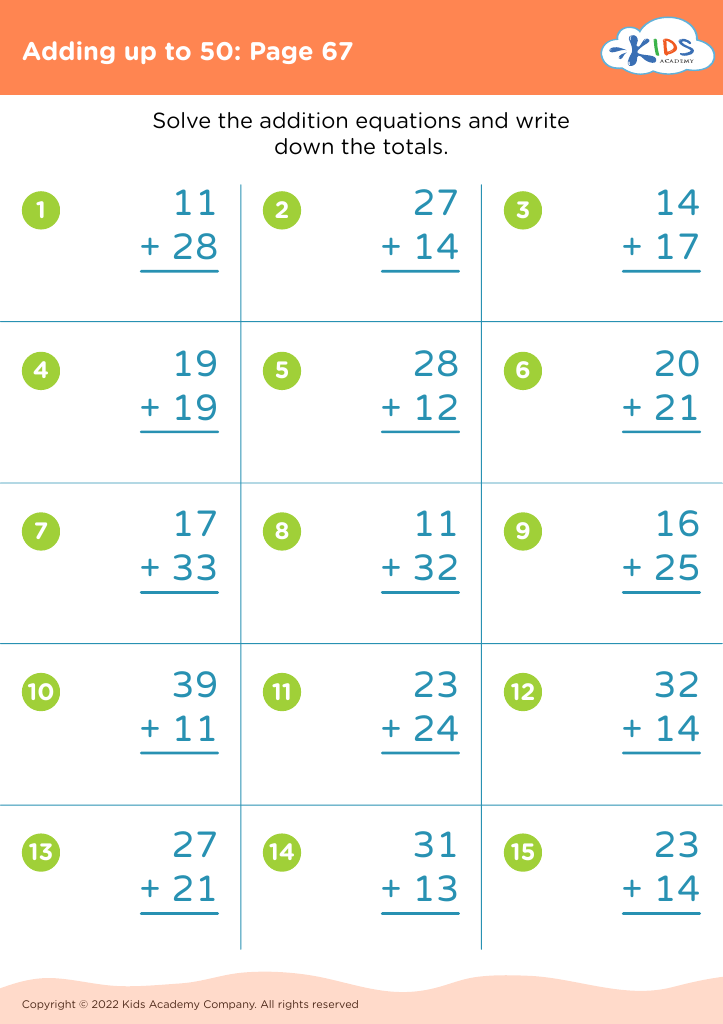
Adding up to 50: Page 67

Adding up to 50: Page 67

Adding up to 50: Page 67
Worksheet
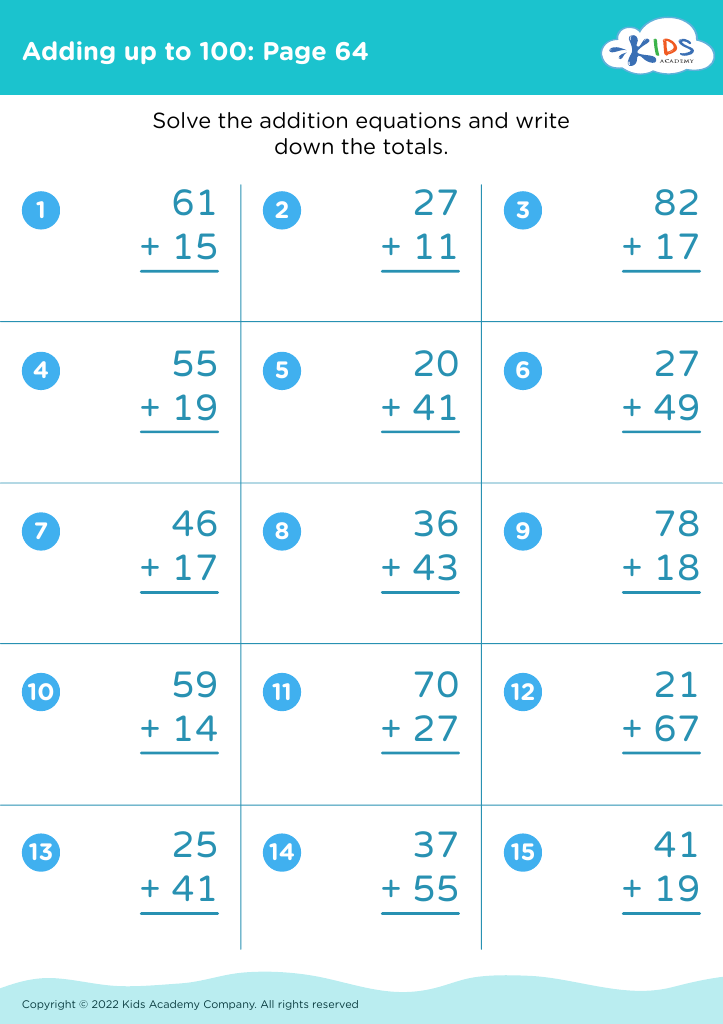
Adding up to 100: Page 64

Adding up to 100: Page 64

Adding up to 100: Page 64
Worksheet
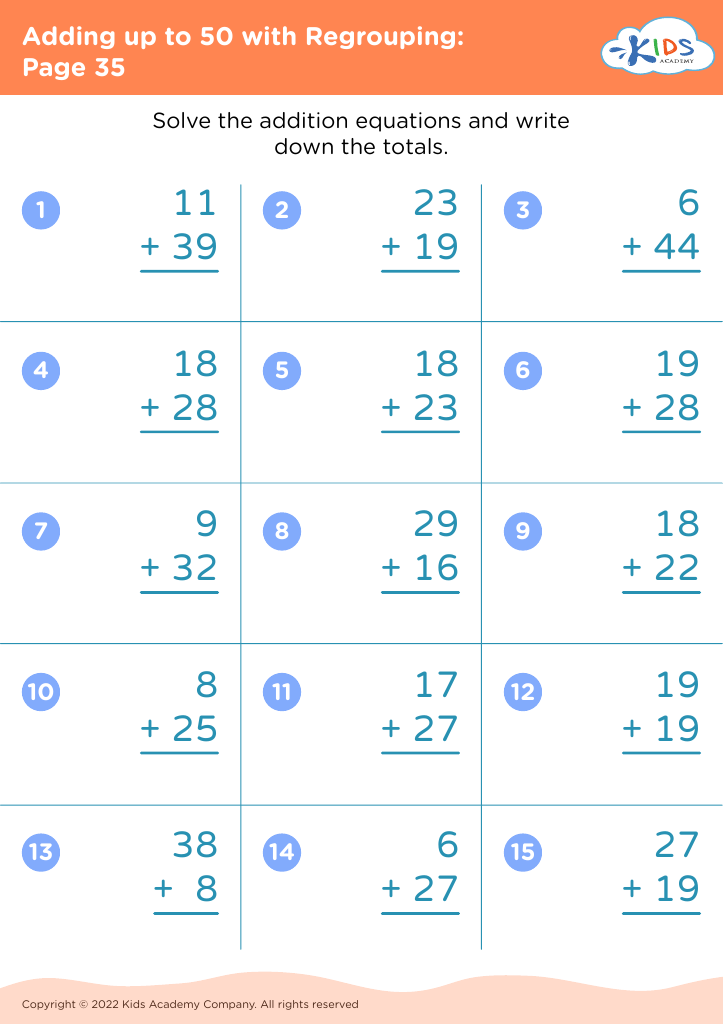
Adding up to 50 with Regrouping: Page 35
Worksheet
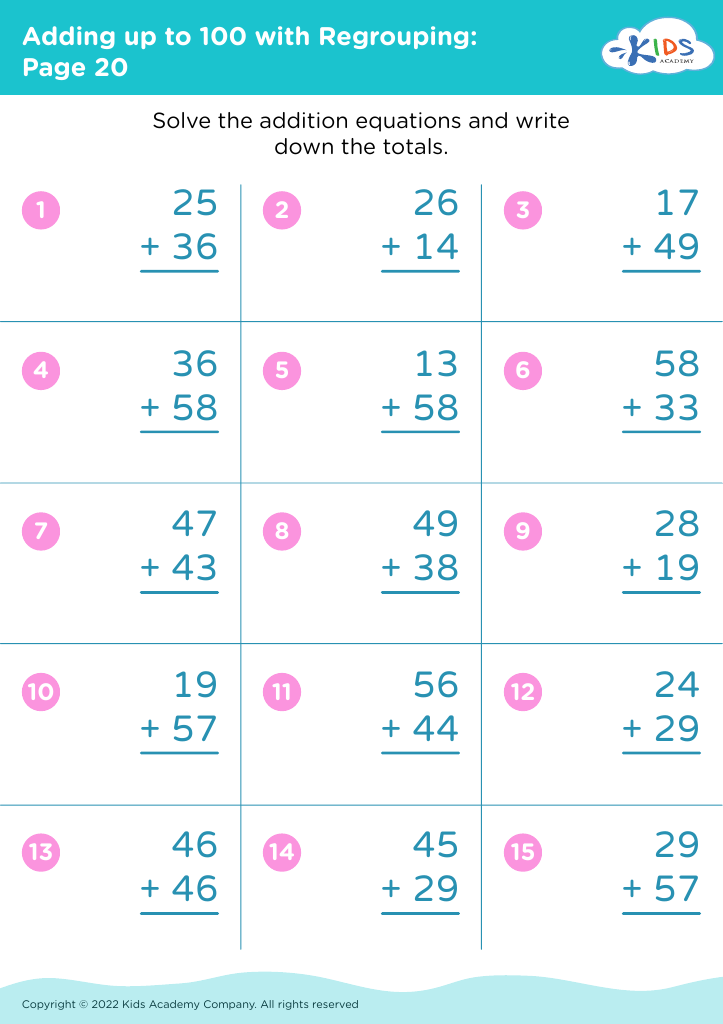
Adding up to 100 with Regrouping: Page 20
Worksheet
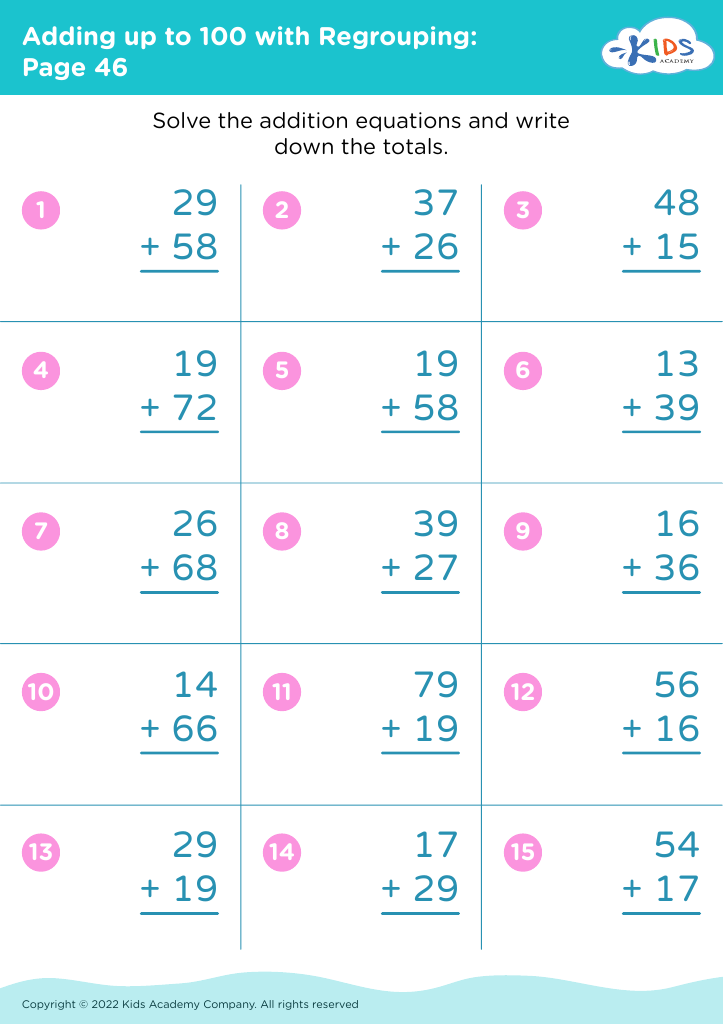
Adding up to 100 with Regrouping: Page 46
Worksheet
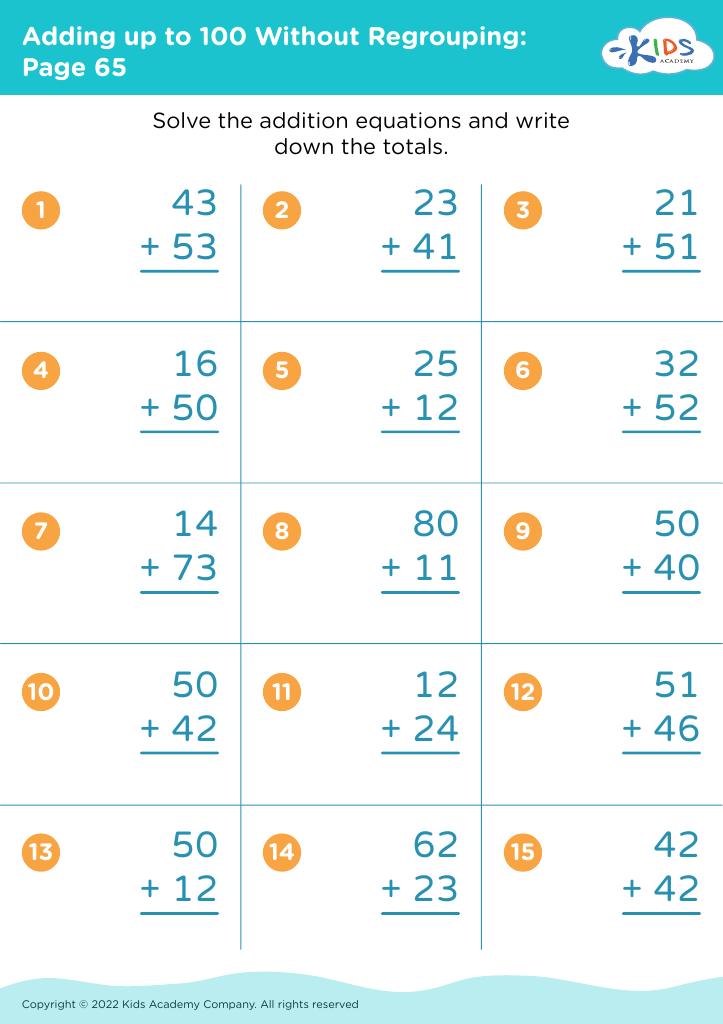
Adding up to 100 Without Regrouping: Page 65
Worksheet
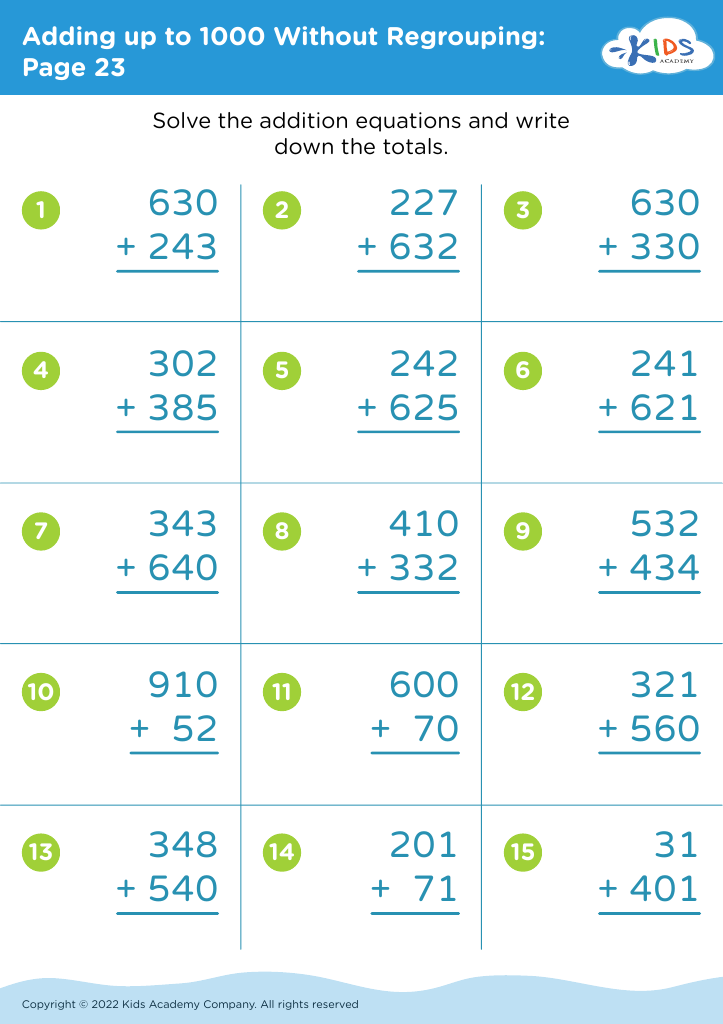
Adding up to 1000 Without Regrouping: Page 23
Worksheet
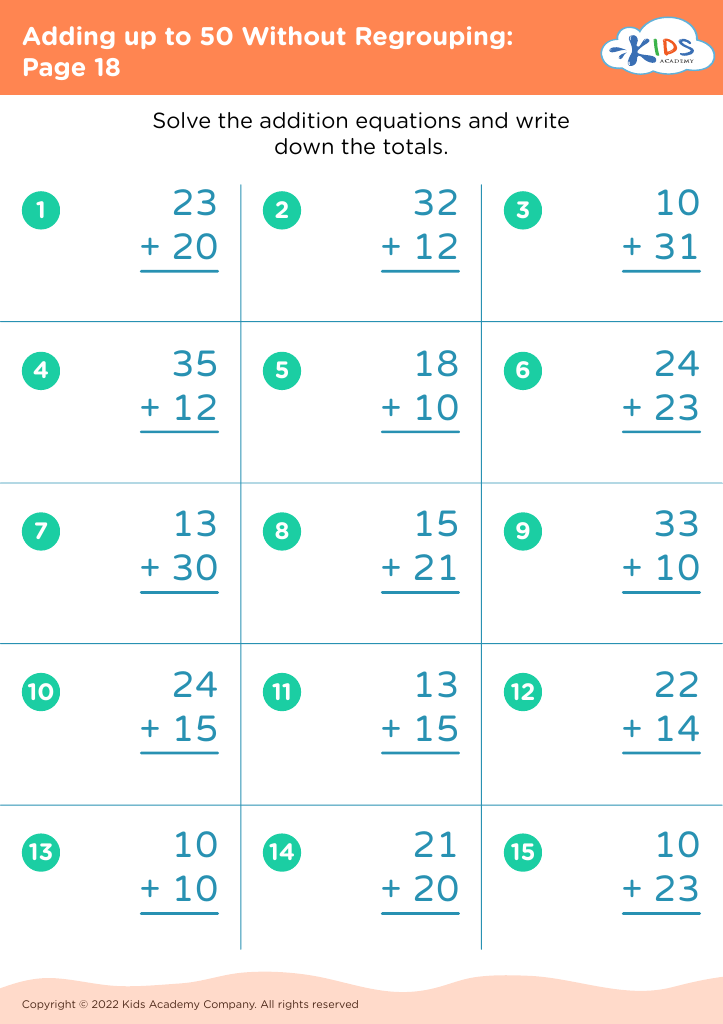
Adding up to 50 Without Regrouping: Page 18
Worksheet
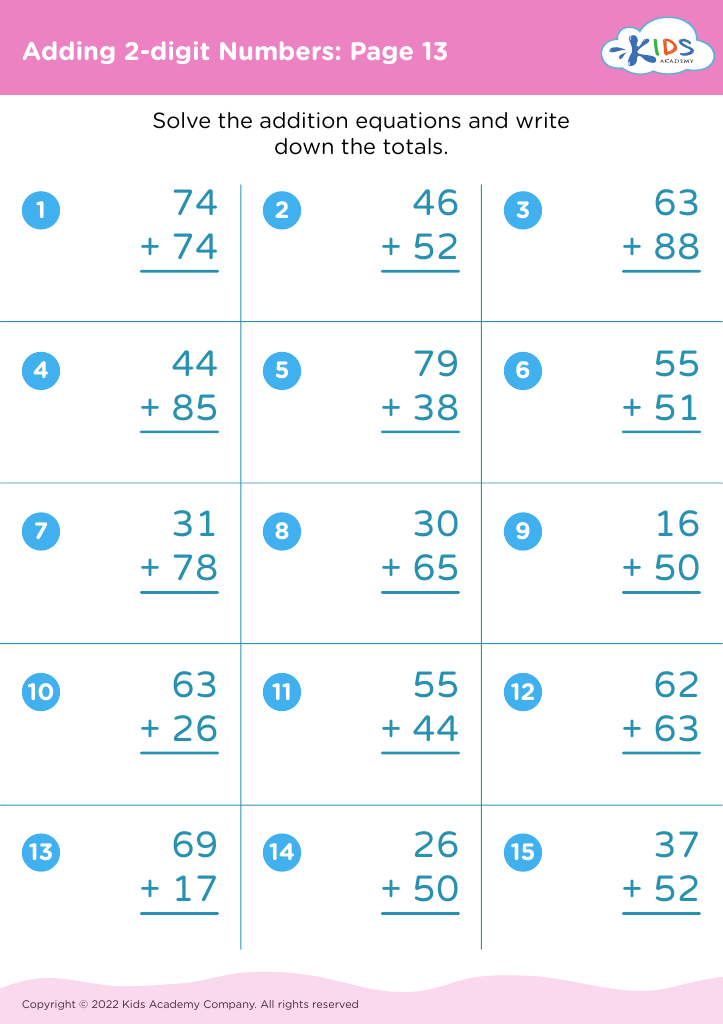
Adding 2-digit Numbers: Page 13

Adding 2-digit Numbers: Page 13

Adding 2-digit Numbers: Page 13
Worksheet
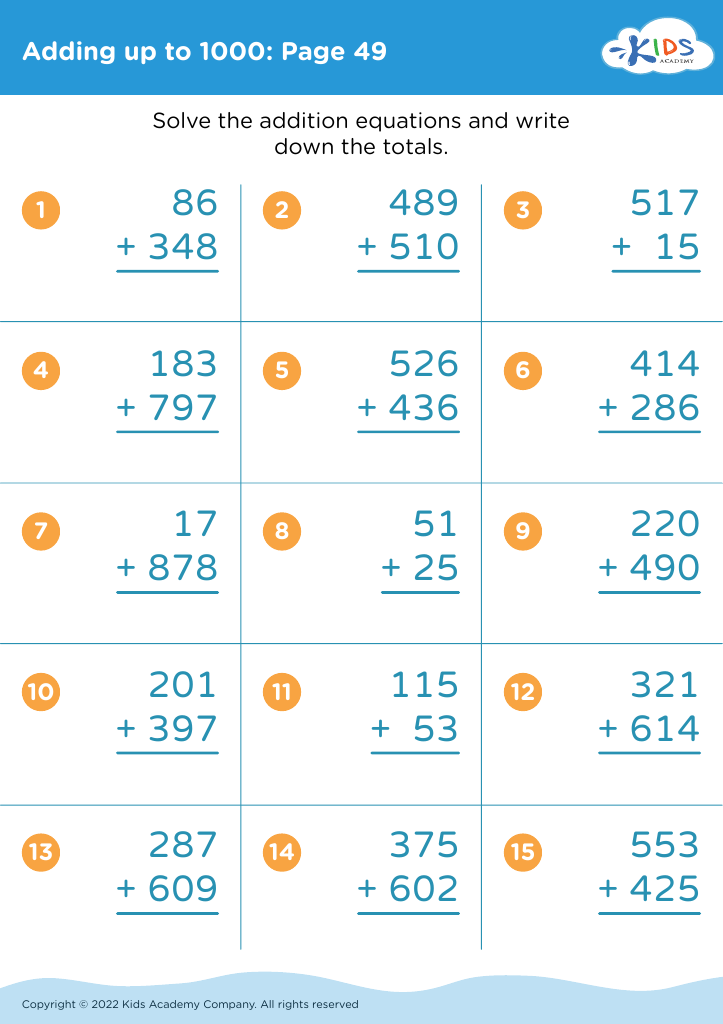
Adding up to 1000: Page 49

Adding up to 1000: Page 49

Adding up to 1000: Page 49
Worksheet
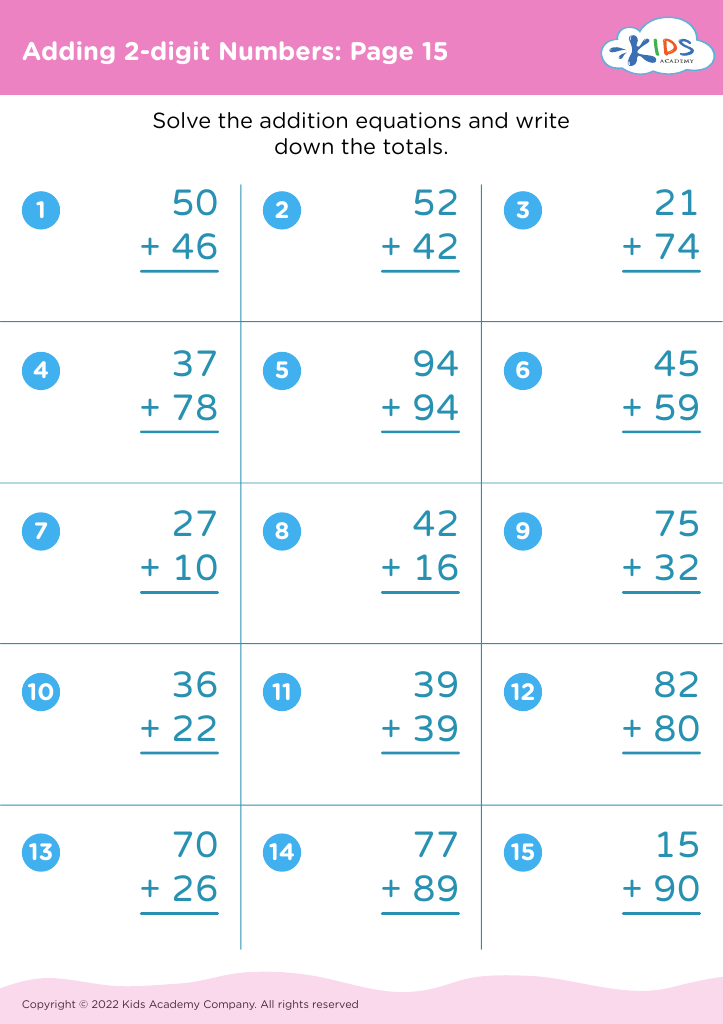
Adding 2-digit Numbers: Page 15

Adding 2-digit Numbers: Page 15

Adding 2-digit Numbers: Page 15
Worksheet
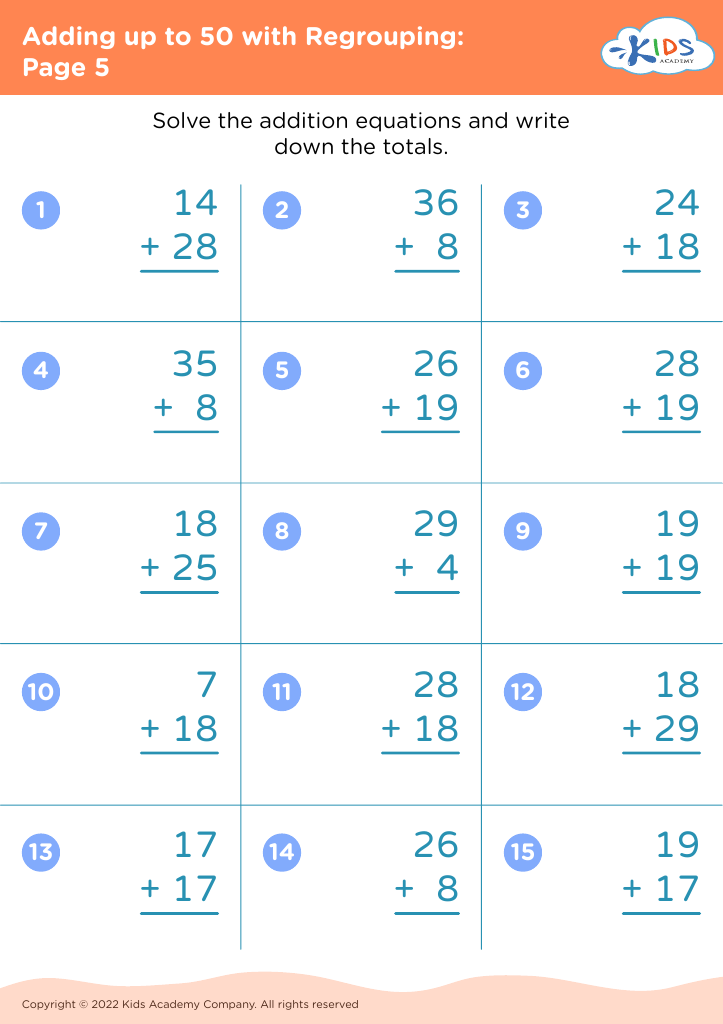
Adding up to 50 with Regrouping: Page 5
Worksheet
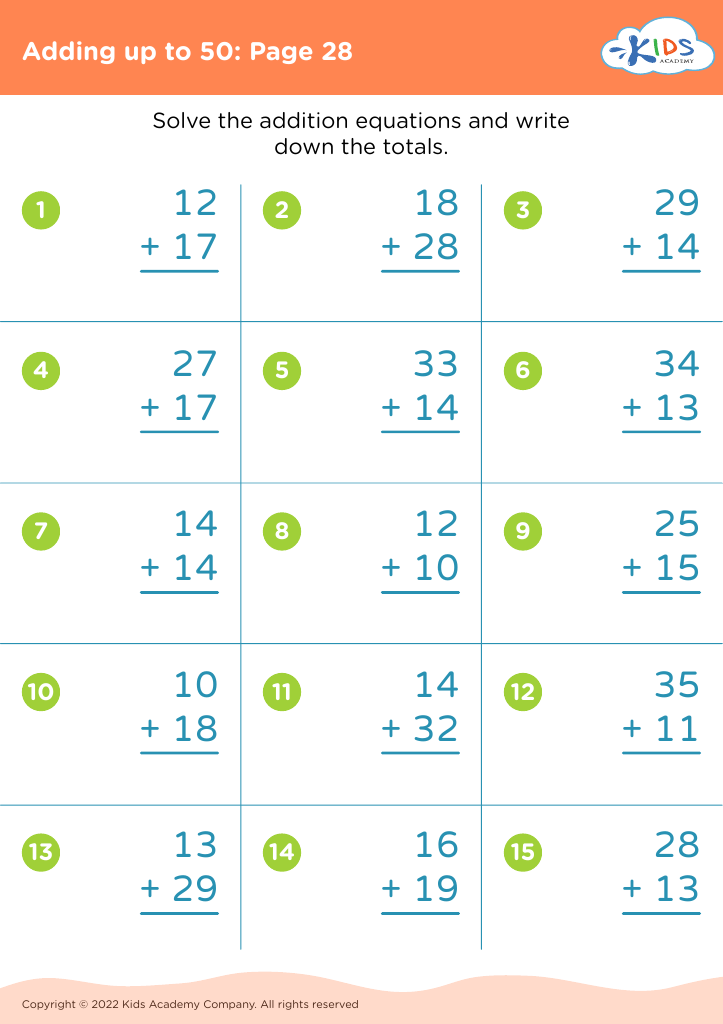
Adding up to 50: Page 28

Adding up to 50: Page 28

Adding up to 50: Page 28
Worksheet


Understanding fractions and addition for children ages 3-8 is foundational for several critical reasons. During early childhood, the brain is highly receptive to new information and developing cognitive skills. Introducing fractions and addition at this age builds a strong mathematical foundation that supports future learning.

Firstly, teaching fractions helps young children understand the concept of parts of a whole, which is essential for everyday problem-solving skills. For instance, sharing food easily demonstrates fractions, making these lessons relatable and practical. Understanding that two halves make a whole or four quarters make a dollar lays the groundwork for more complex mathematical concepts like division, ratios, and percentages.

Additionally, early experiences with addition not only boost numerical literacy but also improve logical thinking and reasoning. Counting, manipulating objects, and solving simple addition problems help to reinforce these concepts. When teachers and parents demonstrate adding fractions using visual tools such as pie charts or fraction bars, children gain a clearer, more tangible grasp of these abstract mathematical ideas.

Encouraging familiarity with these basic mathematical principles early on fosters a positive attitude towards math, reducing anxiety and increasing confidence. This confidence can lead to greater academic success later in life and a better appreciation for disciplines that rely heavily on math, such as science, engineering, and technology. Therefore, parents and teachers play a critical role in fostering mathematical skills and curiosity in their young learners.