Understanding number sequences Addition Worksheets for Ages 3-8
3 filtered results
-
From - To
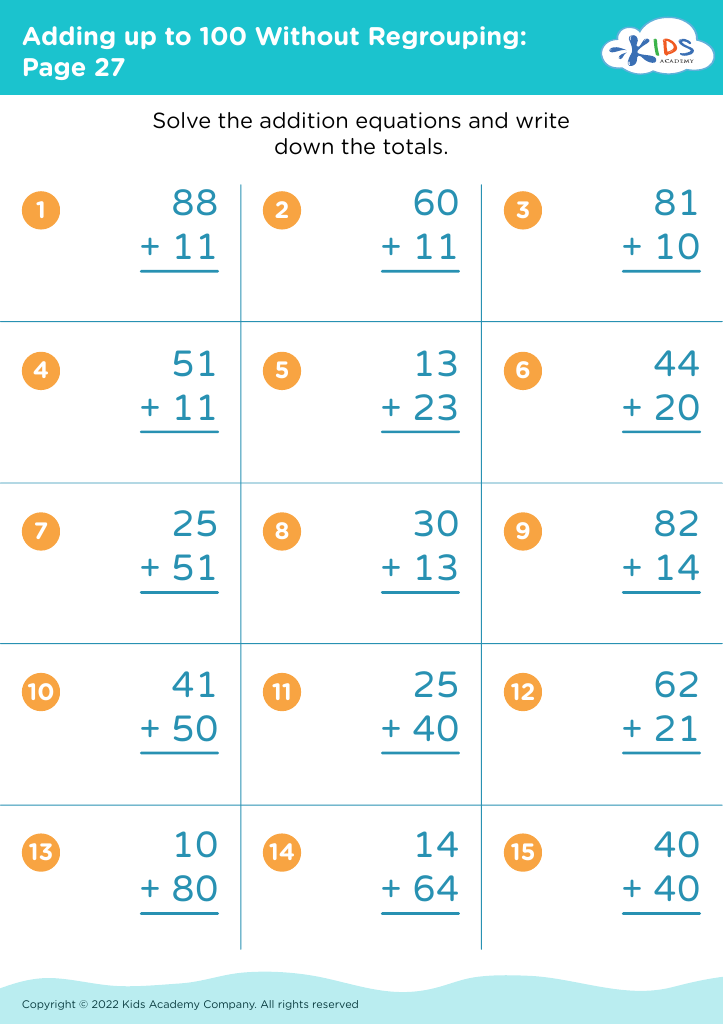
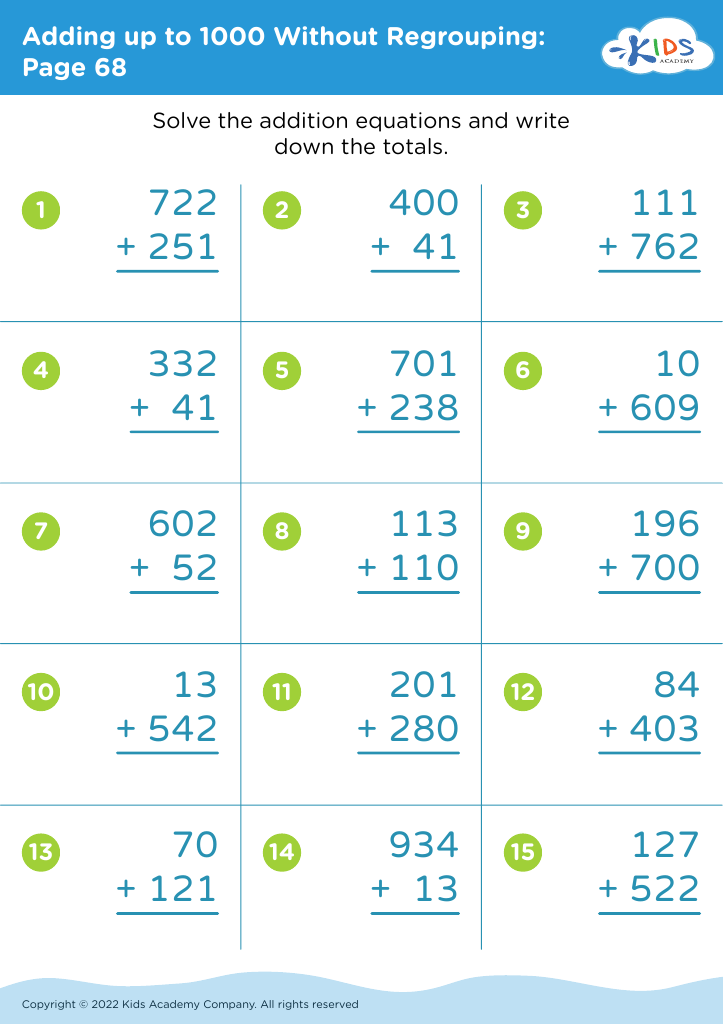
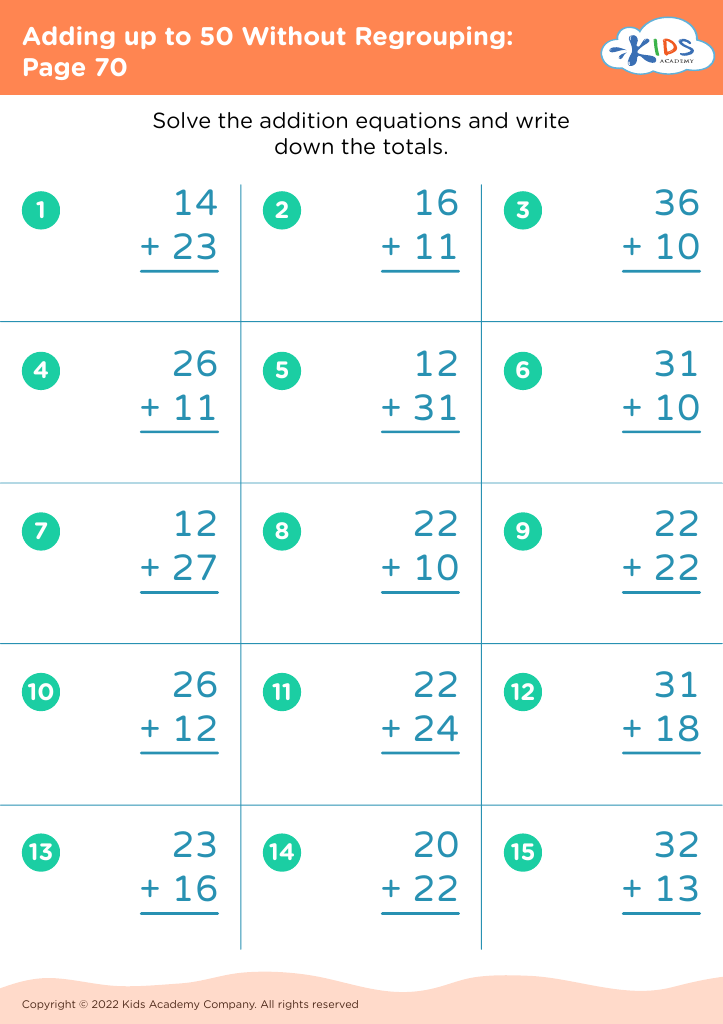
Discover engaging "Understanding Number Sequences Addition Worksheets" designed for children ages 3-8! These worksheets help young learners build a solid foundation in math by connecting number sequences with addition concepts. Our interactive activities make learning fun and enjoyable, ensuring that kids can recognize patterns and progressions confidently. With colorful visuals and age-appropriate challenges, children will develop essential skills while enhancing their problem-solving abilities. Encourage your child's mathematical journey with our thoughtfully crafted worksheets, perfect for both classroom and home use. Explore various exercises that promote critical thinking and strengthen their understanding of addition in a playful and stimulating environment!





.jpg)


Understanding number sequences and addition is crucial for children aged 3-8 as it lays the foundational skills needed for their future academic success. During these formative years, children develop key numeracy skills that will be pivotal throughout their education and daily lives. By learning number sequences, children enhance their ability to recognize patterns and relationships between numbers, which is vital for mastering more complex mathematical concepts.
Addition, as a fundamental operation, supports not only basic math skills but also cognitive development. It teaches problem-solving, critical thinking, and logical reasoning as children engage in combining quantities and identifying sums. Moreover, grasping these concepts at an early age boosts confidence and fosters a positive attitude toward math, reducing the likelihood of math anxiety as they progress.
For parents and teachers, emphasizing these skills cultivates a love for learning and curiosity in mathematics. Engaging in fun activities and games that promote sequencing and addition can make learning interactive and enjoyable. Ultimately, instilling solid number sense prepares children to tackle challenges in mathematics and other subjects, equipping them with essential skills for lifelong learning and personal development.








