Understanding number value Addition Worksheets for Ages 3-8
3 filtered results
-
From - To
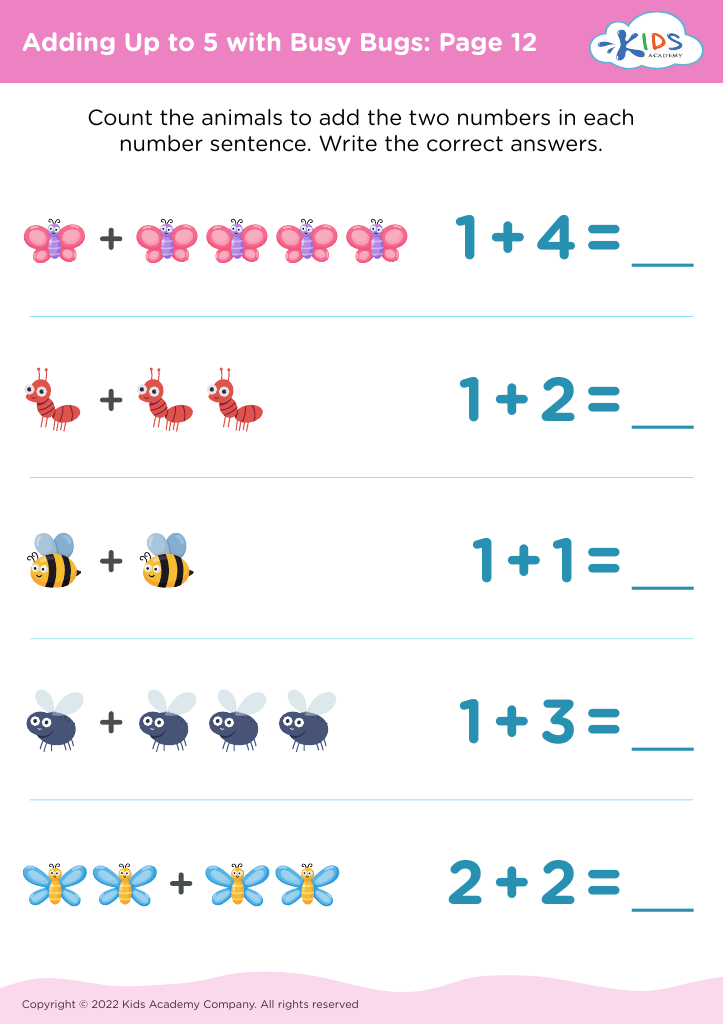
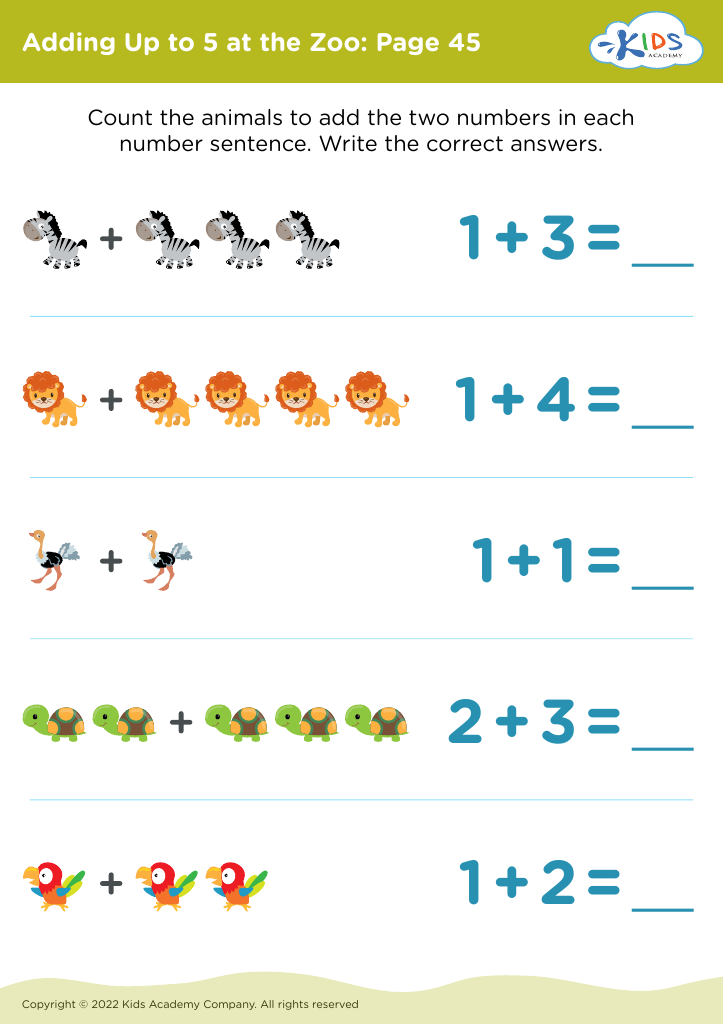
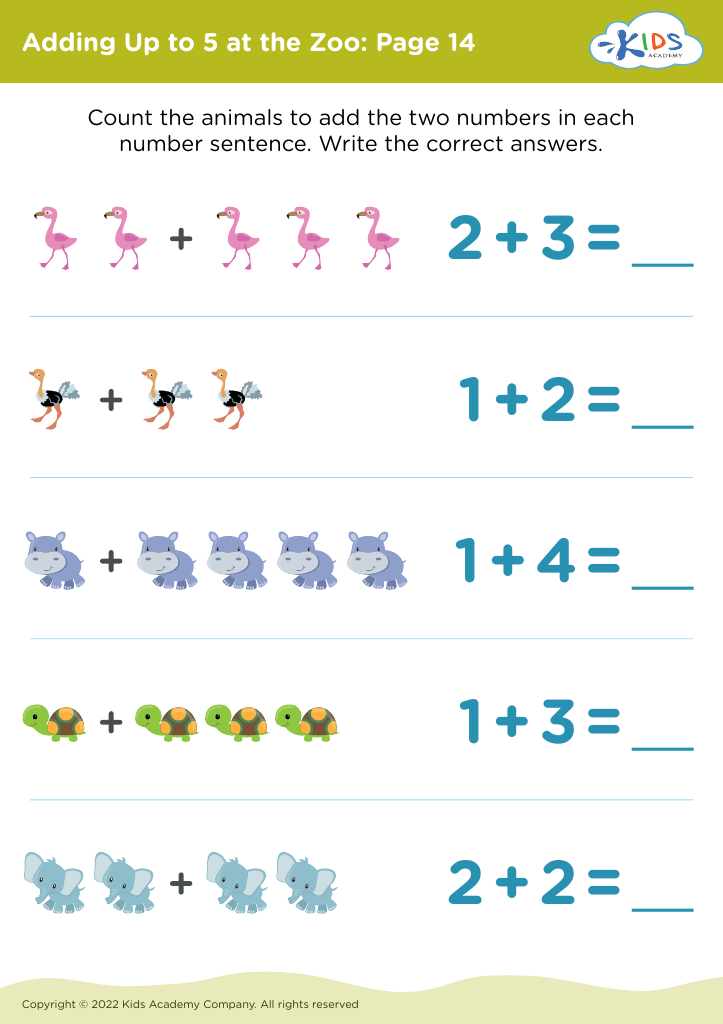
Unlock your child’s mathematical potential with our "Understanding Number Value Addition Worksheets for Ages 3-8." These engaging printable worksheets provide colorful, fun activities designed to help young learners grasp the concept of number values while mastering foundational addition skills. Tailored specifically for kids aged 3-8, each worksheet encourages cognitive development, number recognition, and problem-solving abilities through interactive exercises. Perfect for both classroom and at-home learning, these worksheets promote a solid understanding of number value, setting the stage for future math success. Discover a world where learning math becomes an enjoyable adventure for your early grader today!








Understanding number value addition for children aged 3-8 is crucial, as it lays the foundation for future mathematical competence. At this stage, young minds are rapidly developing, and grasping basic math concepts early on sets the stage for more advanced learning. When children understand number value and addition, they are building critical thinking and problem-solving skills that extend beyond mathematics.
For parents and teachers, fostering this understanding helps create a positive attitude toward math, making it less intimidating for young learners. Early comprehension of these concepts can boost confidence, encourage curiosity, and enhance a child's ability to engage with more complex topics later in their academic journey. Additionally, math is ubiquitous in daily life; understanding number value and addition allows children to better navigate real-world situations, such as sharing toys, understanding time, or dealing with money.
Furthermore, early math skills are often correlated with better outcomes in other academic areas, including reading and science. Therefore, parents and teachers should prioritize these skills to support holistic education and cognitive development. Through fun, engaging activities, manipulatives, and consistent encouragement, adults can help children build a strong math foundation that will benefit them throughout their academic and everyday lives.








