Understanding patterns Addition Worksheets for Ages 3-8 - Page 2
29 filtered results
-
From - To
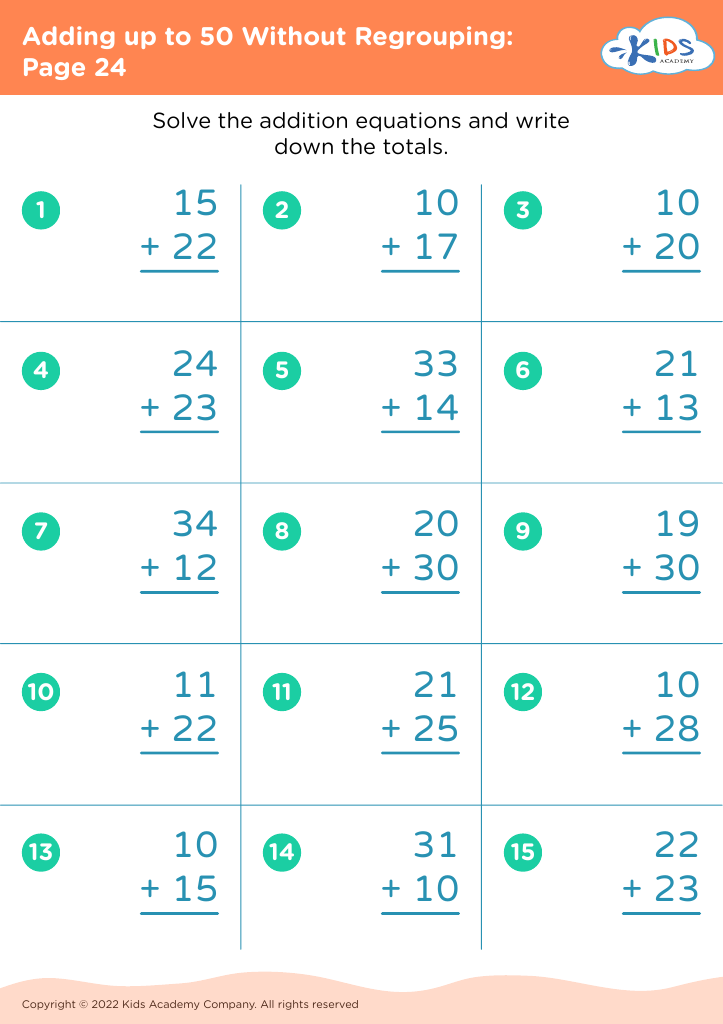
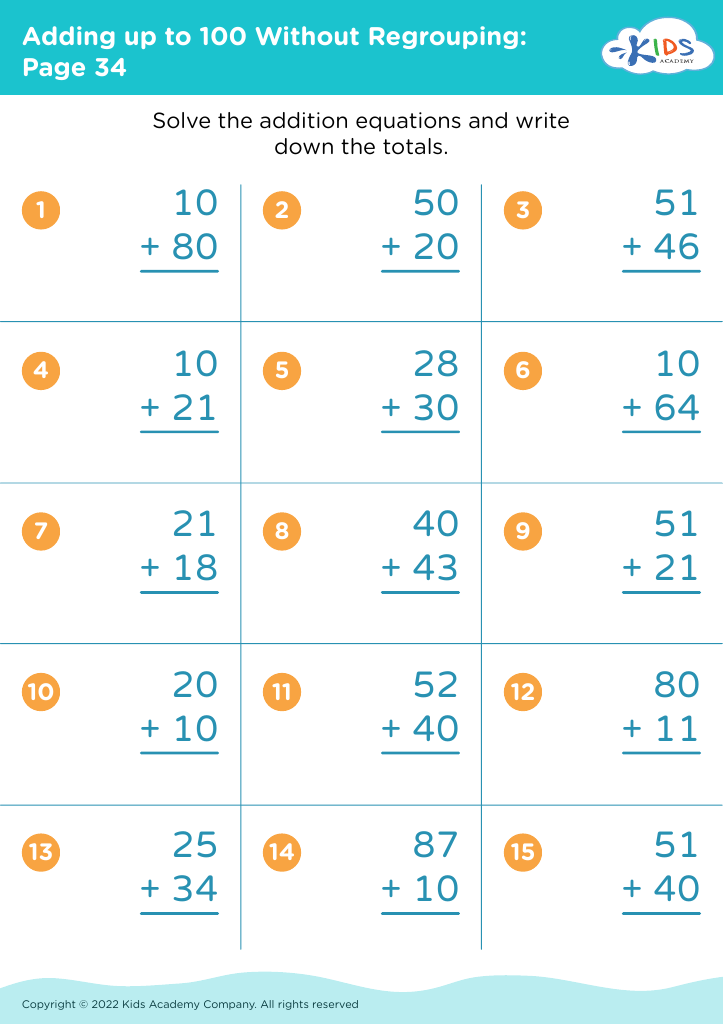
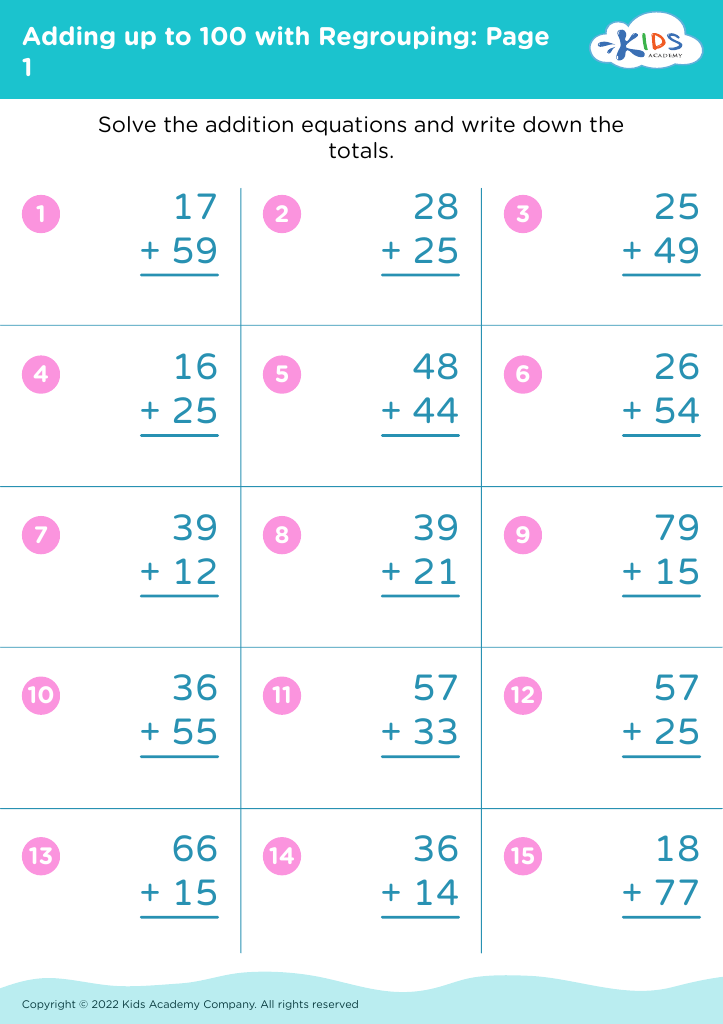
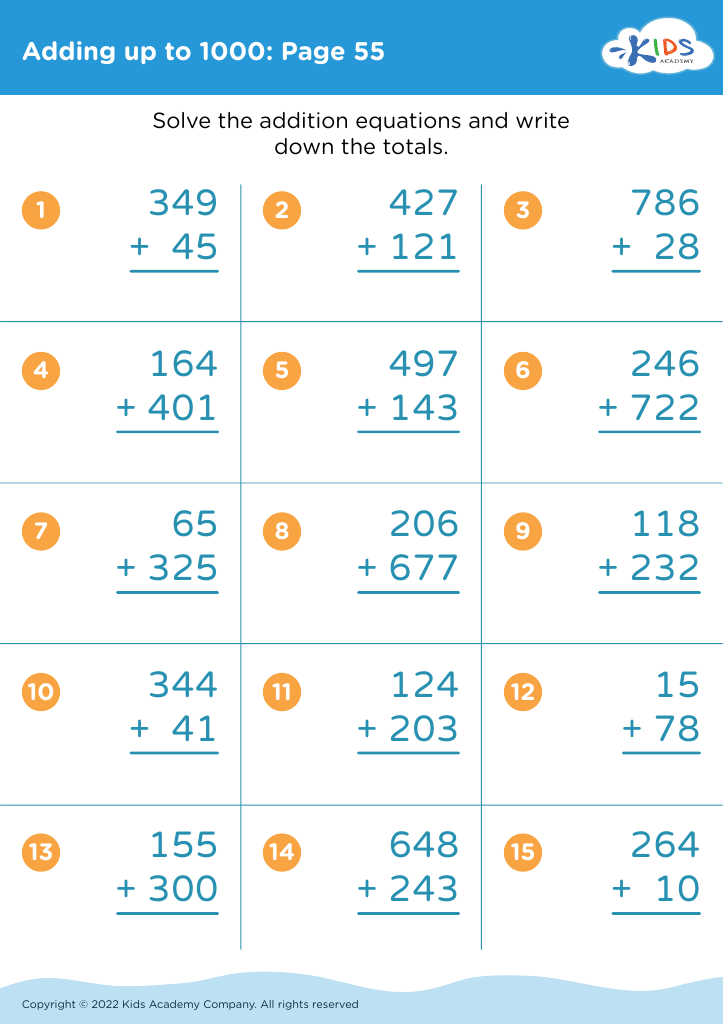
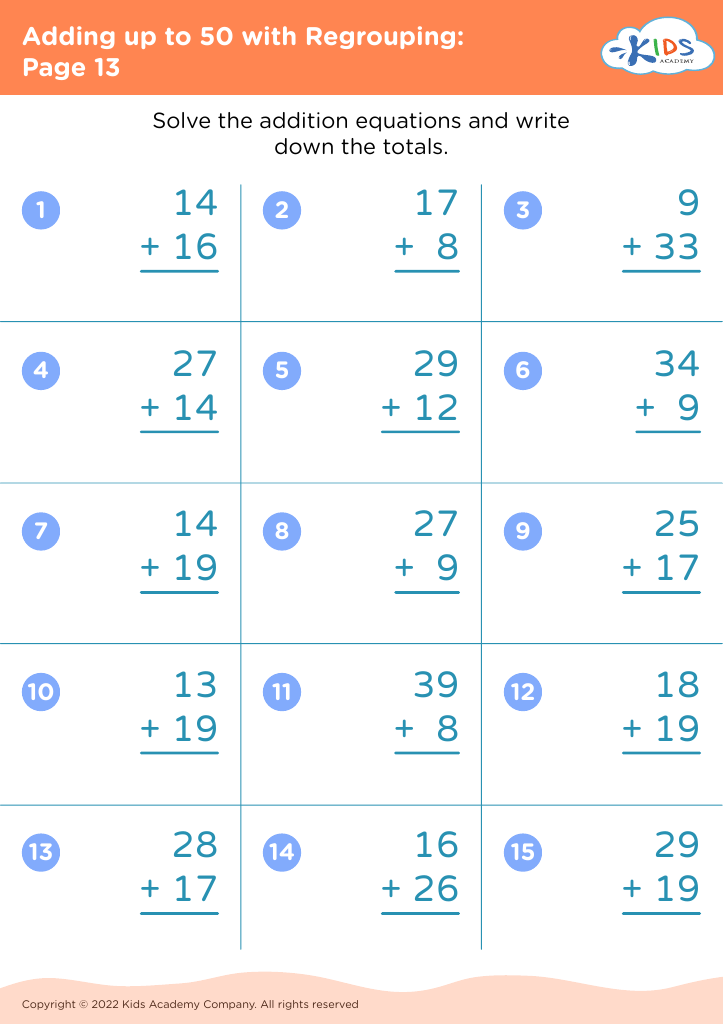







Understanding patterns and addition is fundamental for young learners aged 3-8 as it lays the groundwork for more complex mathematical concepts. At this age, children are naturally curious and eager to explore relationships, making it an ideal time to introduce patterns. Recognizing and creating patterns enhances critical thinking, fosters problem-solving skills, and boosts cognitive development. For both parents and teachers, emphasizing patterns allows children to make connections between numbers and recognize sequences, which are essential for mastering addition.
Moreover, incorporating patterns into addition can make learning enjoyable and engaging. Activities such as using colorful blocks, rhythmic songs, or simple crafts make the abstract concepts of math tangible and relatable. As children discover that addition is about combining quantities or extending patterns, they build a solid numerical foundation that will benefit them throughout their academic journey.
Ultimately, emphasizing the significance of patterns and addition fosters a positive attitude towards mathematics. When children feel confident in their abilities and can see the math in everyday life, they are more likely to experience success in future math-related endeavors. Hence, recognizing the importance of understanding patterns in addition is essential for parents and teachers to nurture young mathematicians.








