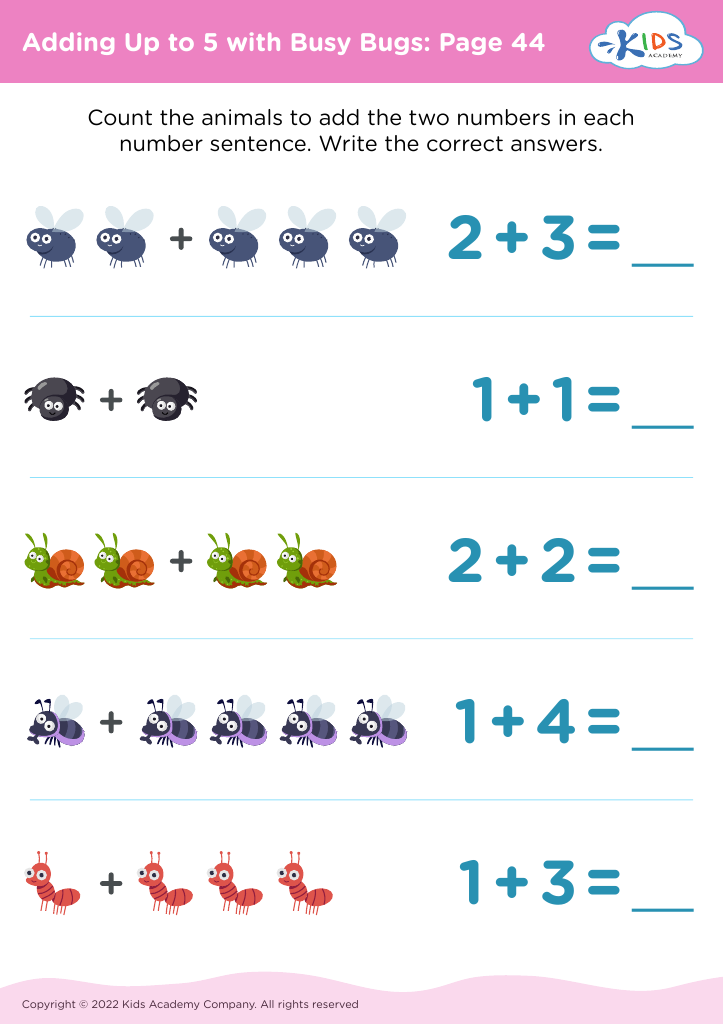
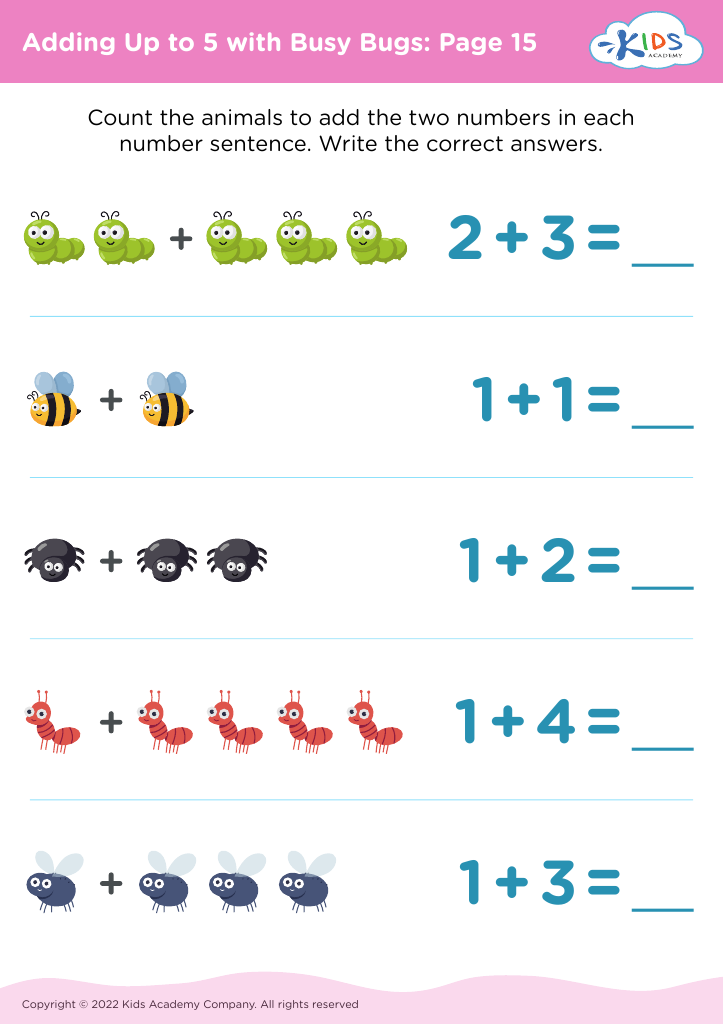








Understanding quantity addition is crucial for children aged 3-8 as it forms the foundation of mathematical reasoning and problem-solving skills they will utilize throughout their education. During these formative years, children are naturally curious about numbers and their relationships. By grasping the concept of quantity addition, children develop essential cognitive skills critical for later mathematical concepts, such as subtraction, multiplication, and division.
Moreover, learning about addition enhances children's ability to recognize patterns and sequences, which are important not only for math but also in everyday situations. Parents and teachers play a key role in fostering this understanding through interactive and engaging activities, such as counting objects, using visual aids, or playing simple math games. These practical experiences nurture a positive attitude toward math, making it less intimidating and more enjoyable.
Furthermore, an early comprehension of quantity addition aids in building a solid academic foundation, empowering children to tackle more complex mathematical challenges in the future. As they develop these skills, they also gain confidence and competence, which can positively affect their overall academic journey. By investing time and effort into teaching addition, parents and teachers are helping to cultivate a generation that is equipped for success in math and beyond.








