Understanding time Addition Worksheets for Ages 3-8
6 filtered results
-
From - To
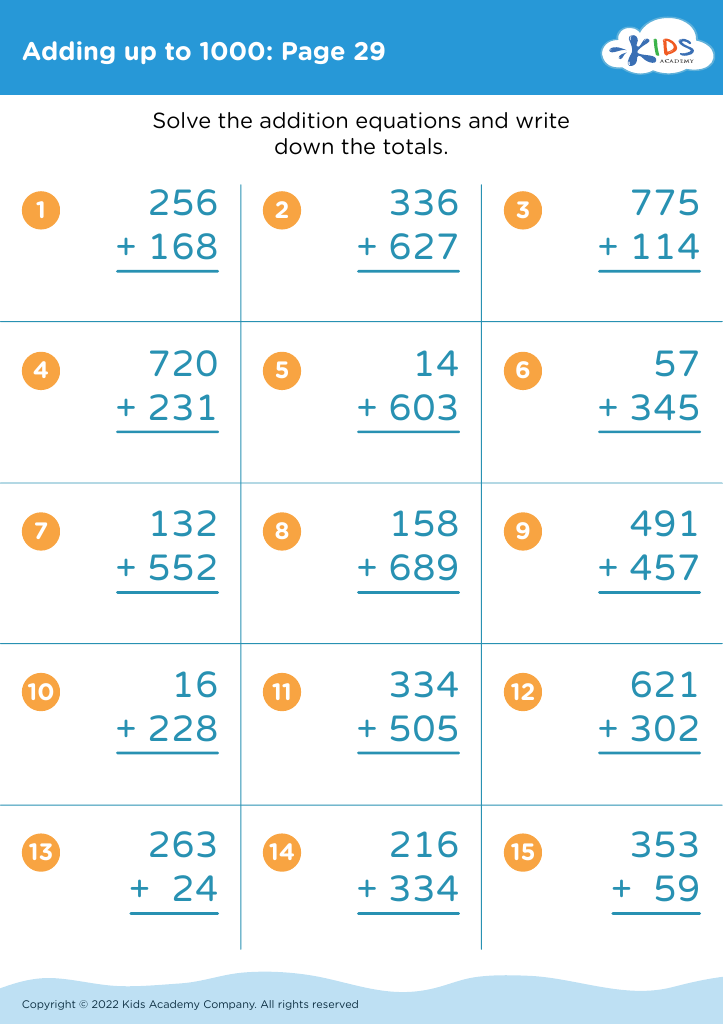
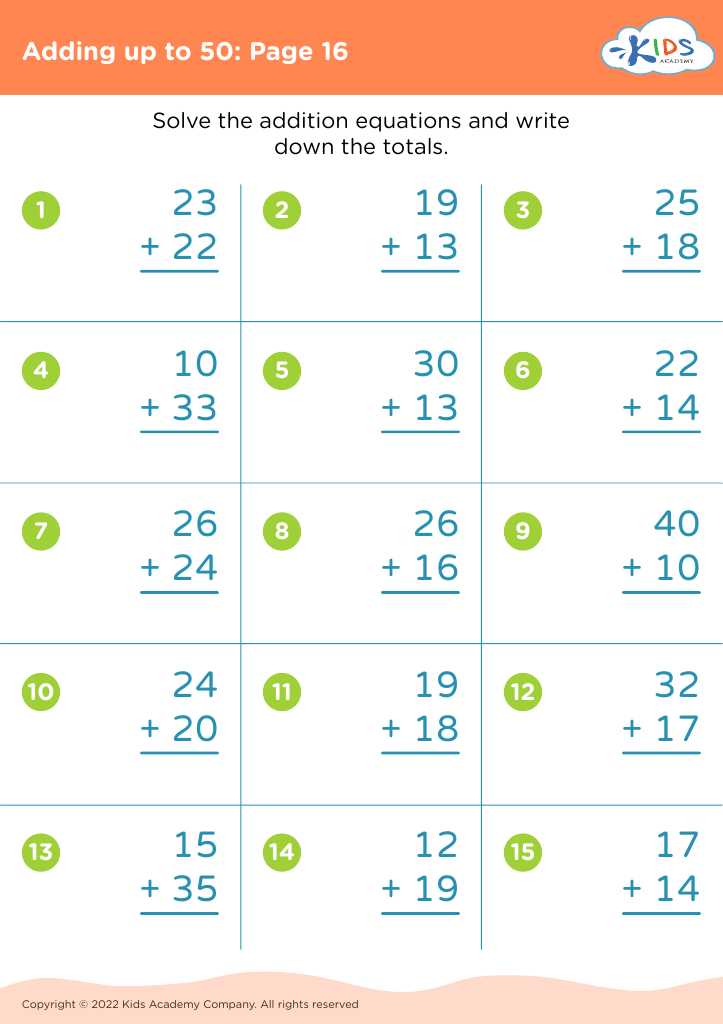
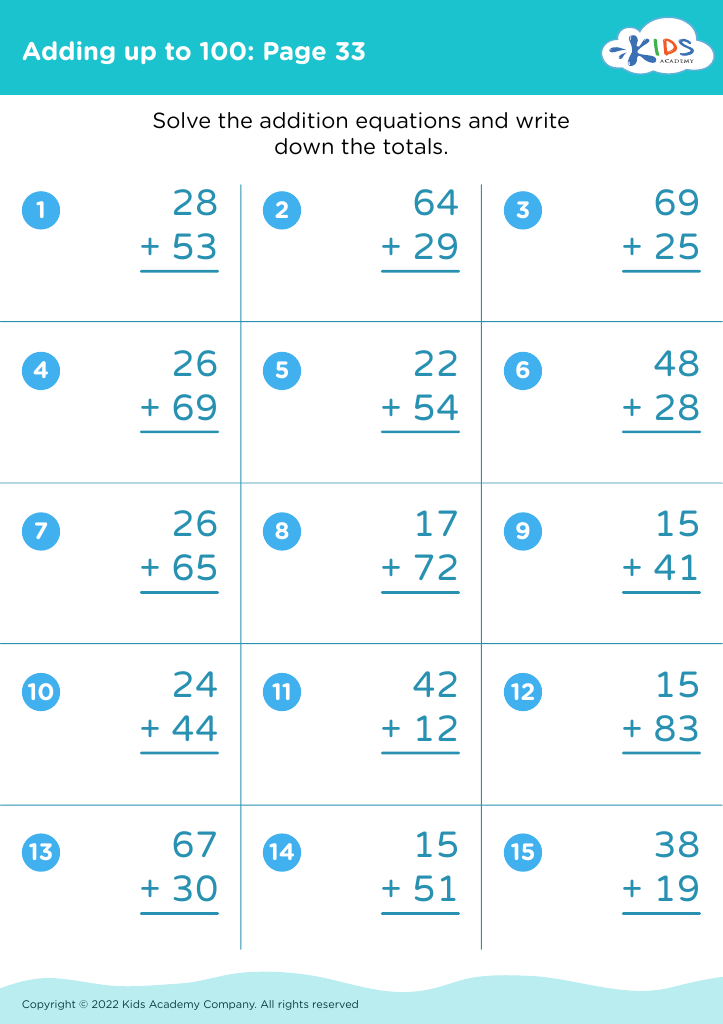
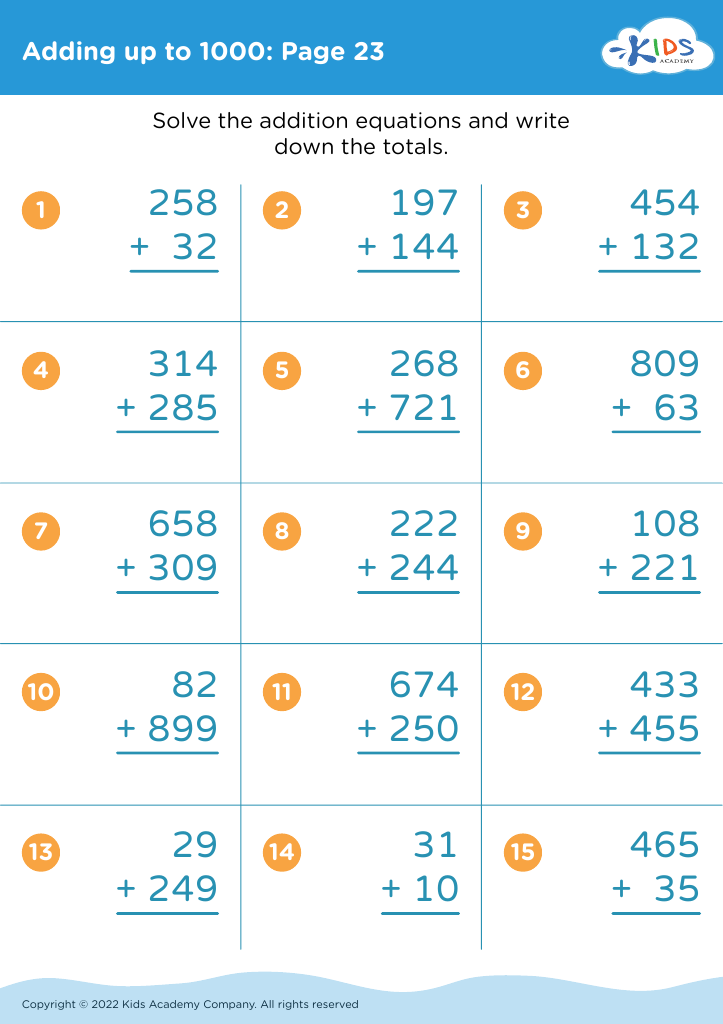
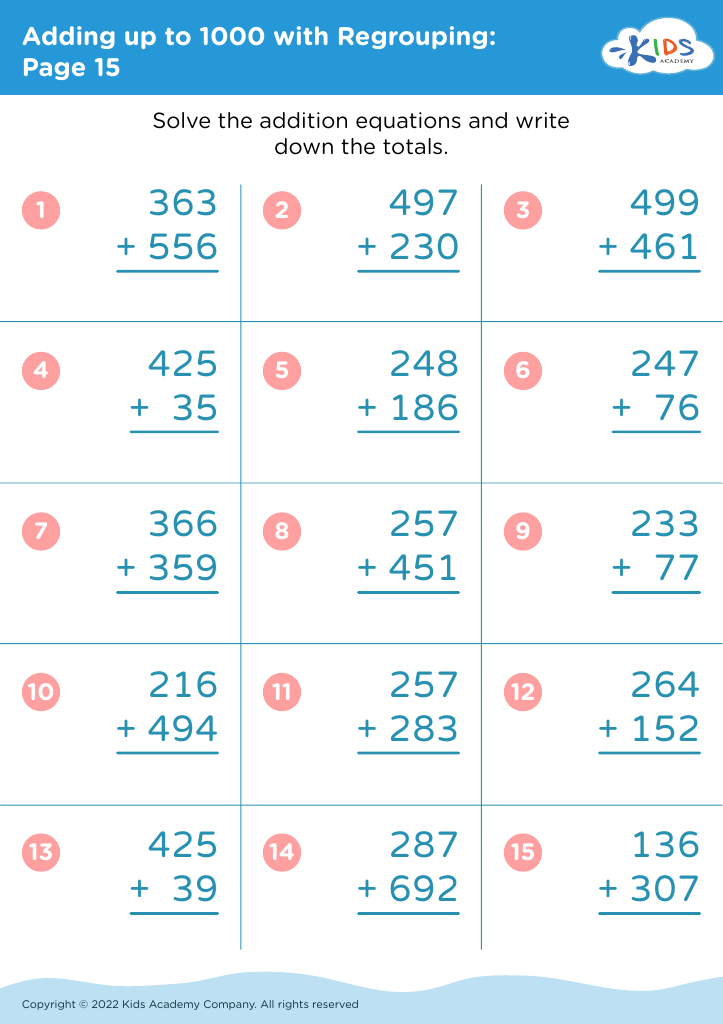
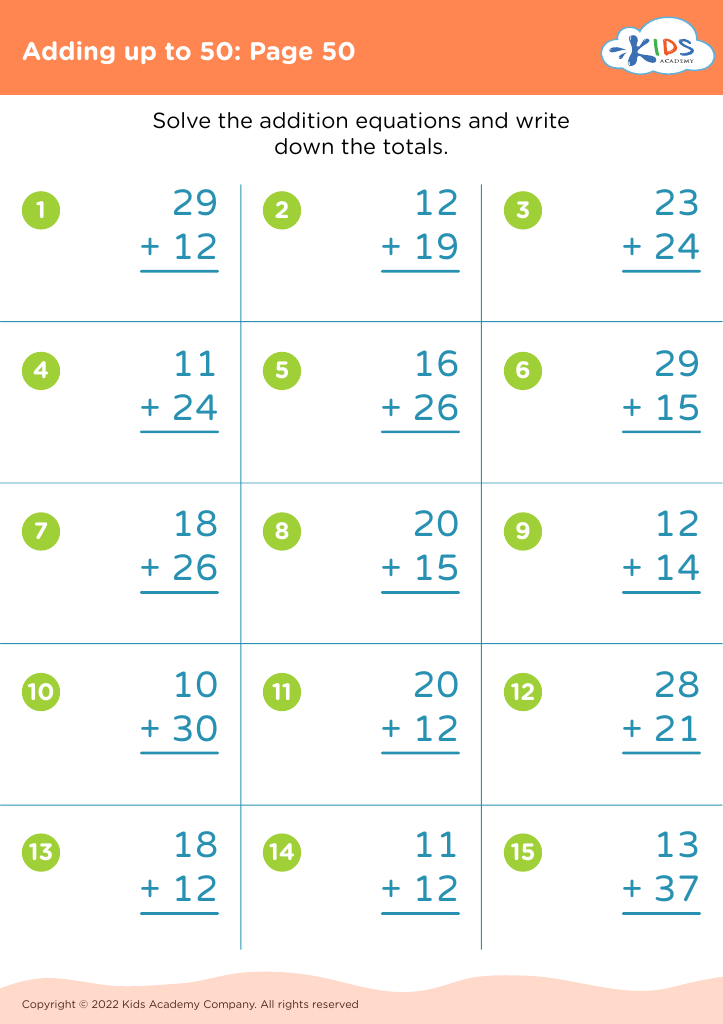
Discover our "Understanding Time Addition Worksheets" designed for children ages 3-8! These engaging worksheets blend basic addition with time-telling skills, making math fun and interactive. Young learners will practice adding up hours and minutes while enhancing their understanding of clocks and daily schedules. Each worksheet offers colorful illustrations and simple instructions to keep kids motivated and focused. Perfect for parents and educators seeking to strengthen foundational math skills in a playful yet educational manner. Unlock the joy of learning math and time management with these expertly crafted resources from Kids Academy!



.jpg)




Understanding time and addition is a fundamental part of early childhood education for ages 3-8 and is crucial for several reasons.
Firstly, the concept of time helps young children develop a sense of routine and order. Learning about days, hours, and minutes allows them to understand daily schedules, which is important for managing their activities and developing time-management skills. Knowledge of time fosters punctuality, helping kids learn the importance of being on time, which is a vital life skill.
Secondly, addition is a core mathematical skill that forms the basis for more complex math concepts. Early proficiency in addition sets the foundation for future math-related learning, including subtraction, multiplication, and division. Additionally, learning addition at a young age strengthens problem-solving skills and logical thinking. It enhances mental arithmetic, making it easier to handle everyday tasks that require quick calculations, such as sharing toys or snacks equally, or handling money as they grow older.
Parents and teachers play key roles in fostering these skills through playful learning activities. Games, storytelling, and problem-solving exercises not only make learning fun but also reinforce these concepts naturally. Investing in understanding these foundational skills equips children with essential tools for their academic journey and everyday life.








