Visual interpretation Addition Worksheets for Ages 3-8
5 filtered results
-
From - To
Explore our engaging Visual Interpretation Addition Worksheets designed specifically for children aged 3-8! These worksheets feature bright, colorful illustrations that make learning addition fun and interactive. By using visual aids, young learners can better understand number concepts and develop their problem-solving skills. Each worksheet encourages children to identify and interpret images, facilitating a strong foundation in mathematical reasoning. Ideal for both classroom and home settings, our resources cater to diverse learning styles, making math enjoyable for every child. Whether practicing single digits or simple equations, these worksheets are perfect for enhancing arithmetic skills through a visual approach. Download now to inspire young mathematicians!
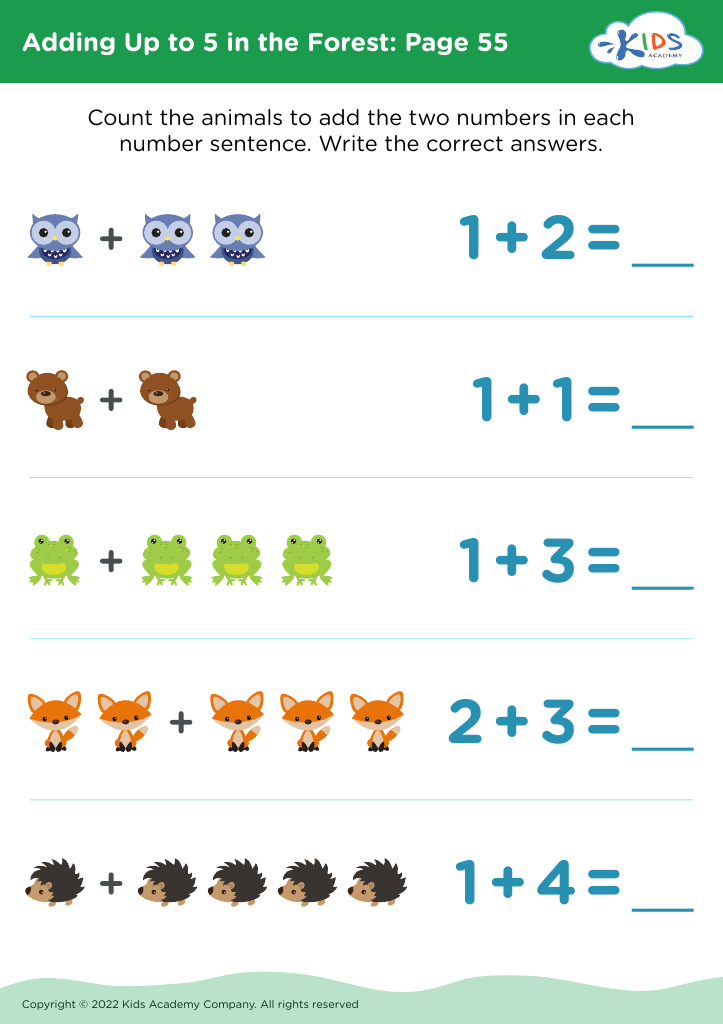
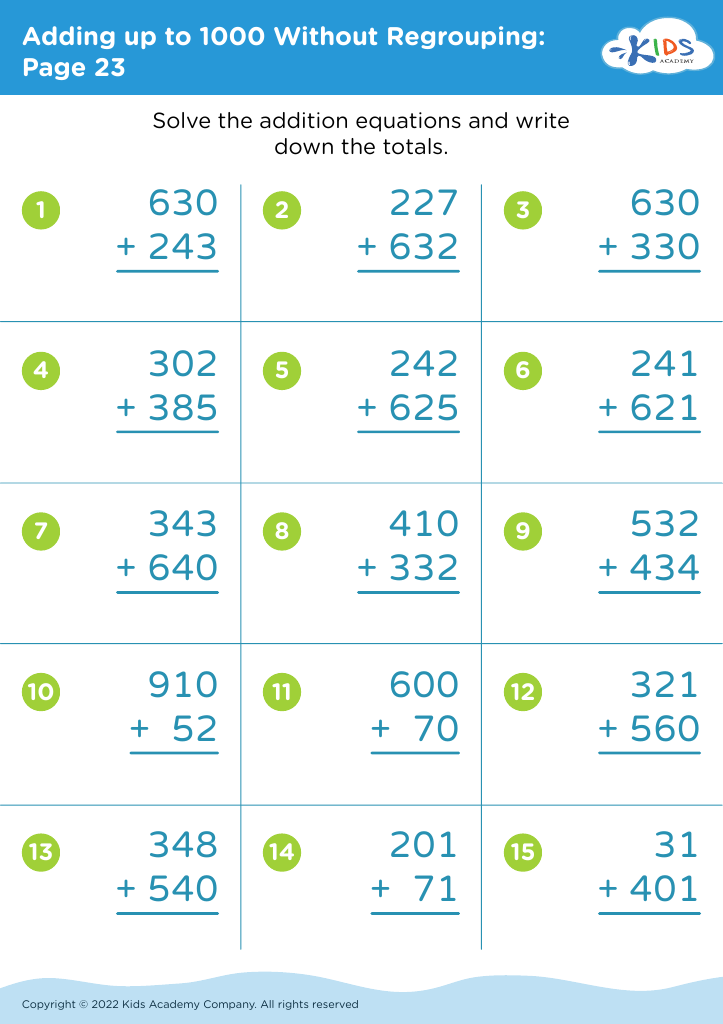
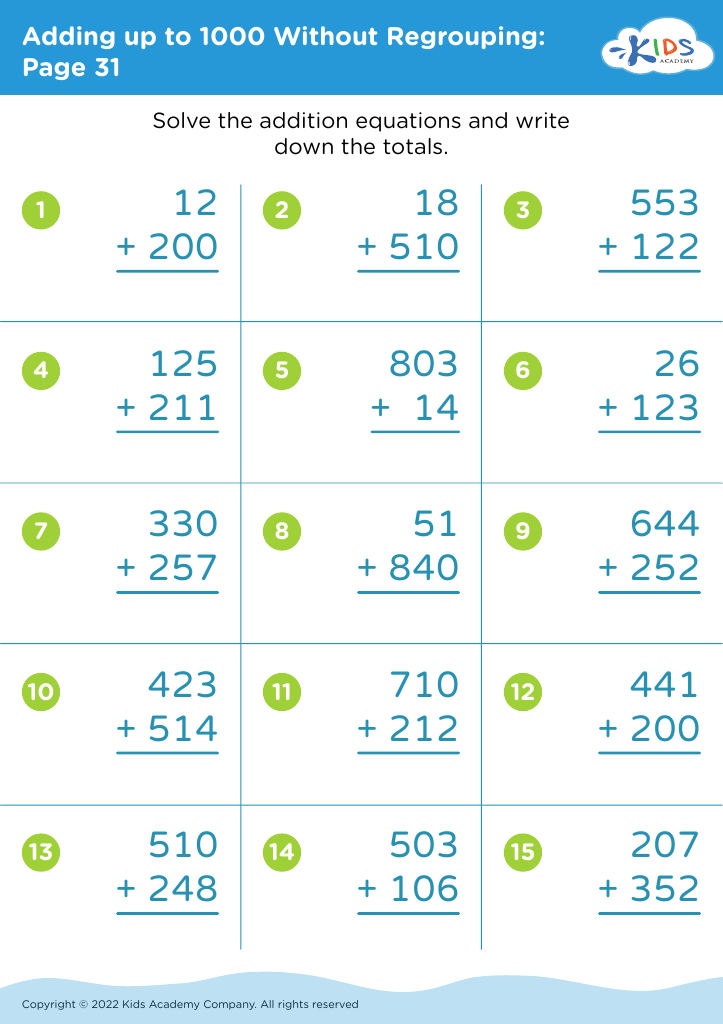
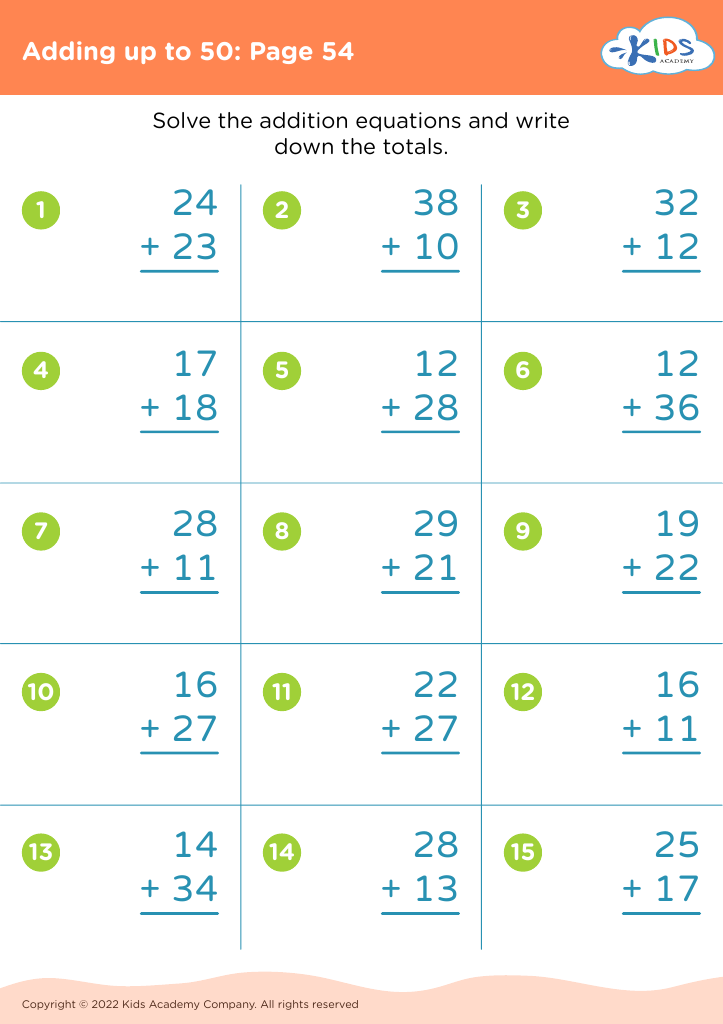
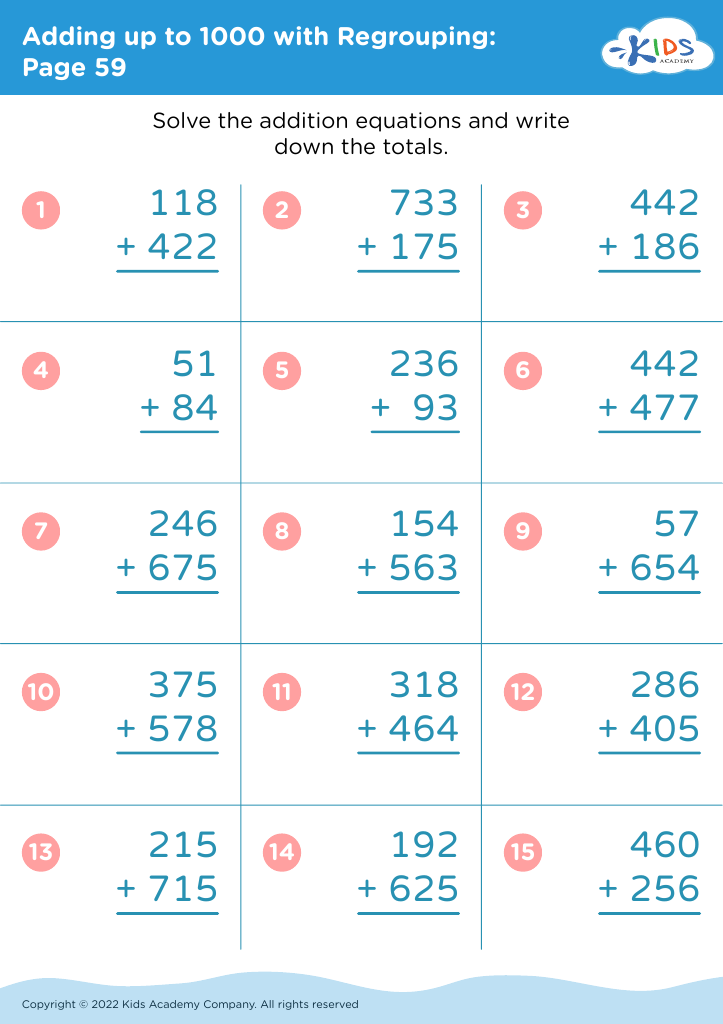








Visual interpretation addition is a crucial skill for young learners, particularly for children ages 3-8. At this stage, children are rapidly developing their cognitive and mathematical abilities, and visual methods provide a concrete way to understand abstract concepts like addition. Using manipulative tools - such as blocks, pictures, or interactive games - allows children to visualize the process of combining quantities. This hands-on experience reinforces understanding and aids retention.
Moreover, visual interpretation helps children grasp the concept of addition as a whole, rather than rote memorization. It encourages critical thinking and problem-solving skills, as kids learn to represent and manipulate numbers through visual formats. Additionally, visual strategies facilitate engagement and motivation, turning learning equations into enjoyable experiences, fostering a positive attitude toward math.
For parents and teachers, nurturing visual interpretation addition is key to laying a strong foundation for future math concepts. It supports differentiated learning, catering to diverse learning styles while promoting collaboration and communication among peers. Consequently, investing time and resources into enhancing these skills not only aids mathematics competency but also builds overall confidence in young learners, preparing them for more complex math challenges in their educational journey.








