Visual learning enhancement Addition Worksheets for Ages 3-8
4 filtered results
-
From - To
Discover our engaging Visual Learning Enhancement Addition Worksheets for children ages 3-8! Designed to make math fun and accessible, these worksheets utilize vibrant visuals and interactive elements to support young learners in mastering addition skills. Each worksheet promotes essential cognitive development through colorful illustrations and hands-on activities, fostering a love for learning. Perfect for both classroom and home use, our resources help children understand concepts in a playful, supportive environment. Encourage problem-solving and boost confidence as kids practice addition with ease. Explore our collection today and provide your child with the tools they need to succeed in math!
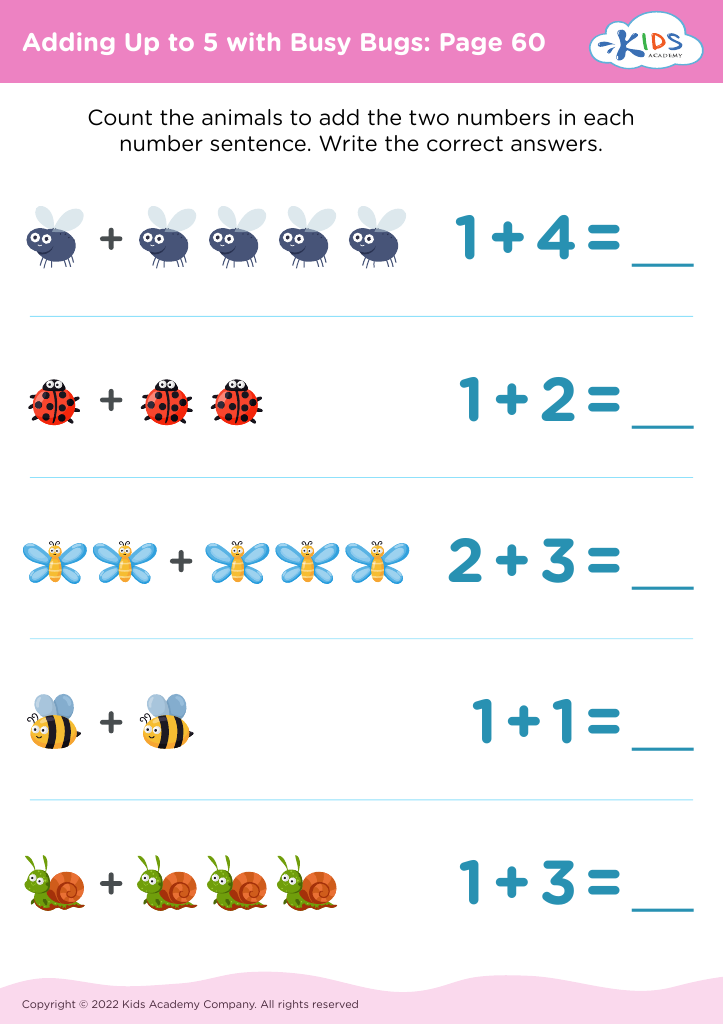
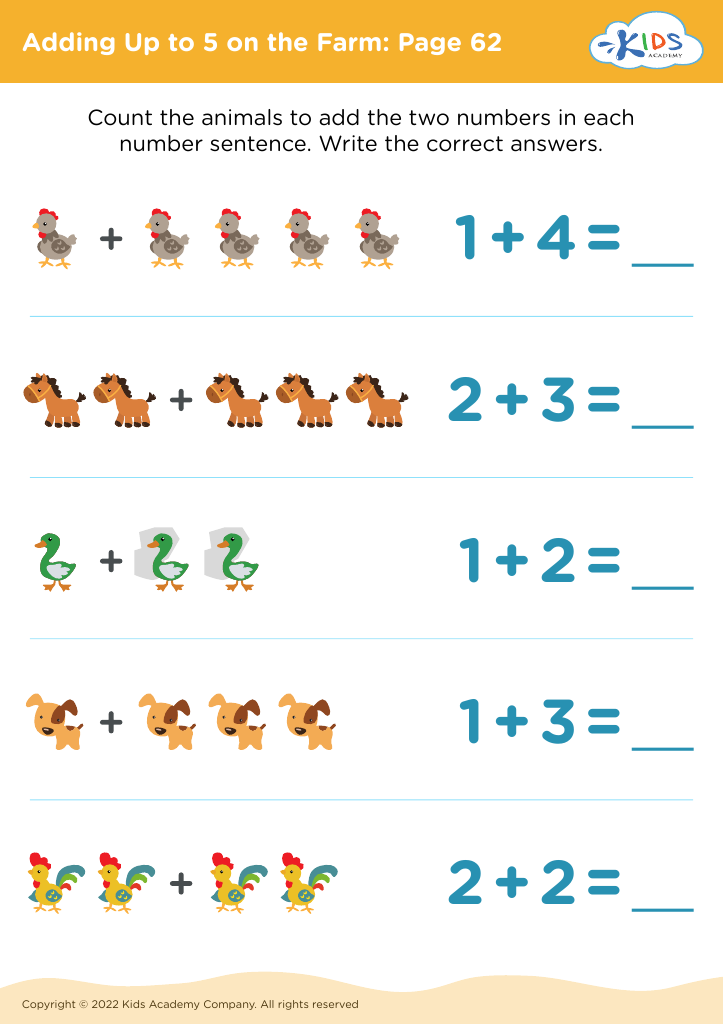
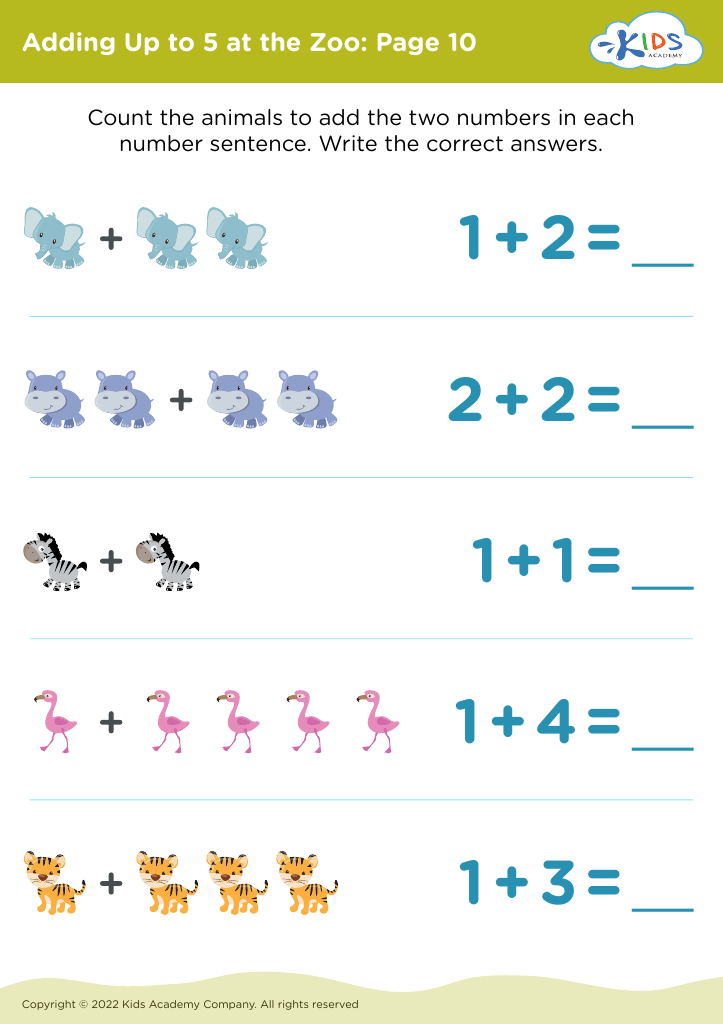
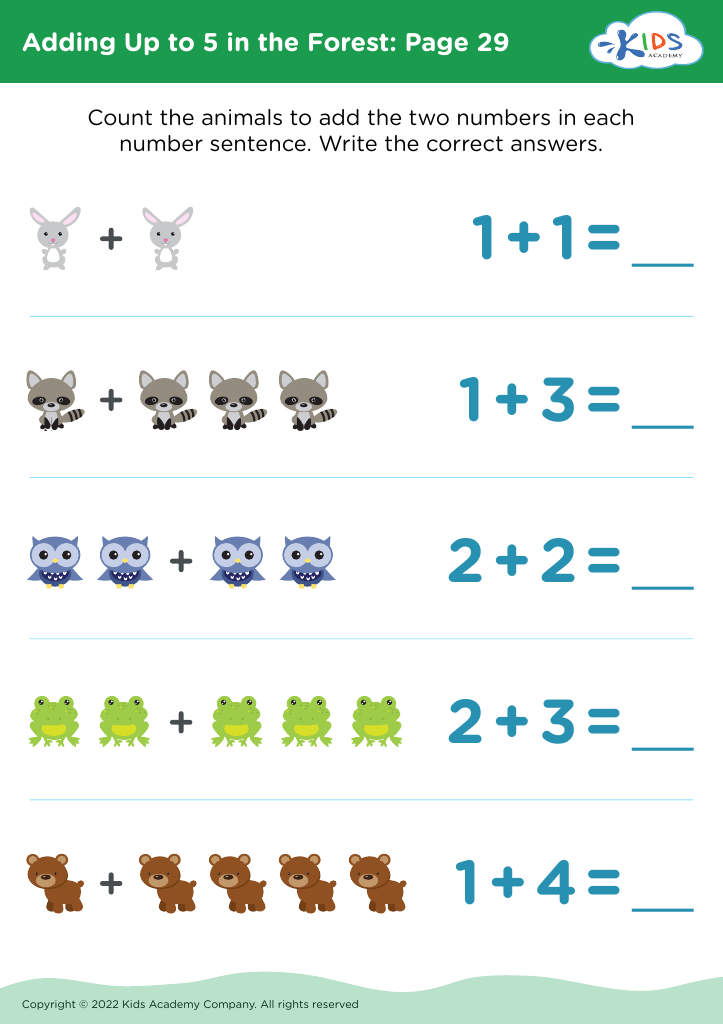








Parents and teachers should prioritize visual learning enhancement for children aged 3-8 because this educational approach leverages young learners' natural inclination towards imagery and visual stimuli. At this developmental stage, children are highly receptive to colorful visuals, interactive content, and engaging stories, which can significantly enhance their understanding and retention of concepts.
Visual learning helps children grasp complex ideas through diagrams, charts, and illustrations, making abstract concepts more concrete. This is particularly important in foundational subjects such as math and literacy, where children can relate visuals to numerical or alphabetical symbols, fostering better comprehension.
Additionally, visual tools cater to different learning styles, ensuring inclusivity in the classroom. Visual aids can be especially beneficial for kinesthetic and auditory learners, helping to bridge the gap for those who might struggle with traditional teaching methods.
Furthermore, embedding visual learning strategies encourages creativity and critical thinking, skills essential for lifelong learning. By incorporating visual elements into lessons, teachers and parents not only make learning fun but also provide children with the tools they need to succeed academically. Ultimately, this approach enhances engagement, promotes enthusiasm for learning, and lays a solid foundation for future educational success.








