Visual Perception Skills Addition Worksheets for Ages 3-8
5 filtered results
-
From - To
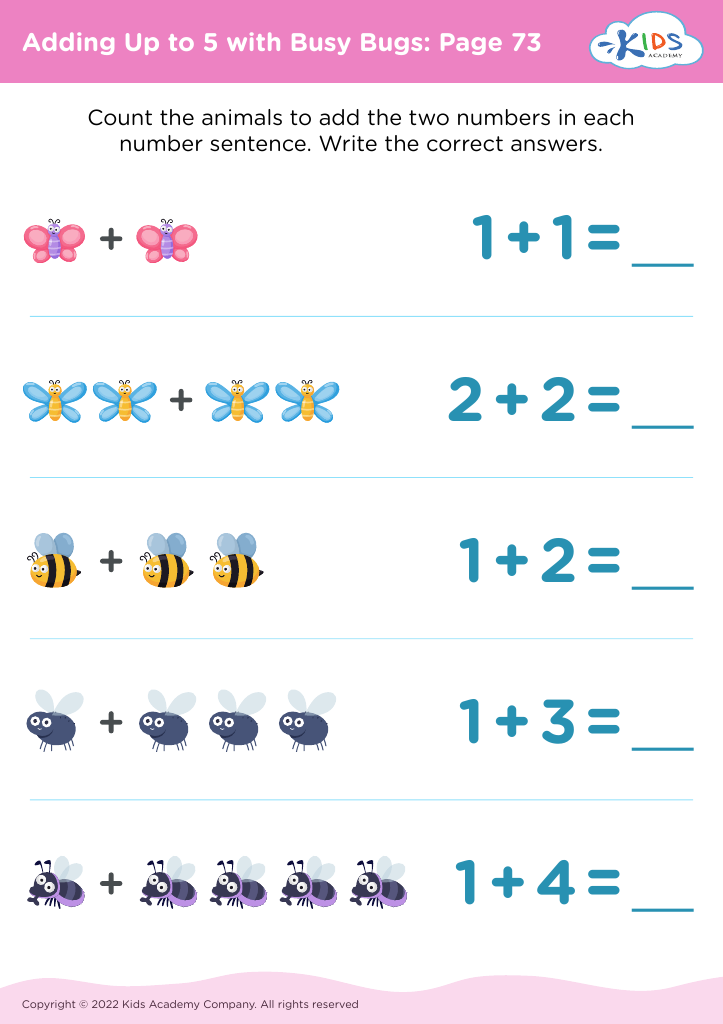
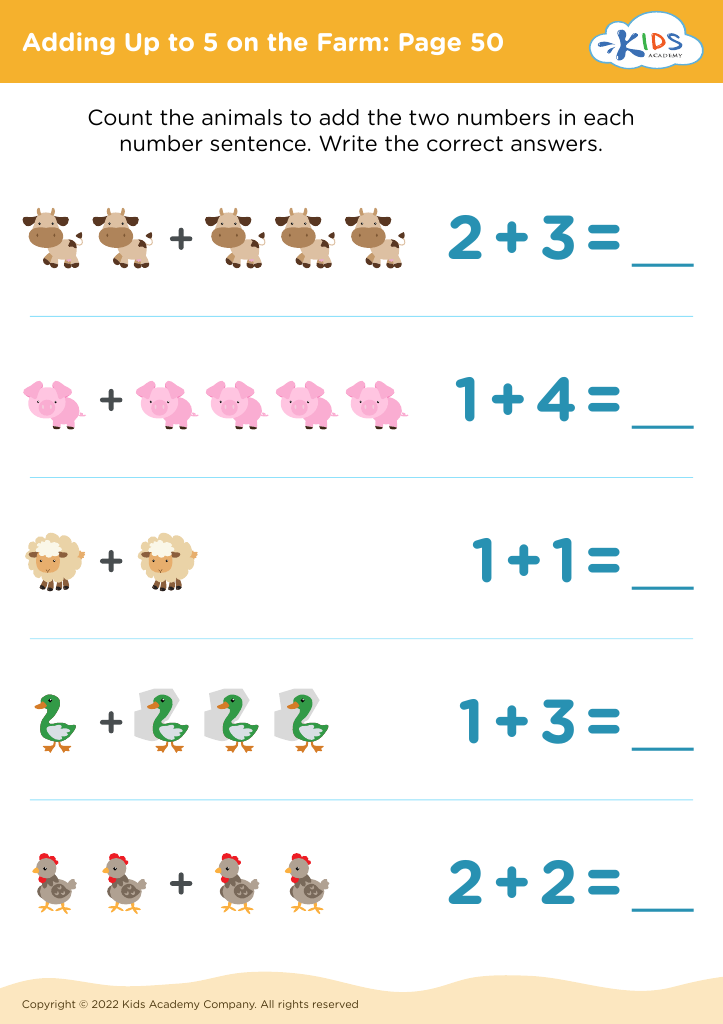
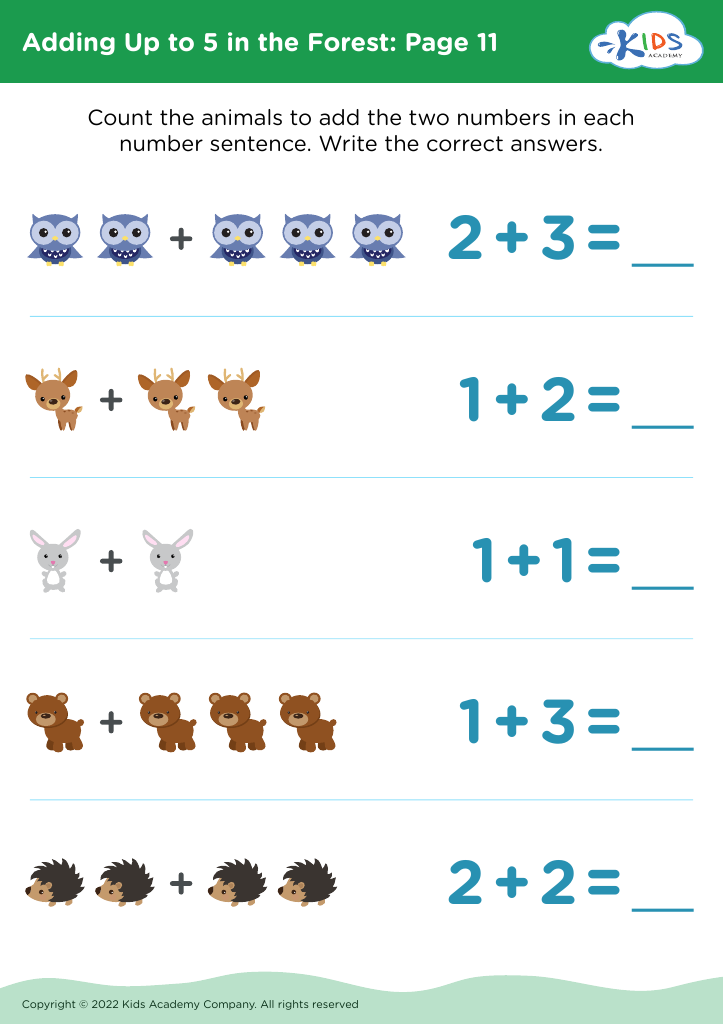
Unlock your child's potential with our Visual Perception Skills Addition Worksheets for ages 3-8! These expert-designed worksheets enhance visual perception and mathematical accuracy through engaging addition exercises. Perfect for early learners, each worksheet brings fun and challenge, stimulating cognitive development and promoting better number recognition. Boost early math skills while honing attention to detail with vibrant, interactive activities. Perfect for home or classroom use, our worksheets make learning exciting, blending education with play. Foster confidence and a love for math in your child today with our comprehensive and captivating addition resources. Start your child's math journey with us!
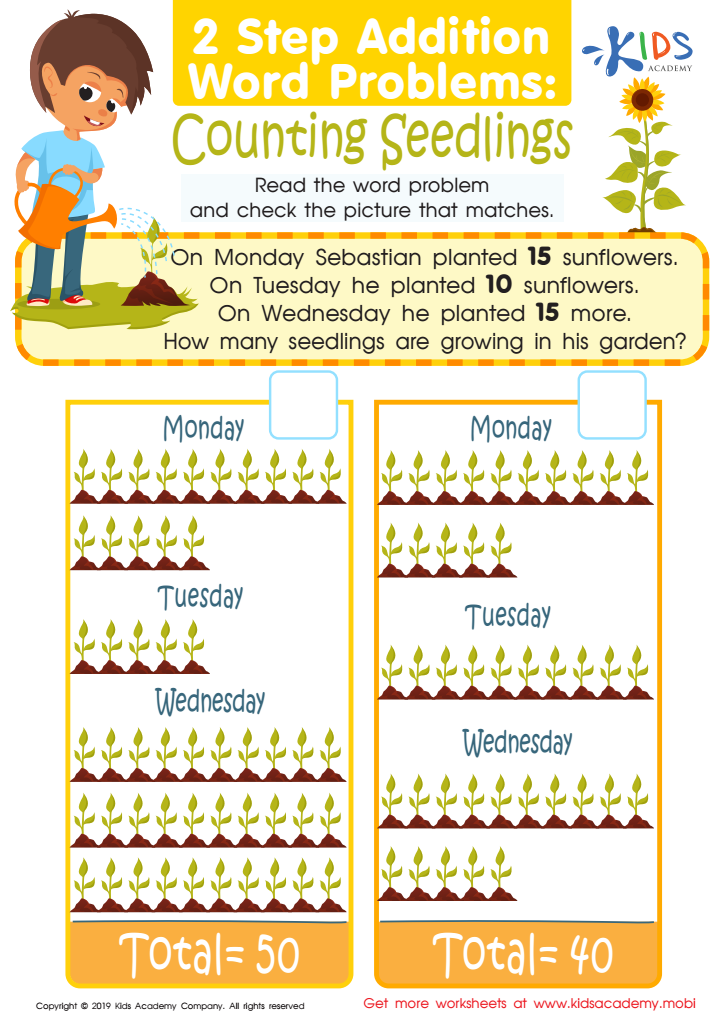
Counting Seedlings Worksheet
 Assign to My Students
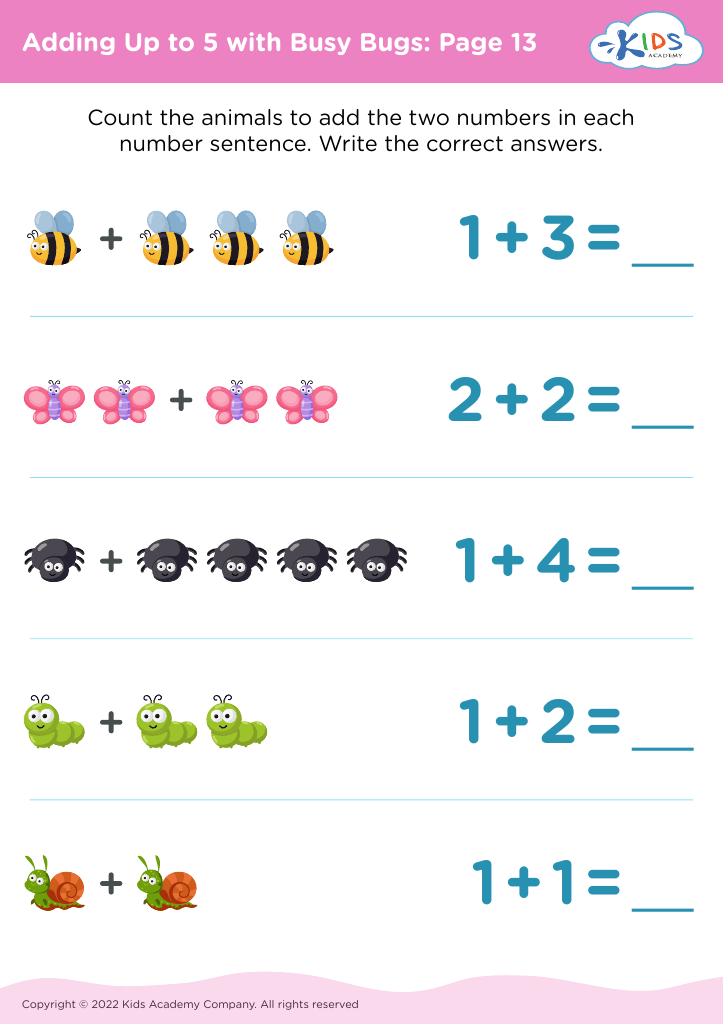








Visual perception skills are crucial developmental abilities that enable children to interpret and make sense of visual information. For ages 3-8, fostering these skills plays an essential role in their overall cognitive development and academic success. Parents and teachers should care about visual perception skills for several reasons.
Firstly, these skills are foundational to reading and writing. When children can effectively distinguish between different shapes, letters, and numbers, their ability to recognize patterns and decode written language improves. This early literacy skill is a predictor of later academic achievement.
Secondly, visual perception enhances hand-eye coordination, essential for tasks such as writing, cutting with scissors, and participating in sports. Children who develop strong visual perception skills are better prepared for the fine motor tasks required in a classroom setting.
Thirdly, strong visual perception skills contribute to better problem-solving and critical-thinking abilities. Children learn to analyze and interpret complex visual information, promoting higher-order thinking skills essential throughout their education.
Lastly, visual perception is crucial for social interactions. Being able to read facial expressions and body language helps children understand social cues, fostering better interpersonal relationships and social development.
In summary, investing in the development of visual perception skills during early childhood sets a strong foundation for academic success, fine motor competence, cognitive development, and social skills, making it an essential area of focus for parents and educators alike.








