Color recognition Arrays Worksheets for Ages 3-8
3 filtered results
-
From - To
Discover our engaging Color Recognition Arrays Worksheets designed for children ages 3-8! These fun and interactive worksheets help young learners identify and differentiate colors while developing important math skills through the concept of arrays. With vibrant visuals and various activities, each worksheet provides a hands-on approach to make learning enjoyable. Whether at home or in the classroom, these resources support early childhood education by enhancing color recognition and improving cognitive development. Perfect for parents and teachers, our Color Recognition Arrays Worksheets foster creativity and promote a love for learning. Start nurturing your child's skills today with our valuable educational tools!
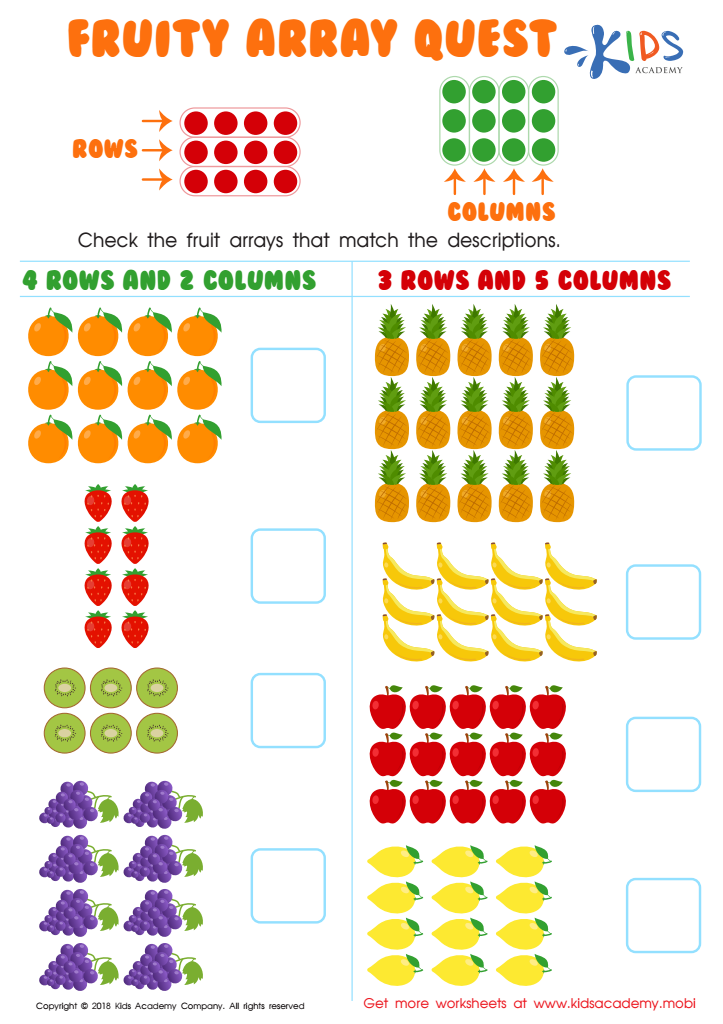
Fruity Array Quest Worksheet
 Assign to My Students
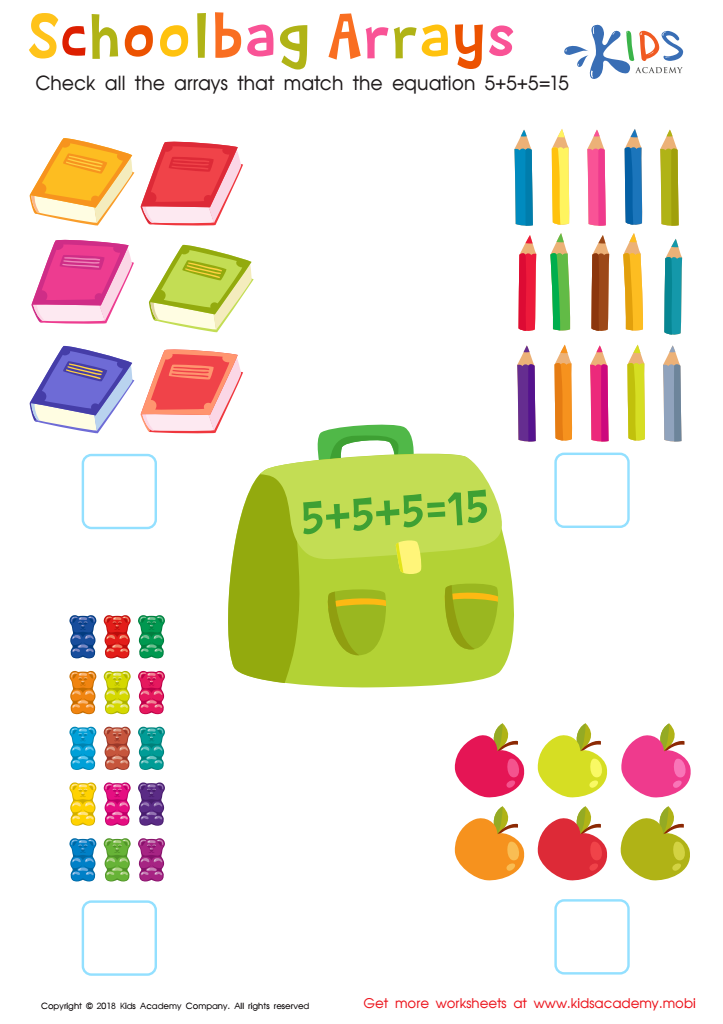
Schoolbag Arrays Worksheet
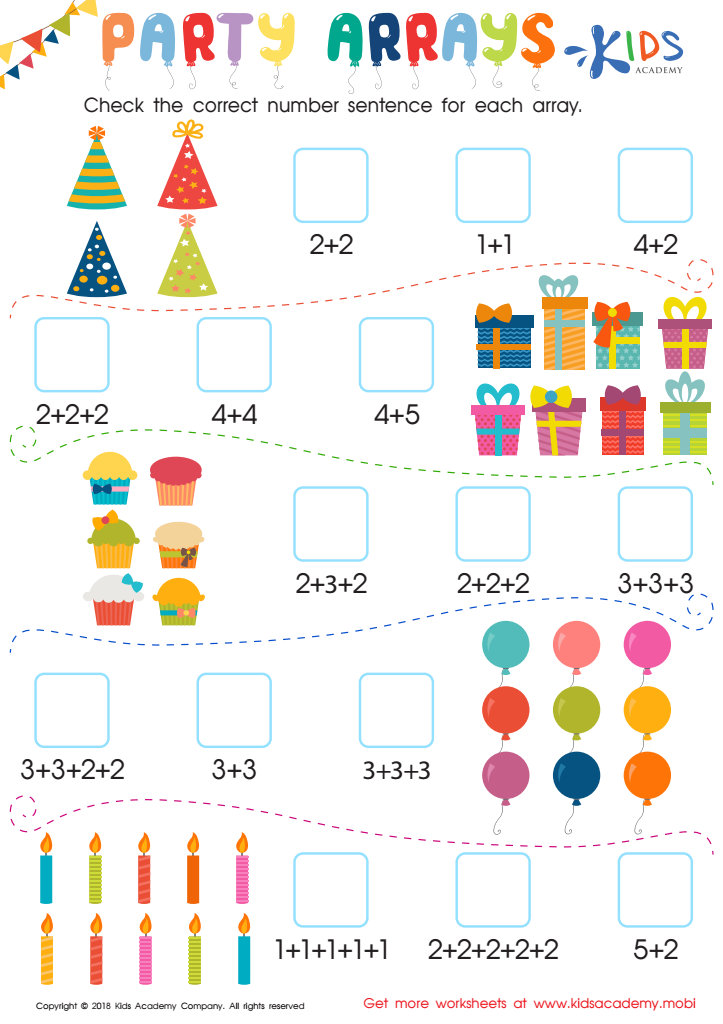
Party Arrays Worksheet








Color recognition is a fundamental skill for children ages 3-8, laying the groundwork for various cognitive and social development milestones. Parents and teachers should prioritize color recognition arrays because they enhance visual discrimination, aid language development, and promote creativity. At this age, children are naturally curious and highly attuned to visual stimuli, making it an ideal time to introduce structured color recognition activities.
Color recognition arrays—collections of objects, images, or materials grouped by color—facilitate hands-on learning experiences. They engage children’s interest, thus enhancing focus and retention. Recognizing and naming colors help children refine their vocabulary, enabling better communication skills as they describe their world. Furthermore, these arrays can encourage problem-solving abilities and critical thinking when children sort, categorize, or compare colors in various contexts.
In addition, color recognition plays a crucial role in artistic expression. Understanding colors enables children to experiment with art materials, fostering creativity. As children learn to navigate the visual complexity of their environment, they build confidence in their ability to observe, classify, and interpret. By supporting color recognition, parents and teachers help cultivate essential cognitive and emotional skills that contribute to a child's readiness for future learning.








