Historical Knowledge Arrays Worksheets for Ages 3-8
4 filtered results
-
From - To
Discover our engaging Historical Knowledge Arrays Worksheets designed specifically for children aged 3-8! These interactive resources blend math skills with historical concepts, making learning fun and effective. Young learners will explore historical figures, events, and cultures while reinforcing their understanding of arrays in math. Each worksheet features colorful illustrations and age-appropriate activities that encourage critical thinking and creativity. Perfect for homeschool settings or classroom use, our worksheets support early education by promoting both numeracy and historical awareness. Engage your child's curiosity about the past while strengthening their mathematical foundation with our thoughtfully crafted worksheets today!
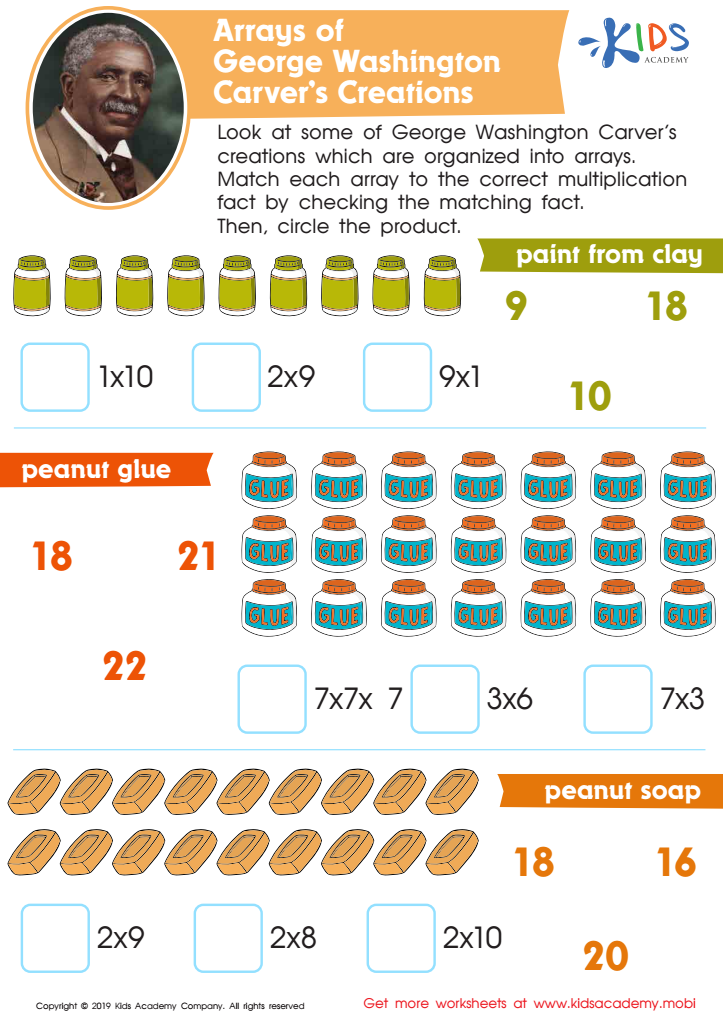
Arrays of George Washington Carver’s Creations Worksheet
 Assign to My Students
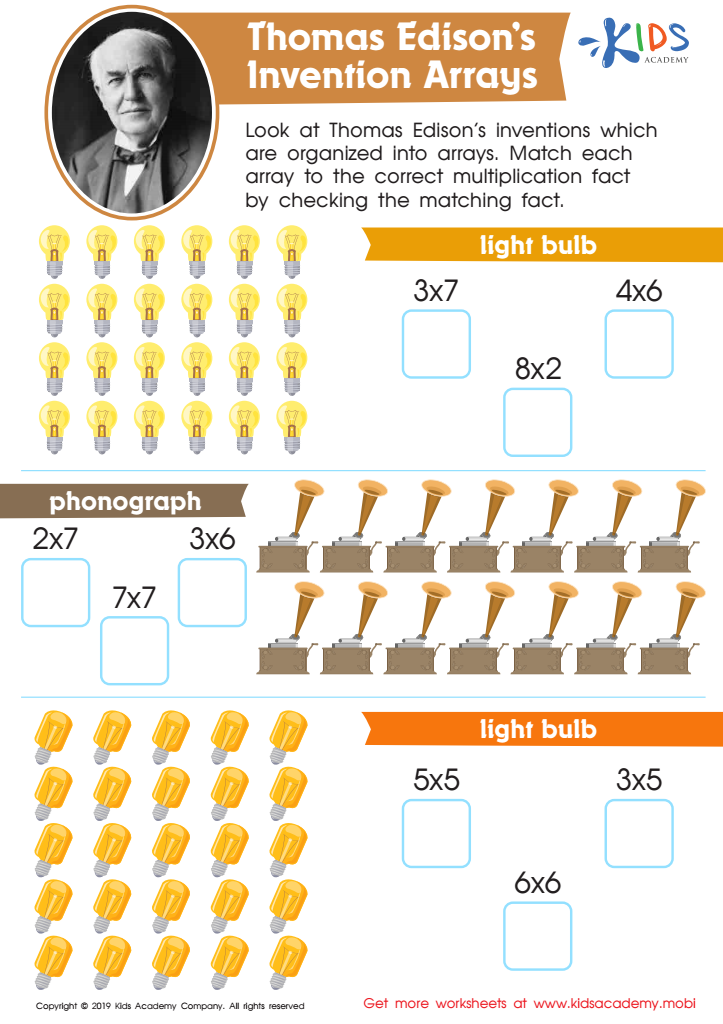
Thomas Edison’s Invention Arrays Worksheet
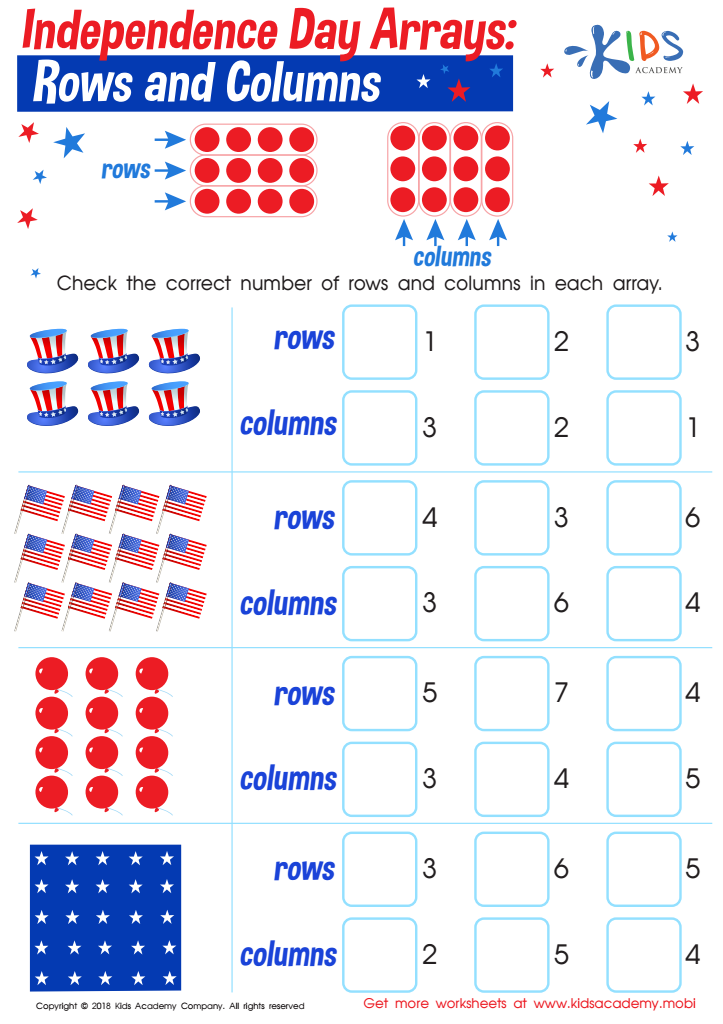
Independence Day Arrays: Rows and Columns Worksheet
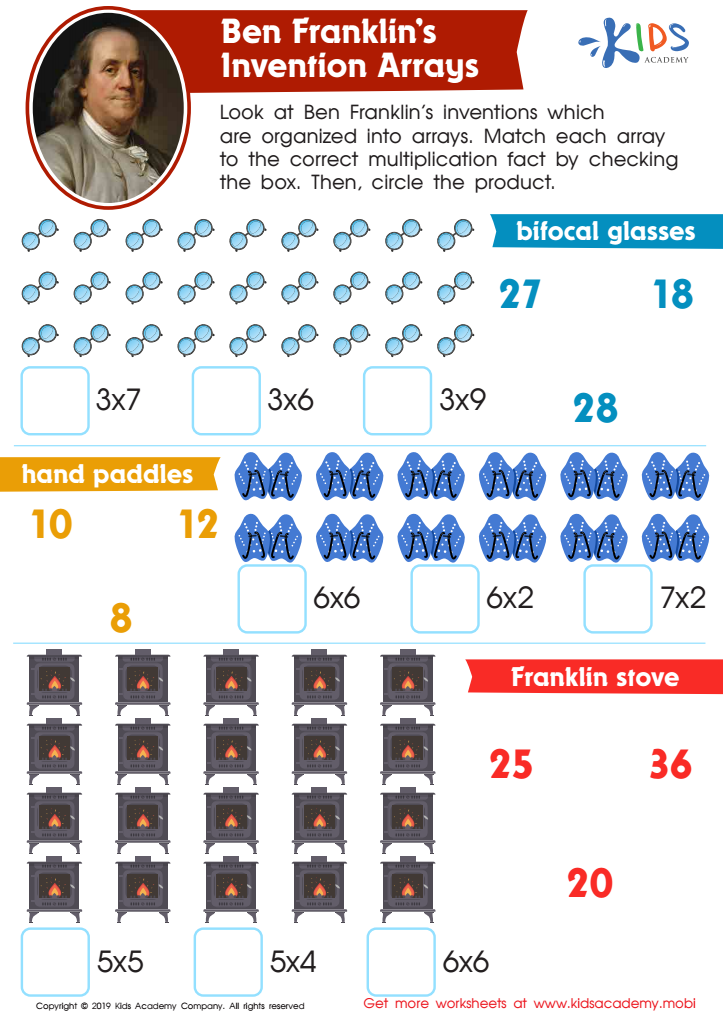
Ben Franklin’s Invention Arrays Worksheet








Parents and teachers should care about Historical Knowledge Arrays for children aged 3-8 because these frameworks serve as valuable tools in fostering critical thinking, cultural awareness, and a sense of identity in young learners. At this age, children are particularly receptive to learning about the world around them. Historical Knowledge Arrays provide a structured way to introduce young audiences to key figures, events, and concepts that have shaped human experiences.
Understanding history helps children develop a narrative of their own lives and the societies they live in. It promotes empathy as they learn about diverse cultures, traditions, and perspectives, encouraging respect and inclusiveness from an early age. Incorporating historical knowledge into early education enhances literacy skills by exposing children to story formats, sequencing events, and improving vocabulary.
Moreover, establishing a foundation in historical awareness nurtures curiosity and a lifelong love for learning, as children explore how past experiences influence present and future outcomes. By integrating historical knowledge into playful and interactive learning experiences, parents and teachers can cultivate informed, engaged citizens who appreciate their heritage and will be empowered to shape a better world. Thus, investing in historical knowledge early on is essential for holistic development.








