Multiplication practice Arrays Worksheets for Ages 3-8
4 filtered results
-
From - To
Boost your child's math skills with our engaging Multiplication Practice Arrays Worksheets for ages 3-8! These worksheets are specially designed to introduce young learners to the concept of multiplication through visual aids and interactive activities. Using arrays to represent multiplication problems, children will enhance their understanding while developing problem-solving and critical thinking skills. Ideal for homeschooling, classroom settings, or supplementary practice, our worksheets cater to various learning paces and styles. Encourage a love for math at an early age and watch your child's confidence soar! Download our printable worksheets today and make learning multiplication fun and accessible!
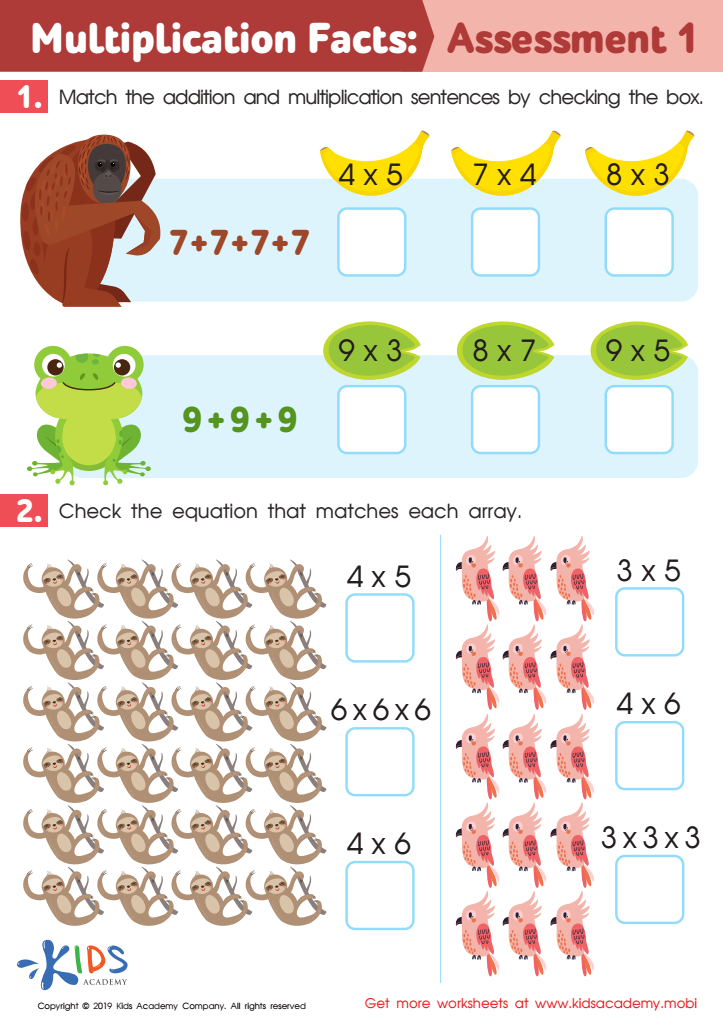
Multiplication Facts: Assessment 1 Worksheet
 Assign to My Students
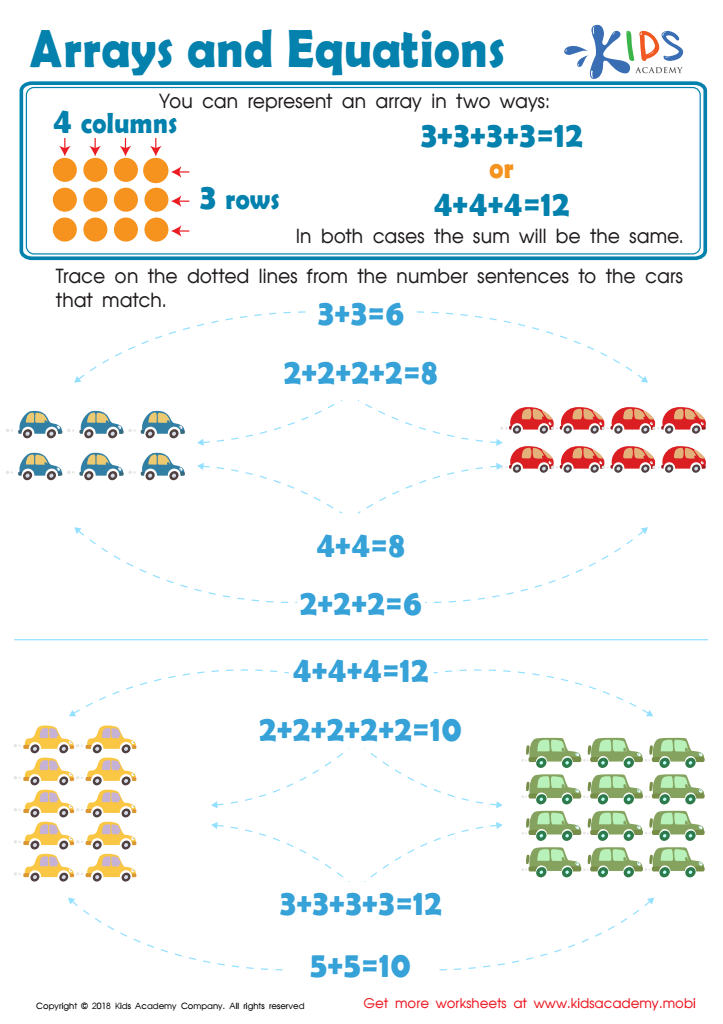
Arrays and Equations Worksheet
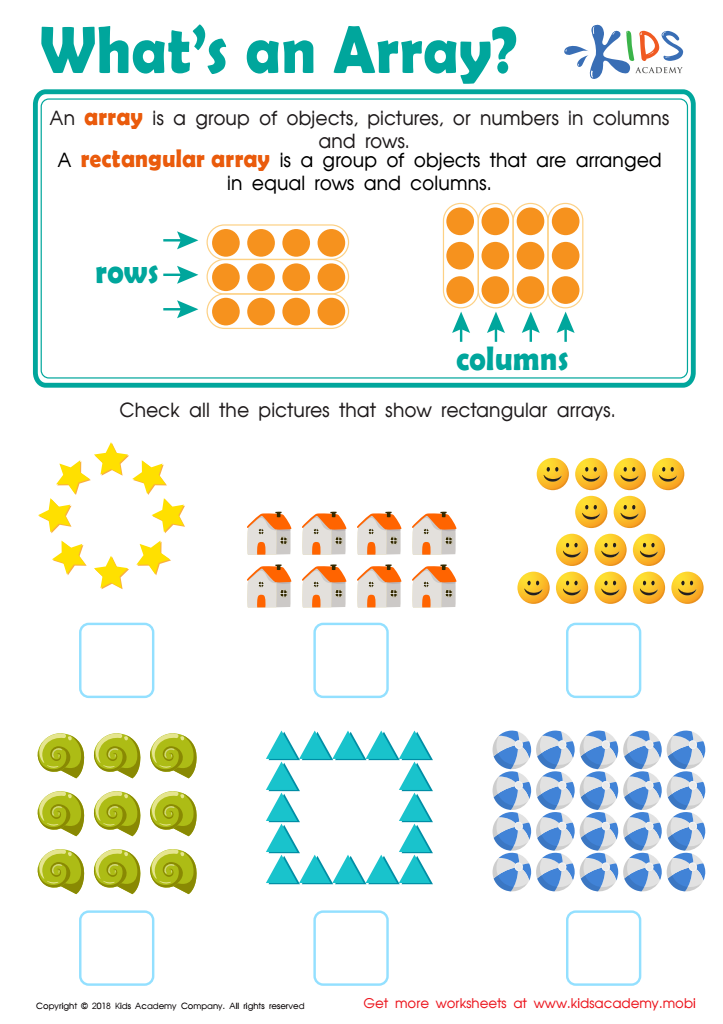
What's an Array? Worksheet
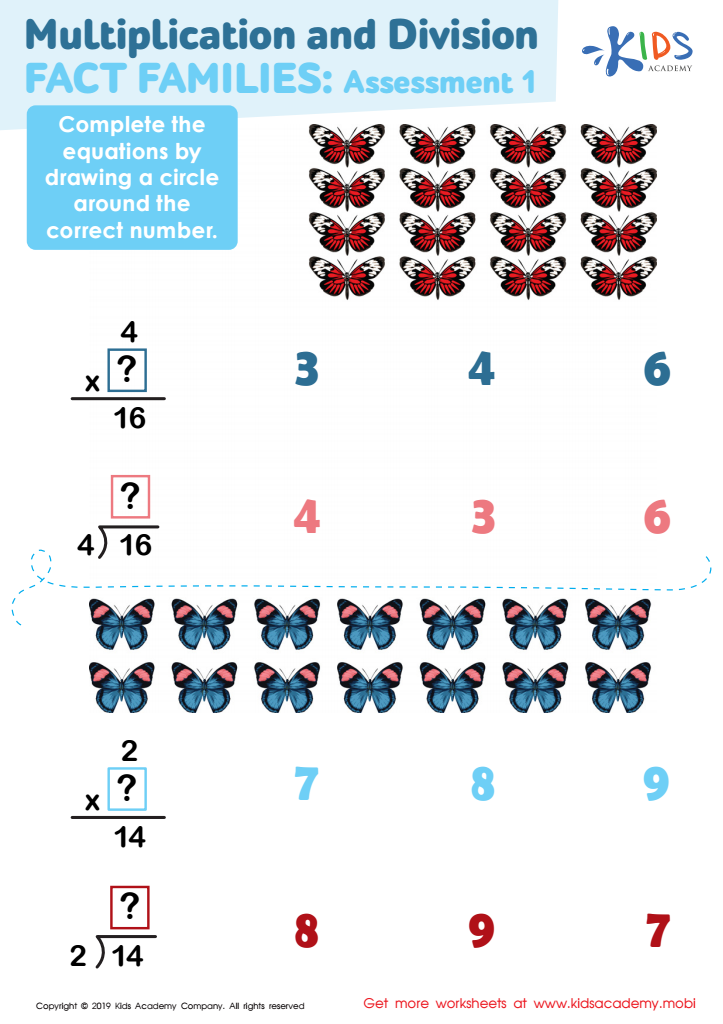
Multiplication and Division Fact Families Assessment 1 Worksheet







Multiplication practice using arrays is crucial for students aged 3-8 as it lays a strong foundation for mathematical understanding. Arrays help children visualize multiplication concepts and grasp the relationship between addition and multiplication, making it easier to transition into more complex mathematical operations.
Using physical objects, such as blocks or counters, to create arrays allows children to explore and understand quantities in an interactive way. This hands-on method engages different learning styles, fostering critical thinking and problem-solving skills. Furthermore, by practicing arrays, children develop fine motor skills and enhance their spatial awareness as they arrange objects in rows and columns.
Moreover, arrays fulfill a key component of a well-rounded early mathematics curriculum. They promote number sense and help children recognize patterns, which is essential for advanced math concepts later on. For parents and teachers, incorporating multiplication practice through arrays emphasizes the importance of counting, grouping, and mathematical reasoning, thereby nurturing a positive attitude towards math.
Ultimately, early exposure to multiplication through arrays equips children with essential skills, boosts their confidence in math, and helps create a strong mathematical foundation for future academic success. Engaging students with tangible arrays not only makes learning fun but also deepens their understanding of essential math concepts.








