Number Recognition Arrays Worksheets for Ages 3-8
3 filtered results
-
From - To
Discover engaging Number Recognition Arrays Worksheets designed for children ages 3-8! Our comprehensive collection helps young learners develop essential number recognition skills through colorful arrays and interactive activities. Each worksheet encourages children to identify, count, and recognize numbers in a fun and supportive manner. These resources are perfect for both home and classroom use, promoting early math proficiency while enhancing visual learning. With a variety of exercises tailored to different skill levels, children will build confidence and mastery in number recognition. Explore our worksheets today and watch your little ones thrive in their mathematical journey! Suitable for Kindergarten and early elementary education settings.
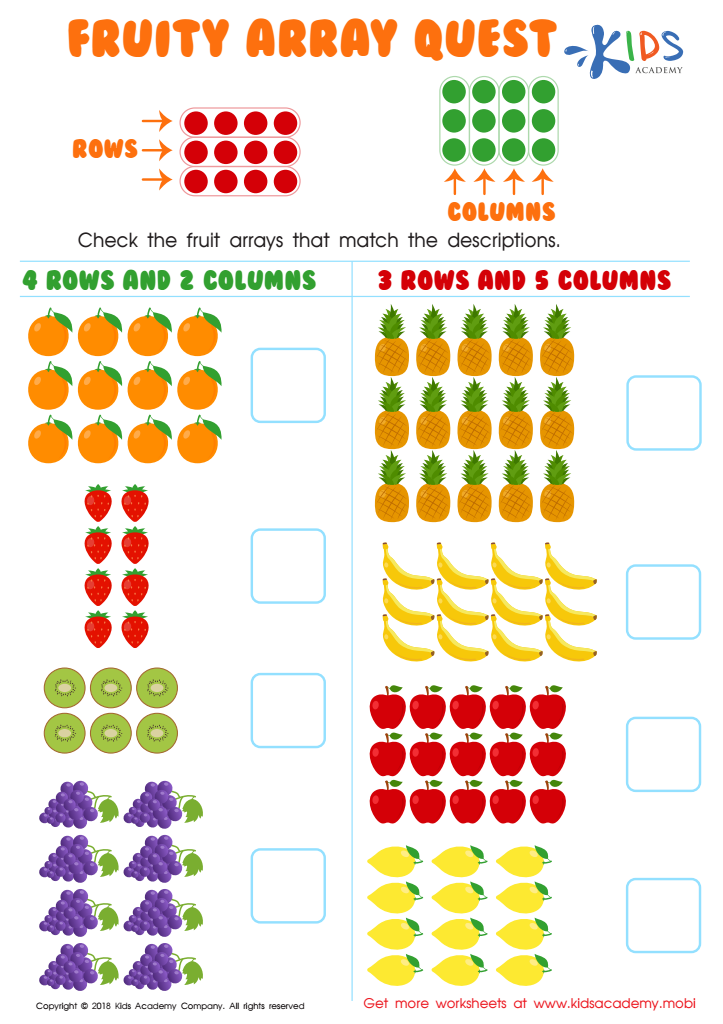
Fruity Array Quest Worksheet
 Assign to My Students
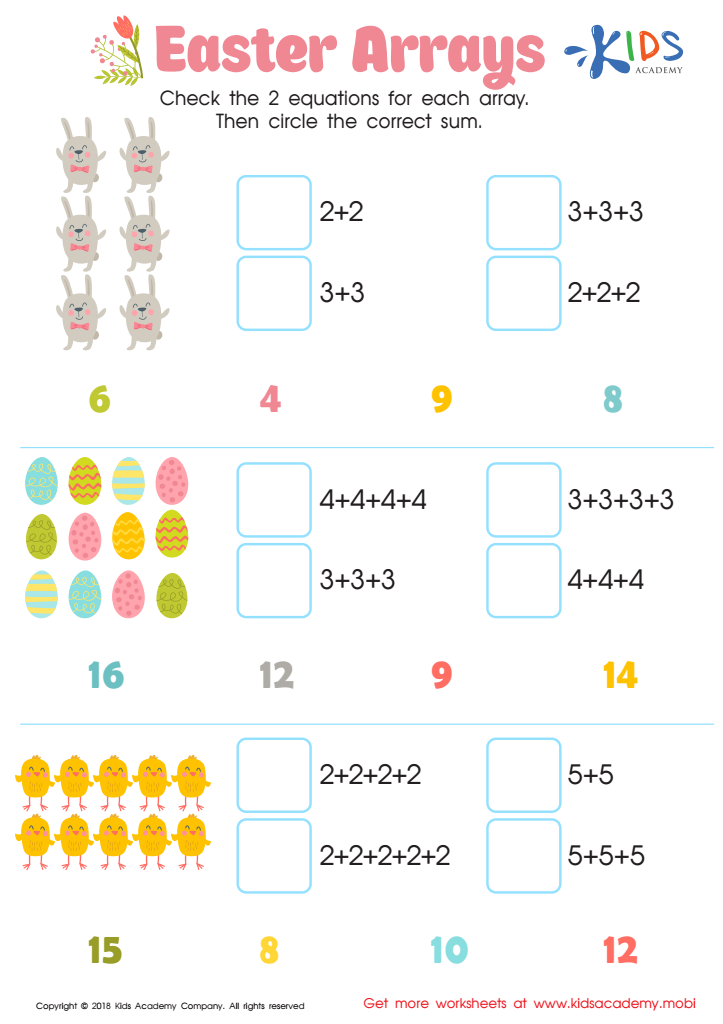
Easter Arrays Worksheet
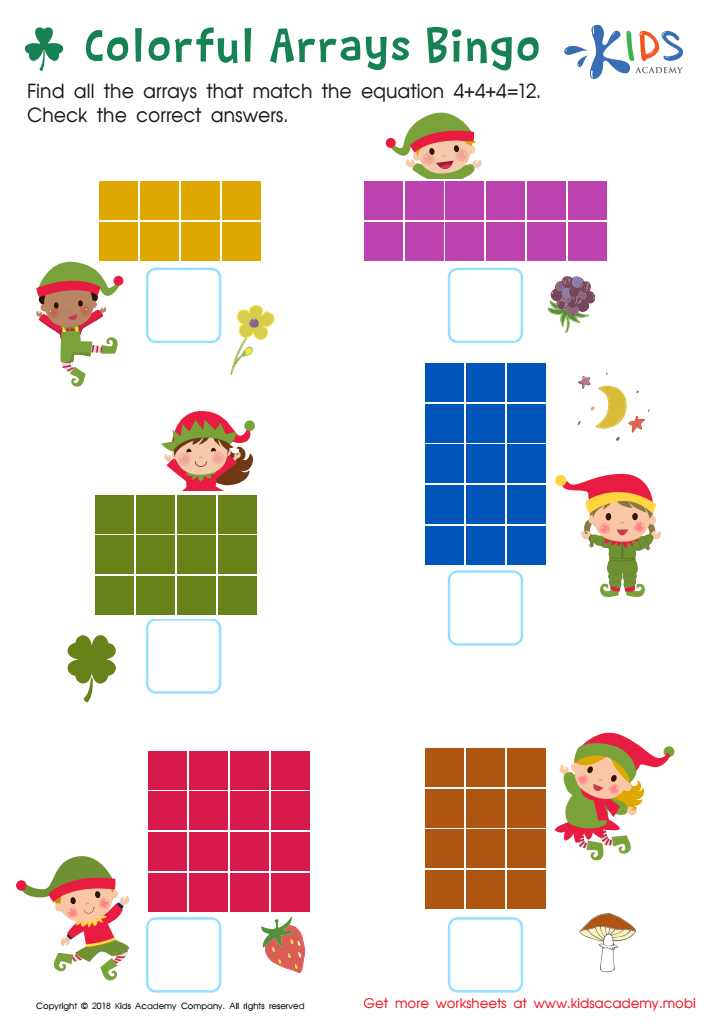
Colorful Arrays Bingo Worksheet








Number Recognition Arrays are crucial tools in early childhood education that help children aged 3-8 develop foundational math skills. These visual representations of numbers aid in teaching numerical concepts and fostering number recognition. Using arrays, children can visually see quantities, which enhances their ability to associate numbers with specific amounts. This creates a deeper understanding of quantity, which is vital as they progress in their mathematical journey.
Parents and teachers should care about these arrays because they make learning more interactive and engaging. Visual learning aids can captivate young children’s attention, making it easier for them to grasp abstract concepts of numbers. They also promote hands-on activities that support cognitive development and problem-solving skills.
Moreover, number recognition is a gateway to later math competencies such as addition, subtraction, and understanding patterns. With early intervention, parents and teachers can identify and address any difficulties a child may face in math, leading to improved confidence and academic performance.
Finally, incorporating Number Recognition Arrays into early education supports a balanced learning environment where children can learn through play, exploration, and structured activities. Emphasizing these arrays sets the stage for a lifelong love of learning in mathematics.








