Reading comprehension Arrays Worksheets for Ages 3-8
5 filtered results
-
From - To
Boost your child's reading and analytical skills with our Reading Comprehension Arrays Worksheets, designed for ages 3-8. Our expertly crafted worksheets engage children through fun and educational activities, enhancing both their math understanding and reading abilities. With a variety of entertaining exercises, kids will learn to identify and understand arrays while practicing essential reading comprehension skills. These worksheets are perfect for early learners, blending learning with play to ensure a fulfilling educational experience. Help your child build a strong foundation in both math and reading with our comprehensive collection of array worksheets, available now at Kids Academy.
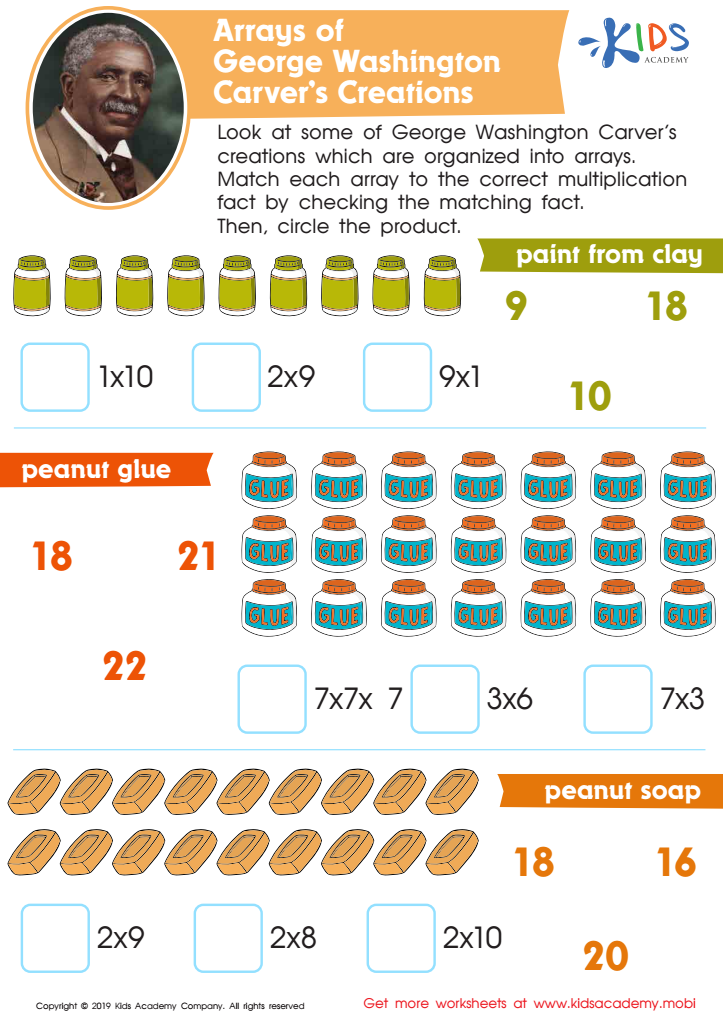
Arrays of George Washington Carver’s Creations Worksheet
 Assign to My Students
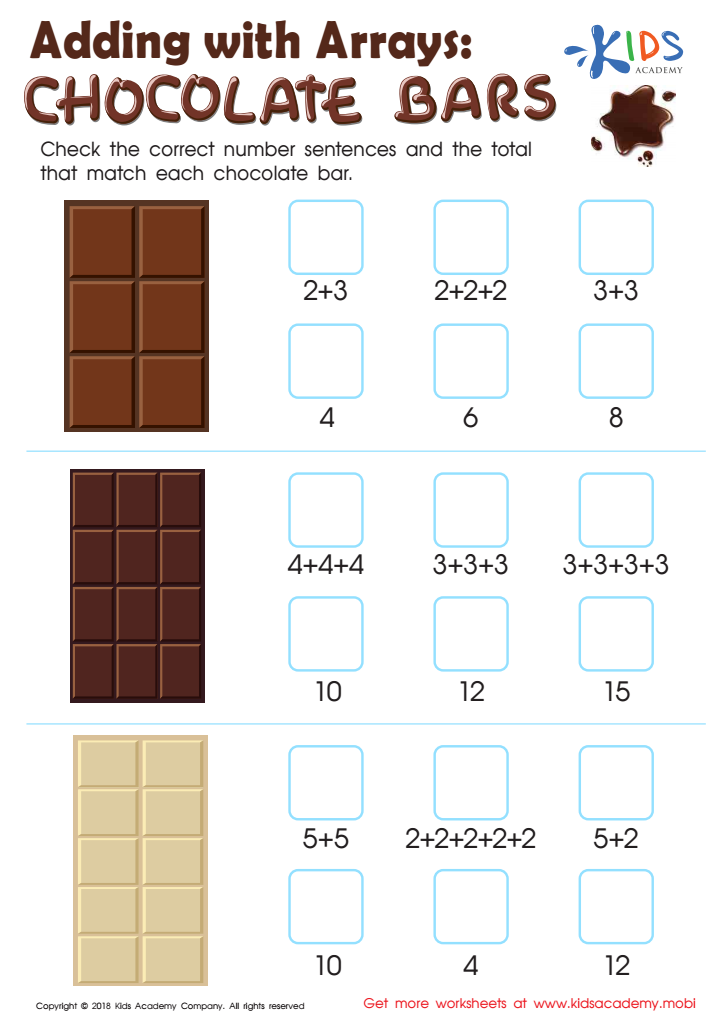
Adding with Arrays: Chocolate Bars Worksheet
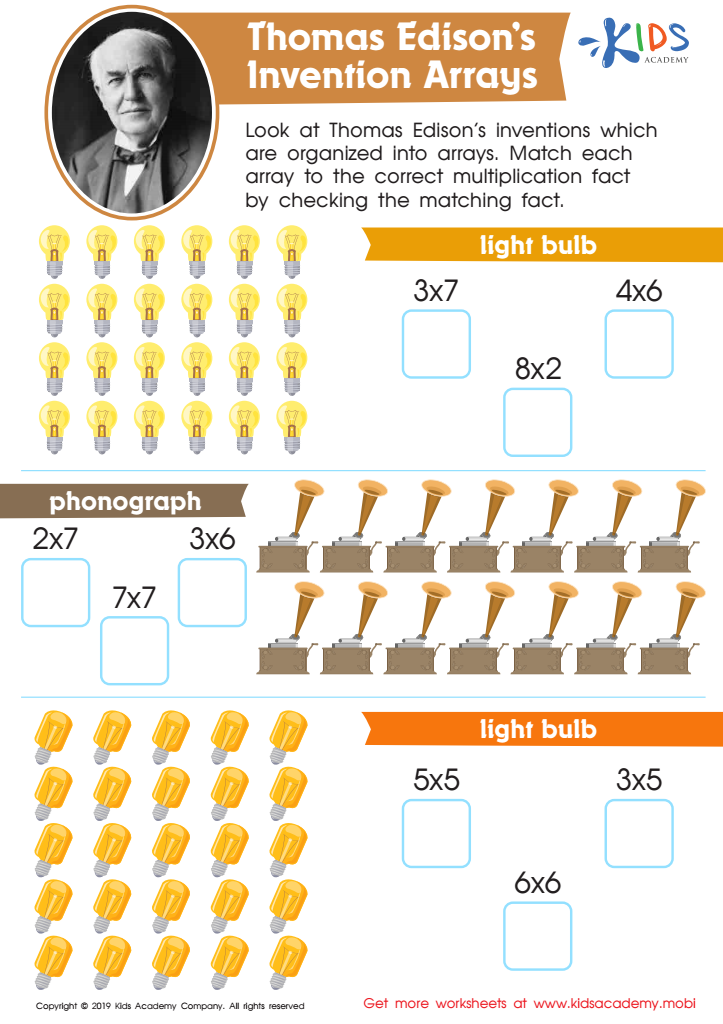
Thomas Edison’s Invention Arrays Worksheet
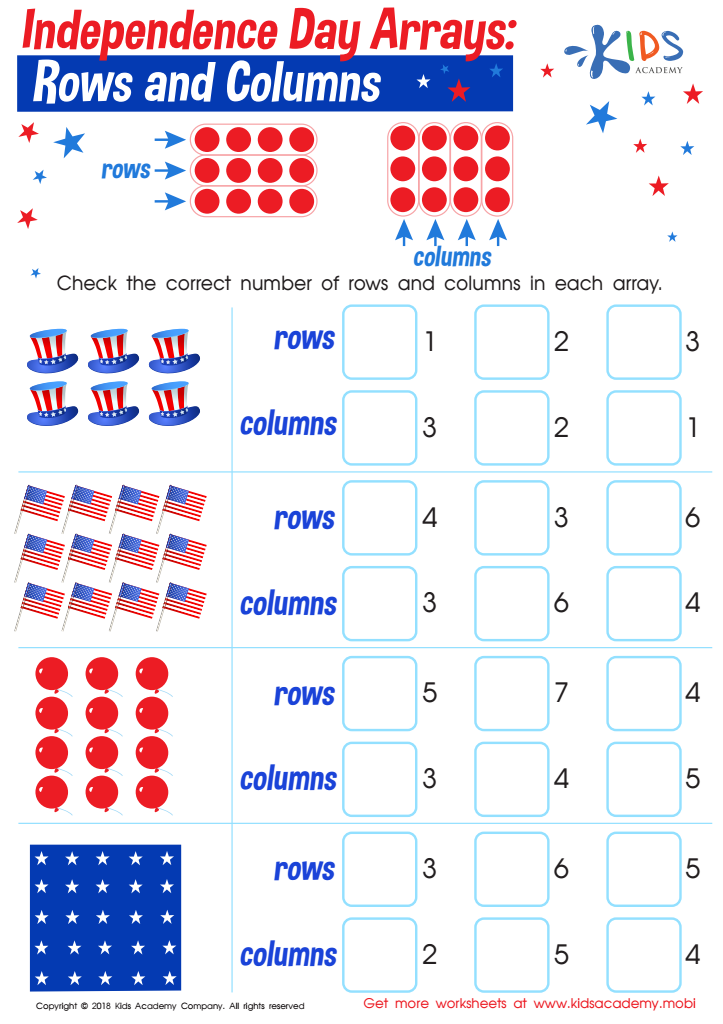
Independence Day Arrays: Rows and Columns Worksheet
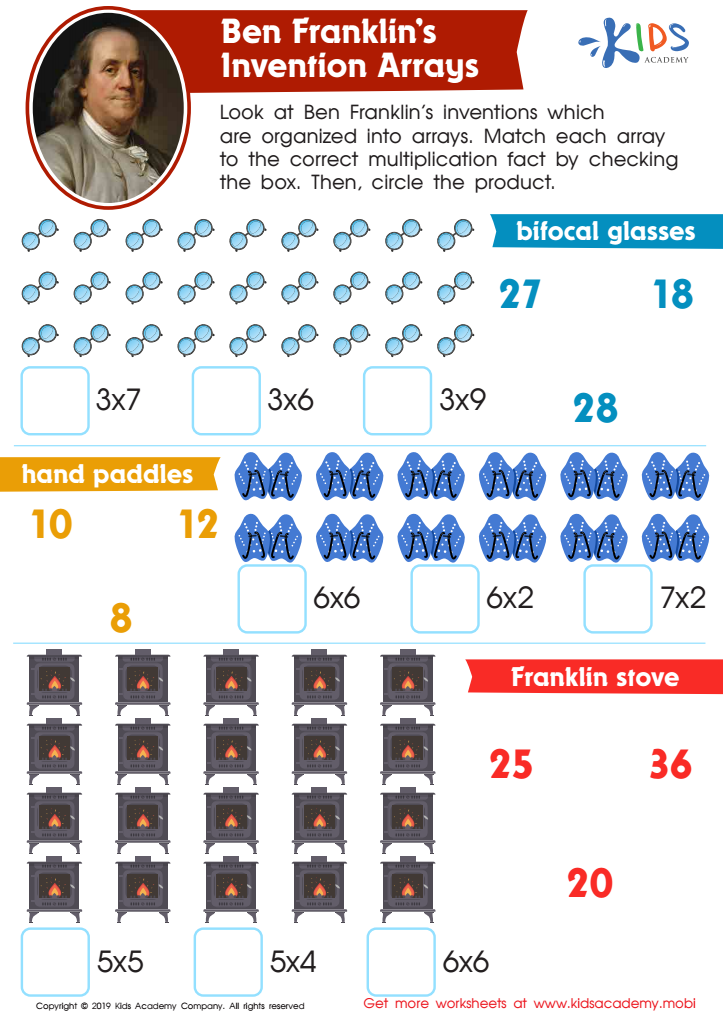
Ben Franklin’s Invention Arrays Worksheet








Reading comprehension is a foundational skill that shapes a child’s cognitive and academic future. For children aged 3-8, the development of reading skills is particularly crucial as it lays the groundwork for successful learning in all subjects. Using reading comprehension arrays, which are tools that break down stories and texts into understandable segments, is beneficial for this age group for several reasons.
Firstly, these arrays help children to better grasp the sequence and structure of stories. Understanding the beginning, middle, and end parts of a tale aids in their narrative skills. Secondly, reading comprehension arrays encourage active engagement with the text. By organizing information visually, children can more easily relate to and retain what they read, enhancing memory and recall.
Additionally, arrays support vocabulary development by isolating key words and phrases, allowing for targeted learning. They also foster critical thinking by prompting children to categorize and connect concepts.
For parents and teachers, the objective is to cultivate a genuine love of reading while ensuring kids have the tools they need to understand and analyze text. Utilizing reading comprehension arrays makes reading less daunting and more interactive, laying a robust literacy foundation that sets children up for long-term academic and cognitive success.








