Understanding patterns Basic Times Tables up to 12 Worksheets for Ages 3-8
3 filtered results
-
From - To
Discover exciting resources for teaching "Understanding Patterns" with our Basic Times Tables up to 12 worksheets, designed for children aged 3-8! These engaging, printable worksheets help young learners grasp the concept of patterns in multiplication through colorful visuals and hands-on activities. By exploring the relationships between numbers, children develop critical thinking skills while building a solid foundation in math. Our worksheets are perfect for home or classroom use, making math fun and interactive. Start cultivating your child's math skills with our thoughtfully crafted resources and watch them gain confidence as they master multiplication patterns! Explore our collection today!
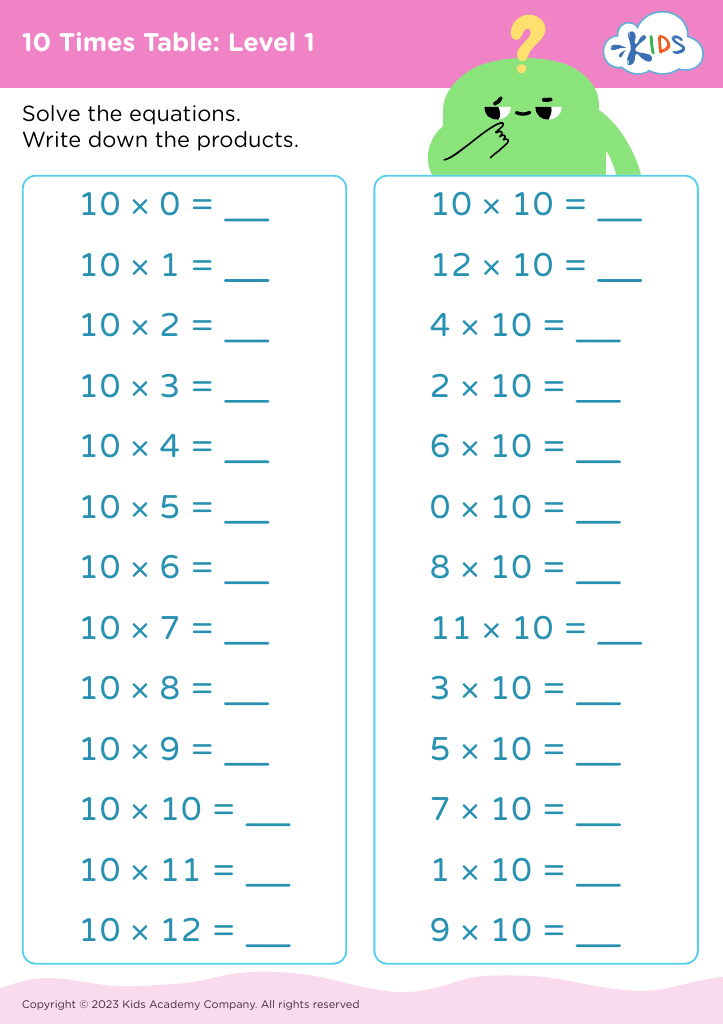
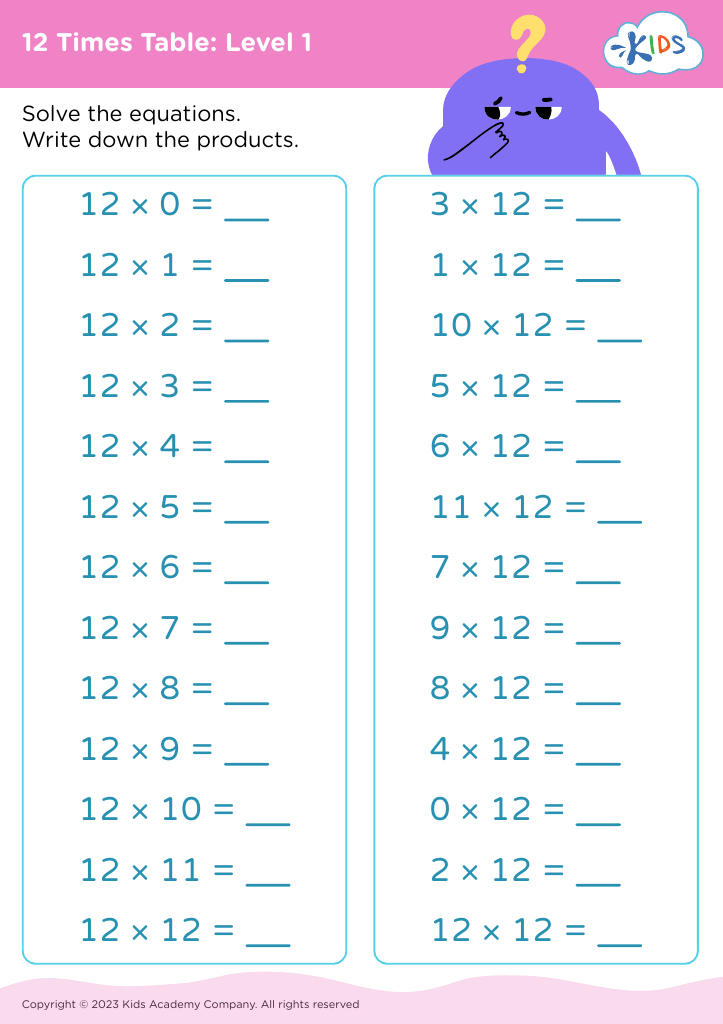
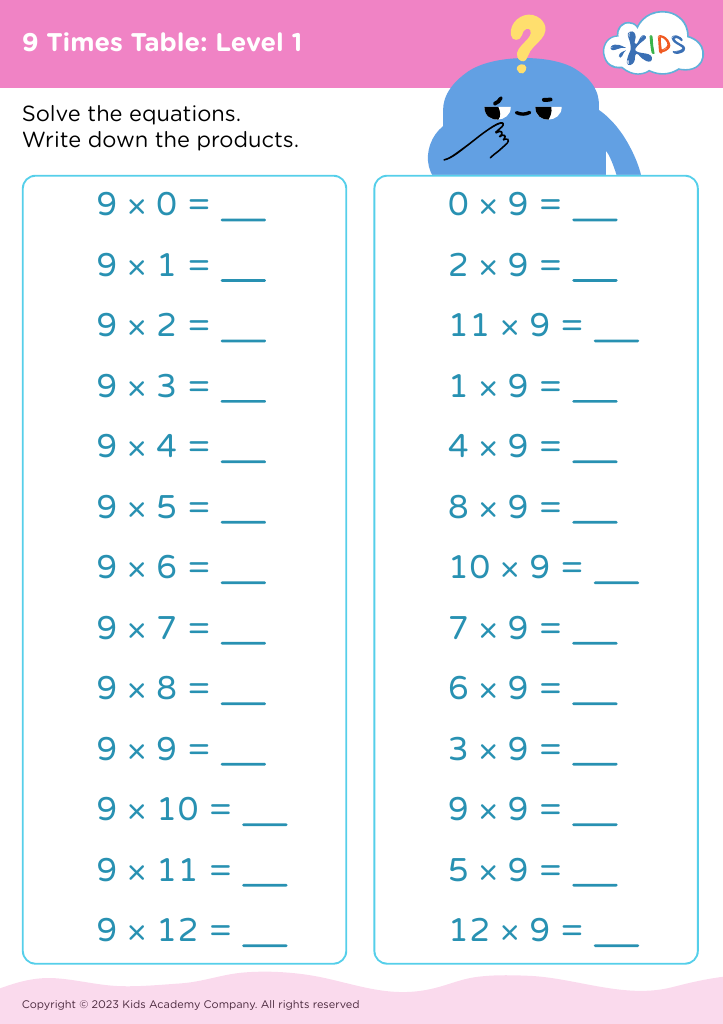


Understanding patterns and basic times tables up to 12 is crucial for children aged 3-8 as it lays a strong foundation for their mathematical skills and overall cognitive development. Firstly, recognizing patterns helps young learners make sense of numbers and enhances their problem-solving abilities. Patterns are prevalent in everyday life, from nature to routines, and learning how to identify them can strengthen critical thinking.
Moreover, the basic times tables introduce children to multiplication, which is a gateway for more advanced mathematics. Early mastery of times tables fosters confidence and builds a sense of achievement. When children grasp the basic concepts of multiplication as repeated addition, they can transfer these skills across subjects, making connections between math and real-world applications.
Moreover, engaging in times table practice through games and fun activities creates a positive learning environment, encouraging students to enjoy math rather than fear it. Additionally, a robust understanding of these concepts provides teachers and parents valuable insights into a child’s learning style and progress, allowing for tailored support. Ultimately, embedding these foundational skills early on equips children with essential tools that will serve them throughout their academic journey and in everyday situations.








