Money recognition Money Worksheets for Ages 3-8
5 filtered results
-
From - To
Discover our engaging Money Recognition Worksheets designed for children aged 3-8! These interactive resources help young learners identify, count, and understand different denominations of coins and bills in a fun, hands-on way. With vibrant illustrations and age-appropriate activities, kids will develop essential money skills that lay the foundation for financial literacy. Our worksheets promote fine motor skills while making learning enjoyable through games and practical exercises. Perfect for preschool and early elementary students, these worksheets will enhance your child's confidence in handling money. Explore our extensive collection and make learning about money a delightful experience for your little ones!
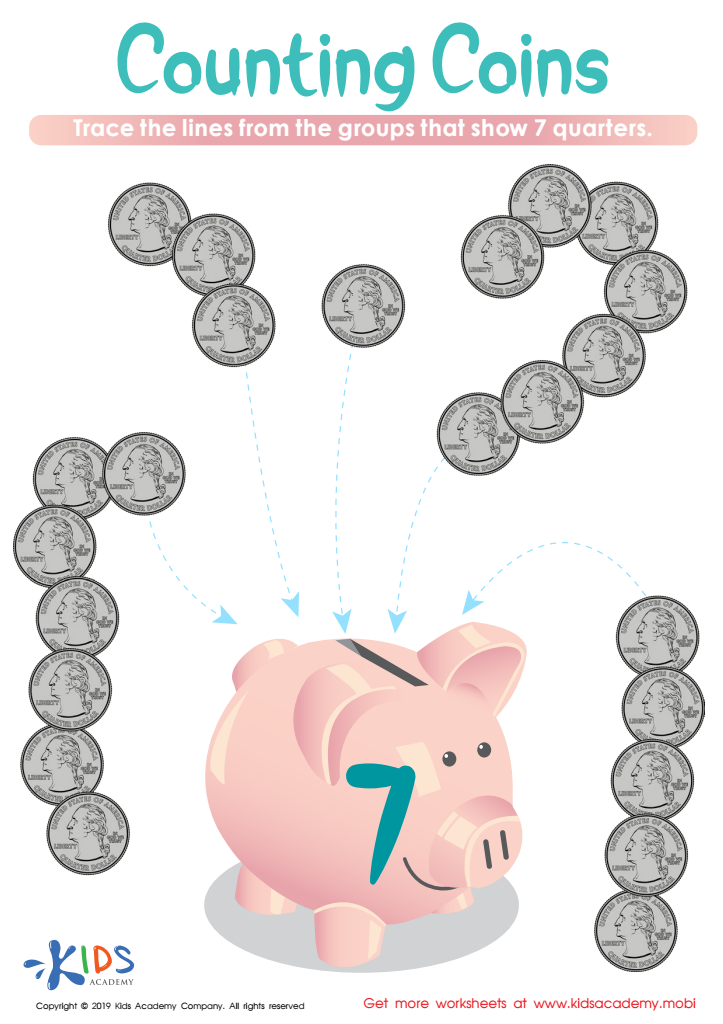
Counting Coins Worksheet
 Assign to My Students
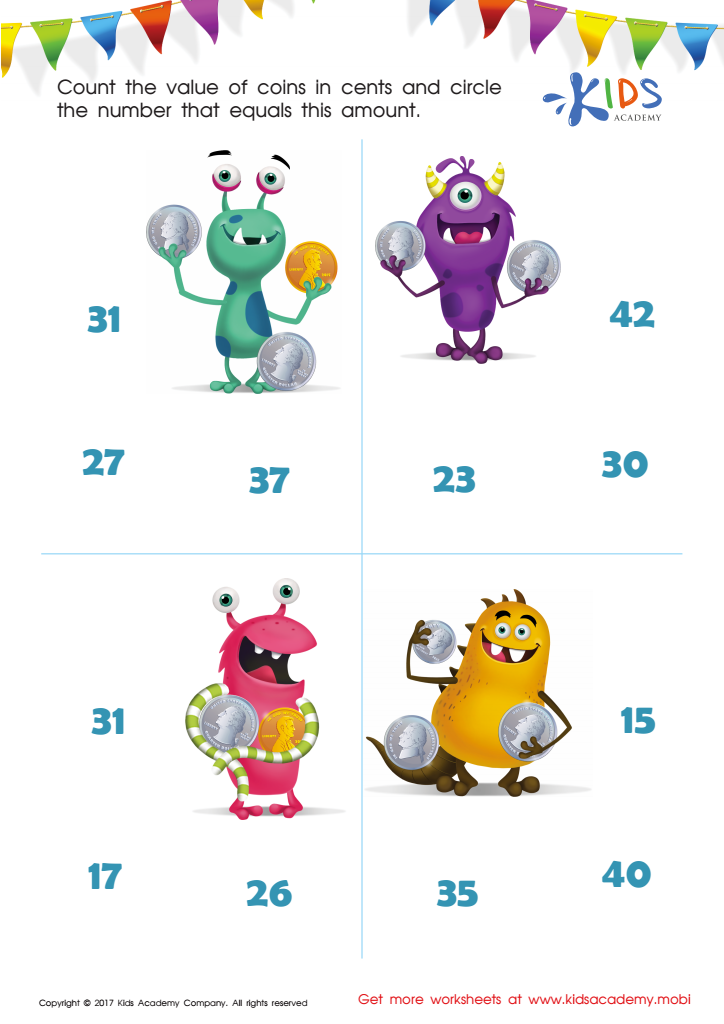
How Many Coins Money Worksheet
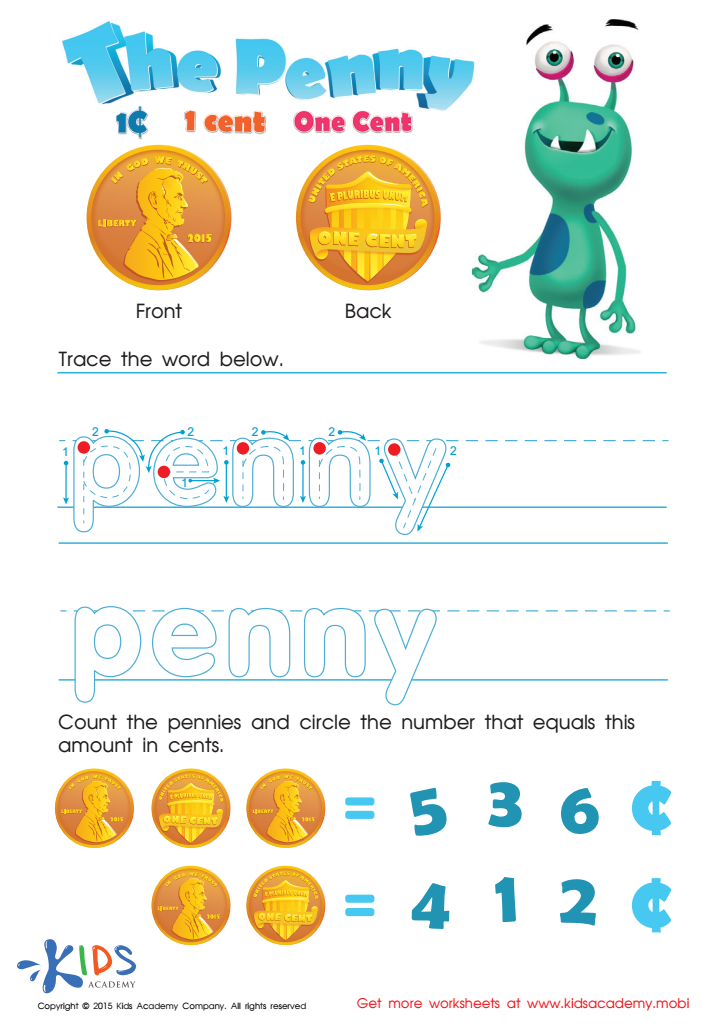
One Cent or the Penny Money Worksheet
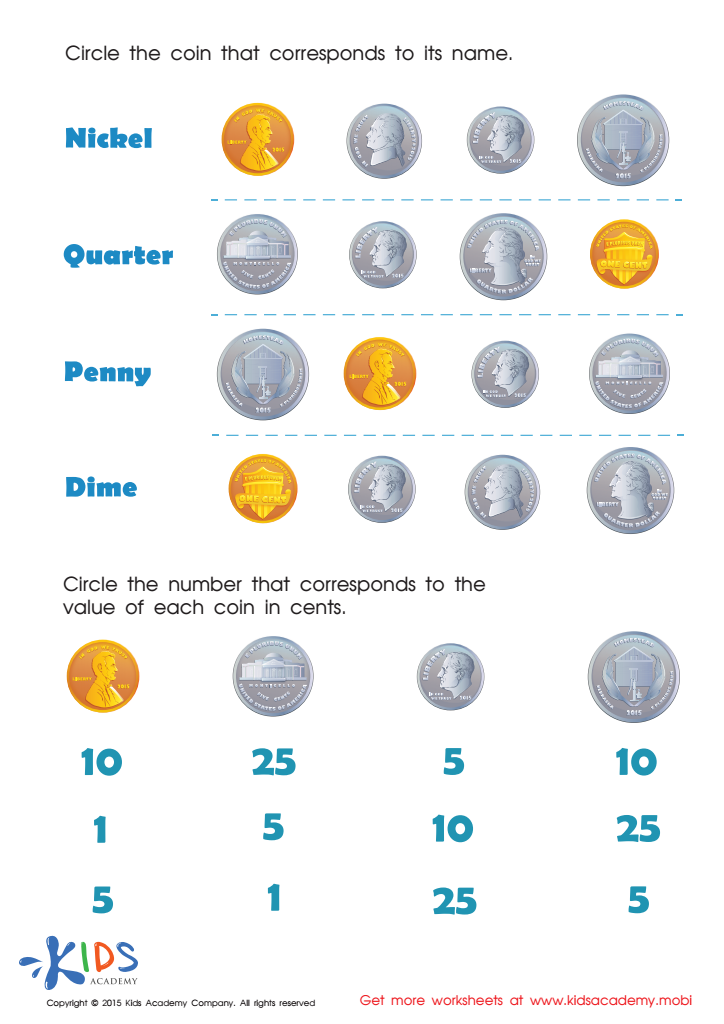
Coin Names and Values Money Worksheet
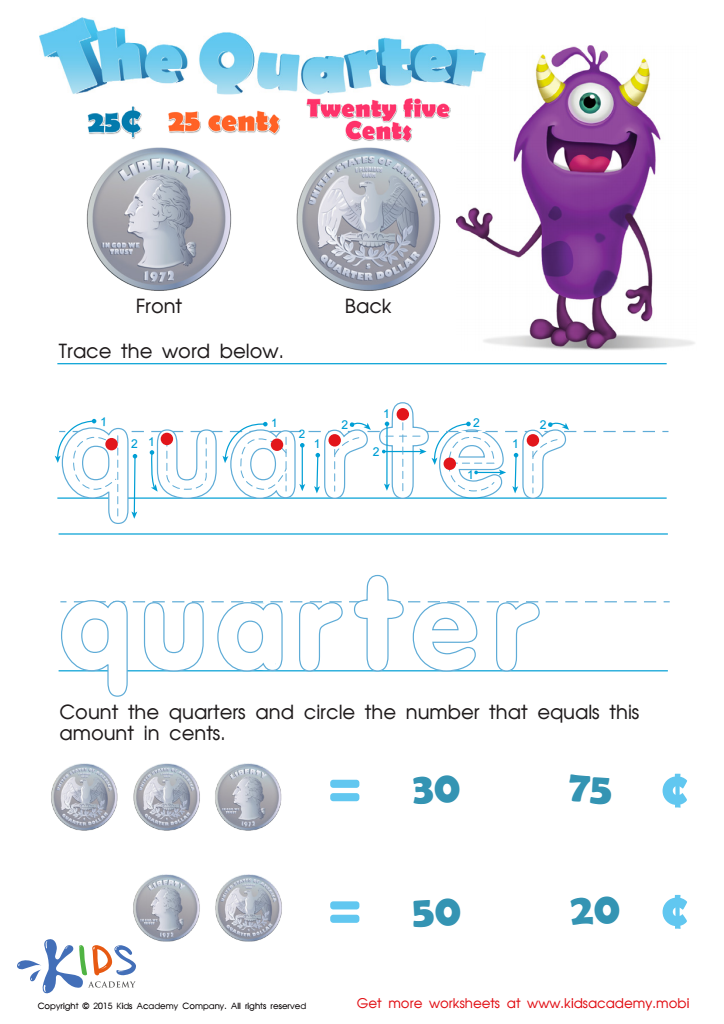
Twenty Five Cents or the Quarter Money Worksheet


.jpg)




Money recognition is an essential skill for children aged 3-8, as it lays the foundation for financial literacy and responsible money management later in life. Understanding money helps children make sense of the world around them, as they frequently encounter transactions in everyday activities, such as shopping with parents or receiving pocket money.
When children learn to recognize different denominations and comprehend the value of coins and bills, they become empowered to make informed choices. For example, they can learn how to budget their allowance, save for desired items, and understand the concept of earning money through chores or small jobs.
For parents and teachers, fostering money recognition cultivates valuable life skills. It promotes critical thinking and decision-making, giving children the confidence to engage in financial discussions as they grow older. Additionally, teaching money recognition in early childhood helps to instill values around spending and saving that can prevent future financial difficulties.
Moreover, starting this education early creates lifelong benefits. Children who understand money concepts are more likely to develop good habits, make wise financial decisions, and achieve economic stability as adults. Therefore, prioritizing money recognition in the formative years is crucial for holistic development.








