Visual representation comprehension Fractions of Shapes Worksheets for Ages 3-8
3 filtered results
-
From - To
Explore our "Visual Representation Comprehension: Fractions of Shapes Worksheets" specifically designed for children aged 3-8! These engaging worksheets help young learners grasp the concept of fractions through colorful visuals and interactive exercises. By identifying fractions in different shapes, children enhance their mathematical understanding while developing critical visual literacy skills. Each activity fosters creativity and encourages children to think critically about part-to-whole relationships. Perfect for classroom reinforcement or home practice, these worksheets make learning fractions fun and accessible. Ignite your child's mathematical journey today with our thoughtfully crafted, visually stimulating resources that lay the foundation for future math success!
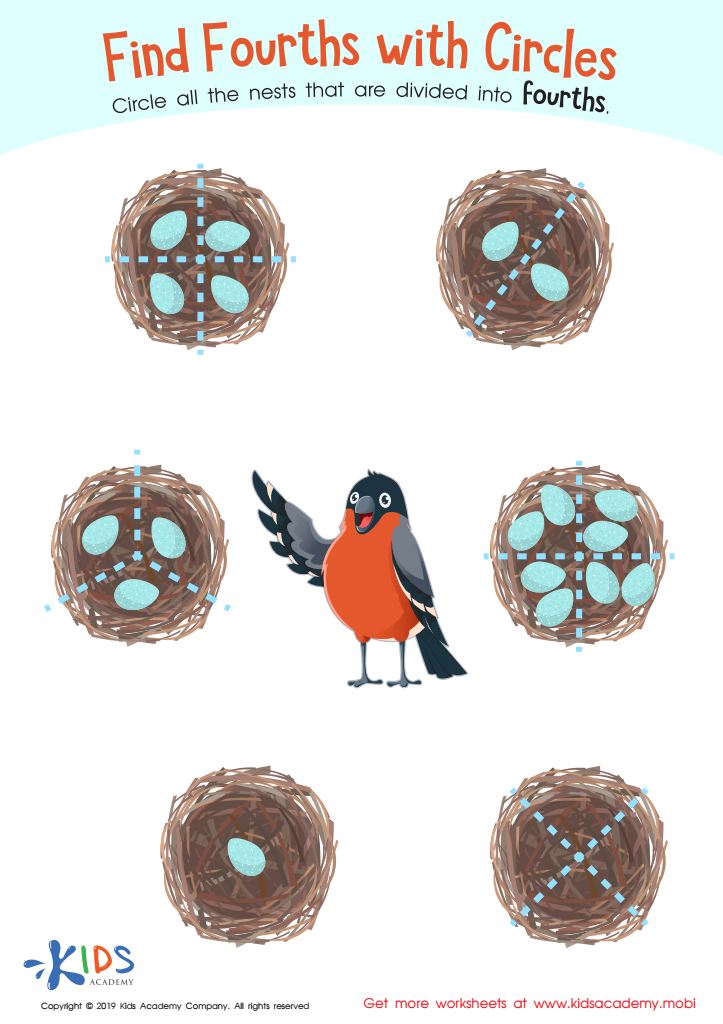
Find Fourths Circles Worksheet
 Assign to My Students
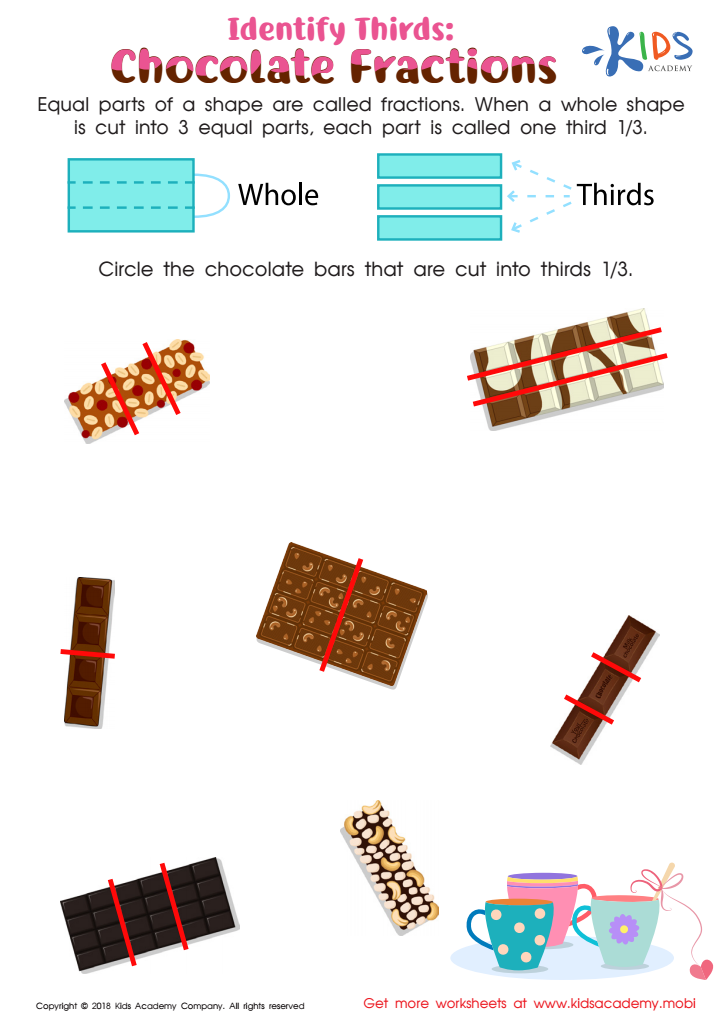
Identify Thirds: Chocolate Fractions Worksheet
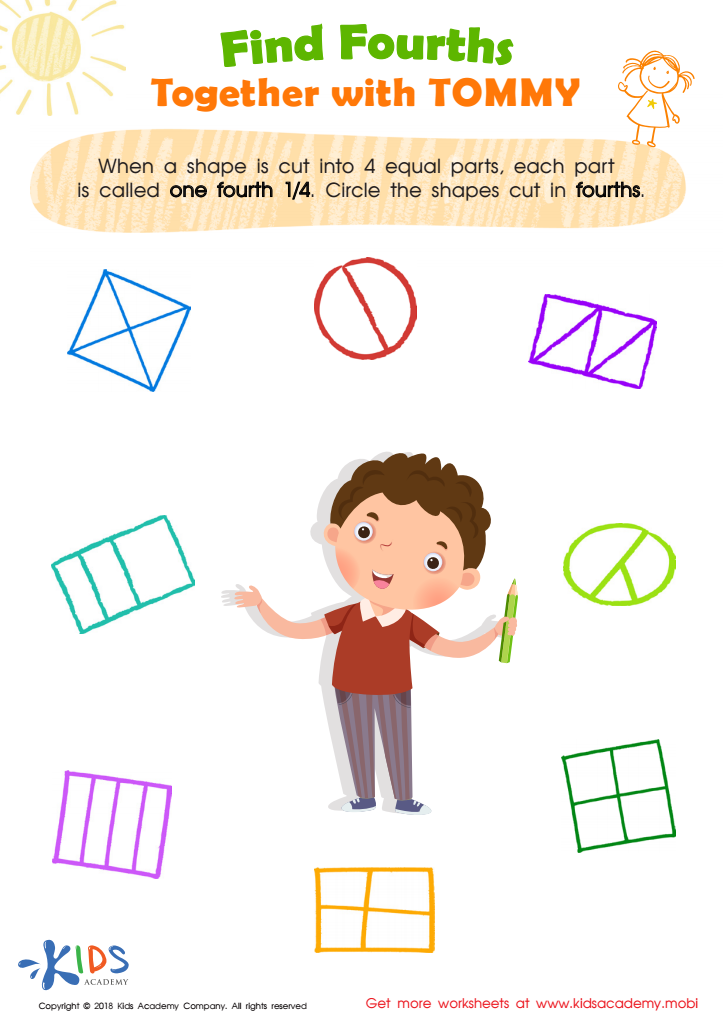
Find Fourths Together with Tommy Worksheet








Visual representation comprehension of fractions, particularly regarding shapes, is crucial for children ages 3-8 as it lays the foundation for their mathematical understanding. At this young age, learners are developing critical thinking skills and cognitive abilities. Engaging with fractions through visual representations helps children recognize and manipulate parts of a whole, fostering spatial awareness and enhancing their ability to categorize and compare sizes.
Understanding fractions through shapes, such as circles and squares, aids in making abstract concepts more tangible. This comprehension supports not only mathematical fluency but also boosts confidence in problem-solving. Furthermore, visual learning strategies cater to various learning styles, ensuring all children—regardless of their individual strengths—can grasp these fundamental concepts.
Parents and teachers should care about fostering this understanding because early mathematics competency is closely linked to future academic success. Additionally, discussions around fractions encourage communication and reasoning, key skills in both mathematics and everyday life. When children can visually interpret fractions, it paves the way for more complex topics in mathematics as they advance in their education. Thus, the focus on visual representation of fractions supports holistic development and equips children with essential life skills.