Filters

6 filtered results

Clear all filters
Favorites
With answer key
Interactive

6 filtered results

Difficulty Level

Grade


Unlock your child's potential with our "Categorization Skills Geometry Worksheets for Ages 3-8"! Designed to make learning fun, these worksheets help kids master the basics of geometry by identifying and sorting different shapes, sizes, and patterns. Ideal for young learners, this engaging resource enhances cognitive and problem-solving abilities while reinforcing crucial math concepts. Perfect for home or classroom use, our worksheets offer interactive and hands-on activities that cater to various learning styles. Give your child a head start in math with our expertly crafted geometry worksheets—because building a strong foundation in categorization leads to future success.

Check out this FREE Trial Lesson on Geometry for age 3-8!

Sorting Objects into 3 Categories

Favorites
With answer key
Interactive
  • 3-8
  • Categorization skills
  • Geometry
Sorting Jewels Worksheet

Sorting Jewels Worksheet

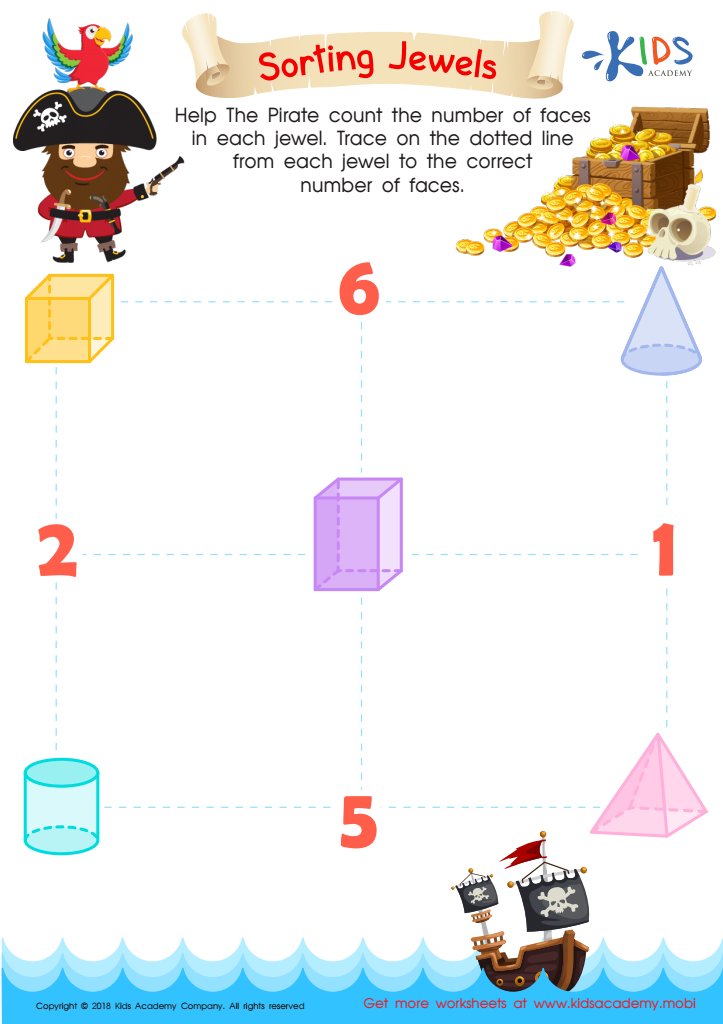
Help your kids explore their pirate fantasies with this tracing sheet. Ask them to count the number of faces in each jewel and then trace the dotted line to the correct number. How many faces does a rectangle have? What about a triangle and a cone? This fun worksheet is a great way to teach your kids the basics of identifying the number of faces on shapes.
Sorting Jewels Worksheet
Worksheet
Sorting Shapes - Part 3 Worksheet

Sorting Shapes - Part 3 Worksheet

Download this fun PDF to help your kiddos recognize basic shapes like circles, squares, and triangles. It'll sharpen their fine motor skills as they trace and sort shapes by color, size, and sides. Your kids won't even realize they're learning with these cheery shapes!
Sorting Shapes - Part 3 Worksheet
Worksheet
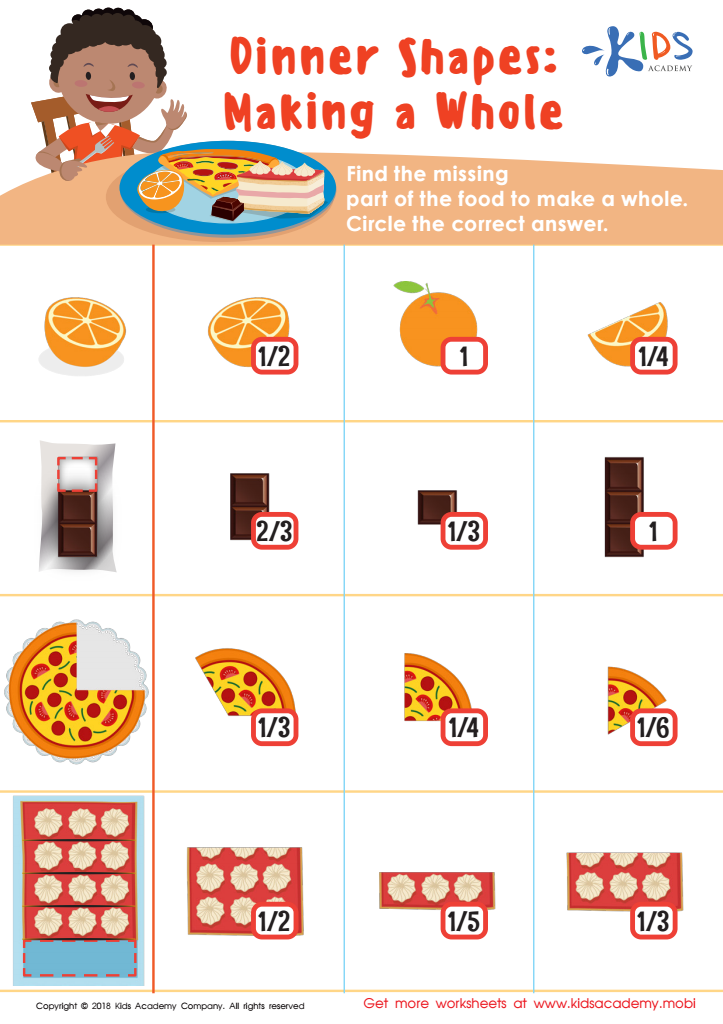
Dinner Shapes: Making a Whole Worksheet

Dinner Shapes: Making a Whole Worksheet

Using food and snacks to stimulate learning and interest in topics is a great strategy. Fractions can prove tricky, but this worksheet can help your child become an expert. Have them look for the missing parts of the food to make a whole, then circle the answer.
Dinner Shapes: Making a Whole Worksheet
Worksheet
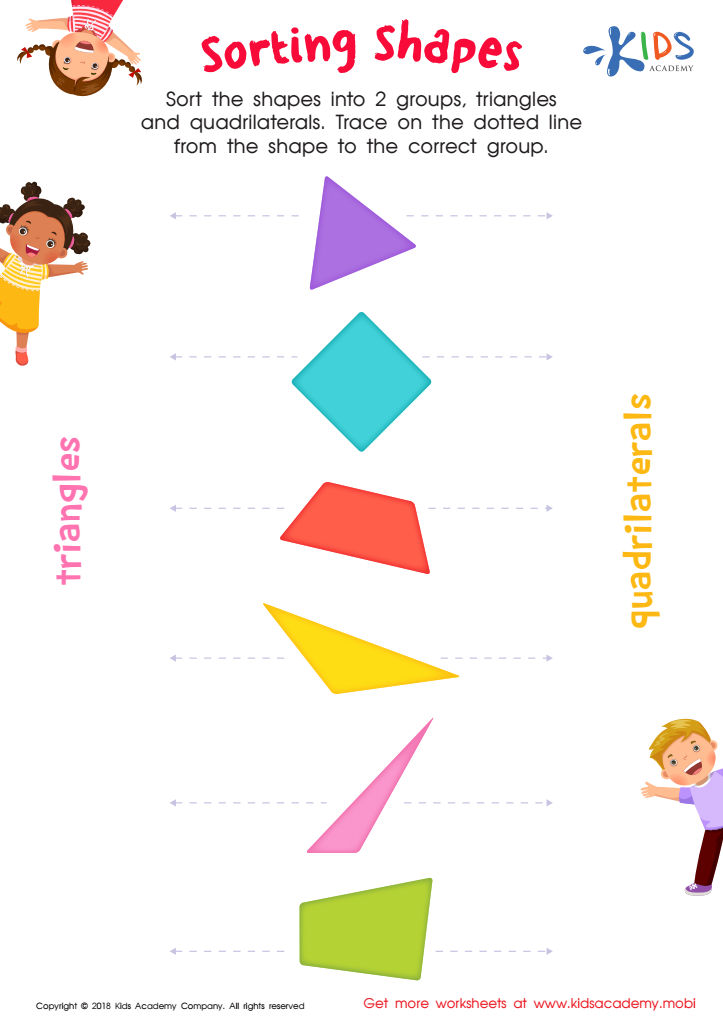
Sorting Shapes Worksheet

Sorting Shapes Worksheet

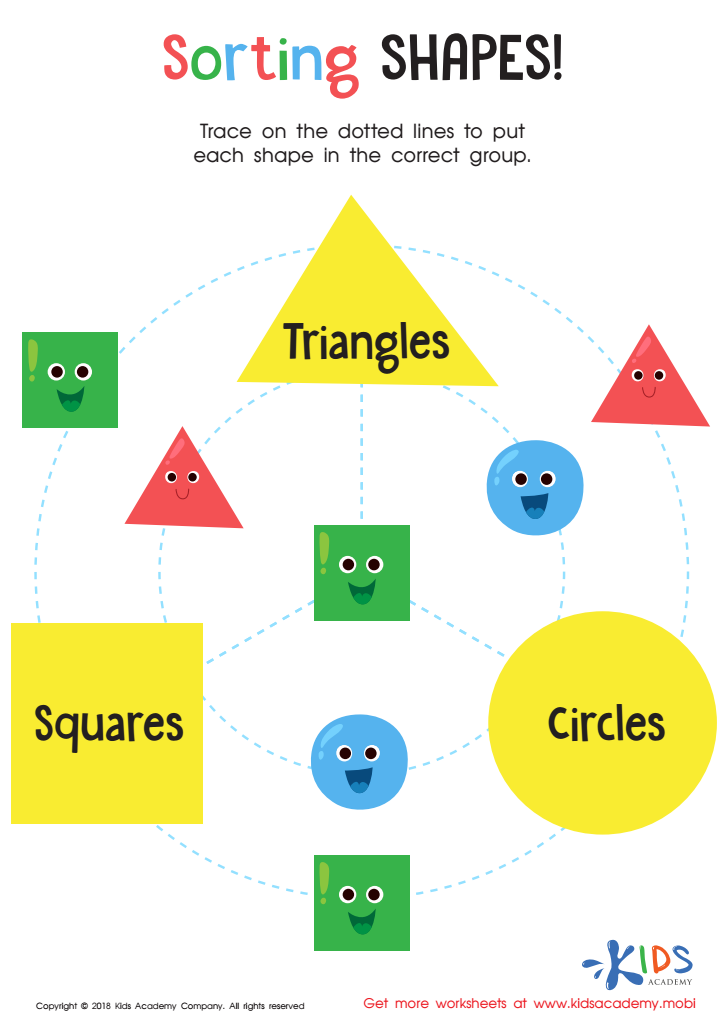
Before beginning, ensure your child is familiar with quadrilaterals (4 sides) and triangles (3 sides). This tracing exercise is easy: sort the shapes into the two groups and trace the dotted lines to the correct group.
Sorting Shapes Worksheet
Worksheet
Shape Sorter Worksheet

Shape Sorter Worksheet

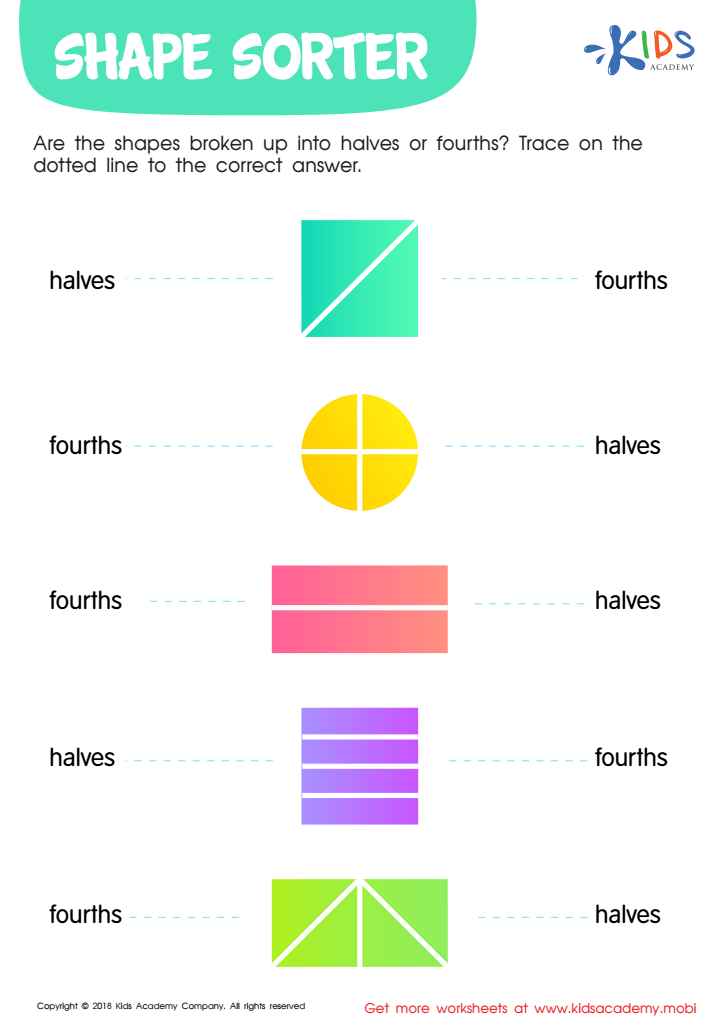
Ask your child if they know halves and fourths. If not, explain that halves are when a shape is divided into two equal parts and fourths is when a shape is divided into four equal parts. Look through this worksheet with your child and let them trace the dotted lines to the correct answer to show whether the shapes are cut into halves or fourths.
Shape Sorter Worksheet
Worksheet
Let's Look! Part 1 Worksheet


Let's Look! Part 1 Worksheet

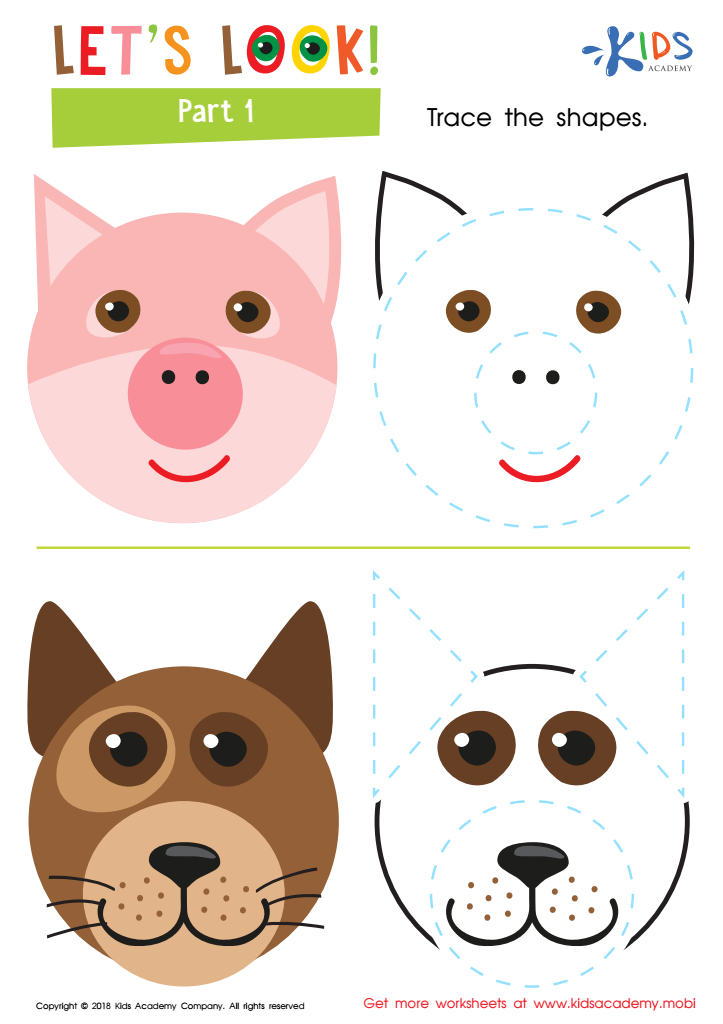
If your kids love animals or have a pet at home, they'll get a kick out of this tracing worksheet. It tests their ability to imitate shapes, starting with a pig and followed by a dog. Beside each of these pictures is a space for tracing the shapes. Unleash your child's creativity and see what they come up with!
Let's Look! Part 1 Worksheet
Worksheet


Parents and teachers should care about categorization skills and geometry for children ages 3-8 because these foundational concepts are critical for cognitive development and future academic success. Categorization helps children organize and make sense of the vast amount of information they encounter in their environment. By grouping objects, shapes, and concepts into categories, young learners improve their ability to recognize patterns, make connections, and solve problems efficiently. For instance, distinguishing between squares, triangles, and circles lays the groundwork for more advanced mathematical thinking and spatial reasoning.

Geometry, on the other hand, enhances a child's ability to comprehend and interact with the world around them. It introduces key vocabulary and ideas related to shapes, sizes, positions, and properties, which are fundamental for early math skills. Understanding geometric principles aids in the development of fine motor skills, spatial awareness, and visual processing abilities.

Furthermore, strong categorization and geometry skills promote analytical thinking and creative problem-solving, which are valuable across all areas of learning. These skills also boost confidence and curiosity, fostering a positive attitude towards education. Equipping children with robust categorization and geometry skills early on sets a strong foundation for their continued academic journey, contributing to a well-rounded, knowledgeable, and capable individual.