Recognizing shapes Geometry Worksheets for Ages 3-8
6 filtered results
-
From - To
Unlock your child's potential with our "Recognizing Shapes Geometry Worksheets for Ages 3-8”! Our expertly designed activities help young learners identify and understand basic shapes such as circles, squares, triangles, and more. Tailored for kids aged 3 to 8, these fun and engaging worksheets build essential geometry skills while enhancing creativity and critical thinking. Ideal for both classroom and home use, our worksheets make learning enjoyable and effective. Foster a love for math early on and support your child's educational journey with our comprehensive shape recognition practice. Start exploring today and watch their math confidence soar!
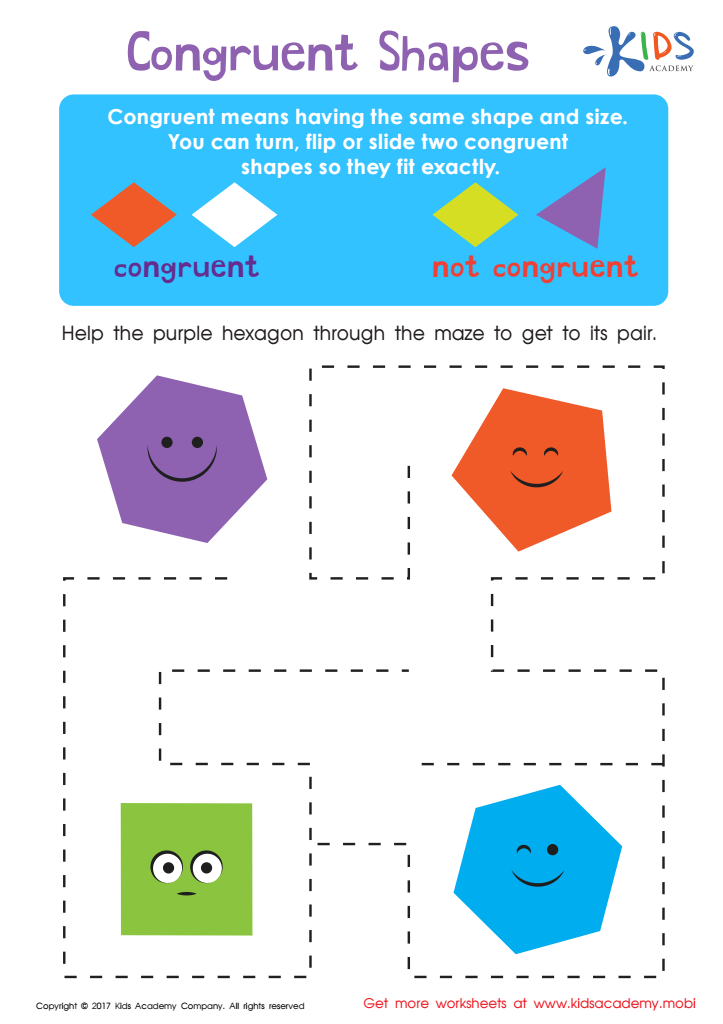
Congruent Shapes Worksheet
 Assign to My Students











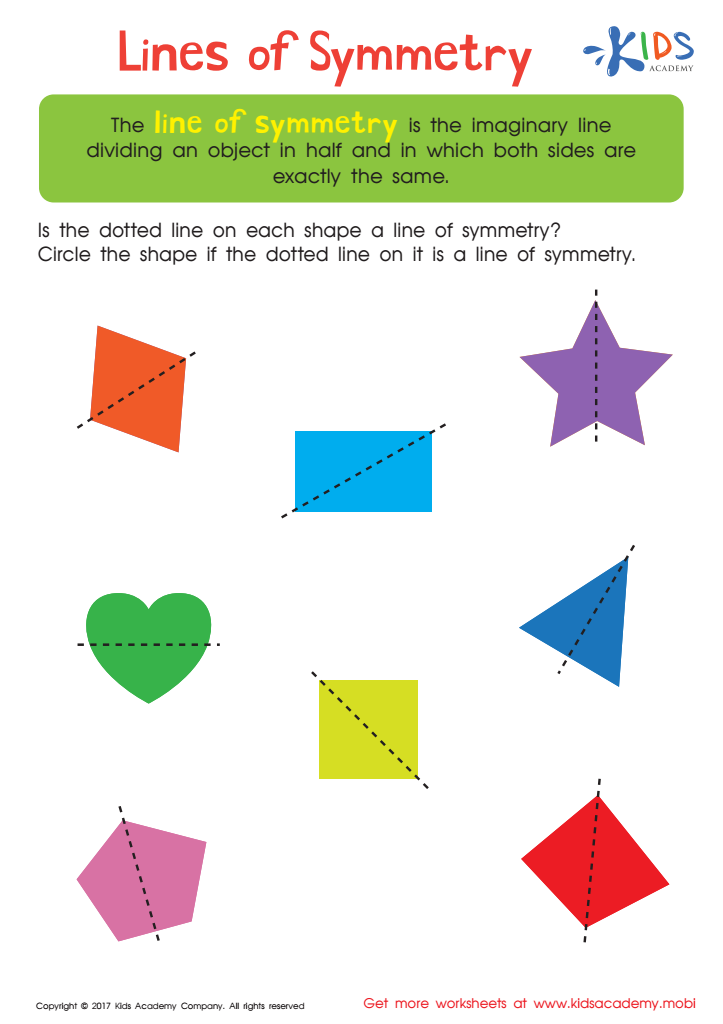
Lines of Symmetry Printable
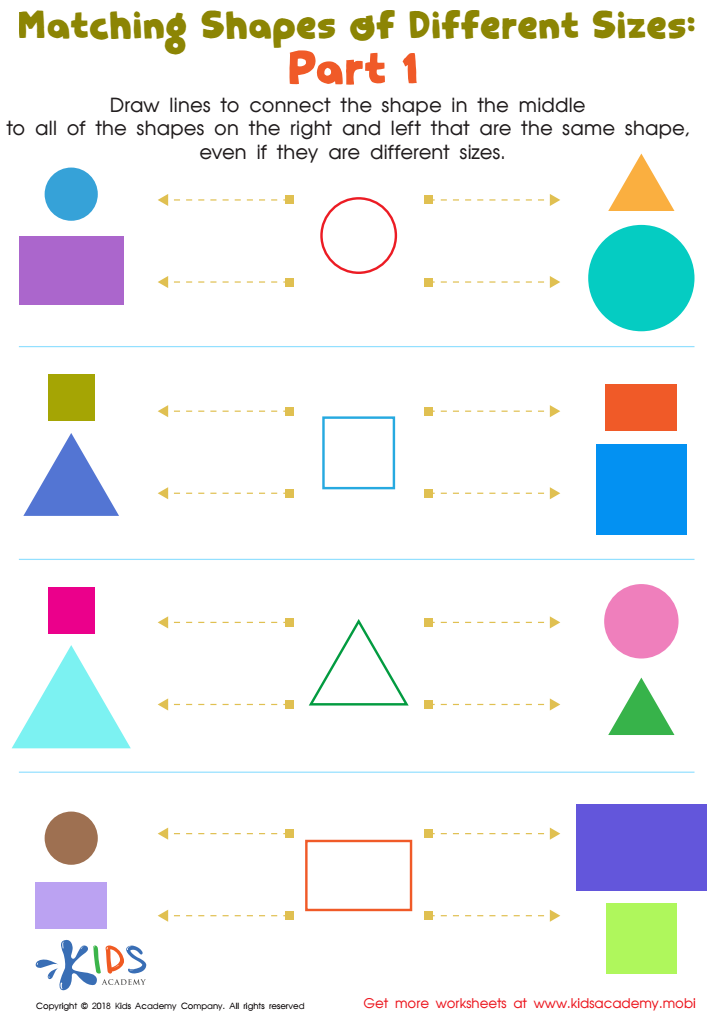
Geometry: part 1 Worksheet
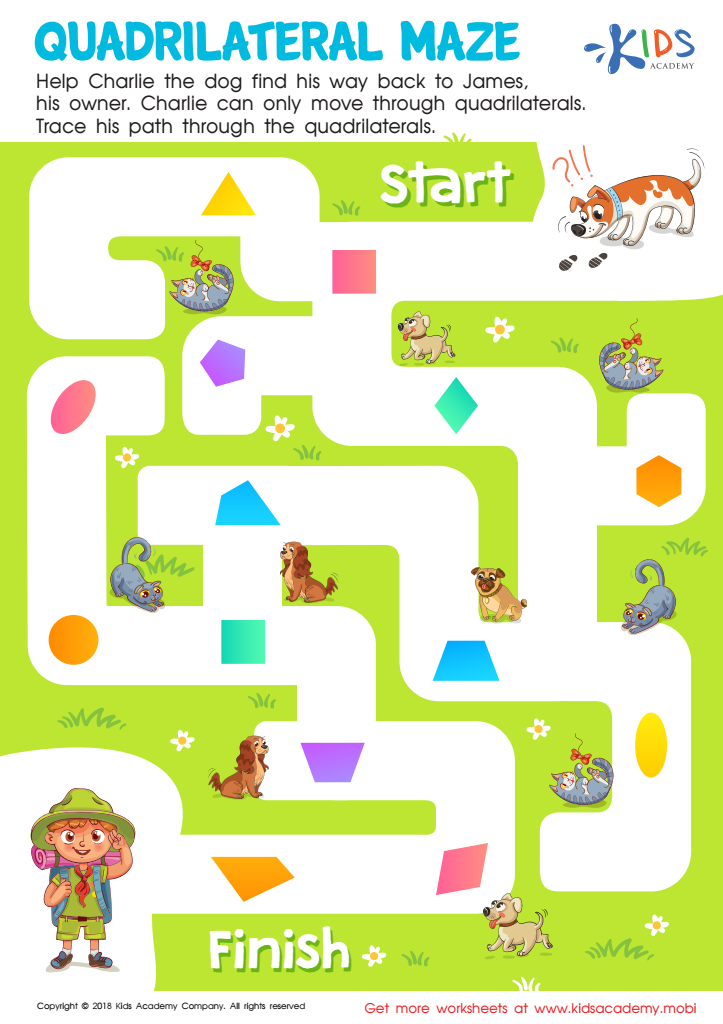
Quadrilateral Maze Worksheet
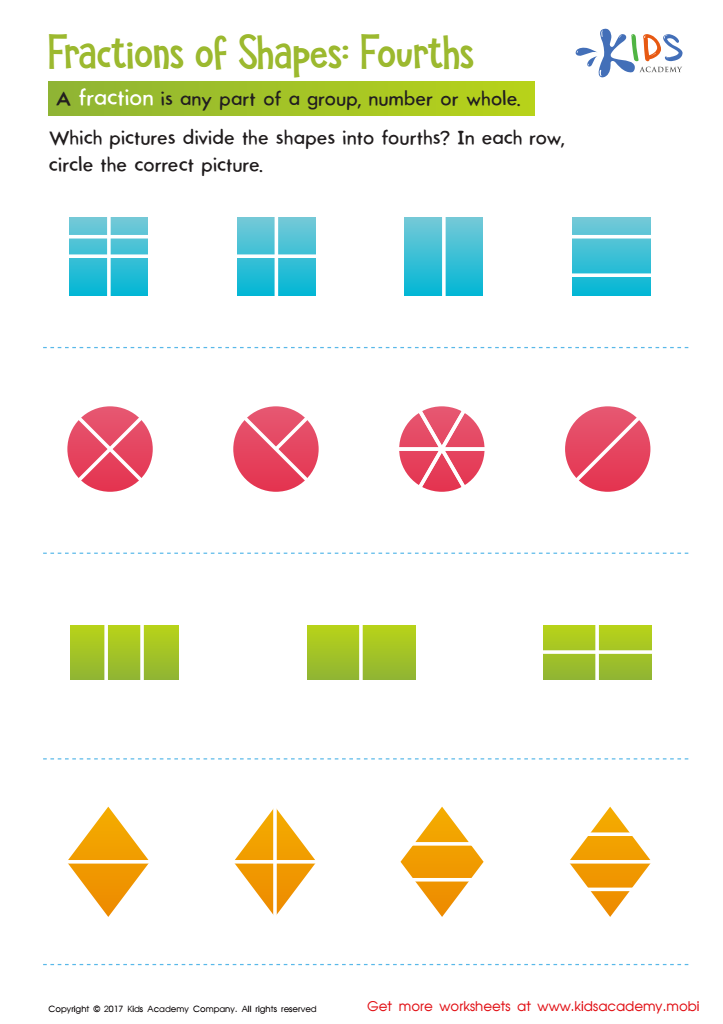
Fractions of Shapes Worksheet
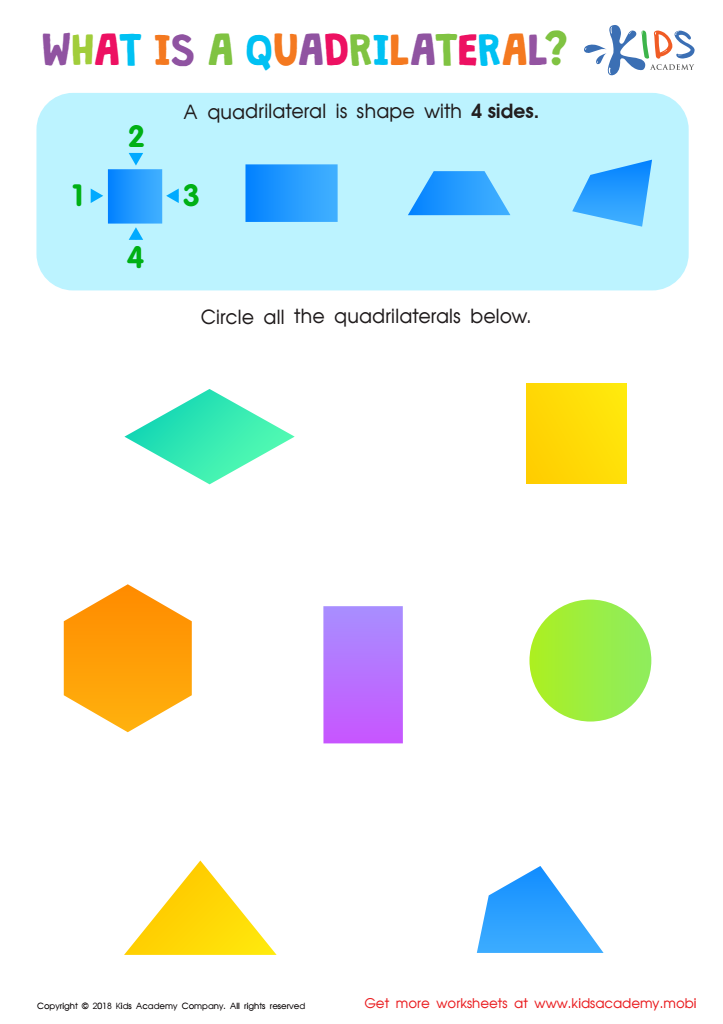
What Is a Quadrilateral? Worksheet








Recognizing shapes is a fundamental skill that goes beyond simple identification; it serves as a building block for early mathematical concepts. For children aged 3-8, engaging with shapes helps them develop spatial awareness, which is crucial for understanding more complex geometry later on. For instance, when children learn to identify circles, squares, and triangles, they are also learning to notice similarities and differences—important skills that will aid in problem-solving and critical thinking.
Parents and teachers should care about this for several reasons. First, it nurtures cognitive development. Shapes are often children's first introduction to geometry, helping integrate concepts like size, space, and relative position "in front of" or "next to," which are foundational for more advanced math and science.
Second, recognizing shapes supports the development of visual literacy. This is the ability to interpret and make meaning from information presented in the form of an image, a skill necessary not only for reading and writing but for daily tasks and navigation.
Third, learning about shapes can also enhance fine motor skills and hand-eye coordination as children practice drawing and identifying shapes. These activities can be both educational and fun, promoting engagement and a positive attitude towards learning.
In sum, recognizing shapes gears young minds for future academic success and practical life skills, underlining its importance in early childhood education.








