Data analysis Graphs Worksheets for Ages 3-8
3 filtered results
-
From - To
Discover our engaging Data Analysis Graphs Worksheets tailored for ages 3-8. Designed to make learning fun, these worksheets introduce young minds to essential graphing skills, paving the way for strong analytical thinking. Children will explore bar graphs, pictograms, and other data visualization tools, enhancing their interpretive skills through hands-on practice. Ideal for building a solid math foundation, our worksheets align with early education standards and cater to various learning styles. Support your child's growth in math and problem-solving with our expert-designed resources, ensuring they grasp the basics of data analysis with confidence and excitement.
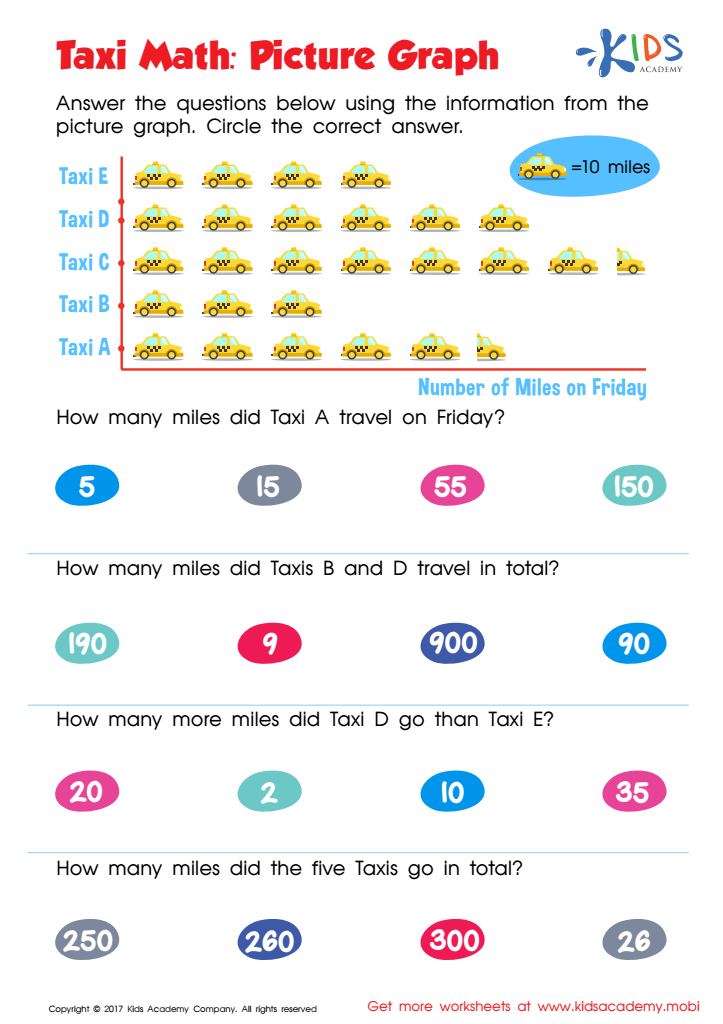
Taxi Math Worksheet
 Assign to My Students
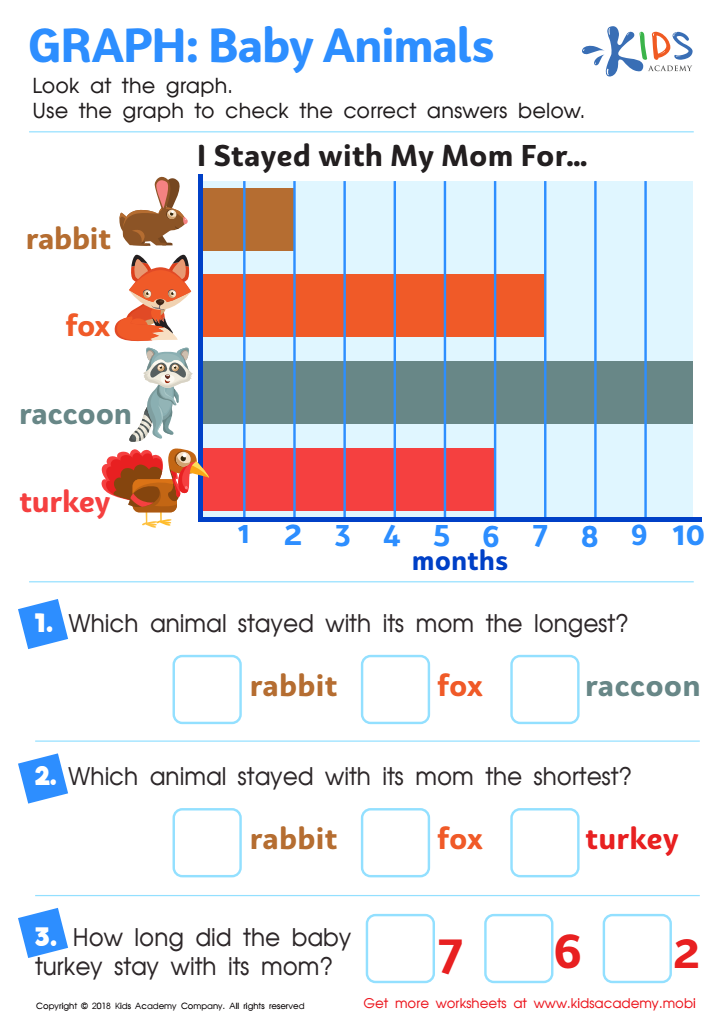
Graph: Baby Animals Worksheet
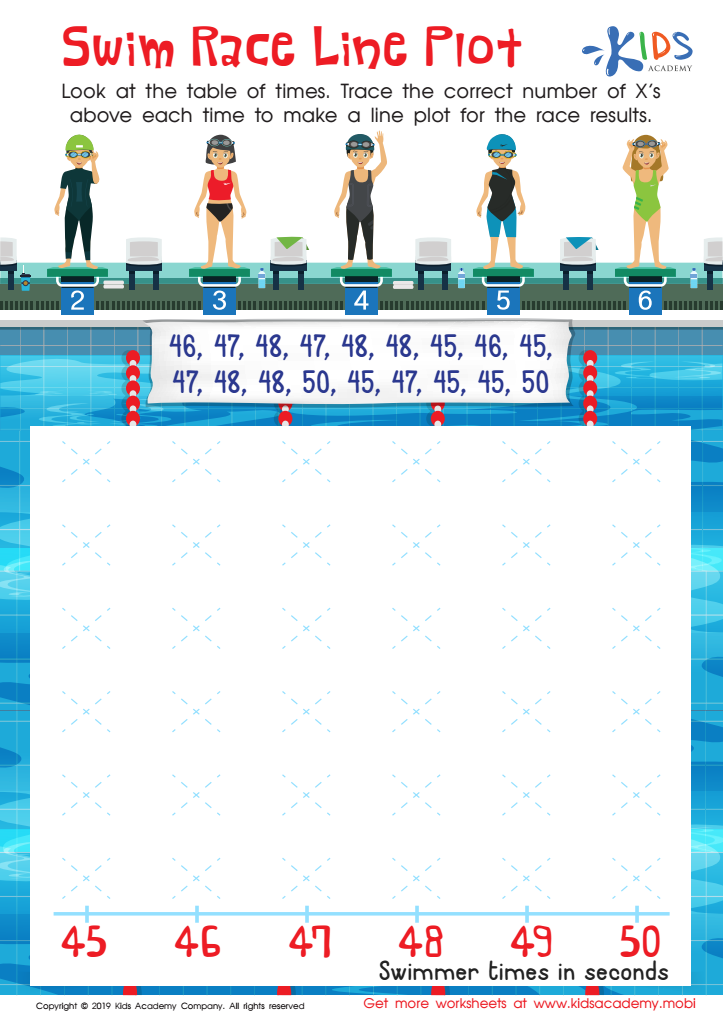
Swim Race Line Plot Worksheet








Data analysis graphs are powerful tools that can provide valuable insights for parents and teachers of young children aged 3-8. At this early developmental stage, children are experiencing rapid growth in cognitive, motor, and social skills. Regularly monitoring this progress through data analysis graphs can help caregivers spot trends, strengths, and areas needing improvement much sooner than they might through casual observation alone.
For teachers, these graphs can be instruments for individualized instruction. By visualizing student data, whether regarding reading proficiency, counting skills, or social interactions, teachers can create tailored lesson plans that address specific needs. This personalized approach can significantly enhance a child's learning experience, making education both effective and enjoyable.
Parents, on the other hand, can benefit from these insights at home. When teachers share these data points, parents can collaborate more efficiently with educators and create complementary activities that bolster their child's learning path. Data analysis can also help in setting realistic, achievable goals, thereby avoiding undue pressure on young learners while promoting a supportive developmental environment.
Overall, data analysis graphs translate raw data into understandable visual insights, making it easier for parents and teachers to make informed decisions that contribute toward a well-rounded, supportive, and stimulating environment for children aged 3-8.








