
Fine motor development Numbers Worksheets for Ages 3-8
3 filtered results
Difficulty Level
Grade
Age
-
From - To
Subject
Activity
Standards
Discover our Fine Motor Development Numbers Worksheets designed for children ages 3-8! These engaging and educational worksheets help young learners enhance their fine motor skills while mastering number recognition, sequencing, and writing. Each activity aims to build crucial hand-eye coordination and pencil control through fun, interactive exercises. Perfect for both classroom and at-home learning, our worksheets are an excellent resource for teachers and parents who want to support their children's early math skills and overall development. Start nurturing your child’s fine motor proficiency and numerical understanding with our expertly crafted sheets today!
Favorites
With answer key
Interactive
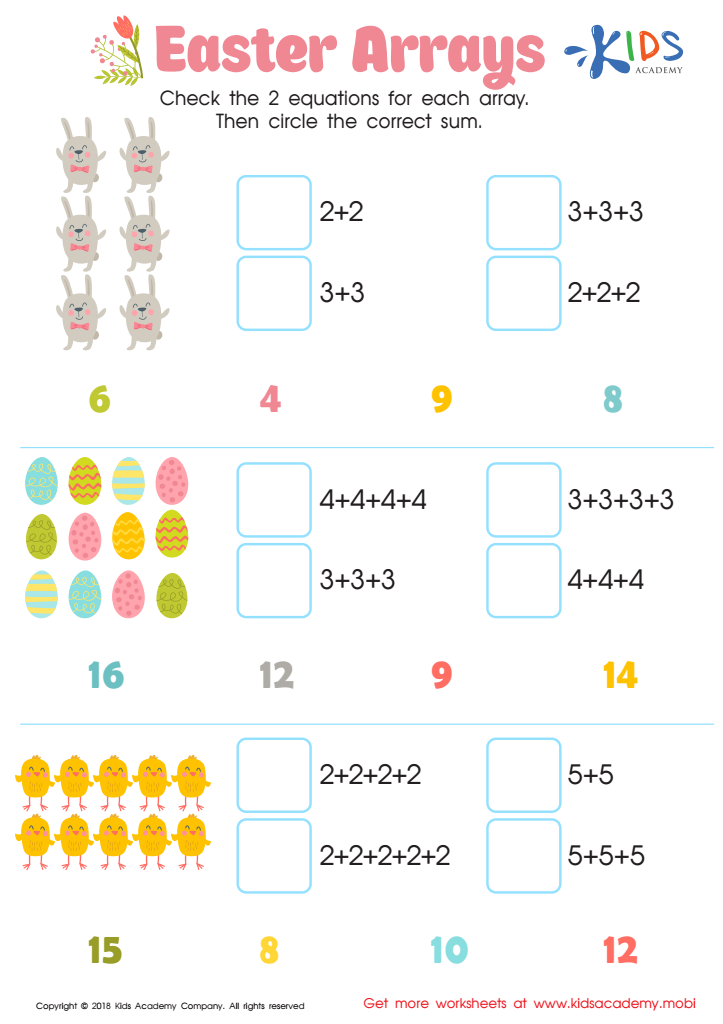
Easter Arrays Worksheet
Does your child love Easter? Do they adore the Easter bunny and egg hunts? Help them have fun with this worksheet! Go through it with them and check the equations for each array. Then, have them circle the correct sum. It's a great way to make the holiday extra exciting!
 Assign to My Students
Easter Arrays Worksheet
Worksheet
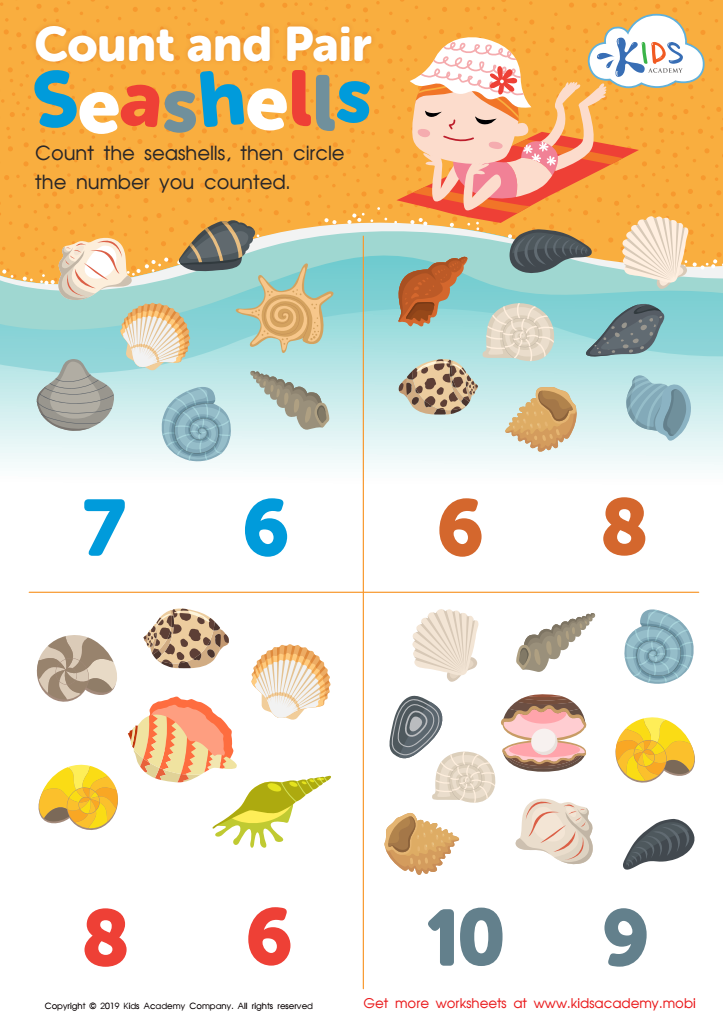
Count and Pair Seashells Worksheet
Kids love trips to the beach. Ask them to count the shells in the four sets of seashells in this printout - then circle the correct number beneath each set. Let them recall the happy memories of the beach and make this worksheet fun.
Count and Pair Seashells Worksheet
Worksheet
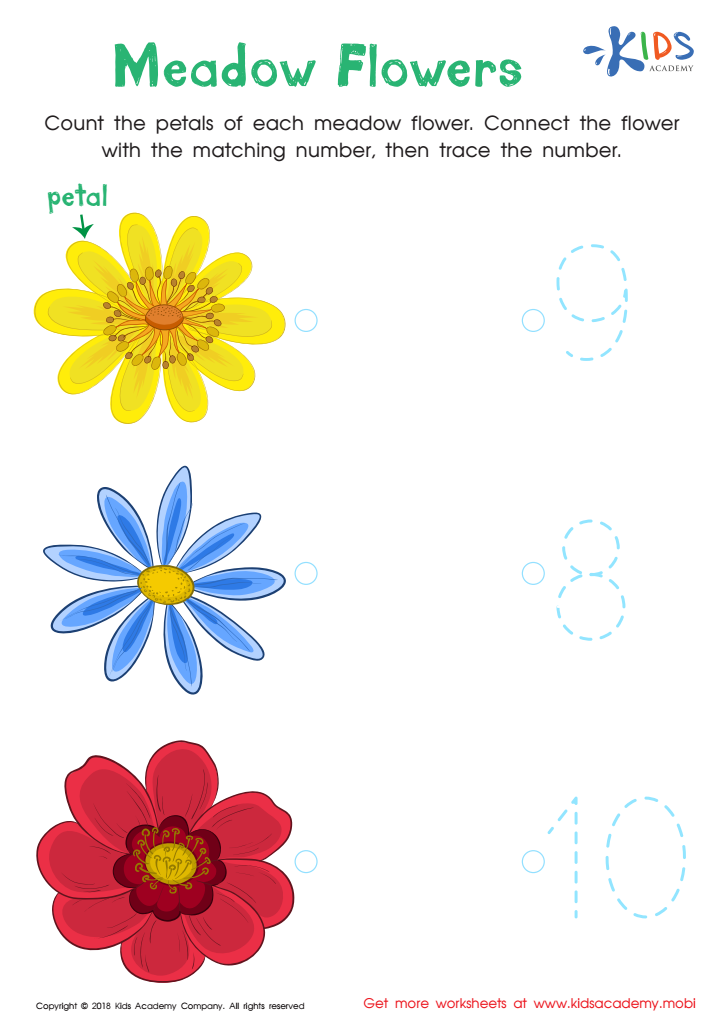
Kindergarten Number Tracing: Medow Flowers Worksheet
Take your child to the garden to count flower petals and trace numbers with this fun kindergarten PDF worksheet. They'll learn to count and write, all while enjoying the sweet scent of the flowers.
Kindergarten Number Tracing: Medow Flowers Worksheet
Worksheet
Join Kids Academy for Free
Who is primarily going to use this learning content?








Fine motor development is essential for children ages 3-8 as it directly impacts their ability to perform everyday tasks and lays the foundation for academic success. Developing fine motor skills involves the coordination of small muscles, particularly in the hands and fingers, which are crucial for activities such as writing, cutting, buttoning clothes, and tying shoelaces.
Parents and teachers should prioritize fine motor development because it influences a child's independence and self-confidence. When children can complete tasks on their own, they feel a sense of achievement and are more willing to take on new challenges. Additionally, fine motor skills are closely linked to cognitive development, as many fine motor activities, such as playing with building blocks or drawing, require problem-solving, planning, and spatial awareness.
Furthermore, strong fine motor skills enhance a child's readiness for school, contributing to better performance in academics, particularly in reading and writing. For instance, children with developed fine motor skills find it easier to hold pencils, form letters, and stay within lines, which are essential components of early literacy.
By fostering activities that encourage fine motor development, such as arts and crafts, puzzles, and using tweezers or scissors, parents and teachers can support holistic growth, ensuring that children have the tools they need for both academic and personal success.








