Spatial reasoning Numbers Worksheets for Ages 3-8
3 filtered results
-
From - To
Unlock your child's mathematical potential with our Spatial Reasoning Numbers Worksheets for ages 3-8! These engaging printables from Kids Academy combine fun with learning, helping young minds develop crucial spatial reasoning and numerical skills. Through age-appropriate activities, children enhance their understanding of shapes, patterns, and spatial relationships while reinforcing their ability to recognize, write, and count numbers. Perfect for early learners, our worksheets foster cognitive growth, problem-solving abilities, and a strong mathematical foundation. Experience the joy of learning through our expertly crafted resources designed to support your child's educational journey every step of the way.
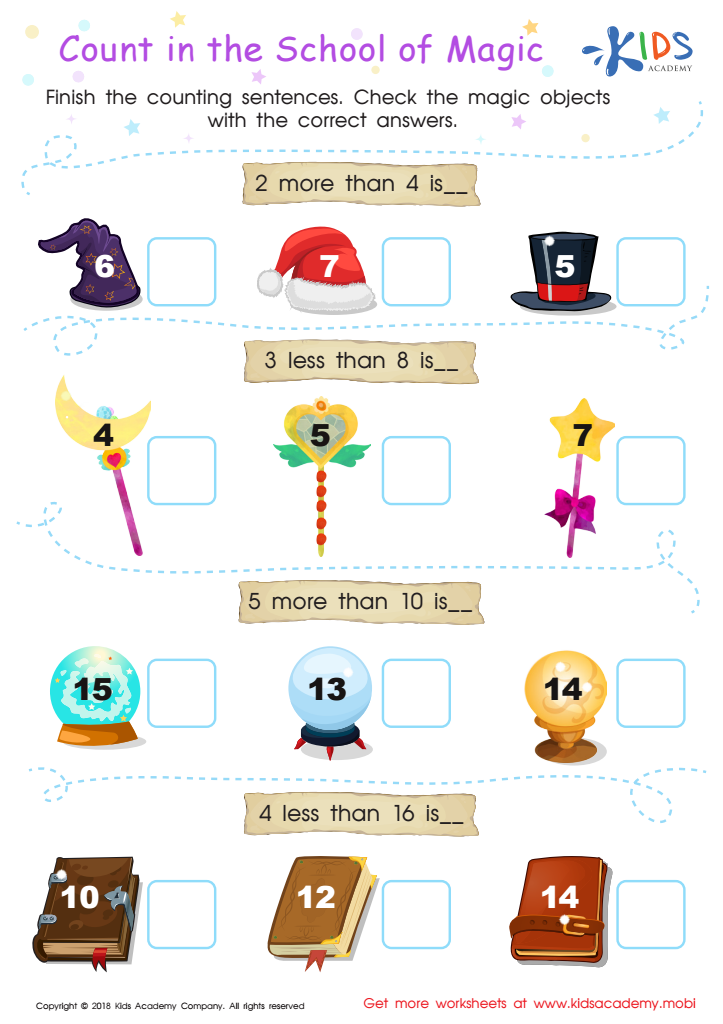
Count in the School of Magic Worksheet
 Assign to My Students
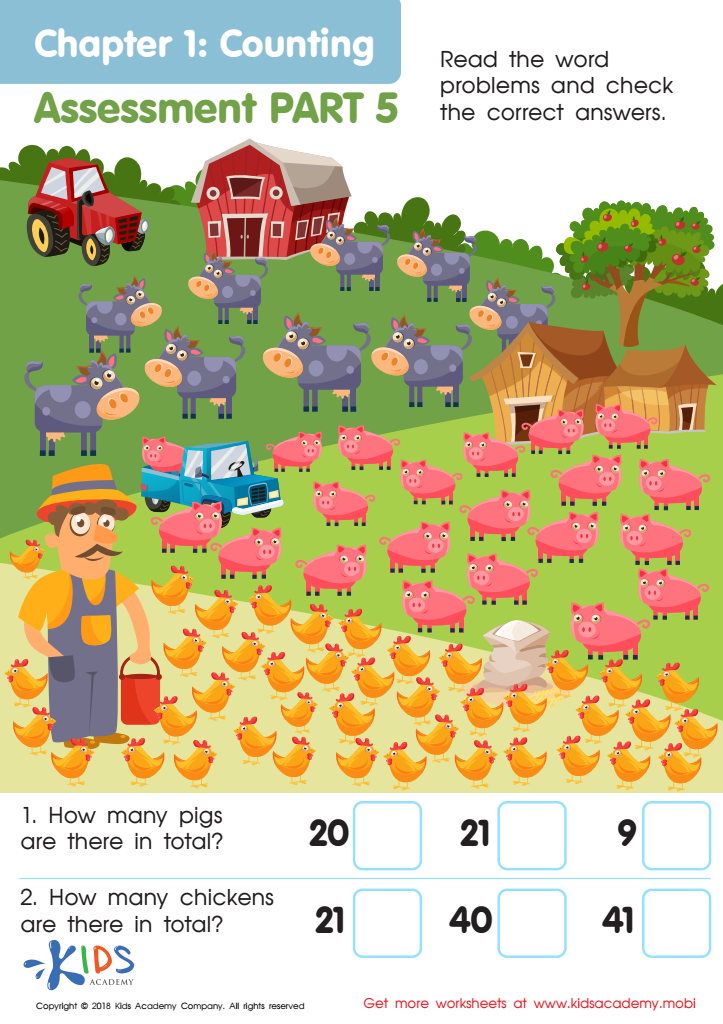
Counting: Assessment 5 Worksheet
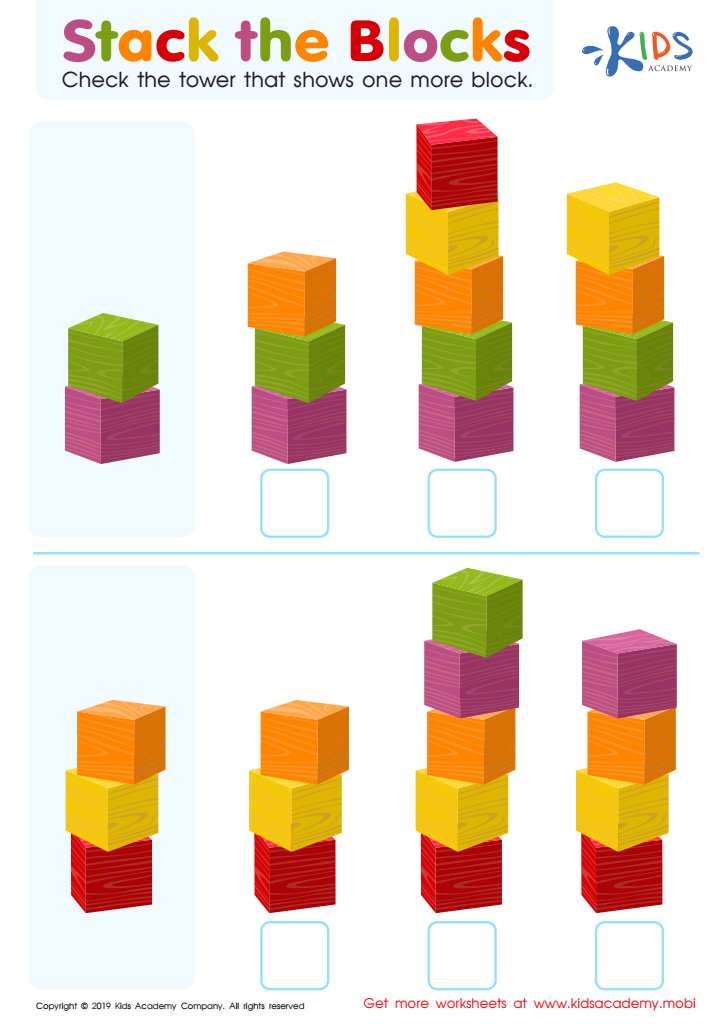
Stack the Blocks Worksheet








Spatial reasoning and number sense are foundational cognitive skills critical for the development of higher-order thinking and problem-solving abilities in children aged 3-8. Spatial reasoning allows children to comprehend and manipulate objects in space, which translates to better understanding geometry, science, and everyday tasks like navigating and organizing materials. It develops a child's ability to visualize, imagine scenes, and understand the relationships between objects, fostering creativity and innovation.
Number sense, or numeracy, is equally important. Early exposure to numerical concepts helps children understand quantities, relationships between numbers, and basic arithmetic operations. This not only prepares them for formal schooling but also contributes to logical and analytical thinking.
Research suggests a strong link between spatial reasoning, number sense, and future academic success, particularly in STEM fields. Activities that enhance these skills, such as puzzles, blocks, counting games, and interactive math stories, encourage a deeper understanding of the world around them. Caring about and nurturing these skills cultivates confident, curious learners who are better prepared to tackle complex problems. For parents and teachers, focusing on developing these abilities provides children with tools for lifelong learning and adaptability in an increasingly complex and technical world.








