Understanding greater/less than Numbers Worksheets for Ages 3-8
3 filtered results
-
From - To
Explore our engaging "Understanding Greater/Less Than Numbers" worksheets designed for children aged 3-8! These resources provide a fun and interactive way to teach kids fundamental mathematical concepts. With colorful visuals and age-appropriate challenges, worksheets help young learners distinguish between greater and lesser quantities, enhancing their counting skills and number recognition. Activities include visual comparisons, number line exercises, and lively worksheets that keep children entertained while learning. Perfect for both home and classroom use, these worksheets encourage critical thinking and build a strong foundation for early math skills. Start your child’s educational journey with our captivating resources today!
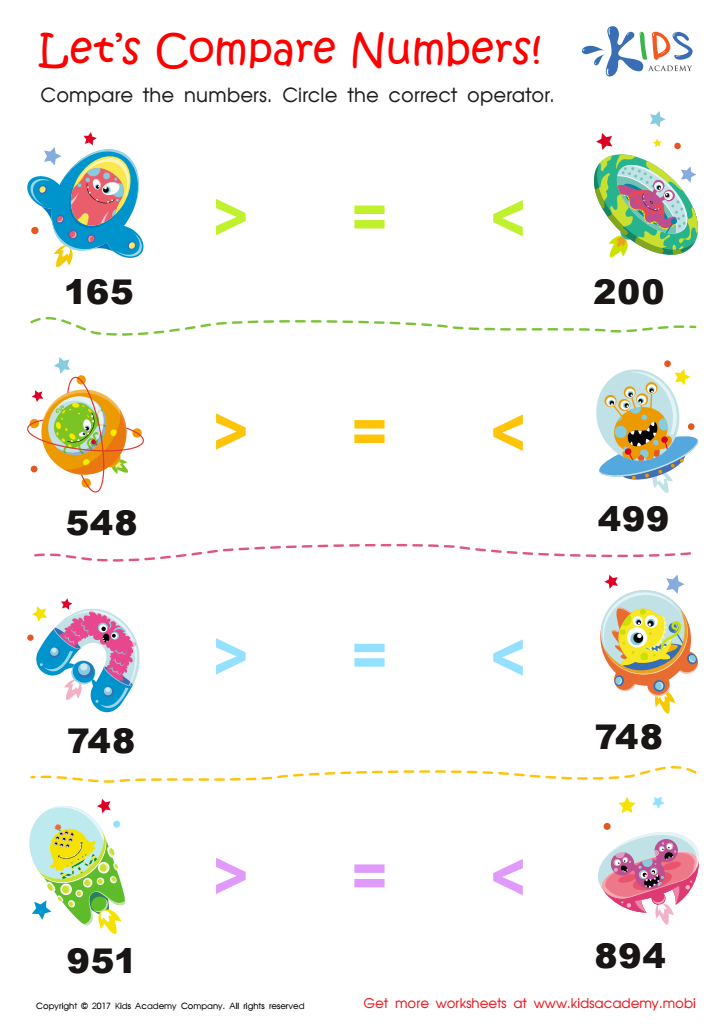
Comparing Numbers Worksheet for 2nd Grade
 Assign to My Students
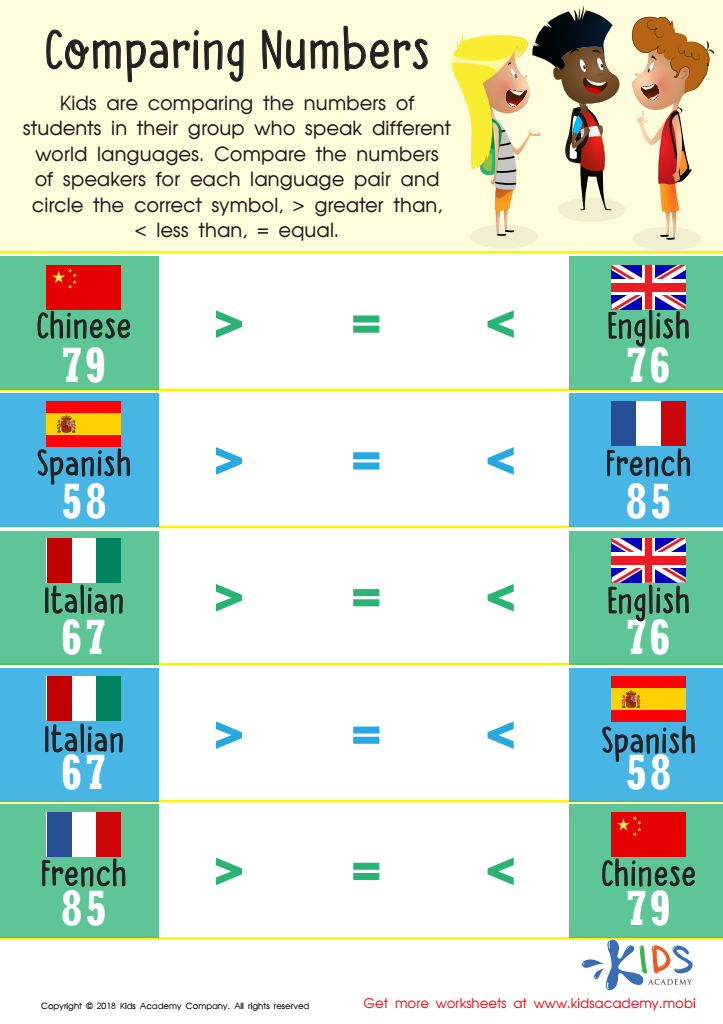
Comparing Numbers Worksheet for 1st Grade
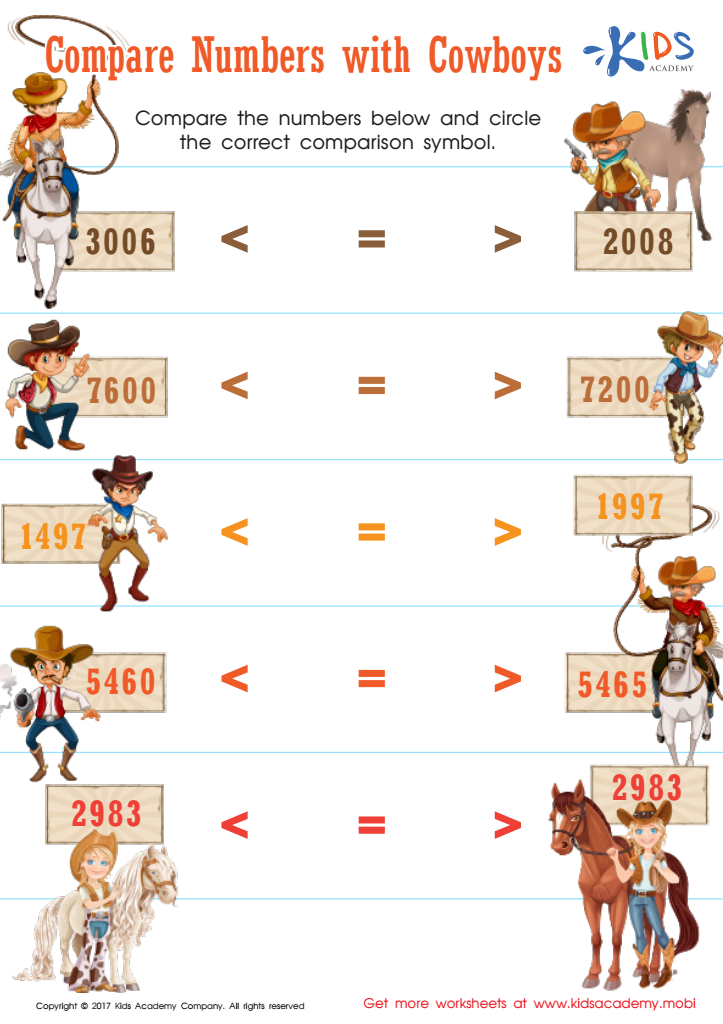
Compare Numbers Worksheet for 3rd Grade







Understanding greater and less than numbers is crucial for children ages 3-8 as it lays the foundation for mathematical reasoning and critical thinking skills. At this age, children are naturally curious, absorbing concepts through exploration and play. By grasping the ideas of "greater than" and "less than," they develop an early sense of comparison, enabling them to make sense of the world around them.
This knowledge is not just about numbers; it's about problem-solving. For instance, children learn to compare quantities when sharing toys or snacks, which fosters social skills and negotiation. Academically, a strong grasp of these concepts enhances their ability to tackle basic arithmetic operations, paving the way for more advanced mathematics later on.
Moreover, early experiences with these comparisons boost confidence in their mathematical abilities, reducing math anxiety as they progress through school. Teachers and parents play pivotal roles in providing engaging, hands-on activities that make learning fun and relatable, such as counting games or everyday comparisons (e.g., comparing the heights of objects).
Ultimately, ensuring that children have a firm grasp of greater and less than numbers sets them up for future success across various subjects, shaping their understanding of quantitative relationships essential for everyday life.








