Check out this FREE Trial Lesson on Math for age 3-8!

P

Favorites
With answer key
Interactive
  • 3-8
  • Basic Addition Skills
  • Math
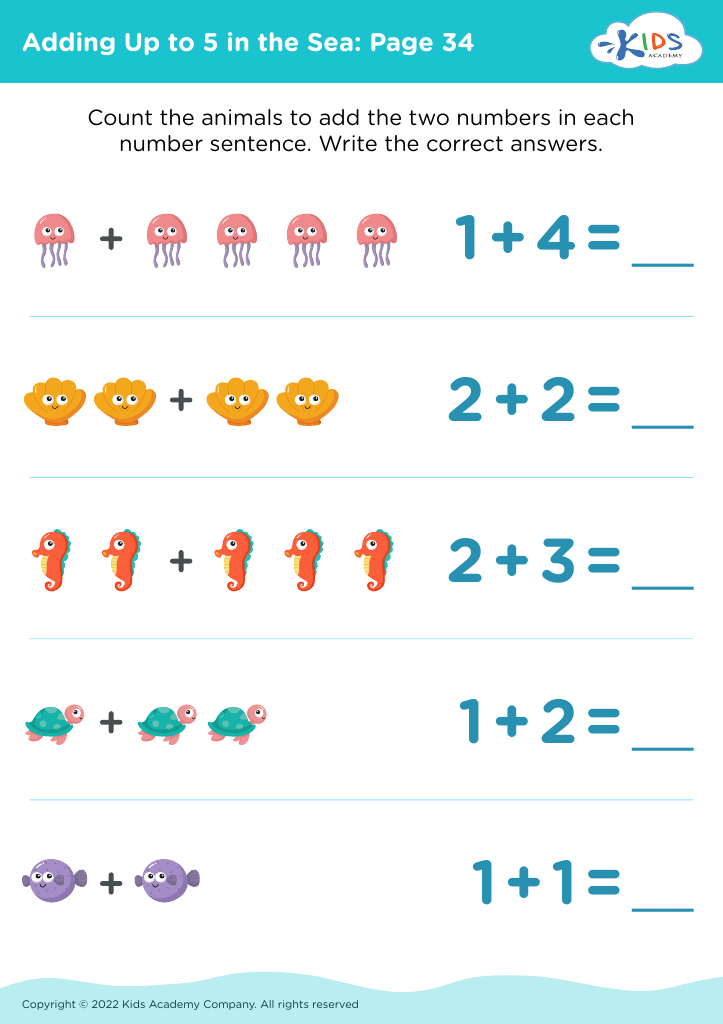
Adding Up to 5 in the Sea: Page 34
Worksheet
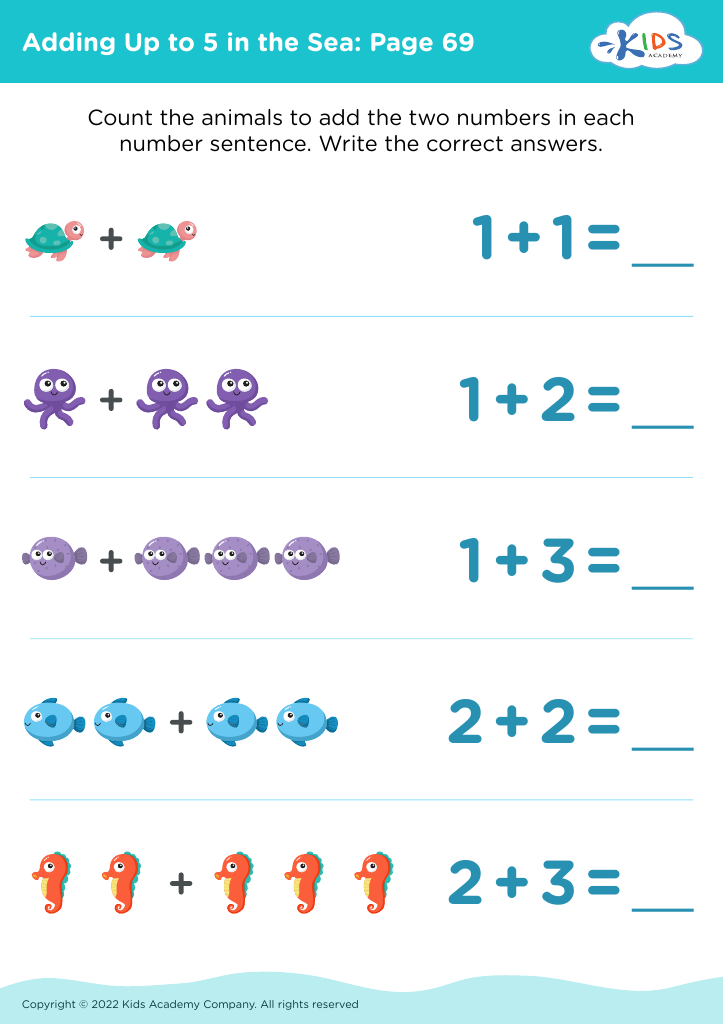
Adding Up to 5 in the Sea: Page 69
Worksheet
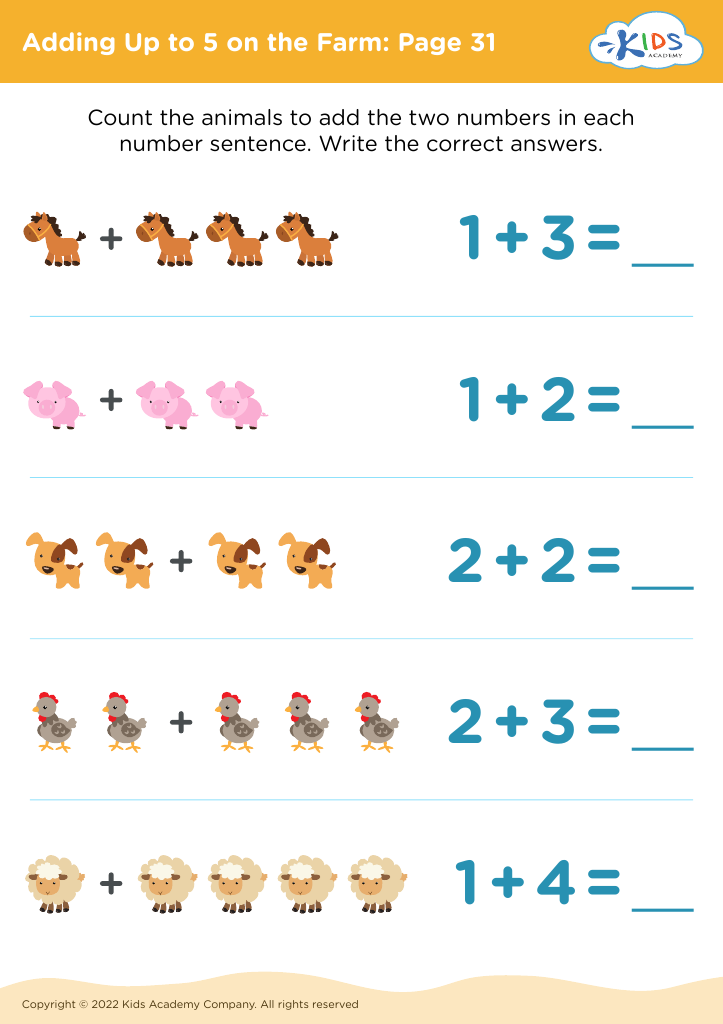
Adding Up to 5 on the Farm: Page 31
Worksheet
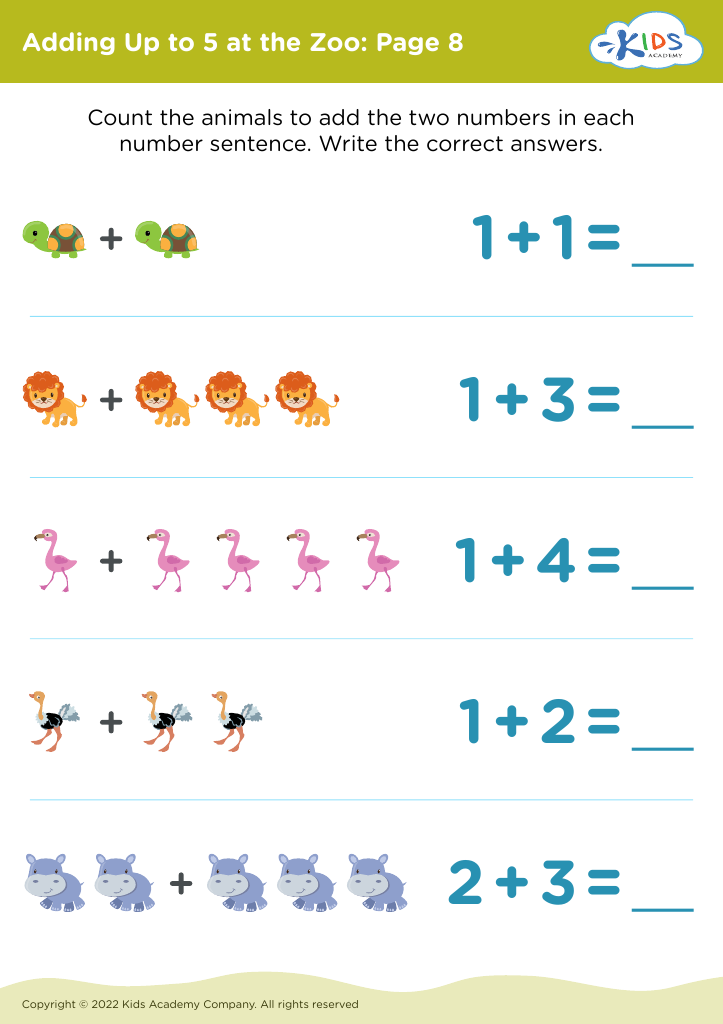
Adding Up to 5 at the Zoo: Page 8

Adding Up to 5 at the Zoo: Page 8

Adding Up to 5 at the Zoo: Page 8
Worksheet
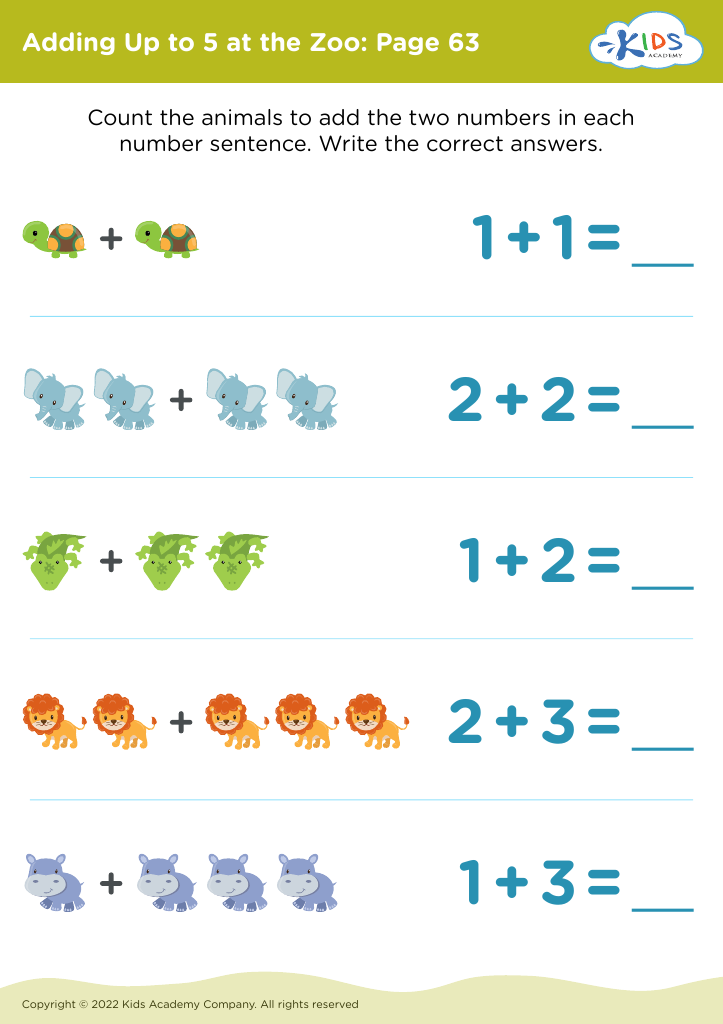
Adding Up to 5 at the Zoo: Page 63
Worksheet
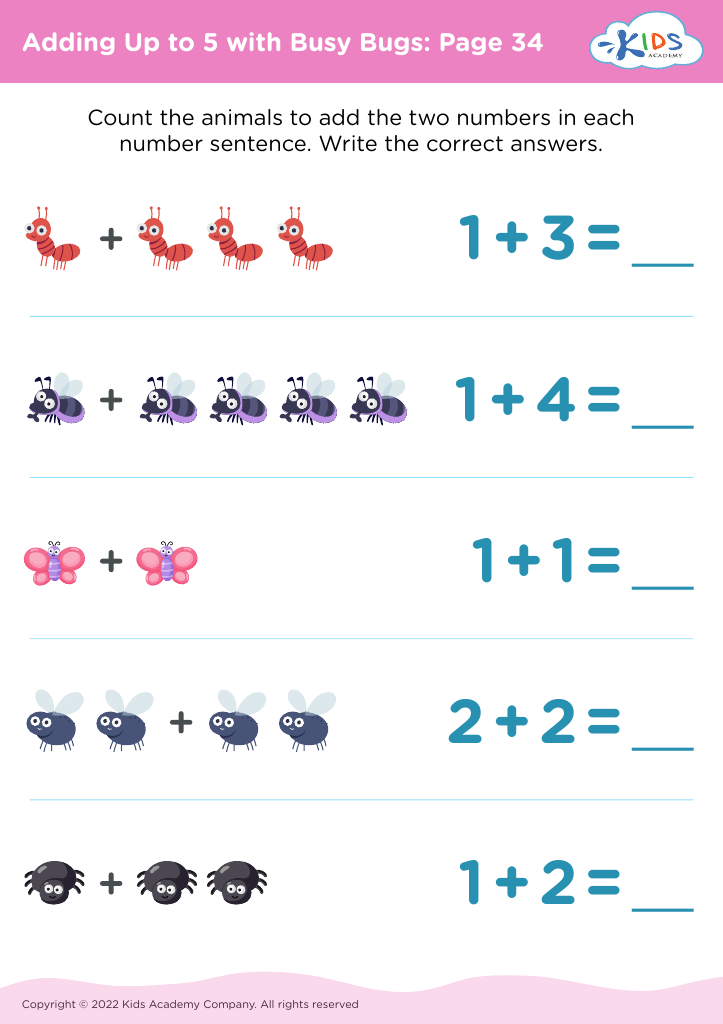
Adding Up to 5 with Busy Bugs: Page 34
Worksheet
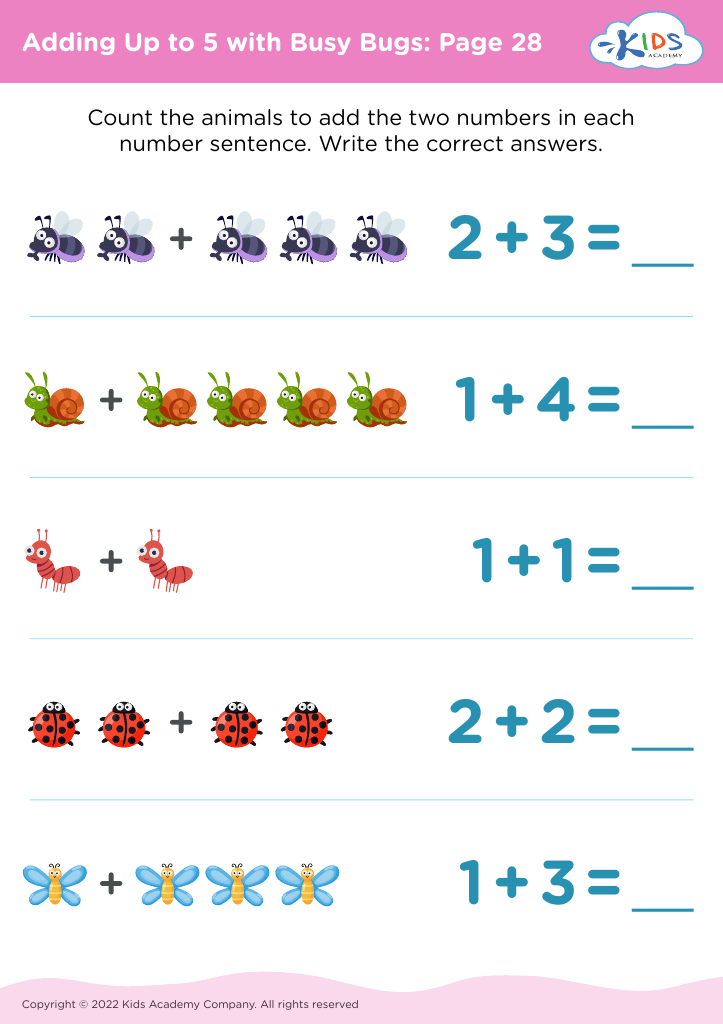
Adding Up to 5 with Busy Bugs: Page 28
Worksheet
Simple Addition PDF Worksheet

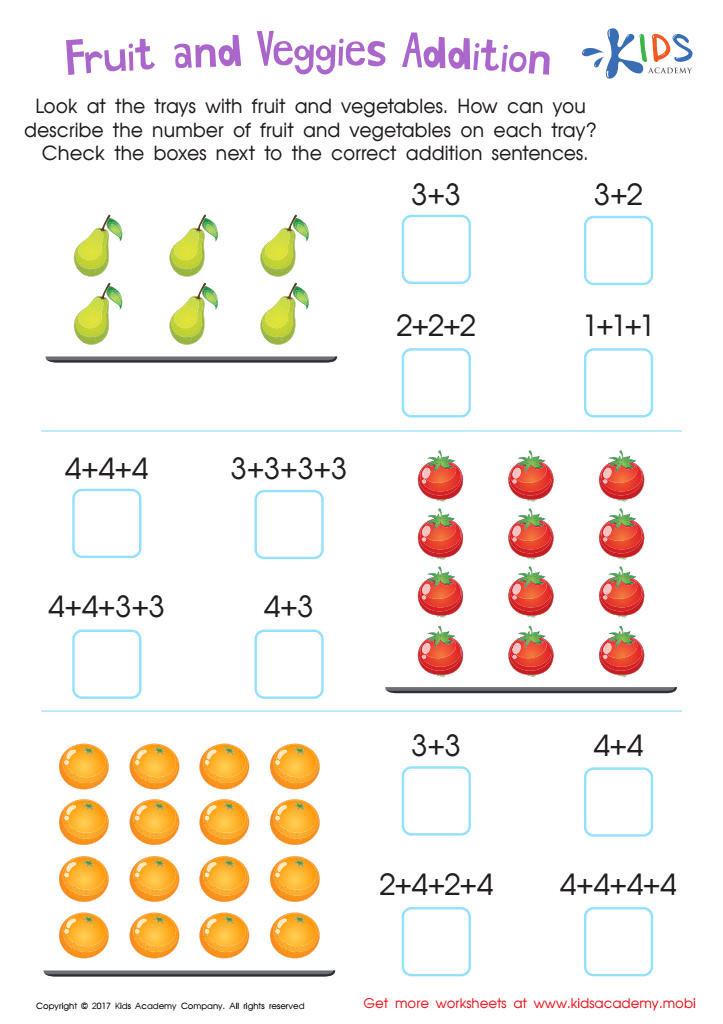
Fruit and Veggies Worksheet

It promotes problem-solving and analytical skills as kids match pictures to correct addition sentences. Help your child go beyond simple addition with this PDF worksheet!
Fruit and Veggies Worksheet
Worksheet
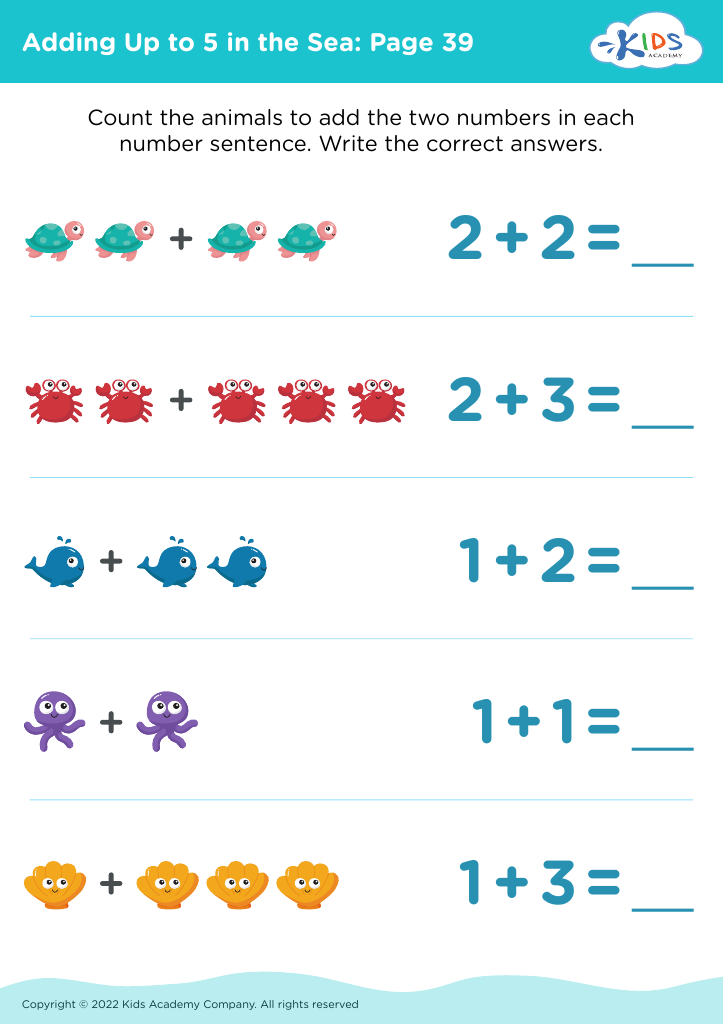
Adding Up to 5 in the Sea: Page 39
Worksheet
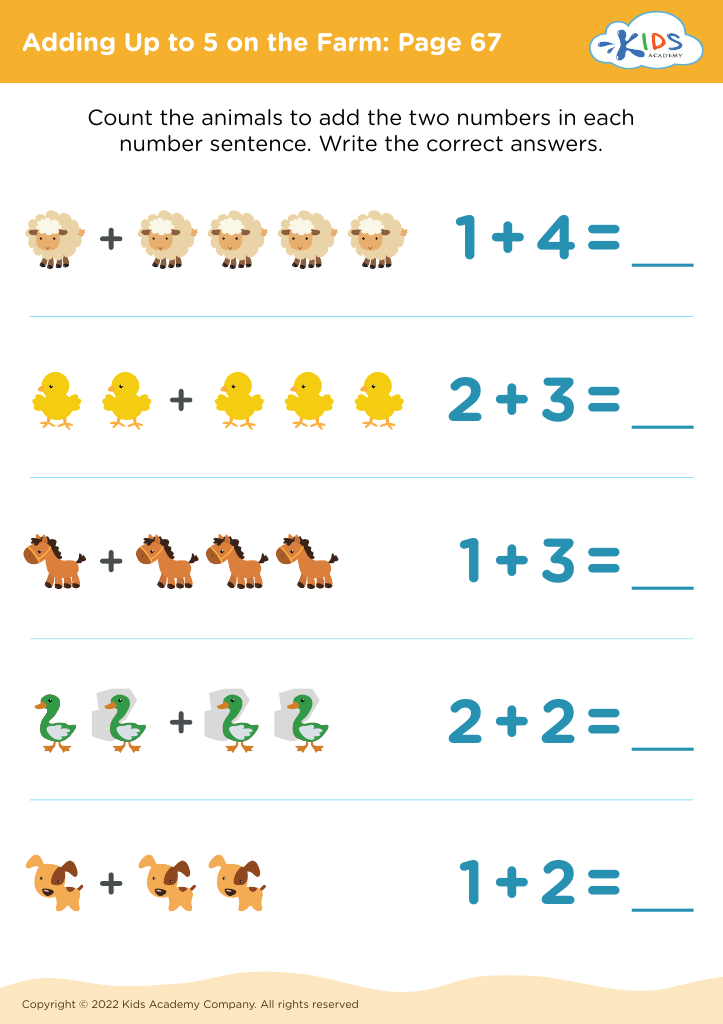
Adding Up to 5 on the Farm: Page 67
Worksheet
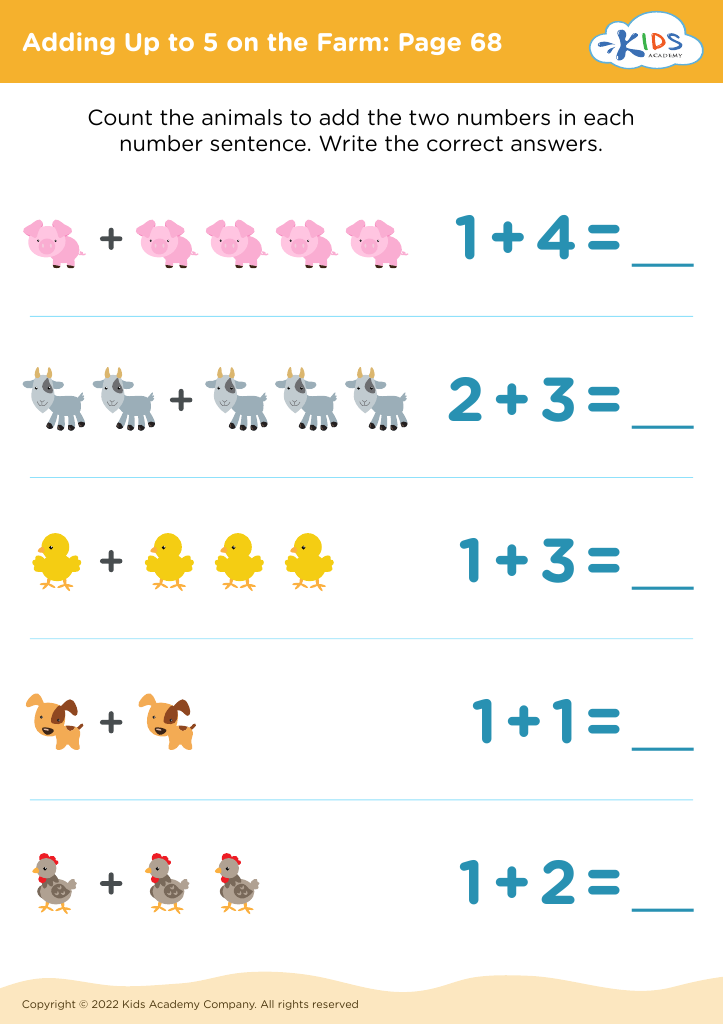
Adding Up to 5 on the Farm: Page 68
Worksheet
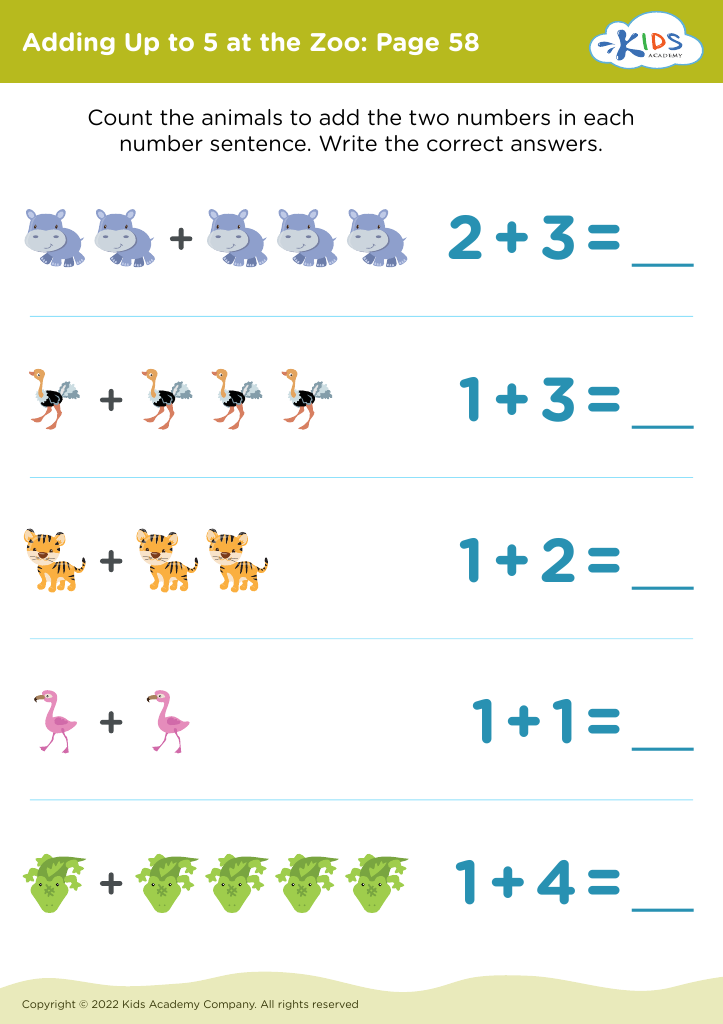
Adding Up to 5 at the Zoo: Page 58
Worksheet
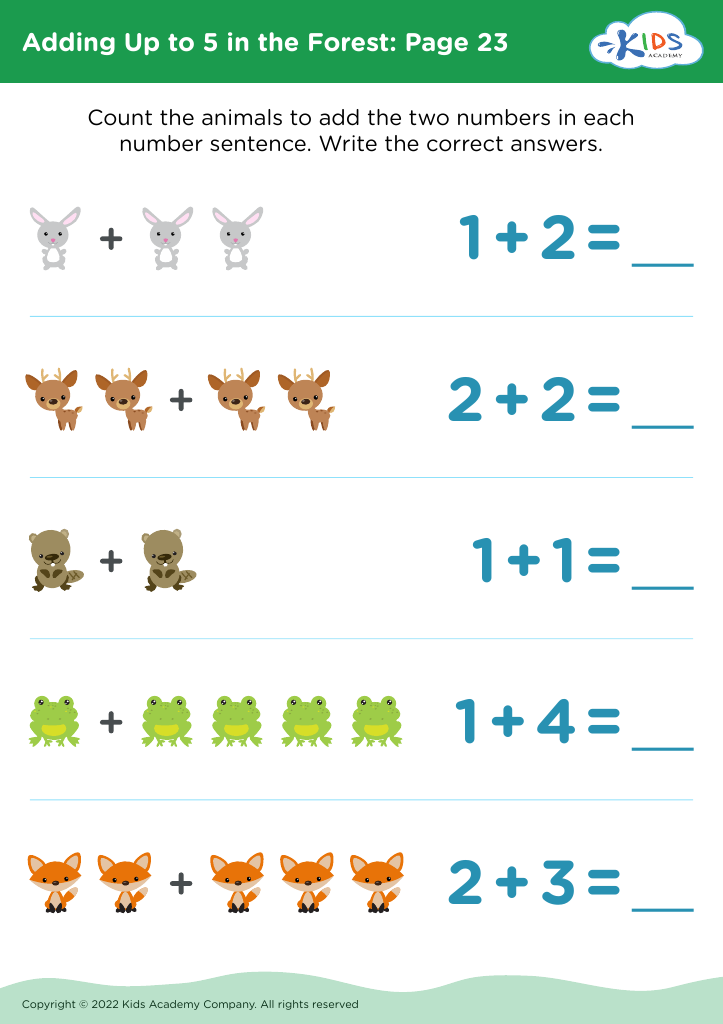
Adding Up to 5 in the Forest: Page 23
Worksheet
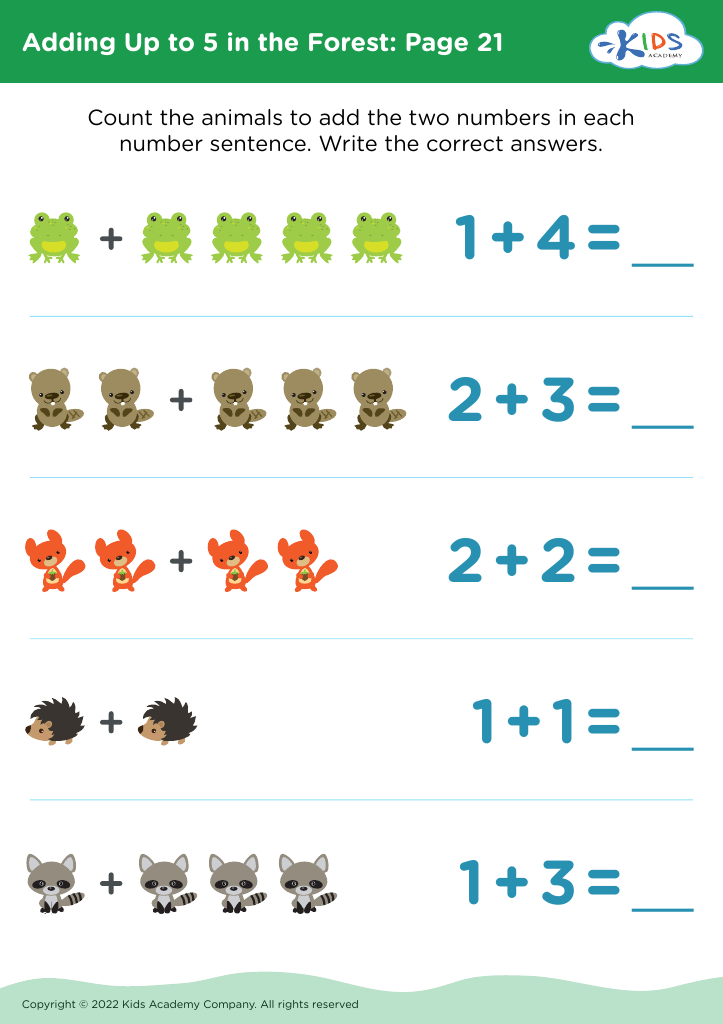
Adding Up to 5 in the Forest: Page 21
Worksheet
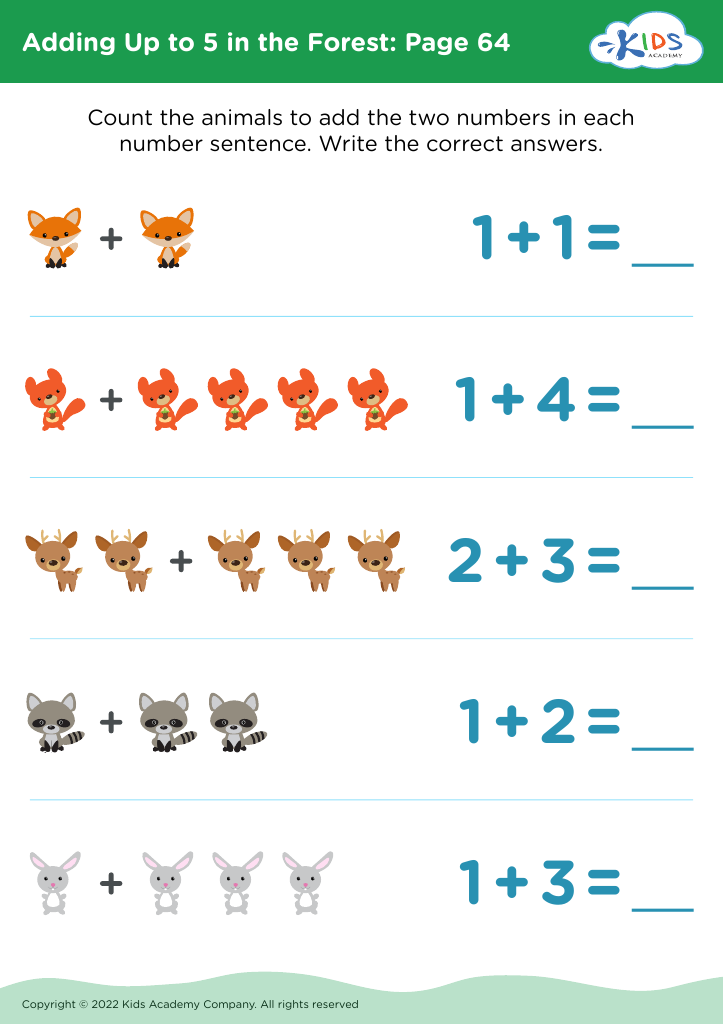
Adding Up to 5 in the Forest: Page 64
Worksheet
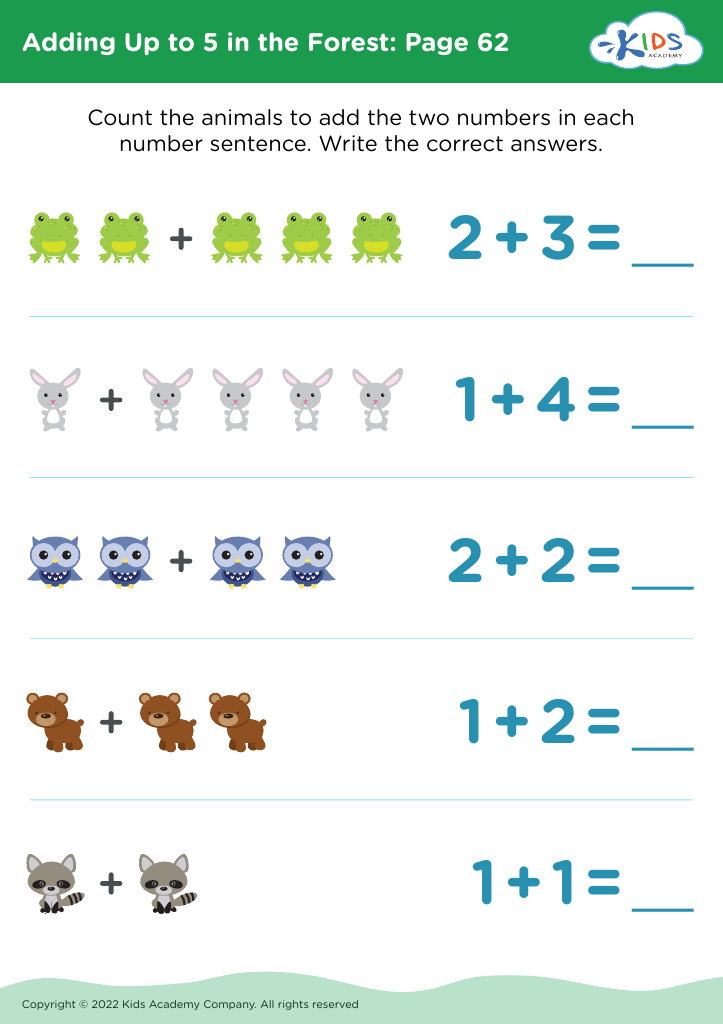
Adding Up to 5 in the Forest: Page 62
Worksheet
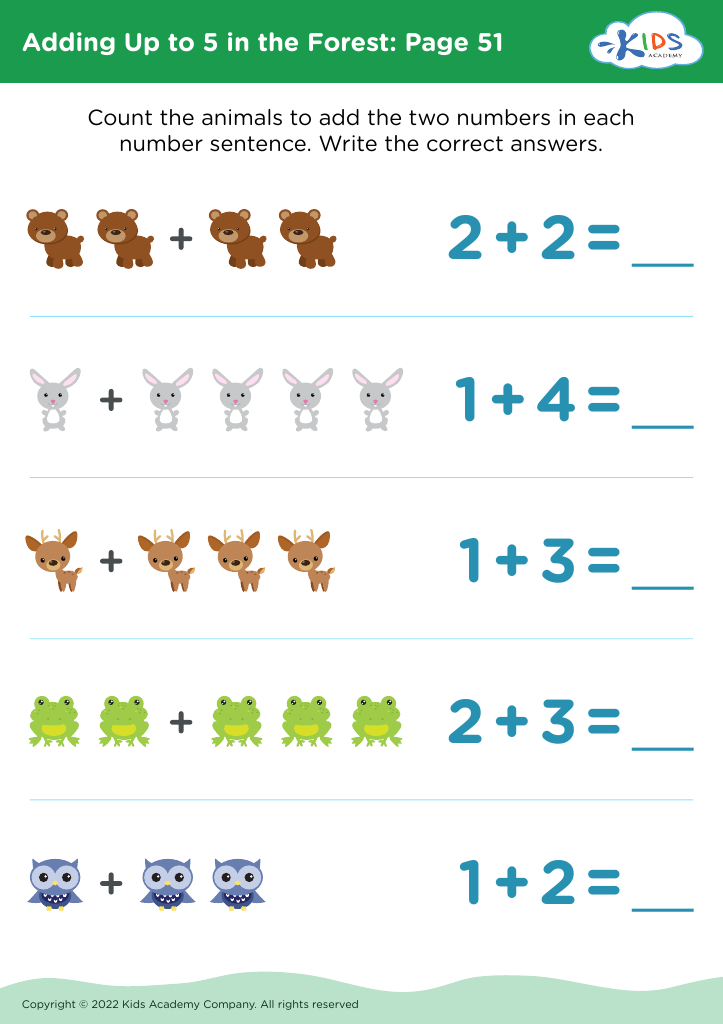
Adding Up to 5 in the Forest: Page 51
Worksheet
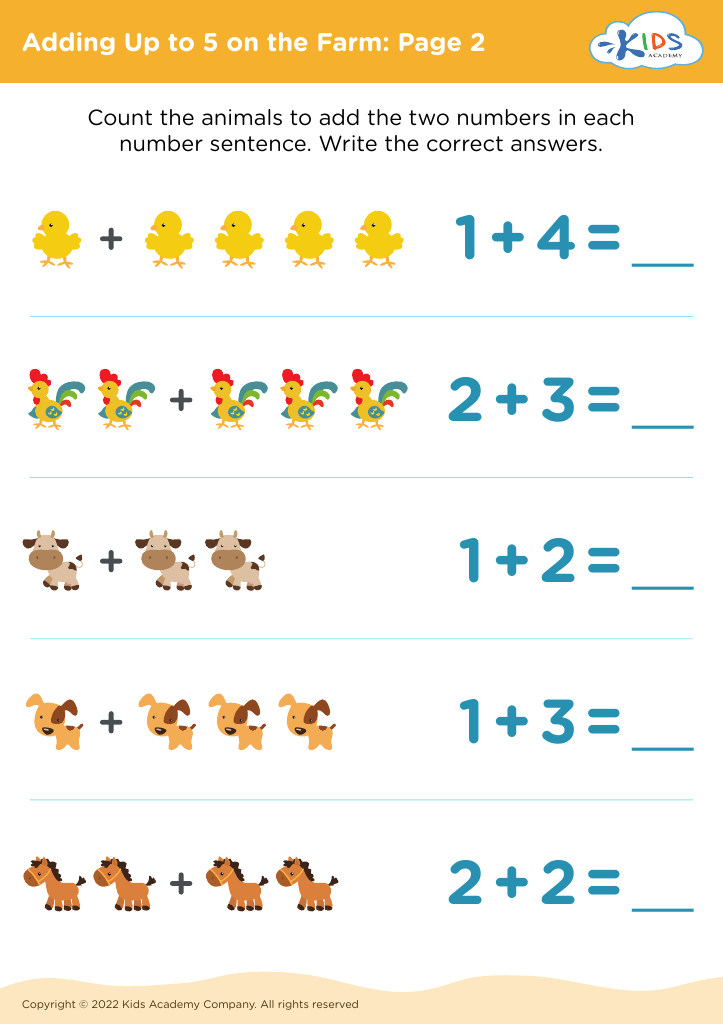
Adding Up to 5 on the Farm: Page 2
Worksheet
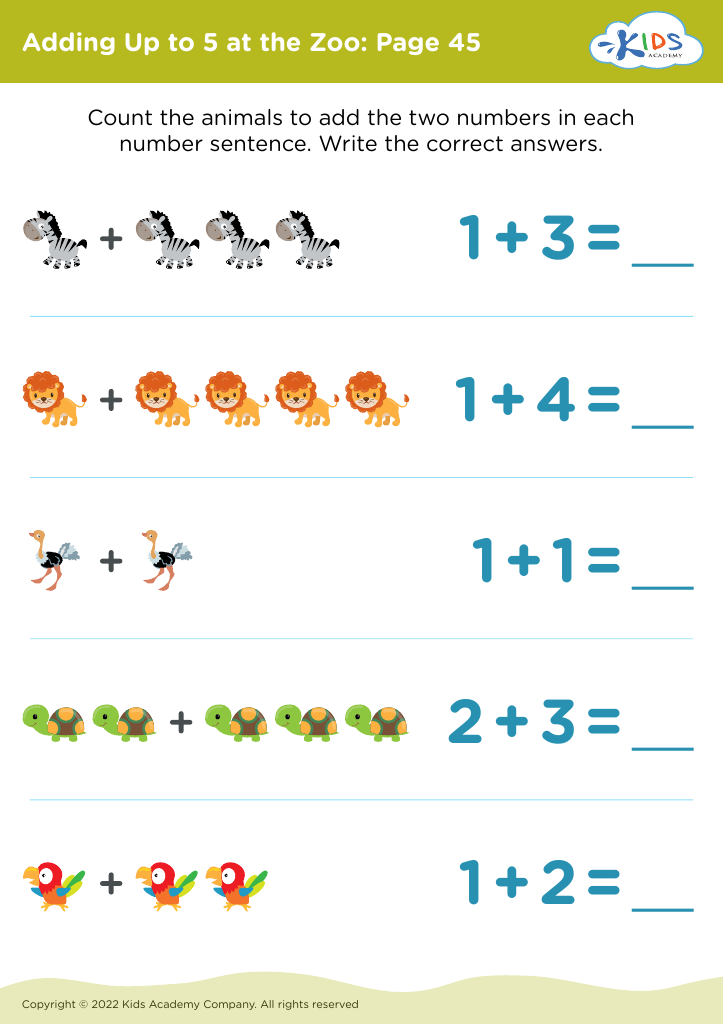
Adding Up to 5 at the Zoo: Page 45
Worksheet
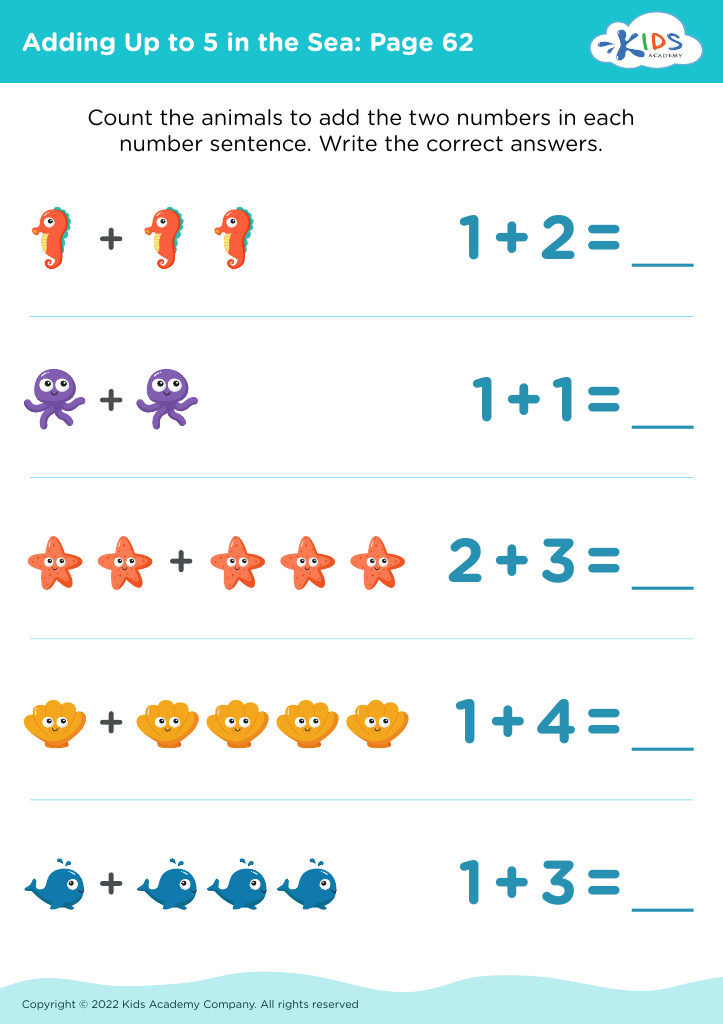
Adding Up to 5 in the Sea: Page 62
Worksheet
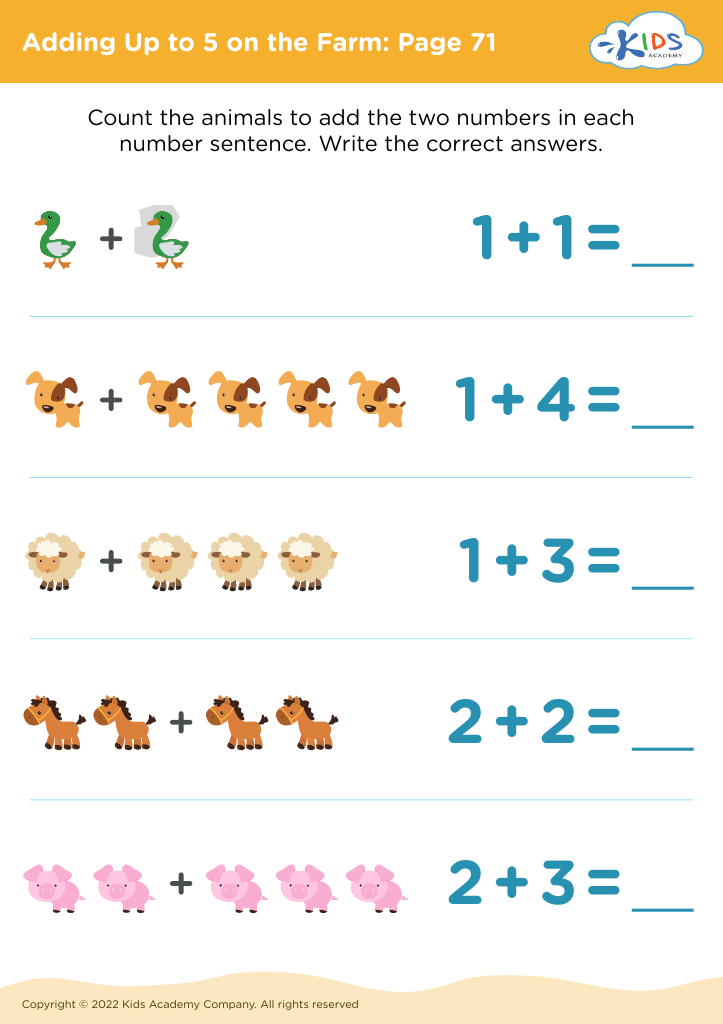
Adding Up to 5 on the Farm: Page 71
Worksheet
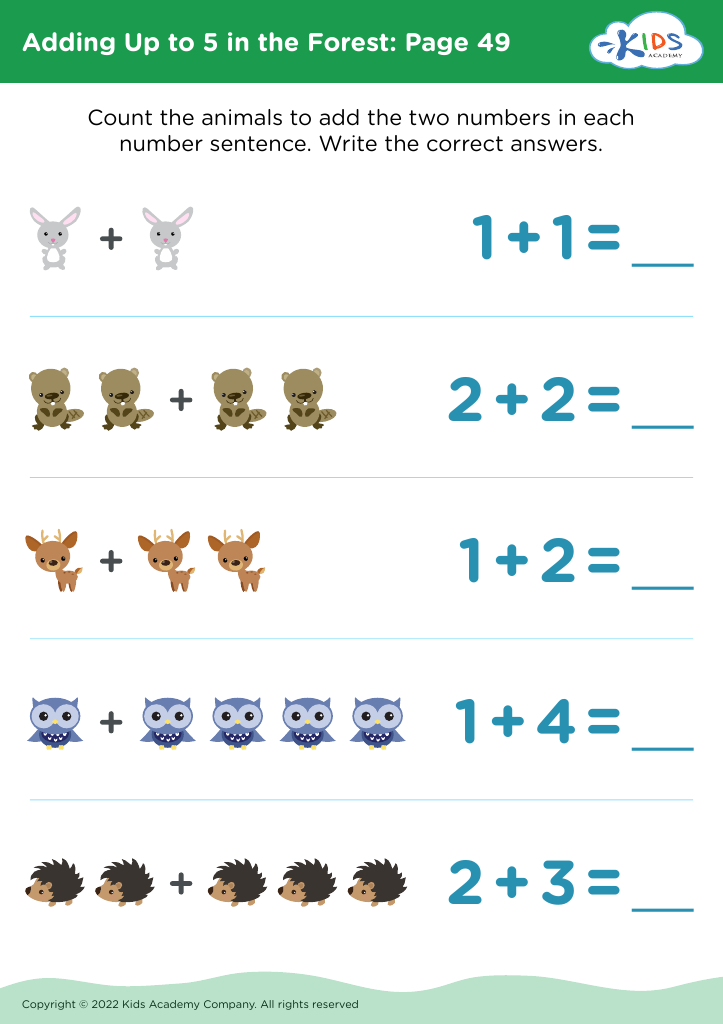
Adding Up to 5 in the Forest: Page 49
Worksheet
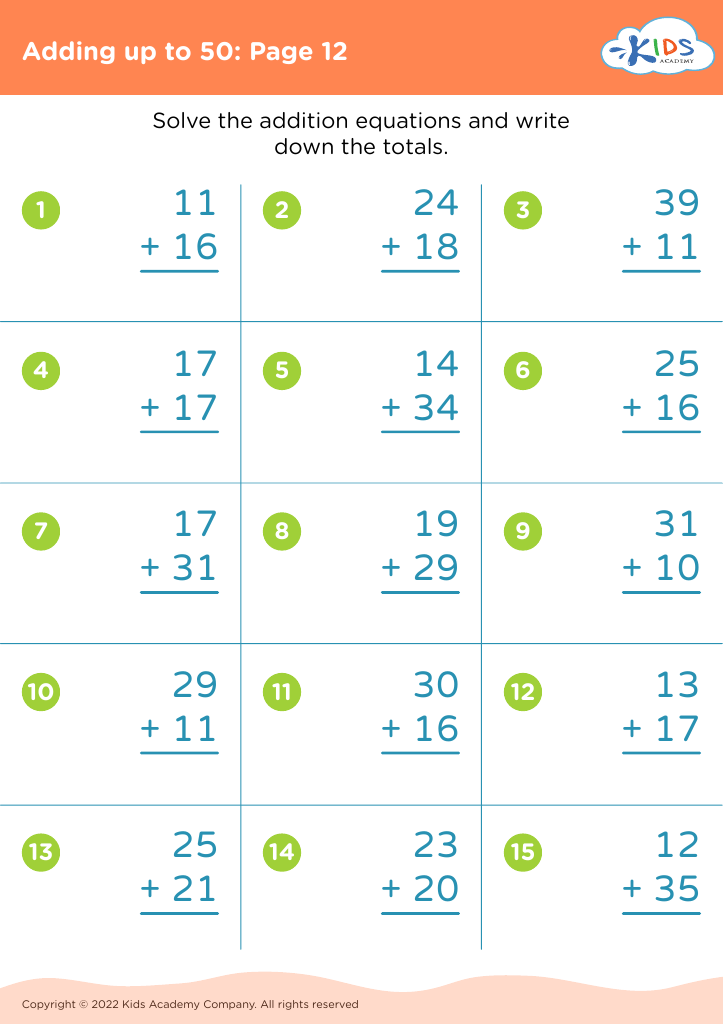
Adding up to 50: Page 12

Adding up to 50: Page 12

Adding up to 50: Page 12
Worksheet
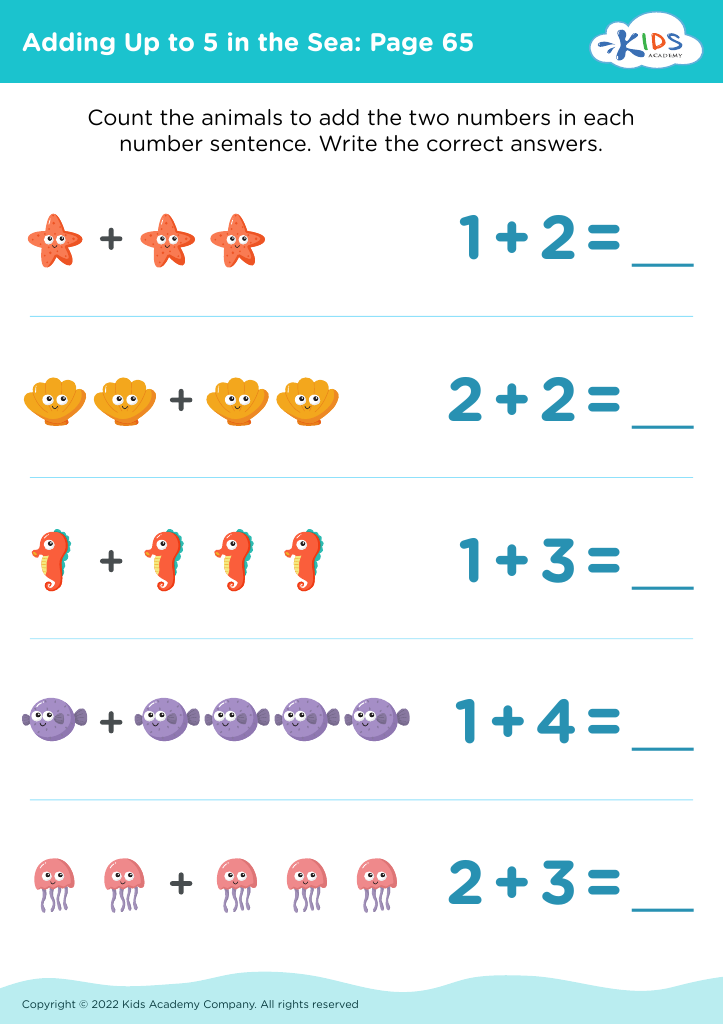
Adding Up to 5 in the Sea: Page 65
Worksheet


For young children, foundational skills in basic addition are crucial. At ages 3-8, children’s brains are highly adaptable and capable of absorbing new concepts quickly. Developing basic addition skills during these early years sets the stage for later math success and overall academic achievement. Understanding addition helps children build problem-solving skills and logical reasoning, essential not only in math but across various subjects and everyday life.

Learning addition in these formative years equips children with the ability to manage money, time, and quantities with confidence, forming a foundational comprehension that will support more advanced arithmetic and mathematical concepts like subtraction, multiplication, division, and beyond. Moreover, early competency in math can boost children’s self-esteem and academic confidence, encouraging them to participate more actively and eagerly in school.

Parents and teachers who prioritize basic addition also promote cognitive development, as math activities tend to improve memory, enhance concentration, and solidify understanding through repeated practice. Furthermore, incorporating fun, engaging math games and activities can make learning enjoyable for young children, fostering a positive attitude toward mathematics from an early age.

In summary, ensuring children aged 3-8 develop basic addition skills lays a critical foundation for their future education, enhances cognitive abilities, and promotes a lifelong positive relationship with learning and problem-solving.