Basic geometry concepts Math Worksheets for Ages 3-8
3 filtered results
-
From - To
Introduce your child to the wonderful world of shapes and spatial understanding with our comprehensive Basic Geometry Concepts Math Worksheets for ages 3-8. These engaging and colorful worksheets from Kids Academy are designed to help young learners grasp foundational geometry skills, such as identifying and comparing shapes, understanding patterns, and recognizing symmetry. Perfect for preschool through early elementary, each worksheet is crafted to make learning fun and effective, while reinforcing critical thinking and problem-solving abilities. Give your little mathematician a strong start with our expertly designed worksheets that build confidence and foster a love for math.
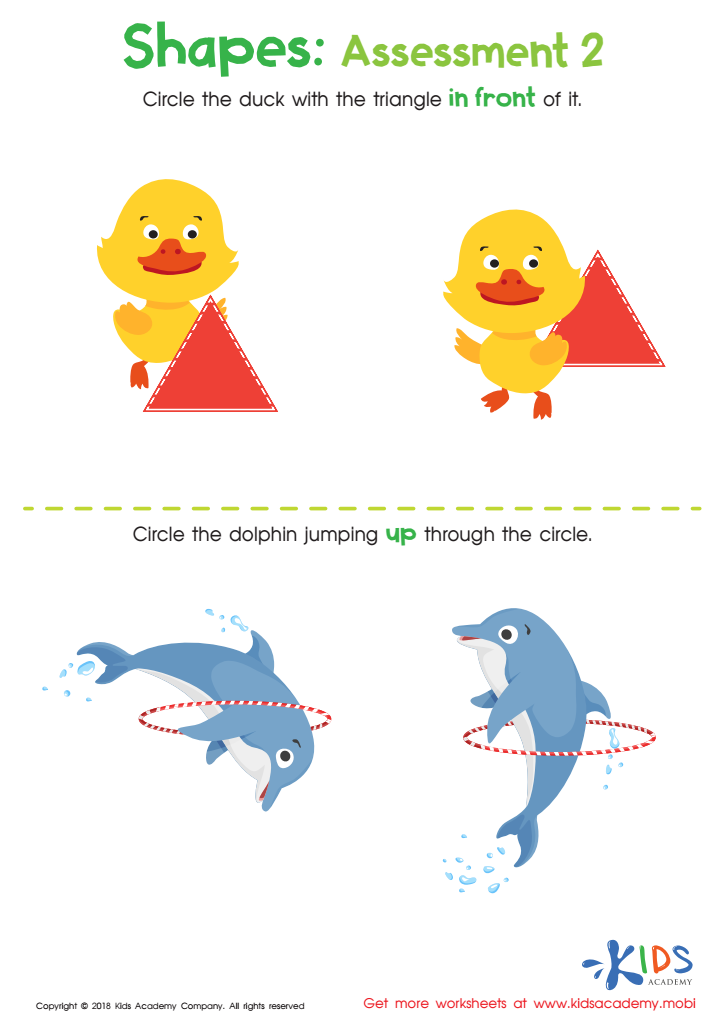
Geometry – Assessment 2 Worksheet
 Assign to My Students
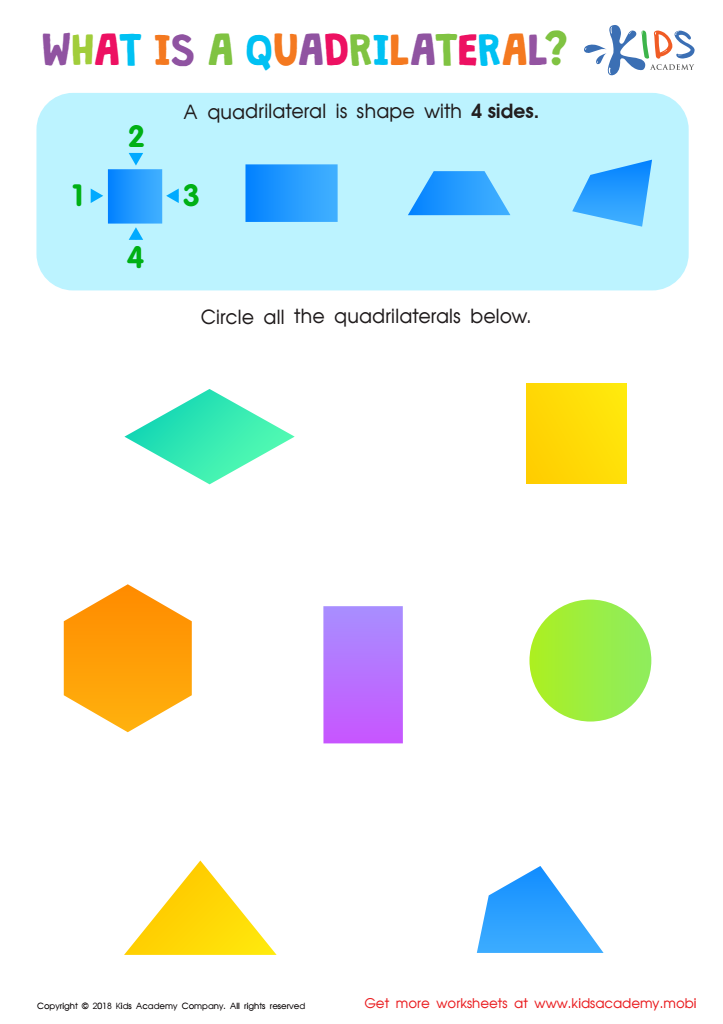
What Is a Quadrilateral? Worksheet


.jpg)
.jpg)




Parents and teachers should care about basic geometry concepts for children ages 3-8 because these foundational skills are integral to early cognitive development and future academic success. At this early age, children are naturally curious and perceptive. Introducing them to shapes, sizes, and spatial relationships helps enhance their thinking and problem-solving skills.
Understanding basic geometry helps young children recognize and classify shapes, which is vital for visual and spatial awareness. These skills aren't only relevant in mathematics but also play a critical role in everyday activities such as reading, writing, and playing. For instance, the ability to discern shapes and their properties aids in letter formation and word recognition, key components of literacy.
Additionally, early exposure to geometry fosters a positive interest in mathematics, laying a strong foundation for more complex math concepts as they progress through school. Through activities like playing with blocks, drawing, and engaging in interactive games, children develop important motor skills and the ability to follow multi-step directions and pattern recognition.
Moreover, introducing geometry concepts at a young age aligns with natural stages of childhood development and capitalizes on the brain's plasticity. This makes it easier for children to assimilate and build upon these concepts later, ensuring a solid grounding in mathematics and the critical thinking skills needed for lifelong learning.








