Comprehension improvement Math Worksheets for Ages 3-8
3 filtered results
-
From - To
Enhance your child's mathematical understanding with our expertly crafted Comprehension Improvement Math Worksheets tailored for ages 3-8. These engaging worksheets focus on boosting problem-solving skills and numerical comprehension through age-appropriate activities. Each sheet is designed to make learning fun and effective, encouraging early learners to develop a robust foundation in math. Ideal for both classroom and home use, our resources aid in the seamless transition from basic concepts to more advanced problem-solving. Improve your child's confidence and academic performance with Kids Academy's thoughtfully developed worksheets for young achievers. Download today and start your child's journey to mathematical success!
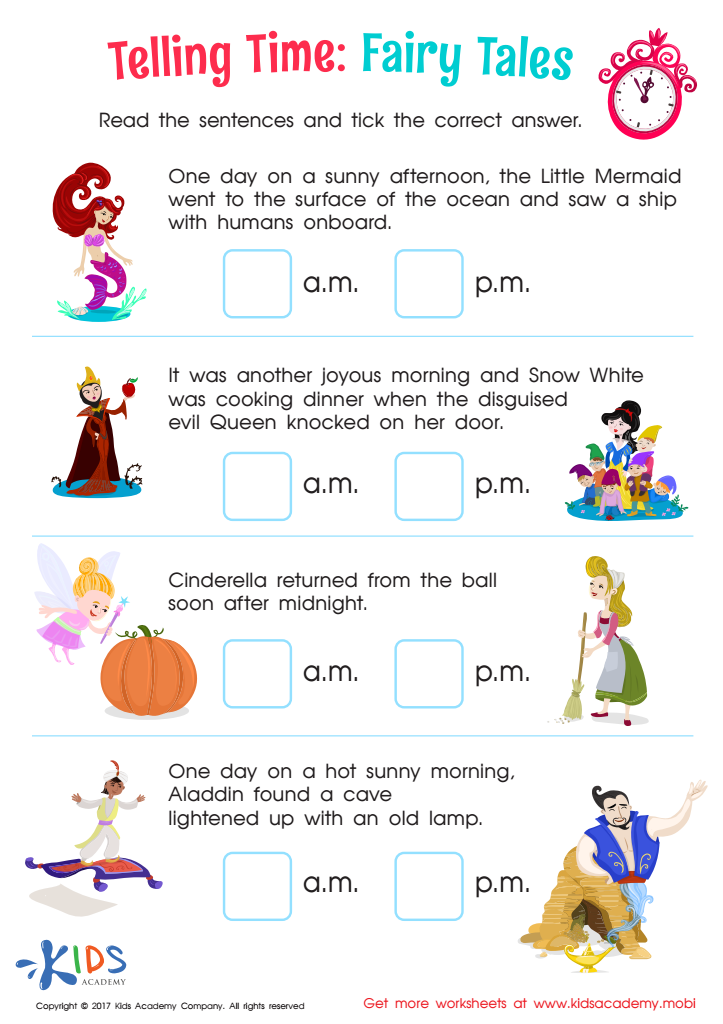
Telling Time: Fairy Tales Worksheet
 Assign to My Students
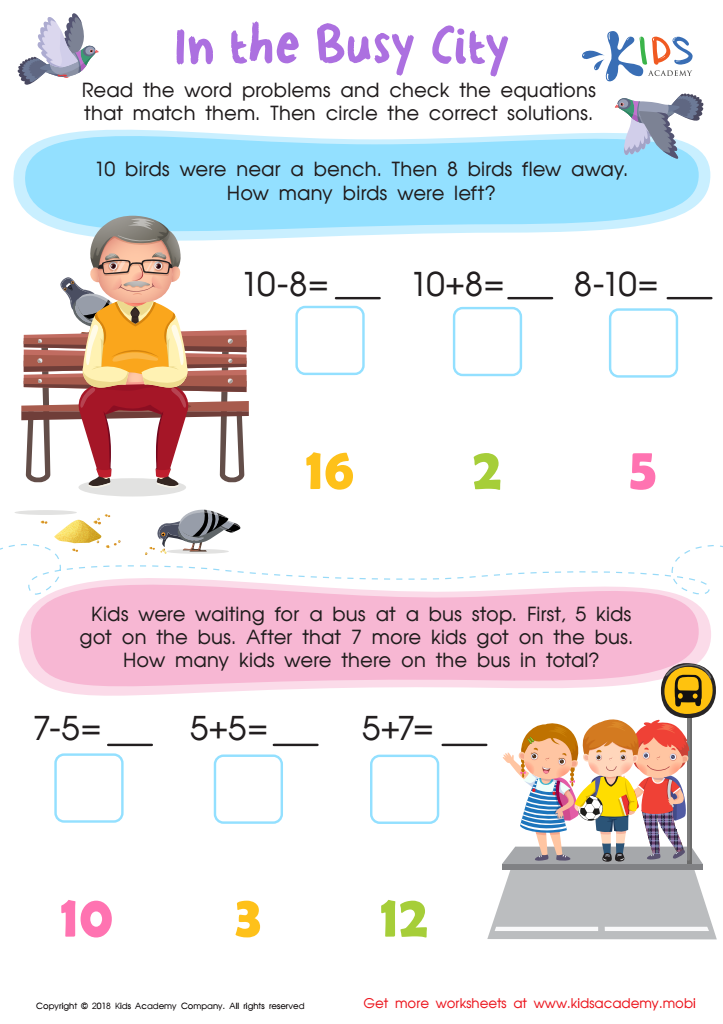
In the Busy City Word Problems Worksheet
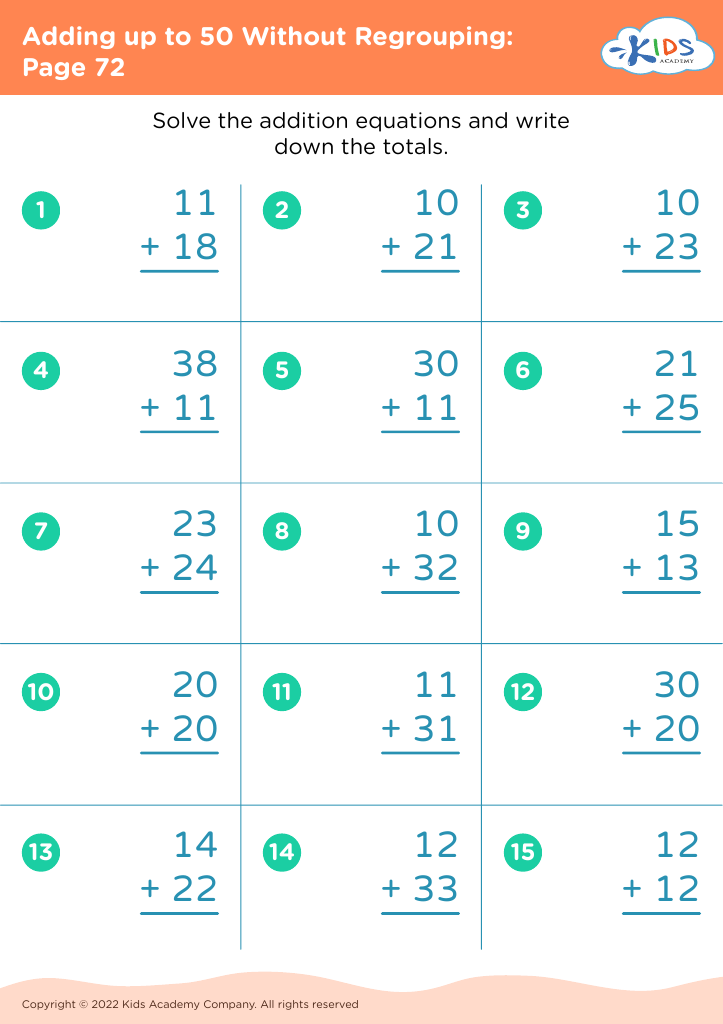








Parents and teachers should place a high emphasis on improving comprehension in math for children aged 3-8 because these formative years are crucial for cognitive development and conceptual learning. Early childhood is a time when children are naturally curious, absorbing information like sponges. Introducing and reinforcing comprehension in math helps build a strong foundation for critical thinking and problem-solving skills that are essential for academic success and everyday life.
Comprehension in math goes beyond just learning numbers and basic operations; it includes understanding patterns, shapes, measurements, and the relevance of mathematics in real-world contexts. This holistic grasp of math concepts enhances a child's ability to reason logically, make connections between different ideas, and approach problems with a well-rounded perspective.
Furthermore, early math skills are highly predictive of later academic achievement, not only in mathematics but in other subjects as well. For example, a solid understanding of quantities and spatial relationships aids language and literacy development, fosters scientific inquiry, and improves attention spans. Therefore, by prioritizing comprehension in math at this critical early stage, parents and teachers can help children develop the confidence and curiosity needed to excel academically and navigate complex future challenges effectively.








