Counting skills improvement Math Worksheets for Ages 3-8
3 filtered results
-
From - To
Enhance your child’s counting skills with our engaging Math Worksheets, designed specifically for ages 3-8. Our collection offers a variety of fun, interactive activities that make learning to count enjoyable. These printable worksheets focus on improving number recognition, basic addition and subtraction, and understanding quantities through colorful visuals and playful themes. Tailored to different age groups, they provide an effective way to reinforce foundational math concepts at home or in the classroom. Encourage your child to explore numbers with confidence and watch their math skills flourish! Start improving your child’s counting skills today with our versatile worksheets!
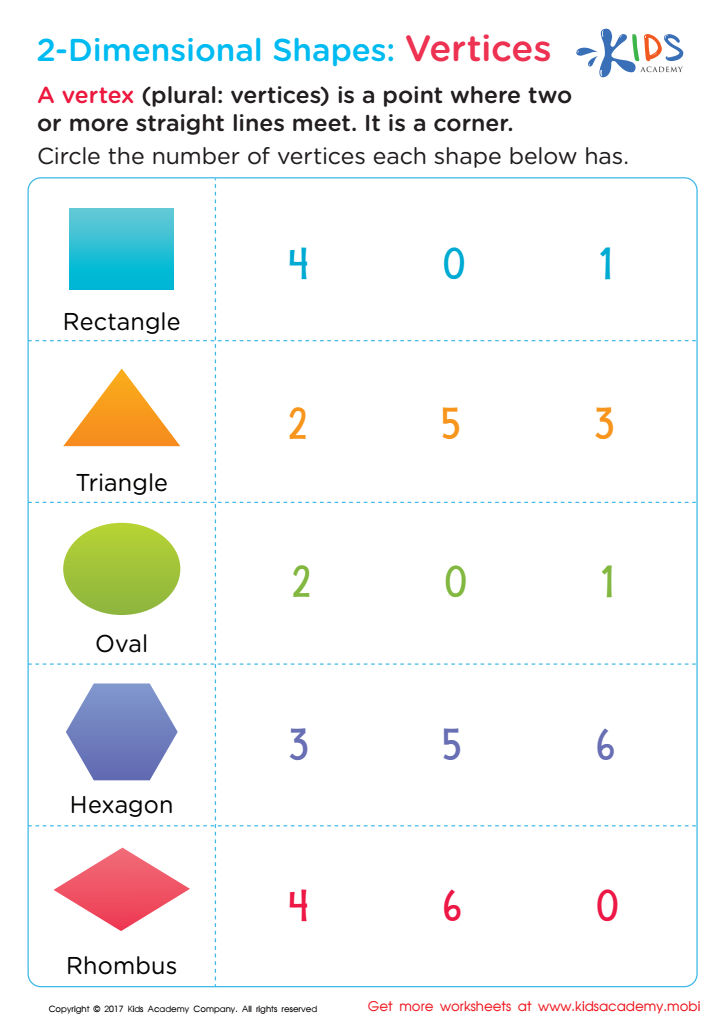
Two–Dimensional Shapes: Vertices Printable
 Assign to My Students
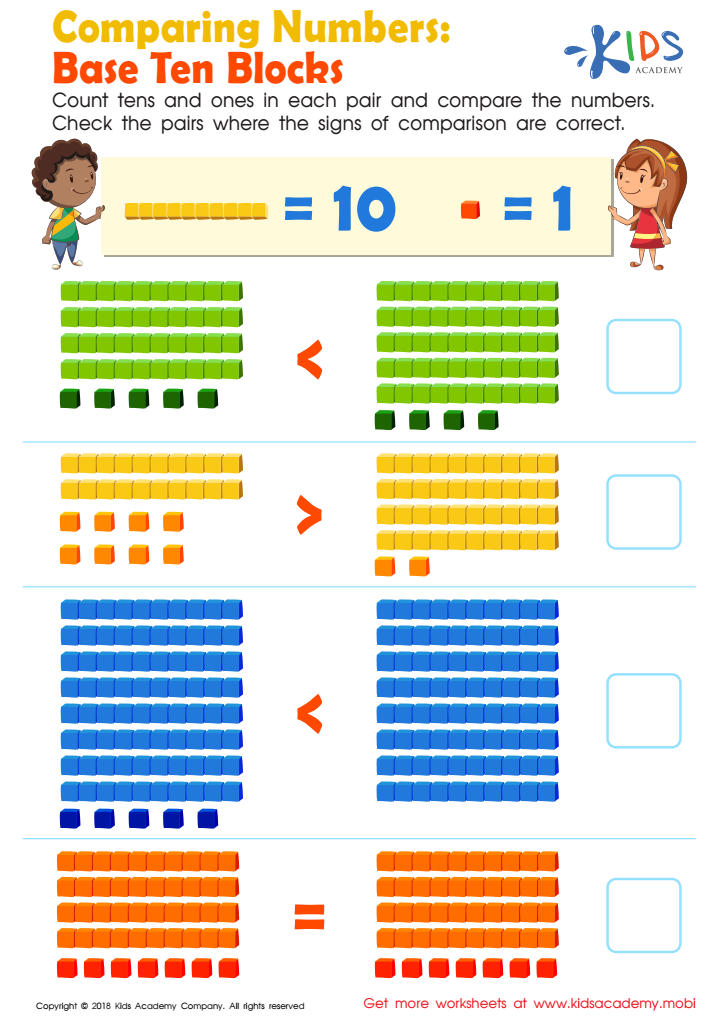
Comparing Numbers: Base Ten Blocks Worksheet
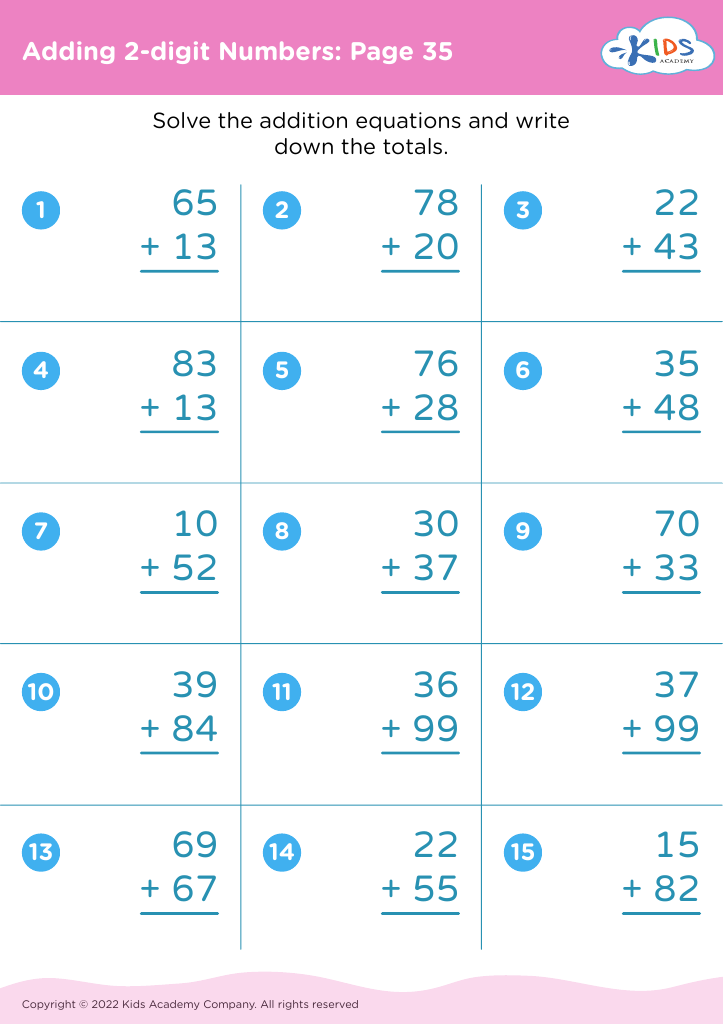



.jpg)



Counting skills development is crucial for children aged 3-8, as it lays the foundation for more advanced mathematical concepts and overall cognitive growth. During these formative years, children start to construct their understanding of numbers and quantities, which directly impacts their problem-solving and critical thinking abilities. Early mastery of counting aids in developing number recognition, which is vital for future learning in math.
For parents and teachers, fostering counting skills not only enhances a child's mathematical knowledge but also boosts their confidence and engagement in learning. Activities that promote counting, such as counting objects, games, and stories, contribute to a child's ability to process information and develop number sense, which is essential for academic success in later grades.
Additionally, strong counting skills are linked to improved performance in standardized tests and real-world applications, from managing money to understanding time. Engaging children in counting exercises helps build a positive attitude towards math, ensuring they approach the subject with curiosity rather than apprehension. Therefore, supporting counting skills in young children is an investment in their educational journey, giving them the tools necessary for lifelong learning and success.








