
Enhance problem-solving Math Worksheets for Ages 3-8
3 filtered results
Difficulty Level
Grade
Age
-
From - To
Subject
Activity
Standards
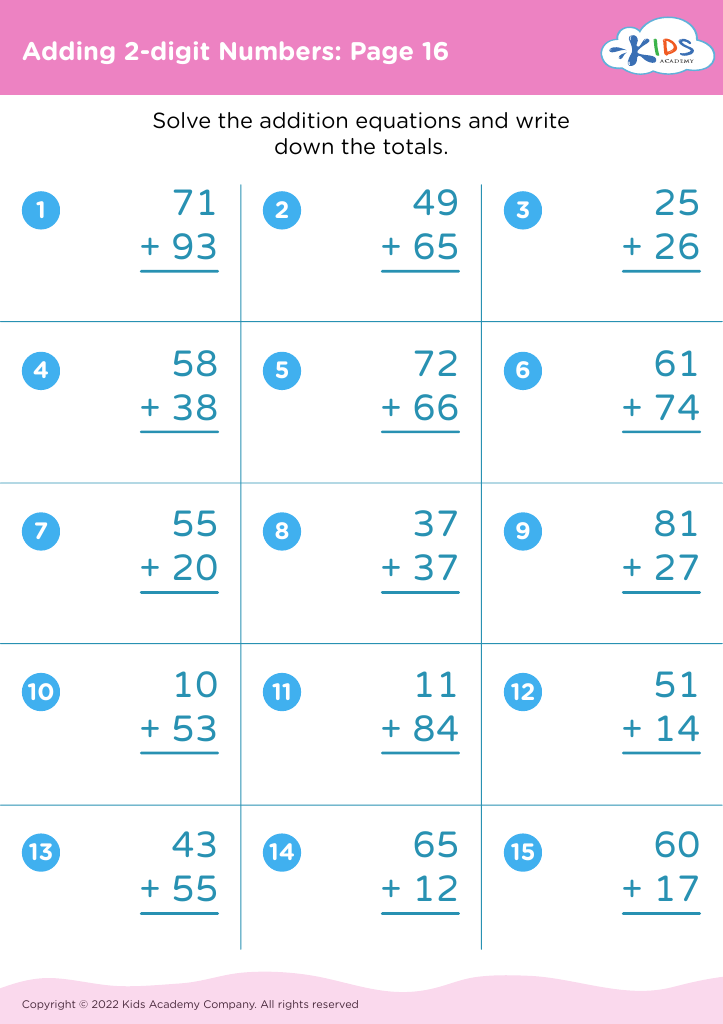
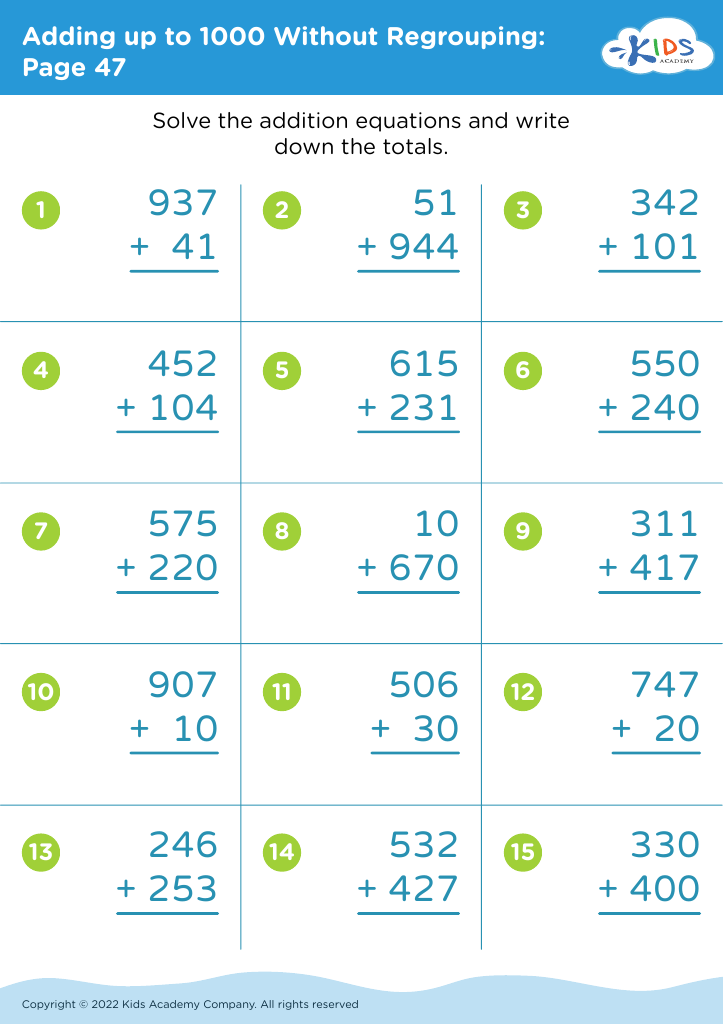
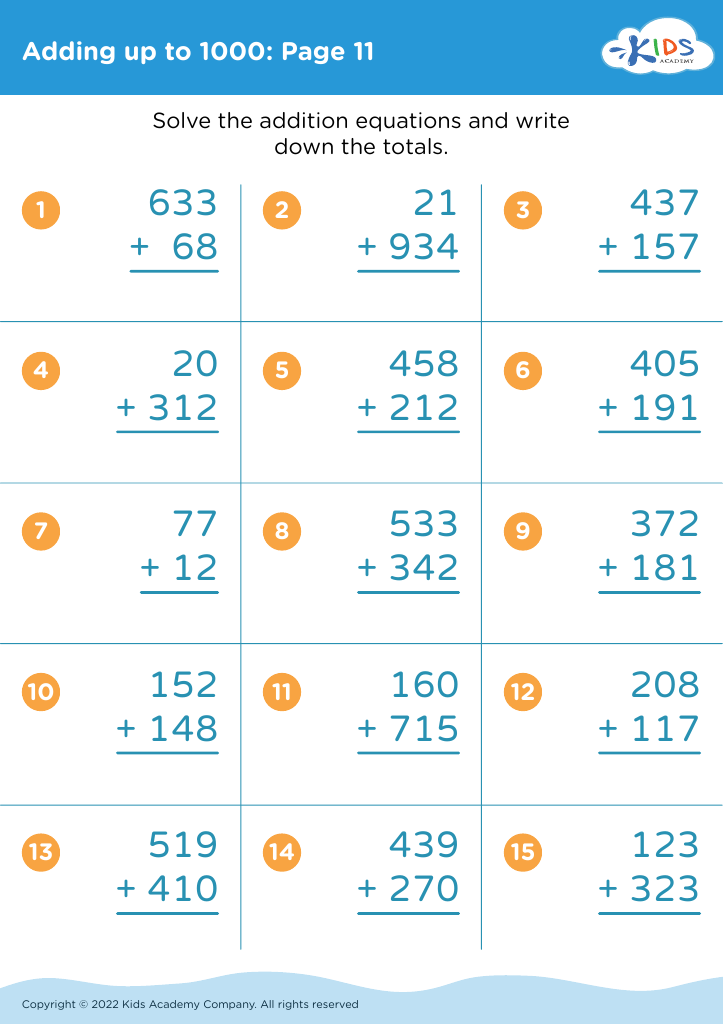
Discover our collection of "Enhance Problem-Solving Math Worksheets" designed for children ages 3-8! These engaging worksheets promote critical thinking and logic skills while making math fun. Our resources include a variety of activities that challenge young learners to solve problems through playful scenarios, which not only strengthen their math foundations but also boost their confidence. Perfect for classroom use or at-home learning, these worksheets cater to various learning styles. Dive into a vibrant world of numbers with colorful visuals and interactive exercises that inspire creativity and enhance cognitive abilities. Start fostering a lifelong love for math today!
Favorites
With answer key
Interactive
Join Kids Academy for Free
Who is primarily going to use this learning content?




.jpg)



Enhancing problem-solving skills in young children aged 3-8 is crucial for their overall development. This early stage lays the foundation for critical thinking, creativity, and cognitive growth. Introducing problem-solving math concepts provides children with a framework to understand the world around them, helping them develop logical reasoning skills essential for everyday life.
When parents or teachers prioritize problem-solving math, they cultivate resilience and perseverance in children. Facing challenging problems teaches them to approach obstacles with a growth mindset, recognizing that mistakes are opportunities for learning rather than failures. Additionally, it encourages collaboration and communication skills, as children often work in groups or pairs to tackle math challenges.
Moreover, focusing on problem-solving math enhances their spatial awareness and numerical understanding, which are fundamental skills they will build upon throughout their education. This foundation not only supports future academic success in mathematics but also equips children to handle real-world situations that require quantitative reasoning and decision-making.
Incorporating engaging, age-appropriate math problems into daily activities promotes enthusiasm for learning, nurturing a generation that is equipped to explore, question, and innovate. In summary, fostering problem-solving in mathematics at this young age is an investment in children's future success, academically and beyond.








